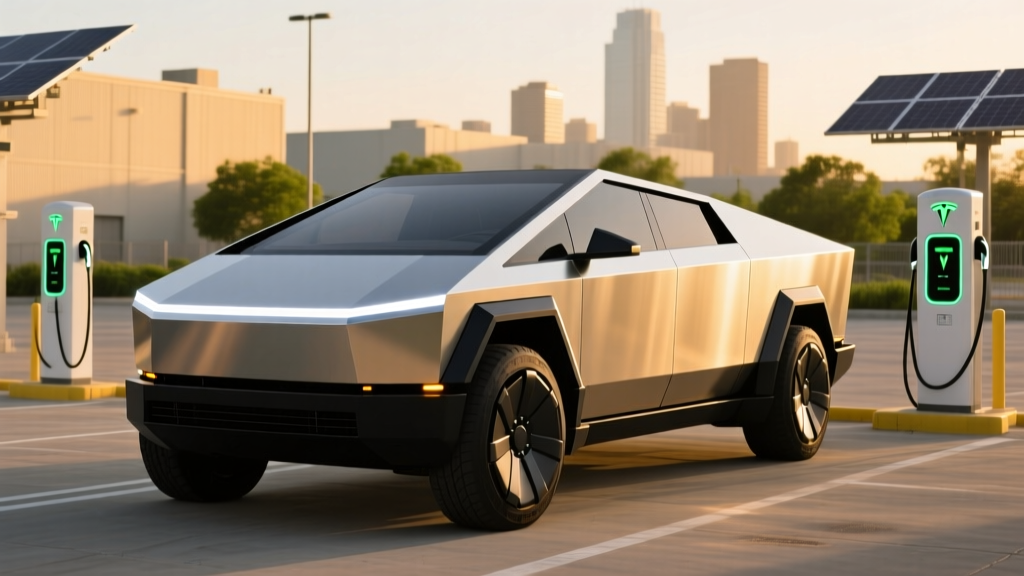
Tesla's first-generation Cybertruck polarized the truck world with its stainless-steel exoskeleton, steer-by-wire steering, and a price that climbed well past its original $39,900 promise. Now, speculation around a Cybertruck 2 — a next-generation iteration or platform refresh — is intensifying as Tesla signals plans to broaden its truck lineup. Here is everything we know, what remains unconfirmed, and how a second-generation Cybertruck might stack up against the current model and its key rivals.
What Is the Cybertruck 2 and How Does It Differ From the Current Truck?
The term "Cybertruck 2" currently refers to Tesla's anticipated next-generation electric pickup, which may arrive as a substantial platform refresh, a smaller companion truck, or a re-engineered version of the existing Cybertruck architecture. Multiple industry reports point to Tesla exploring a more affordable, compact electric pickup that would compete directly with the Ford Maverick Hybrid and the upcoming Chevrolet Montana EV. Other signals suggest a refresh of the full-size Cybertruck with next-generation battery cells and a revised manufacturing process aimed at driving down the per-unit cost.
What is clear from Tesla's public statements and investor communications is that the company recognizes the current Cybertruck's limitations: a starting price that sits above the mass-market sweet spot, a polarizing design that limits fleet and commercial appeal, and production complexity tied to the stainless-steel exoskeleton. A Cybertruck 2 — in whatever form it takes — would aim to address at least some of those constraints.
Expected Range, Battery, and Efficiency
The current Cybertruck lineup offers three battery configurations. A next-generation model would likely adopt Tesla's latest 4680-cell architecture with either an NMC (nickel-manganese-cobalt) or potentially an LFP (lithium iron phosphate) chemistry for base trims, depending on Tesla's cell-supply strategy at launch.
| Spec | Current Cybertruck (AWD) | Cybertruck 2 (Estimated) |
|---|---|---|
| Battery Capacity (usable) | ~123 kWh (NMC, 4680 cells) | ~100–130 kWh (next-gen 4680, NMC/LFP TBD) |
| EPA Range | 340 mi (AWD) / 320 mi (Cyberbeast) | 350–400 mi (targeted, unconfirmed) |
| Efficiency | ~50 kWh/100 mi (est.) | ~42–48 kWh/100 mi (improved aero + cells) |
| Chemistry | NMC (4680) | NMC or LFP (base trim) |
Charging Speed and Infrastructure
Charging speed remains one of the most consequential specs for truck buyers who plan to tow or road-trip. The current Cybertruck supports up to 250 kW peak DC fast charging on Tesla's V3 Superchargers and is compatible with V4 Supercharger stalls capable of higher throughput. Here is what we expect from a next-generation platform:
| Charging Level | Current Cybertruck | Cybertruck 2 (Estimated) |
|---|---|---|
| Level 1 (120V) | ~3 mi/hr | ~3–4 mi/hr |
| Level 2 (240V, 48A) | 11.5 kW / ~34 mi/hr | 11.5–19.2 kW / ~34–52 mi/hr |
| DC Fast Charge (Peak) | 250 kW | 250–350 kW (if 800V architecture adopted) |
| 10–80% DC Fast Charge | ~25–30 min | ~18–25 min (estimated) |
| Connector | NACS (native Tesla) | NACS (native Tesla) |
A shift to an 800-volt architecture — something Tesla has not confirmed but which competitors like Hyundai/Kia (E-GMP platform) and Rivian (R2) are leveraging — would allow the Cybertruck 2 to sustain higher charge rates for longer, reducing the steep taper that occurs above 80% state of charge on today's 400V systems. This matters most on road trips where a 10–80% stop is the standard refueling pattern.
Tesla's Supercharger network remains the strongest charging ecosystem in North America, with over 6,500 V3/V4 stalls in the U.S. alone, according to Tesla's Supercharger page. Cybertruck 2 owners would have seamless native access — no adapter required — while CCS-equipped rivals need a NACS adapter.
Performance, Drivetrain, and Towing
The current Cybertruck delivers remarkable performance numbers. The dual-motor AWD produces an estimated 600 horsepower and hits 0–60 mph in 3.9 seconds, while the tri-motor Cyberbeast pushes 845 hp and a 2.6-second 0–60 time. A next-generation Cybertruck 2 would likely retain the dual- and tri-motor configurations, potentially with a single-motor RWD base trim to hit a lower price point.
| Spec | Current AWD | Current Cyberbeast | Cybertruck 2 (Est.) |
|---|---|---|---|
| 0–60 mph | 3.9 sec | 2.6 sec | 3.5–4.2 sec (AWD) |
| Horsepower | 600 hp | 845 hp | 500–700 hp (AWD) |
| Drivetrain | Dual-motor AWD | Tri-motor AWD | RWD / Dual / Tri-motor |
| Max Towing | 11,000 lbs | 11,000 lbs | 10,000–12,000 lbs (est.) |
| Payload | 2,500 lbs | 2,500 lbs | 2,500–3,000 lbs (est.) |
Towing is where real-world range takes the hardest hit. Expect a 40–55% range reduction when towing near max capacity at highway speeds — a universal EV truck limitation, not specific to Tesla. A Cybertruck 2 with a larger battery pack could push tow-range past 180 miles, which would be competitive with the Rivian R1T and Ford F-150 Lightning extended-range models.
Pricing, Trims, and Federal Tax Credit Eligibility
Current Cybertruck pricing has drawn criticism for departing from Elon Musk's original sub-$40,000 positioning. The 2025 AWD starts at approximately $79,990, while the Cyberbeast tops $99,990 before options. A Cybertruck 2 is widely expected to target a more accessible price bracket, potentially starting in the $50,000–$60,000 range if Tesla achieves its stated manufacturing-cost reductions.
- MSRP Cap: Pickup trucks must have an MSRP at or below $80,000 to qualify for the §30D credit. Current Cybertruck AWD and Cyberbeast both exceed or sit at this cap.
- Income Limits: Modified adjusted gross income must not exceed $150,000 (single), $225,000 (head of household), or $300,000 (joint filers).
- Battery Sourcing: Critical minerals and battery components must meet escalating domestic-content and free-trade-agreement thresholds. As of 2026, vehicles with battery components from a "foreign entity of concern" (FEOC) are disqualified.
- Point-of-Sale Transfer: Eligible buyers can transfer the credit to the dealer at purchase for an immediate price reduction rather than claiming it at tax time.
- Cybertruck 2 Outlook: If a base trim comes in under $80,000 MSRP and Tesla's battery supply chain meets FEOC requirements, it could qualify for up to $7,500. Confirm eligibility at IRS.gov §30D page and fueleconomy.gov before purchasing.
Cargo Space, Interior, and Daily Usability
The current Cybertruck offers a 6-foot bed with a motorized tonneau cover and approximately 67 cubic feet of enclosed cargo volume in the bed (with the vault closed). The front trunk (frunk) adds roughly 7 cubic feet of lockable storage. Interior passenger space includes about 41 inches of front legroom and 38 inches of rear legroom — adequate for adults but tighter than a full-size F-150 Lightning or Rivian R1T crew cab.
A Cybertruck 2 may address one of the most common owner complaints: rear-seat comfort and ingress/egress. The current truck's angular roofline and high floor create a somewhat cramped back seat. A redesigned platform with a lower floor (enabled by next-gen structural battery packs) could improve headroom and legroom meaningfully.
The current Cybertruck's standout interior feature is its minimalist 18.5-inch center touchscreen with no physical buttons — a love-it-or-hate-it proposition. Steering is handled entirely by a yoke with steer-by-wire, which eliminates the mechanical connection between the wheel and the rack. Some drivers adapt quickly; others find the lack of feedback disconcerting at low speeds. A Cybertruck 2 may retain steer-by-wire but could add an optional conventional steering wheel for fleet and commercial buyers.
Driver Assistance and Autonomous Features
The Cybertruck ships with Tesla's Autopilot suite and offers Full Self-Driving (Supervised) as a $8,000 add-on or $99/month subscription. It is critical to understand what this system does and does not do:
Tesla Autopilot and FSD (Supervised) are SAE Level 2 systems. The driver must remain fully attentive, keep hands on the yoke/wheel, and be prepared to take over instantly. These are not self-driving systems. Only Level 4 services like Waymo's robotaxi operate without a human driver in defined geographic zones. See NHTSA's automated vehicle safety page for the official SAE framework.
On the positive side, Tesla's vision-only approach (no LiDAR or radar on current models) has improved substantially with the HW4 computer. Highway lane-keeping and adaptive cruise are strong, and FSD Supervised handles complex urban intersections with increasing competence — though it still makes errors that require driver intervention. A Cybertruck 2 may adopt Tesla's next-generation HW5/AI5 computer, which the company has indicated will deliver a significant inference-performance leap.
Warranty and Long-Term Ownership
Tesla's current warranty structure for the Cybertruck includes:
- Basic Vehicle: 4 years / 50,000 miles
- Battery & Drive Unit: 8 years / 120,000 miles (minimum 70% capacity retention)
- Restraint System: 5 years / 60,000 miles
The 70% capacity-retention threshold over 8 years is standard across the industry but worth noting: it means Tesla considers a battery that has lost 29% of its original capacity to still be "within spec." For a truck with 340 miles of EPA range, that translates to roughly 240 miles of range at the warranty boundary. Real-world degradation data from current Cybertruck owners is still limited given the vehicle's late-2023 launch, but Tesla's 4680 NMC cells have shown promising cycle-life results in early fleet data.
Cybertruck 2 vs. the Competition
The electric truck segment is crowded and growing. Here is how a Cybertruck 2 would need to position itself against current and upcoming rivals:
| Vehicle | EPA Range | Starting MSRP | Max Tow | DC Fast Charge |
|---|---|---|---|---|
| Tesla Cybertruck AWD (current) | 340 mi | $79,990 | 11,000 lbs | 250 kW |
| Ford F-150 Lightning (Ext. Range) | 320 mi | ~$69,995 | 10,000 lbs | 150 kW |
| Rivian R1T (Dual-Motor Max) | 352 mi | ~$87,000 | 11,000 lbs | ~200 kW |
| Chevrolet Silverado EV (4WT) | 440 mi | ~$74,800 | 10,000 lbs | 350 kW |
| Cybertruck 2 (Est.) | 350–400 mi | $50,000–$65,000 | 10,000–12,000 lbs | 250–350 kW |
The Silverado EV's 440-mile range and 350-kW charging are benchmarks that a Cybertruck 2 would need to approach, while a sub-$60,000 starting price would undercut every full-size competitor and push into midsize-truck territory — a segment currently dominated by the Ford Maverick Hybrid and Toyota Tacoma.
Pros and Cons
✅ Potential Pros
- Lower starting price could unlock mass-market and fleet buyers
- Native NACS / Supercharger access — best charging network in North America
- Next-gen 4680 cells may improve range and charge speed
- Steer-by-wire offers precise handling and tight turning radius
- Stainless-steel body resists dents and eliminates paint-shop cost
- Over-the-air updates continuously improve features post-purchase
❌ Potential Cons
- Unreleased — no confirmed specs, timeline, or pricing
- Polarizing design may limit resale value and commercial appeal
- Yoke-only steering is divisive; no conventional wheel option yet
- Tesla's build-quality history (panel gaps, trim issues) remains a concern
- 800V architecture not confirmed — may lag competitors on charge speed
- Tax credit eligibility uncertain until battery sourcing is finalized
- Rear-seat space may remain compromised if dimensions don't grow
Who Should Wait for the Cybertruck 2?
Decision Framework
- Wait for Cybertruck 2 if: You want a Tesla truck but find the current $80K+ price prohibitive, you need a sub-$60K EV truck for a small business or fleet, or you want next-gen battery tech with potentially better cold-weather performance.
- Buy the current Cybertruck now if: You need a truck immediately, you want the Cyberbeast's 2.6-second 0–60 performance, you value the existing Supercharger network for frequent road trips, and the MSRP fits your budget regardless of tax credit eligibility.
- Look at rivals if: You need proven build quality (Ford F-150 Lightning), best-in-class range (Silverado EV 4WT), or off-road adventure capability with a conventional interior (Rivian R1T).
Frequently Asked Questions
What is the real-world range of the Tesla Cybertruck 2?
Since the Cybertruck 2 is unreleased, no EPA or real-world testing data exists. Based on current Cybertruck AWD testing (EPA 340 mi, real-world highway ~260–290 mi), a next-gen model targeting 350–400 EPA miles might deliver 280–330 miles in real-world mixed driving, with cold-weather highway range potentially dropping to 220–270 miles.
How fast will the Cybertruck 2 charge?
If Tesla retains the current 400V architecture, expect peak DC fast charging around 250 kW (10–80% in ~25–30 minutes). If the company adopts an 800V platform, peak rates could reach 300–350 kW (10–80% in ~18–22 minutes). Home Level 2 charging at 11.5 kW adds roughly 34 miles per hour of charging.
How much will the Cybertruck 2 cost after tax credits?
If a base Cybertruck 2 trim comes in at approximately $55,000–$65,000 MSRP and meets IRS §30D battery-sourcing requirements, eligible buyers could reduce the effective price by up to $7,500, bringing the net cost to roughly $47,500–$57,500. This depends on income caps, MSRP thresholds, and FEOC compliance — verify at IRS.gov before purchasing.
Does the Cybertruck 2 qualify for the federal EV tax credit?
Not confirmed. Eligibility depends on three factors: (1) MSRP at or below the $80,000 truck cap, (2) buyer income within §30D limits, and (3) battery components and critical minerals meeting domestic-sourcing thresholds without FEOC involvement. The current Cybertruck's eligibility has been uncertain due to pricing and sourcing complexities.
When will the Cybertruck 2 be available?
Tesla has not announced an official timeline. Industry analysts estimate a reveal or announcement could come in late 2026 or 2027, with deliveries following 6–12 months later. Tesla's production timelines have historically been optimistic, so plan accordingly.
Is the Cybertruck 2 worth waiting for vs. buying a current EV truck?
If you need a truck now, the Ford F-150 Lightning, Rivian R1T, and Chevrolet Silverado EV are all available and proven. If you can wait 18–24 months and want a potentially more affordable Tesla truck with next-gen battery technology, the Cybertruck 2 could be compelling — but nothing is guaranteed until Tesla formally unveils the vehicle.