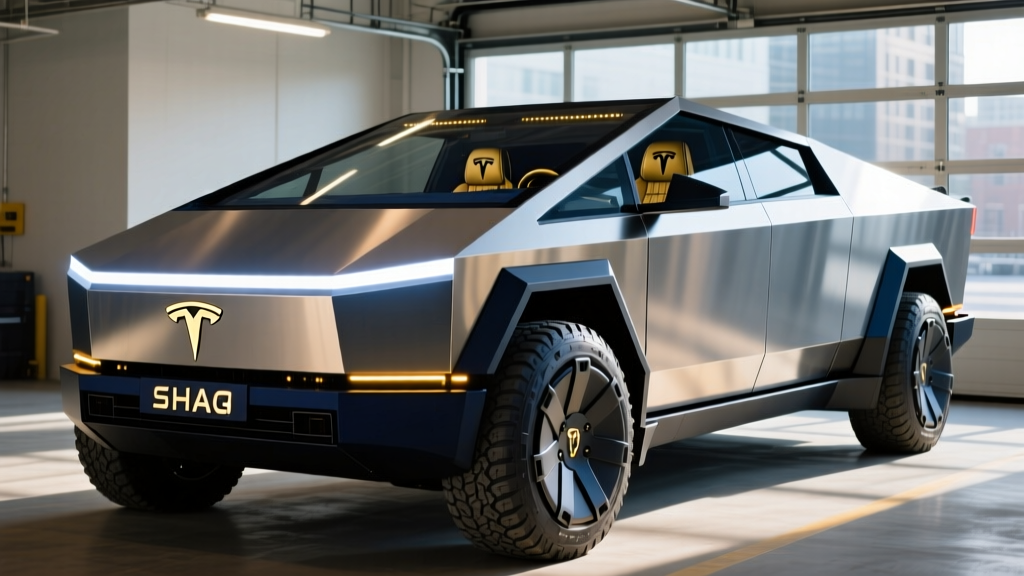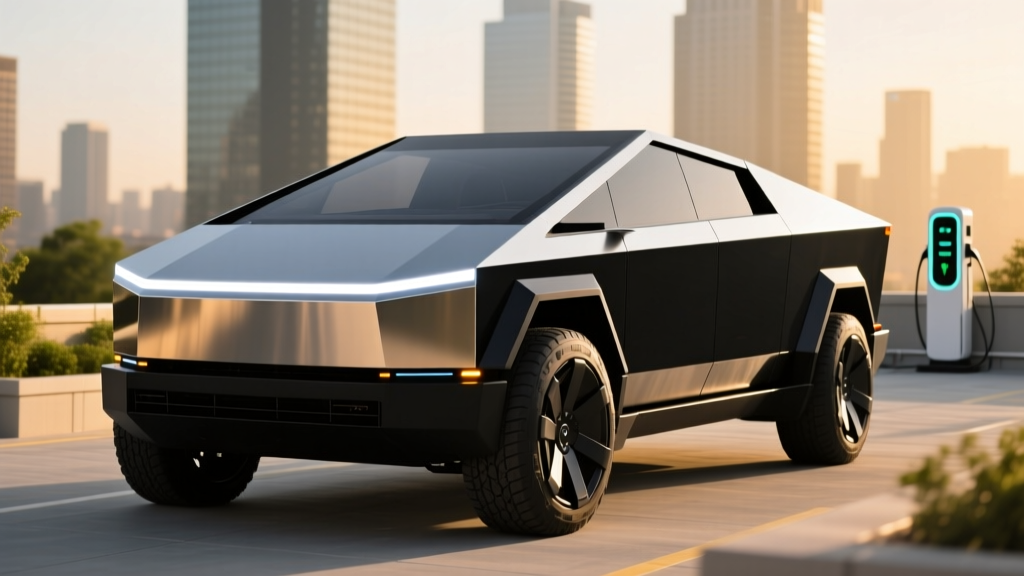
If you have been following Tesla's product cadence, the phrase "Cybertruck 2.0" has started appearing across forums, earnings-call transcripts, and speculative headlines. As of early 2026, Tesla sells the Cybertruck in three trims — the Rear-Wheel Drive, the All-Wheel Drive, and the Cyberbeast — but the company has not officially announced a next-generation or "2.0" variant. What follows is a data-grounded breakdown of what a Cybertruck 2.0 refresh could realistically bring, based on Tesla's current platform trajectory, supply-chain signals, and the competitive landscape of full-size electric pickups.
This article separates confirmed current specs from reasonable projections, so buyers can decide whether to purchase today or wait. We also run the numbers on real-world range, charging curves, and federal tax credit eligibility under current IRS §30D rules.
Current Cybertruck Lineup: The 2026 Baseline
Before projecting a 2.0 refresh, here is exactly what Tesla delivers today. These figures anchor any credible discussion of future upgrades.
| Spec | RWD | AWD | Cyberbeast |
|---|---|---|---|
| Base MSRP | $60,990 | $79,990 | $99,990 |
| EPA Range | ~250 mi (est.) | 340 mi | 320 mi |
| Battery (usable, est.) | ~100 kWh | ~123 kWh | ~123 kWh |
| Chemistry | NMC (expected) | NMC | NMC |
| Drivetrain | Single-motor RWD | Dual-motor AWD | Tri-motor AWD |
| Horsepower | ~315 hp | 600 hp | 845 hp |
| 0-60 mph | ~6.5 s | 4.1 s | 2.6 s |
| Max DC Fast Charge | ~250 kW | ~250 kW | ~250 kW |
| 10-80% DCFC Time | ~30 min | ~28 min | ~28 min |
| Level 2 Home Charging | 11.5 kW (~37 mi/hr) | 11.5 kW (~37 mi/hr) | 11.5 kW (~37 mi/hr) |
| Towing Capacity | 7,500 lb | 11,000 lb | 11,000 lb |
| Payload | 2,500 lb | 2,500 lb | 2,500 lb |
| Battery Warranty | 8 yr / 120,000 mi | 8 yr / 120,000 mi | 8 yr / 120,000 mi |
Sources: Tesla Cybertruck specs page, EPA fueleconomy.gov.
What "Cybertruck 2.0" Could Actually Mean
Tesla does not use traditional model-year designations the way legacy automakers do. Instead, the company implements running changes — hardware and software updates that roll into production mid-cycle. When enthusiasts and analysts say "Cybertruck 2.0," they generally refer to one of three scenarios:
- A significant battery/powertrain refresh — potentially adopting Tesla's next-generation 4680 cells with higher energy density, dry-electrode manufacturing, or a structural pack revision.
- An 800V architecture migration — moving from the current ~400V-500V system to 800V, which would unlock DC fast-charge rates above 350 kW, similar to what the Hyundai Ioniq 5 and Porsche Macan EV already offer.
- A lower-cost RWD variant with LFP chemistry — Tesla has signaled interest in using lithium iron phosphate (LFP) cells for more affordable models. An LFP Cybertruck RWD could undercut $55,000 but would sacrifice some range and energy density.
None of these have been officially confirmed by Tesla as of this writing. Treat all projected figures below as informed estimates based on Tesla's published roadmap, patent filings, and supply-chain reporting.
Projected Range and Battery Upgrades
The single biggest question from prospective buyers: will a Cybertruck 2.0 push past the 340-mile EPA ceiling of the current AWD model?
EPA Sticker: 340 miles
Real-World Highway (70 mph, 75°F): ~270-290 miles
Real-World Cold Weather (30°F, mixed driving): ~230-260 miles
With Range Extender (bed-mounted battery pack): ~440+ miles (Tesla's claim; independent verification pending)
The Cybertruck's stainless-steel exoskeleton and boxy profile create a high drag coefficient (~0.38-0.40 Cd estimated). Highway efficiency suffers more than sleeker EVs like the Lucid Air or Tesla Model S.
If Tesla migrates to higher-density 4680 cells with a dry-cathode process — something the company has been scaling at Giga Texas — a 10-15% energy density improvement is plausible. That could push the AWD variant to approximately 370-390 miles EPA, assuming the pack capacity grows to ~135-140 kWh usable without a significant weight penalty.
| Attribute | NMC (Current AWD/Beast) | LFP (Potential RWD Refresh) |
|---|---|---|
| Energy Density | ~250 Wh/kg (cell-level) | ~170-190 Wh/kg |
| Cycle Life | ~1,000-1,500 cycles | ~3,000-5,000 cycles |
| Cold-Weather Performance | Better low-temp discharge | ~10-15% more range loss in cold |
| Charging to 100% Regularly | Not recommended (80% daily) | Can charge to 100% daily safely |
| Cost per kWh | Higher (~$120-140/kWh) | Lower (~$80-100/kWh) |
| Cobalt/Nickel Content | Yes (supply-chain risk) | None (more ethical sourcing) |
Charging Speed: The 800V Question
Current Cybertrucks peak at roughly 250 kW on V3 Superchargers, which is respectable but increasingly outpaced. The Rivian R1T (with its Max Pack) sustains strong charge rates, and GM's Silverado EV on the Ultium platform targets 350+ kW capability on 800V infrastructure.
| Scenario | Current Cybertruck AWD | Cybertruck 2.0 (Projected, 800V) |
|---|---|---|
| Max DC Fast Charge Rate | ~250 kW (peak) | ~350 kW (peak, est.) |
| Sustained Rate (10-50%) | ~170-200 kW avg | ~280-310 kW avg (est.) |
| 10-80% Time | ~28 minutes | ~18-20 minutes (est.) |
| Miles Added in 15 min | ~128 miles | ~180-200 miles (est.) |
| Level 2 Home (11.5 kW) | ~37 mi/hr | ~37 mi/hr (no change expected) |
| Level 2 Home (potential 19.2 kW upgrade) | N/A | ~55-60 mi/hr (if offered) |
A critical nuance most spec sheets omit: peak kW is not sustained kW. The current Cybertruck hits ~250 kW only briefly in the 10-20% state-of-charge window, then tapers. By 50% SoC, it drops to roughly 150-170 kW, and above 80% it slows dramatically to protect the cells. An 800V architecture would flatten that charge curve, holding higher rates longer — which matters far more than the headline peak number.
For home charging, the current 11.5 kW onboard charger adds about 37 miles of range per hour. Overnight charging from 20-80% takes roughly 7-8 hours, which works fine for daily use. A Cybertruck 2.0 might offer an optional 19.2 kW onboard charger (requiring a 100-amp dedicated circuit), cutting that time nearly in half — but this requires a significant electrical panel upgrade for most homes.
Performance and Drivetrain: What Changes?
The Cyberbeast's 2.6-second 0-60 mph time already makes it one of the quickest production trucks ever built. A 2.0 refresh is unlikely to chase faster acceleration — instead, the focus would likely shift to efficiency and towing range.
When towing at or near the 11,000-lb max capacity, expect the Cybertruck AWD's range to drop to approximately 100-130 miles depending on trailer aerodynamics, terrain, and speed. This is a fundamental physics constraint — no electric pickup currently delivers acceptable highway-towing range without a massive battery. Ford's F-150 Lightning Extended Range faces the same limitation (~100 miles at max tow). If range while towing is your top priority, a diesel truck remains the pragmatic choice in 2026.
Where a 2.0 refresh could help: improved thermal management for sustained high-load towing, better heat-pump integration for cold-climate efficiency, and software-optimized tow modes that pre-condition the battery before reaching a Supercharger with a trailer attached.
Pricing, Trims, and Federal Tax Credit Eligibility
Tesla's pricing has been volatile since Cybertruck's launch. Here is where the lineup stands in early 2026, alongside the federal tax credit landscape.
| Trim | Base MSRP | §30D Credit Eligible? | Effective Price (with credit) |
|---|---|---|---|
| RWD (est. delivery late 2026) | $60,990 | Likely yes (under $80K truck cap) | ~$53,490 |
| AWD | $79,990 | Borderline — at $80K truck MSRP cap | ~$72,490 (if eligible) |
| Cyberbeast | $99,990 | No — exceeds $80,000 truck MSRP cap | $99,990 (no credit) |
Critical IRS §30D caveats (per irs.gov):
- MSRP Cap: Trucks, SUVs, and vans must have an MSRP at or below $80,000 to qualify. The Cyberbeast is excluded. The AWD at $79,990 is borderline — any dealer-installed options or destination charges that push the total above $80K could disqualify it.
- Income Cap: Adjusted gross income must not exceed $150,000 (single), $225,000 (head of household), or $300,000 (joint filing).
- Battery Sourcing: Critical minerals and battery components must meet phased-in domestic/free-trade sourcing requirements that tighten annually. Tesla's reliance on certain supply chains may affect eligibility in specific model years.
- Point-of-Sale Transfer: As of 2024+, buyers can transfer the credit to the dealer at purchase, reducing the out-of-pocket price immediately rather than waiting for a tax refund.
Always verify current eligibility on fueleconomy.gov and consult a tax professional before relying on credit projections. Rules change, and Tesla's specific battery sourcing compliance can shift between production batches.
Interior, Cargo, and Technology
The Cybertruck's cabin is polarizing — minimalist to the extreme, with a single 18.5-inch front touchscreen and a 9.4-inch rear display. Here are the hard numbers on space:
- Front Legroom: ~41.5 inches
- Rear Legroom: ~38.2 inches (tight for a full-size truck)
- Bed Length: 6 feet (72 inches)
- Bed Width (between wheel wells): ~49 inches (will not fit standard 4×8 sheets of plywood flat)
- Cargo Volume (bed, with tonneau closed): ~67 cu ft
- Front Trunk (Frunk): ~7.1 cu ft
- Rear Under-Bed Storage: Additional sealed compartment
Standout tech: Steer-by-wire steering (no mechanical linkage between wheel and rack), 48-volt electrical architecture (a first for a production vehicle), armored glass (improved from the infamous 2019 demo), stainless-steel exoskeleton panels, and a HEPA air filtration system. The truck also features Tesla's Full Self-Driving (Supervised) capability, which remains an SAE Level 2 system — meaning the driver must remain attentive and keep hands available at all times.
Tesla Autopilot and FSD (Supervised) are Level 2 driver-assistance systems. They can handle steering, acceleration, and braking on highways and some city streets, but the driver is legally and practically responsible for the vehicle at all times. This is fundamentally different from Level 4 robotaxi services like Waymo, which operate without a human driver in geofenced areas. Never treat FSD as "self-driving."
Cybertruck 2.0 vs. the Competition
If Tesla delivers a meaningful refresh, here is how it would stack up against the key players in the electric pickup segment as of 2026:
| Spec | Cybertruck AWD | Rivian R1T (Dual-Motor Max) | Ford F-150 Lightning (Ext. Range) | Chevy Silverado EV (4WT) |
|---|---|---|---|---|
| EPA Range | 340 mi | ~410 mi | ~320 mi | ~400 mi |
| Starting MSRP | $79,990 | ~$89,000 | ~$69,995 | ~$74,800 |
| Max Tow | 11,000 lb | 11,000 lb | 10,000 lb | 10,000 lb |
| Max DCFC | ~250 kW | ~220 kW | ~150 kW | ~200 kW |
| Bed Length | 6 ft | 4.5 ft (+ pass-through) | 5.5 ft | 5 ft 11 in |
| §30D Eligible | Borderline | Yes (under cap) | Yes (under cap) | Yes (under cap) |
The Rivian R1T offers more range and a clever gear-tunnel pass-through but costs more and charges slower. The F-150 Lightning is the value leader with a conventional truck form factor and broad dealer support. The Silverado EV targets fleet buyers with its massive range and work-truck features. The Cybertruck's advantage remains its polarizing design, stainless-steel durability, and Tesla's Supercharger network — though with NACS adoption by Ford, GM, and Rivian, that exclusivity advantage has largely evaporated by 2026.
Who Should Buy the Cybertruck (Now vs. Waiting for 2.0)
Buy now if:
- You want a Cybertruck AWD and can confirm §30D eligibility before the MSRP cap or sourcing rules change
- You need a stainless-steel bed for rugged work use (no paint to scratch)
- You are a Tesla ecosystem loyalist who values Supercharger integration and FSD (Supervised) access
- You can accept 270-290 miles of real-world highway range
- You need 350+ real-world highway miles and are willing to wait 12-24 months for a possible refresh
- Fast DC charging (under 20 minutes, 10-80%) is a priority for your road-trip habits
- You want an LFP battery option for daily 100% charging without degradation concerns
- The RWD trim at ~$53,490 (after credit) meets your needs and you can wait for deliveries to scale
Pros and Cons
Pros
- Tri-motor Cyberbeast delivers supercar-level acceleration (2.6s 0-60)
- Stainless-steel exoskeleton is extremely durable and dent-resistant
- 11,000-lb towing capacity matches or beats gas half-ton trucks
- 48-volt architecture enables thinner wiring and more efficient accessories
- Steer-by-wire allows variable steering ratios (tight parking, stable highway)
- Tesla Supercharger network remains the most reliable DC fast-charging network in the US
- Over-the-air updates continuously add features
Cons
- 6-foot bed is shorter than competitors; 49-inch width between wells won't fit plywood flat
- Real-world highway range ~270-290 mi (AWD) — below EPA sticker due to high drag
- Cold-weather range loss is significant (~25-30%) due to stainless steel's thermal properties and large battery mass
- Cyberbeast ($99,990) does not qualify for the $7,500 federal tax credit
- Rear legroom is tight for a full-size truck (~38.2 inches)
- Steer-by-wire feels unusual and takes adaptation for traditional truck drivers
- Panel fitment and build-quality inconsistencies reported by early owners
- Towing range drops to ~100-130 miles at max load — same as all electric pickups
Frequently Asked Questions
Has Tesla officially announced a Cybertruck 2.0?
No. As of early 2026, Tesla has not announced a "Cybertruck 2.0" by name. The company implements running production changes rather than traditional model-year refreshes. Any projected specs in this article are estimates based on Tesla's technology roadmap and industry analysis, not confirmed specifications.
What is the real-world range of the current Cybertruck?
The AWD model carries a 340-mile EPA estimate. In real-world highway driving at 70 mph in moderate temperatures, expect approximately 270-290 miles. In cold weather (below freezing), range drops to roughly 230-260 miles. The Cyberbeast, with its higher-performance motors and slightly lower EPA rating of 320 miles, delivers approximately 250-270 miles on the highway.
How fast does the Cybertruck charge at home and on the road?
On a DC fast charger (V3 Supercharger), the current Cybertruck peaks at roughly 250 kW and charges from 10-80% in approximately 28 minutes. At home on a Level 2 charger (11.5 kW, 48-amp circuit), it adds about 37 miles of range per hour, meaning a full overnight session easily covers daily driving needs.
Does the Cybertruck qualify for the $7,500 federal EV tax credit?
It depends on the trim and your income. The RWD ($60,990) and AWD ($79,990) fall under the $80,000 MSRP cap for trucks and are likely eligible, assuming your AGI is within limits ($150K single / $300K joint) and the battery sourcing requirements are met. The Cyberbeast at $99,990 exceeds the cap and does not qualify. Always verify on fueleconomy.gov and consult a tax professional.
Is the Cybertruck worth buying over the Rivian R1T or F-150 Lightning?
The Cybertruck wins on acceleration, stainless-steel durability, and Tesla software integration. The Rivian R1T offers more range (~410 miles with Max Pack), a more practical bed with a gear tunnel, and a more conventional driving experience. The F-150 Lightning is the most affordable option with the widest dealer network and a familiar truck form factor. Your choice depends on whether you prioritize performance and design (Cybertruck), range and adventure features (R1T), or value and familiarity (Lightning).
What is the biggest risk of buying a Cybertruck now vs. waiting?
The primary risk is that a future refresh could bring 800V charging (cutting 10-80% times to under 20 minutes), higher energy density cells (pushing range past 370 miles EPA), and potentially an LFP option for the RWD trim at a lower price. However, Tesla's refresh timeline is unpredictable — the current platform could remain in production for years with only incremental changes. If current specs meet your needs and you can secure tax credit eligibility, buying now is a defensible choice.