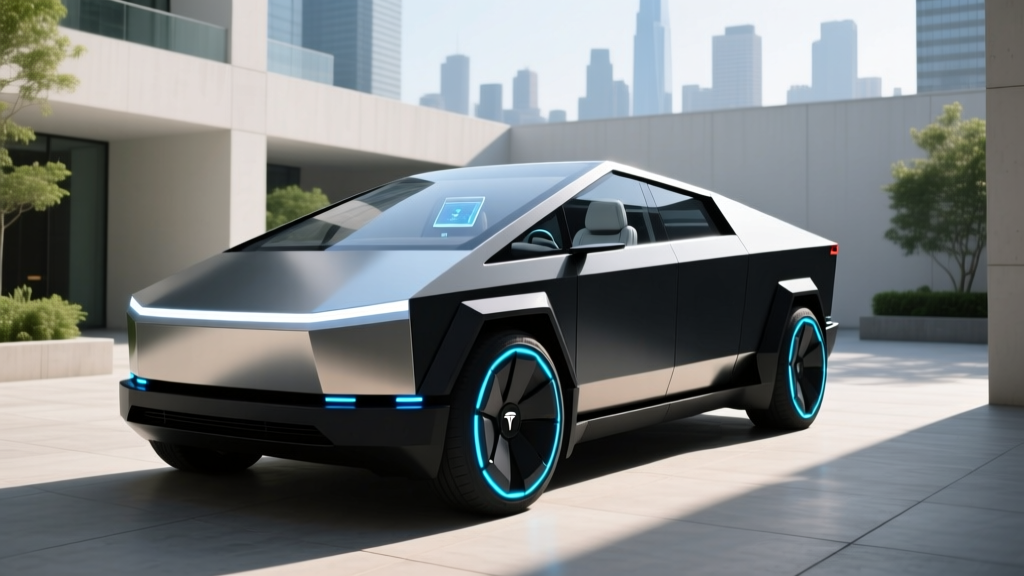
Tesla's recent trademark filings have stirred up serious speculation about a compact, affordable electric vehicle that could sit below the Model 3 in the lineup. The "Cybercar" name, appearing in multiple trademark applications, points toward a vehicle Tesla has teased for years: a sub-$30,000 EV designed to compete directly with mass-market offerings from Chevrolet, Hyundai, and Volkswagen. But trademark filings aren't a production confirmation — they're a signal of intent. Here's what we know, what's estimated, and what buyers should realistically expect if and when this vehicle reaches showrooms.
What the Tesla Cybercar Trademark Application Tells Us
Tesla filed trademark applications for "Cybercar" with the United States Patent and Trademark Office (USPTO) covering goods in Class 12 — motor vehicles and structural parts. This is the same classification used for the Cybertruck before its production. The naming convention — "Cyber" prefix — aligns with Tesla's branding strategy for next-generation vehicles, though it remains unclear whether the production model will carry this name or adopt something like "Model 2" or "Model Q."
What's notable is the timing. Tesla CEO Elon Musk has referenced a next-generation, lower-cost vehicle platform multiple times since 2023, and the company's investor presentations have outlined a manufacturing approach called the "unboxed" process designed to cut production costs by up to 50%. The trademark application suggests Tesla is moving from concept-stage to pre-production branding — a step that typically precedes a reveal by 12 to 18 months.
Estimated Range, Battery, and Efficiency
Based on Tesla's platform strategy and competitive positioning, the Cybercar is expected to target the compact EV segment with an EPA-estimated range between 250 and 300 miles. Tesla has historically optimized for range efficiency, and a smaller, lighter vehicle on a dedicated compact platform could achieve strong MPGe figures.
EPA Estimate (projected): 250–300 miles
Real-World Highway (70+ mph): Expect ~210–250 miles
Cold Weather (below 32°F): Expect ~180–220 miles (20–30% reduction typical for LFP chemistry)
Efficiency Target: ~120–130 MPGe combined / 25–28 kWh per 100 miles
Tesla is widely expected to use LFP (lithium iron phosphate) battery chemistry for the Cybercar, consistent with its approach in the standard-range Model 3. LFP cells are less expensive to produce, contain no cobalt or nickel (simplifying supply-chain sourcing), and offer longer cycle life. The trade-off is lower energy density — meaning a physically larger or heavier pack for the same kWh — and slightly worse cold-weather performance compared to NMC (nickel manganese cobalt) chemistry.
| Spec | Estimated Value |
|---|---|
| Battery Capacity (usable) | 50–60 kWh |
| Chemistry | LFP (Lithium Iron Phosphate) — likely |
| EPA Range (projected) | 250–300 miles |
| Efficiency | ~120–130 MPGe / 25–28 kWh/100mi |
| Drivetrain | RWD (base), possible AWD variant |
Charging Speed: DC Fast Charge and Home Level 2
Charging infrastructure is where affordable EVs live or die for apartment dwellers and road-trippers alike. Tesla's Supercharger network remains the gold standard for reliability, and the Cybercar will almost certainly be natively compatible with NACS (North American Charging Standard) connectors — Tesla's proprietary plug that has now been adopted industry-wide.
| Level | Power (kW) | Speed | Notes |
|---|---|---|---|
| Level 1 (120V household) | ~1.4 kW | ~4–5 mi/hr | Emergency/trickle only |
| Level 2 (240V home) | ~11.5 kW | ~35–40 mi/hr | Full charge in ~6–8 hours |
| DC Fast Charge (peak) | ~150–170 kW | 10–80% in ~25–30 min | LFP charges more linearly; less taper above 80% |
A critical nuance for LFP batteries: unlike NMC packs that dramatically taper charging speed above 80% State of Charge (SoC), LFP chemistry allows relatively sustained charge rates higher into the curve. Tesla also recommends periodic charging to 100% for LFP packs to maintain battery calibration — a meaningful ownership difference from NMC vehicles, where daily charging to 80% is preferred for longevity.
On the Supercharger network, expect the Cybercar to peak around 150–170 kW. This is lower than the Model 3 Long Range's ~250 kW peak, but with a smaller battery (50–60 kWh vs. ~75 kWh), the charge time remains competitive. A 10–80% session should take roughly 25 to 30 minutes at a V3 or V4 Supercharger stall.
Performance and Drivetrain
Tesla rarely sacrifices performance even in its most affordable vehicles. The base Model 3 RWD does 0–60 mph in 5.8 seconds — quicker than most compact gas sedans. The Cybercar, being lighter and more compact, should deliver similar or slightly better acceleration from a single rear motor.
| Metric | Estimated |
|---|---|
| 0–60 mph | ~5.5–6.5 seconds (RWD base) |
| Horsepower | ~250–280 hp (single motor) |
| Drivetrain | Rear-Wheel Drive (base); AWD possible |
| Top Speed | ~125–130 mph (electronically limited) |
An AWD dual-motor variant is plausible but would likely push pricing above the $30,000 target and potentially disqualify the vehicle from the federal tax credit's MSRP cap (see below). Tesla may reserve this for a later "Performance" or "Long Range" trim.
Pricing, Trims, and Federal Tax Credit Eligibility
The Cybercar's entire strategic purpose is affordability. Tesla has targeted a starting MSRP around $25,000–$30,000 — a price point that would make it one of the least expensive new EVs on the U.S. market, undercutting the Chevrolet Equinox EV and rivaling the base Hyundai Kona Electric.
| Trim (Estimated) | MSRP | After §30D Credit* |
|---|---|---|
| Base RWD | ~$25,000–$28,000 | ~$17,500–$20,500 |
| Mid (est. Long Range) | ~$30,000–$33,000 | ~$22,500–$25,500 |
*Federal tax credit estimates assume full $7,500 eligibility under IRS §30D rules. Actual credit depends on buyer income, battery sourcing, and MSRP caps. See IRS clean vehicle credit guidelines for current-year requirements.
- MSRP Cap: Sedans/hatchbacks must be ≤$55,000 — Cybercar easily qualifies
- Buyer Income Cap: AGI ≤$150,000 (single) / ≤$300,000 (joint) / ≤$225,000 (head of household)
- Battery Sourcing: Critical minerals and battery components must meet phased-in domestic/free-trade requirements — this is the key variable for Tesla
- Point-of-Sale Transfer: Eligible buyers can apply the credit at purchase, reducing out-of-pocket cost immediately
- Final Assembly: Must be in North America — Tesla's Texas Gigafactory qualifies
Consult a tax professional for personal eligibility. Rules are subject to legislative changes.
Interior, Cargo, and Technology
The Cybercar will be compact — think hatchback or small crossover proportions. Expect a footprint similar to the Chevrolet Bolt EV or Hyundai Kona Electric, with seating for five (tight in the rear) and cargo space in the 20–25 cubic foot range behind the second row.
Technology will likely follow Tesla's minimalist interior philosophy: a single central touchscreen (probably 12–15 inches), no traditional instrument cluster, and Tesla's latest infotainment software. Autopilot — Tesla's SAE Level 2 driver-assistance system — should be standard, with Full Self-Driving (Supervised) available as a paid add-on.
Warranty and Ownership Costs
Tesla's current battery and drive-unit warranty covers 8 years or 100,000 miles (whichever comes first) for standard-range vehicles, with a capacity retention threshold of 70%. The Cybercar should follow this structure. LFP chemistry typically shows slower degradation than NMC — many LFP packs retain 90%+ capacity after 200,000 miles in real-world fleet data.
| Coverage | Estimated Terms |
|---|---|
| Basic Vehicle | 4 years / 50,000 miles |
| Battery & Drive Unit | 8 years / 100,000 miles (≥70% retention) |
Insurance premiums for Teslas tend to run higher than segment averages due to repair costs and parts pricing. Budget $150–$250/month depending on your state, age, and driving record. On the savings side, charging at home on a Level 2 setup at average U.S. electricity rates (~$0.16/kWh) works out to roughly $0.04–$0.05 per mile — about one-third the fuel cost of a 30 MPG gas car at $3.50/gallon.
Cybercar vs. the Competition
If Tesla prices the Cybercar at $25,000–$30,000, it enters a rapidly growing segment. Here's how it stacks up against announced or current rivals:
| Vehicle | Est. Range (EPA) | Base MSRP | DC Fast Charge |
|---|---|---|---|
| Tesla Cybercar (est.) | 250–300 mi | ~$25,000–$28,000 | ~150–170 kW |
| Chevrolet Equinox EV | 319 mi | ~$33,000 | ~150 kW |
| Hyundai Kona Electric | 261 mi | ~$32,975 | ~100 kW |
| Nissan Leaf (final gen) | 212 mi | ~$28,140 | ~100 kW (CHAdeMO) |
The Cybercar's key advantages, if Tesla delivers on pricing, would be Supercharger network access (still the most reliable DC fast-charging network in the U.S.), over-the-air software updates, and Tesla's software ecosystem. Its main risk is build quality consistency — an area where Tesla has improved but still trails legacy automakers in panel-gap and interior-finish ratings from IIHS and consumer surveys.
Who Should Wait for the Cybercar?
- Sub-$30K price point (before credits)
- Native Supercharger / NACS access
- Strong efficiency and range for the price
- LFP battery longevity
- Tesla software and OTA updates
- Not yet available — timeline uncertain
- Compact rear seating and cargo
- Minimalist interior won't suit all buyers
- Tesla service-center wait times in some markets
- Insurance costs may exceed segment average
Best for: Budget-conscious commuters, first-time EV buyers, apartment dwellers with workplace or public charging access, and Tesla ecosystem loyalists who want Supercharger convenience at a lower entry price.
Look elsewhere if: You need a family-sized vehicle with three rows, you prioritize traditional interior controls, or you need to buy immediately — the Chevrolet Equinox EV and Hyundai Kona Electric are available now with confirmed specs.
Frequently Asked Questions
What is the real-world range of the Tesla Cybercar?
Projected EPA range is 250–300 miles, but expect 210–250 miles in real-world highway driving and 180–220 miles in cold weather (below 32°F). LFP chemistry loses more range in cold conditions than NMC, so preconditioning the battery before driving is essential for winter efficiency.
How fast does the Cybercar charge?
Estimated DC fast-charging peaks at 150–170 kW, delivering a 10–80% charge in roughly 25–30 minutes at a Tesla Supercharger. Home Level 2 charging at 11.5 kW adds approximately 35–40 miles of range per hour, fully replenishing the battery in 6–8 hours overnight.
How much does the Cybercar cost after tax credits?
If the base MSRP lands around $25,000–$28,000 and the buyer qualifies for the full $7,500 federal §30D credit (applied at point of sale), the effective cost could be as low as $17,500–$20,500. Eligibility requires meeting income caps ($150K single / $300K joint), battery-sourcing requirements, and North American final assembly.
Does the Tesla Cybercar qualify for the federal EV tax credit?
It should, assuming Tesla's battery supply chain meets the critical-mineral and component-sourcing thresholds set by the IRS under §30D. The MSRP is well under the $55,000 sedan cap, and final assembly at Giga Texas satisfies the domestic-production requirement. The buyer's adjusted gross income must also fall within limits. Check current rules at irs.gov before purchasing.
Is the Cybercar worth waiting for vs. buying now?
If you can wait 12–18+ months and want the lowest possible price with Supercharger access, yes. If you need an EV now, the Chevrolet Equinox EV (319 mi EPA range, ~$33K) and Hyundai Kona Electric (261 mi, ~$33K) are strong alternatives available today with confirmed tax-credit eligibility.
When will the Tesla Cybercar be available?
Tesla has not confirmed a production or delivery date. Based on the trademark filing timeline and Tesla's typical 12–18 month gap between branding moves and first deliveries, a late 2026 or 2027 launch is plausible but not guaranteed. Tesla's production timelines have historically slipped — treat any date as preliminary.