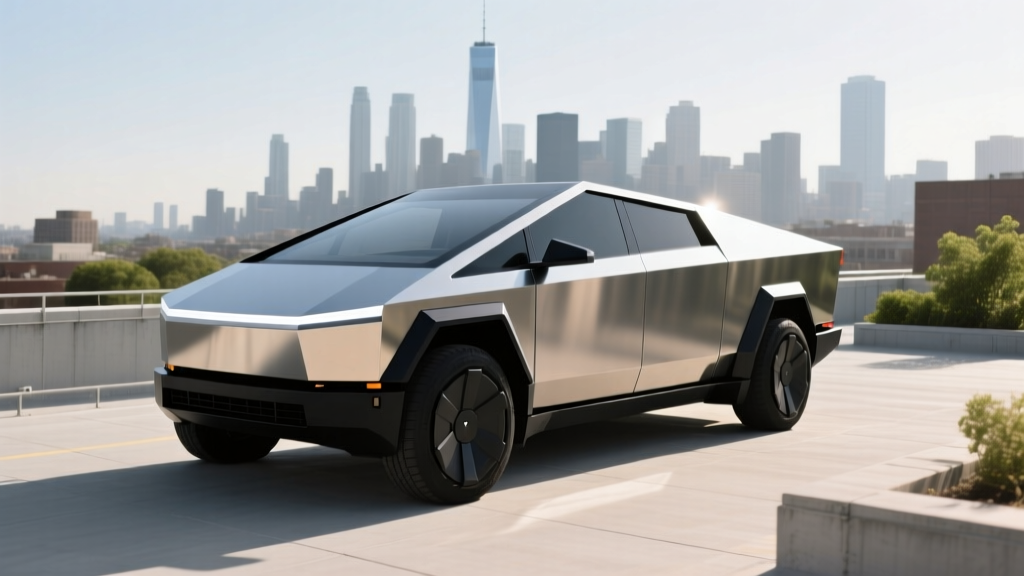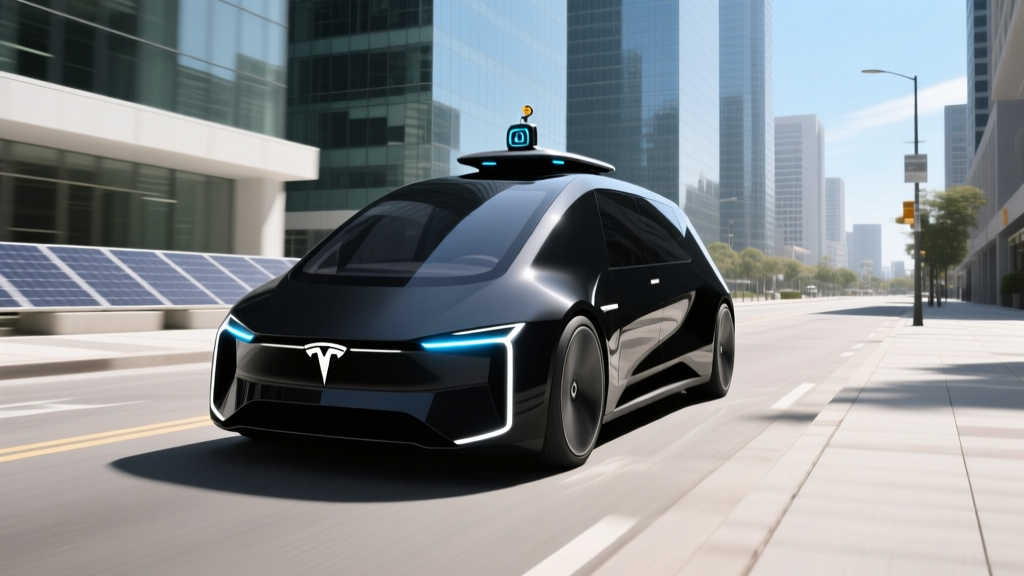
The Tesla Cybercab — the two-seat, steering-wheel-free robotaxi unveiled in late 2024 — remains one of the most polarizing vehicles in the electric-vehicle industry. With no driver controls, no steering wheel, and no pedals, the Cybercab is designed exclusively for Tesla's planned autonomous ride-hailing network. But as Tesla pushes toward limited production in 2026, the Cybercab vehicle safety issues surrounding Level 4 autonomy, sensor redundancy, and regulatory approval have become the defining questions for prospective riders, investors, and policymakers alike.
This profile breaks down everything confirmed and projected about the Cybercab's specifications, safety architecture, and operational readiness — separating Tesla's marketing claims from verified engineering and regulatory realities.
What the Tesla Cybercab Actually Is
The Cybercab is not a consumer vehicle. It is a purpose-built, two-passenger autonomous electric pod designed for Tesla's planned ride-hailing network. Tesla has stated it will not offer the Cybercab for individual purchase in the traditional sense; instead, the company envisions a fleet model where owners can add their Cybercabs to Tesla's network for shared revenue, or Tesla operates its own fleet directly.
Unlike the Tesla Model Y or Model 3 equipped with FSD (Supervised) — which is SAE Level 2 driver-assistance requiring full driver attention — the Cybercab is designed to operate at SAE Level 4: fully autonomous within a defined operational design domain (ODD), with no human intervention expected or possible.
The Tesla Cybercab is designed for SAE Level 4 autonomy — meaning it operates without human intervention within specific geographic and environmental boundaries. This is fundamentally different from Tesla's FSD (Supervised), which is SAE Level 2 and requires the driver to remain fully engaged at all times. Level 4 vehicles like Waymo's 6th-generation driver handle all driving tasks within their approved zones and can safely pull over if conditions exceed their capabilities.
Cybercab Vehicle Safety Issues: Core Concerns Explained
The absence of manual controls is the most visible safety question, but the deeper concerns revolve around sensor architecture, edge-case handling, and the regulatory pathway Tesla is pursuing.
Vision-Only Autonomy vs. Multi-Sensor Redundancy
Tesla's entire autonomous driving strategy relies on a vision-only approach — cameras and neural networks without LiDAR or radar. This stands in stark contrast to Waymo, Cruise (now defunct as of 2024), and Zoox, all of which use LiDAR, radar, and cameras in a redundant sensor suite.
The safety implications are significant:
- Low-visibility conditions: Heavy rain, fog, snow, and direct sun glare can degrade camera performance. LiDAR provides independent depth perception regardless of lighting.
- Sensor redundancy: If a camera fails or is obstructed, a vision-only system has limited fallback. Multi-sensor stacks can cross-validate detections.
- Edge cases: Construction zones, unusual road configurations, and erratic human behavior remain challenging for vision-only systems, as evidenced by NHTSA investigations into Tesla's FSD performance.
Tesla has argued that its neural-network approach, trained on billions of miles of real-world driving data from its existing fleet, compensates for the lack of LiDAR. However, as of early 2026, Tesla has not published independent third-party validation of its Level 4 readiness specific to the Cybercab platform.
NHTSA Scrutiny and Regulatory Pathway
The National Highway Traffic Safety Administration (NHTSA) has maintained active oversight of Tesla's autonomous claims. Previous investigations into Tesla's Autopilot and FSD systems have examined crash patterns involving stationary emergency vehicles, sudden steering maneuvers, and driver-monitoring adequacy.
For the Cybercab to operate legally as a Level 4 vehicle on public roads, Tesla must navigate:
- Federal Motor Vehicle Safety Standards (FMVSS): The Cybercab lacks a steering wheel, mirrors, and pedals — all currently required under FMVSS. Tesla must obtain exemptions or wait for updated regulations.
- State-level approval: States like California, Arizona, and Texas have frameworks for autonomous vehicle testing and deployment, but each requires separate permitting, safety reporting, and operational restrictions.
- Crash reporting: Under NHTSA's Standing General Order, Tesla must report all crashes involving Level 2+ and higher automation systems.
As of 2026, the Tesla Cybercab has not received full regulatory approval for driverless commercial operation on public roads. Tesla has conducted limited testing, but the vehicle is not available for public ride-hailing. Any claims about current Cybercab availability or safety certification should be treated as preliminary until confirmed by NHTSA and relevant state authorities.
Projected Specifications: Range, Battery, and Charging
Because the Cybercab is not yet in production, the following specifications are based on Tesla's announcements and industry analysis. All figures should be treated as preliminary estimates subject to change.
| Attribute | Projected Value |
|---|---|
| EPA Estimated Range | ~200–250 miles (projected) |
| Battery Capacity | ~50–60 kWh (estimated), LFP chemistry likely |
| Drivetrain | Single-motor RWD (projected) |
| Horsepower | ~200–250 hp (estimated) |
| 0–60 mph | ~6.0–7.0 seconds (estimated) |
| Max DC Fast Charge | ~150–170 kW (projected peak) |
| 10–80% DC Charge Time | ~25–30 minutes (estimated) |
| Level 2 Home/Fleet Charging | ~11.5 kW / ~35–40 miles per hour |
| Efficiency | ~120–135 MPGe (projected); ~25–28 kWh/100 mi |
| Passenger Capacity | 2 passengers |
| Cargo Space | Minimal — under-seat storage, no traditional trunk |
| Connector | NACS (Tesla native) |
| Projected Base MSRP | ~$25,000–$30,000 (Tesla claim, unverified) |
| Federal Tax Credit (§30D) | Likely ineligible — not a consumer-purchase vehicle |
| Battery/Powertrain Warranty | TBD — fleet-operated, Tesla-maintained |
Tesla has projected roughly 200–250 miles of EPA range for the Cybercab. In real-world operation, expect:
- City driving (ride-hailing cycles): ~190–230 miles — regenerative braking in stop-and-go traffic helps recover energy.
- Highway operation: ~160–190 miles — sustained 65–75 mph speeds reduce efficiency significantly.
- Cold weather (below 32°F): ~140–170 miles — battery chemistry and cabin heating draw reduce usable range by 25–35%.
Charging Speed and Fleet Operations
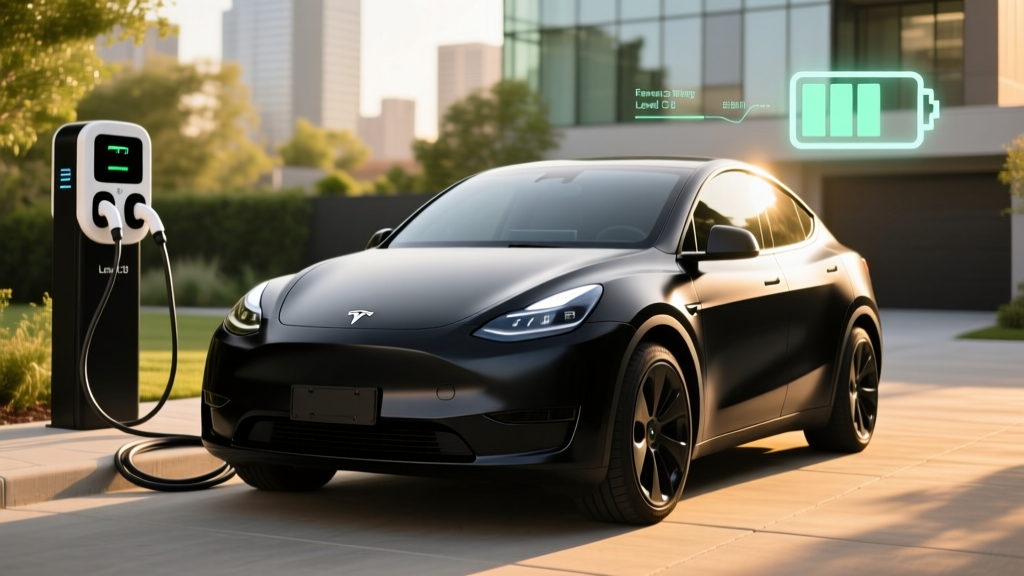
The Cybercab is designed for fleet operation, meaning it will charge at Tesla's own depots or Supercharger stations between ride cycles. Tesla has indicated the Cybercab will support wireless inductive charging for automated depot operations, though this has not been independently verified.
| Charging Level | Power (kW) | Miles Added Per Hour | Notes |
|---|---|---|---|
| Level 1 (120V) | ~1.4 kW | ~4–5 mi/hr | Not relevant for fleet ops |
| Level 2 (240V) | ~11.5 kW | ~35–40 mi/hr | Overnight depot charging |
| DC Fast Charge | ~150–170 kW peak | ~500+ mi/hr (peak) | 10–80% in ~25–30 min; tapers above 80% |
A critical note for fleet economics: the Cybercab's smaller battery (~50–60 kWh) means faster absolute charge times, but the charge curve will taper significantly above 80% State of Charge. Tesla's fleet management software will likely optimize charging to 80% for turnaround speed, reserving 100% charges for overnight balancing.
Safety Architecture: What Tesla Has Confirmed
Tesla has provided limited details about the Cybercab's specific safety redundancy systems. Based on Tesla's existing FSD hardware (HW4/AI5) and public statements, the following are expected:
- Camera array: 8+ cameras providing 360° coverage, using Tesla's latest sensor hardware.
- Compute redundancy: Dual redundant AI inference computers — if one fails, the other can safely bring the vehicle to a stop.
- Braking redundancy: Independent brake actuators capable of stopping the vehicle if the primary system fails.
- Steering redundancy: Dual-motor steer-by-wire system with independent control paths.
- Remote assistance: Tesla has referenced a remote-operations center where human operators can assist the vehicle in complex scenarios (though not direct remote driving).
How This Compares to Waymo
Waymo's 6th-generation driver, currently operating commercially in Phoenix, San Francisco, Los Angeles, and Austin, uses a fundamentally different approach:
- Sensor suite: LiDAR (custom-built), radar, and cameras — providing independent depth sensing in all lighting conditions.
- Operational track record: Over 50 million fully driverless miles completed as of late 2025, with published safety data showing fewer injury-causing crashes than human benchmarks in their ODD.
- Regulatory approval: Waymo holds active commercial permits in multiple states with established safety reporting.
The Cybercab has not yet matched either the validated sensor redundancy or the operational track record of Waymo's platform.
Pricing, Access, and Tax Credit Reality
Tesla CEO Elon Musk has stated that a Cybercab ride could cost less than $1 per mile, and that the vehicle itself could be produced for under $30,000. However, several critical realities apply:
| Factor | Status |
|---|---|
| Projected MSRP (if sold) | $25,000–$30,000 (Tesla claim) |
| Consumer Purchase Available? | No — fleet/ride-hailing only (planned) |
| Federal §30D Tax Credit | Likely ineligible — credit requires personal use, new vehicle purchase, MSRP caps ($55K sedans), income limits, and battery-sourcing compliance. Fleet vehicles do not qualify under current IRS §30D rules. |
| Ride Cost (projected) | Tesla claims ~$0.20–$1.00/mile; independent verification pending |
The §30D federal tax credit is designed for individual consumers purchasing vehicles for personal use. Since the Cybercab is not intended for consumer purchase, the credit is functionally irrelevant to this vehicle. Anyone evaluating the Cybercab should not factor the $7,500 credit into any cost analysis.
Who the Cybercab Is Designed For
The Cybercab is not a vehicle you buy — it is a vehicle you ride in. Its target user profile is:
- Urban commuters in Tesla's approved operational zones who want low-cost point-to-point transport.
- Non-drivers — elderly, disabled, or unlicensed individuals who cannot operate a traditional vehicle.
- Airport and transit connectors — short, predictable routes ideal for Level 4 autonomy.
It is not designed for families (two-seat capacity), road trips (limited range and cargo), or rural areas (outside the geofenced ODD).
Biggest Pros and Cons
- Low projected per-ride cost vs. Uber/Lyft
- Zero tailpipe emissions in operation
- Accessibility for non-drivers
- Tesla's massive real-world data advantage
- Potential for rapid fleet scaling if approved
- Vision-only sensor stack lacks LiDAR redundancy
- No FMVSS compliance without exemptions
- No published Level 4 safety validation data
- Two-seat limit restricts use cases
- Regulatory approval timeline uncertain
- Not available for consumer purchase or §30D credit
Frequently Asked Questions
What is the real-world range of the Tesla Cybercab?
Tesla projects approximately 200–250 miles of EPA range. In real-world city ride-hailing, expect ~190–230 miles. Highway use drops to ~160–190 miles, and cold weather can reduce range to ~140–170 miles. These are estimates pending official EPA certification.
How fast does the Cybercab charge?
Projected DC fast charging peaks at ~150–170 kW, achieving a 10–80% charge in approximately 25–30 minutes. Level 2 fleet depot charging at 11.5 kW adds roughly 35–40 miles per hour. As with all EVs, charging slows significantly above 80% SoC to protect battery health.
How much does the Cybercab cost after tax credits?
The Cybercab is not available for consumer purchase, so the federal §30D tax credit does not apply. Tesla plans to operate it as a ride-hailing service, with projected ride costs of $0.20–$1.00 per mile (unverified). The MSRP figures Tesla has cited ($25,000–$30,000) relate to fleet production cost, not consumer pricing.
Is the Cybercab worth waiting for vs. using Waymo?
Waymo is already operating commercially in multiple U.S. cities with a validated safety record and multi-sensor redundancy. The Cybercab has not yet received regulatory approval for driverless operation and relies on a vision-only system. If autonomous ride-hailing is available in your city today, Waymo is the proven option. The Cybercab remains speculative.
What are the biggest Cybercab vehicle safety issues?
The primary safety concerns are: (1) vision-only sensor architecture without LiDAR redundancy, (2) lack of FMVSS compliance requiring federal exemptions, (3) no published independent safety validation for Level 4 operation, and (4) uncertain regulatory timeline. Tesla's fleet data advantage is significant but does not substitute for certified safety testing of the Cybercab platform specifically.
Does the Cybercab qualify for the federal EV tax credit?
No. The IRS §30D credit requires the vehicle to be purchased new for personal use, with MSRP under $55,000 (sedans), buyer income below $150K single / $300K joint, and compliant battery sourcing. The Cybercab is a fleet-operated robotaxi not available for individual purchase, making it ineligible.
The Tesla Cybercab represents an ambitious vision for autonomous transportation, but as of 2026, it remains in pre-production with significant safety, regulatory, and technical hurdles unresolved. Readers should treat all specifications and timelines as preliminary until Tesla achieves formal regulatory approval and publishes independent safety validation. For current autonomous ride-hailing, Waymo remains the only commercially operating Level 4 service in the United States.