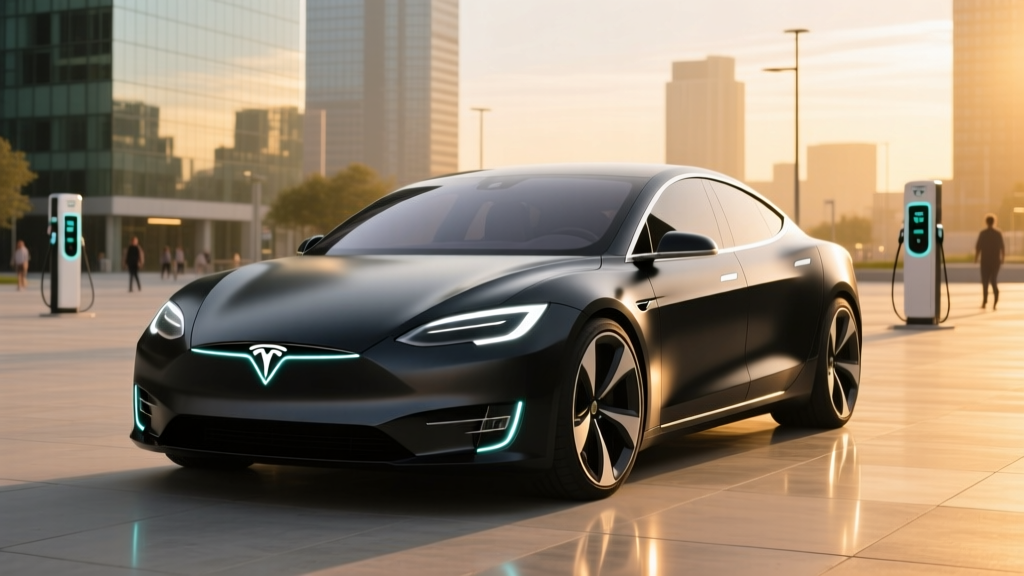
Tesla unveiled the Cybercab in October 2024 to enormous fanfare, promising a steering-wheel-free, pedal-free robotaxi that would fundamentally reshape urban transportation. But for anyone searching when is the Cybercab coming out, the honest answer requires separating Elon Musk's timeline optimism from production reality. As of early 2026, the Cybercab remains an announced, unreleased vehicle — not available for purchase, not in pilot service, and not yet in verified volume production. Here is everything confirmed, everything estimated, and the regulatory hurdles that matter most.
Current Status: Announced, Not Available
The Cybercab (sometimes referred to as the Tesla Robotaxi) was revealed at the "We, Robot" event on October 10, 2024, at Warner Bros. Studios. Tesla showed a prototype with no steering wheel, no pedals, butterfly-style doors, and a two-passenger cabin. Musk stated production would begin before 2027, with an aspirational target of 2026. However, Tesla has a well-documented history of timeline slippage — the Roadster 2.0, Semi, and original Cybertruck all arrived years later than initially promised.
As of this writing, no Cybercab has been spotted in unattended public road testing (unlike Waymo's Level 4 vehicles, which have logged millions of autonomous miles in Phoenix, San Francisco, and Los Angeles). Tesla's current Full Self-Driving (Supervised) software remains an SAE Level 2 driver-assist system requiring active driver engagement. The Cybercab is designed to be SAE Level 4 — no driver needed — but achieving that certification with no manual controls is a massive regulatory and technical leap.
Announced Specifications (Preliminary)
Because the Cybercab is unreleased, the following specs are based on Tesla's event claims, patent filings, and analyst estimates. All figures are preliminary and subject to change.
| Specification | Announced / Estimated |
|---|---|
| EPA Range (est.) | ~250 miles (unconfirmed by EPA) |
| Battery Capacity | ~50 kWh usable (estimated, LFP chemistry likely) |
| Drivetrain | Rear-wheel drive (single motor) |
| Horsepower | ~200 hp (estimated) |
| 0-60 mph | Not disclosed (est. 6.5–7.5 sec) |
| DC Fast Charge (peak) | ~150 kW (estimated) |
| 10-80% Charge Time | ~25–30 minutes (estimated) |
| Seating | 2 passengers |
| Steering Wheel / Pedals | None (Level 4 design) |
| Base Price (claimed) | Under $30,000 (if sold to consumers) |
| Production Start | Before 2027 (Musk claim); 2026 aspirational |
Range, Battery & Real-World Expectations
Tesla has not submitted the Cybercab to the EPA for official range testing, so no EPA sticker figure exists. Based on the vehicle's compact dimensions, estimated ~50 kWh battery, and efficiency targets, analysts project roughly 250 miles of range under ideal conditions.
Tesla is expected to use LFP (lithium iron phosphate) battery chemistry in the Cybercab. LFP cells are cheaper to produce, have longer cycle life (often 3,000+ cycles before significant degradation), and tolerate daily 100% charging better than NMC chemistries. The trade-off is lower energy density and reduced cold-weather performance — an acceptable compromise for a fleet vehicle operating primarily in warm-climate cities.
Charging Speed & Infrastructure
The Cybercab is designed to charge exclusively via Tesla's Supercharger network (NACS connector). Tesla has not published an official peak DC fast-charge rate, but given the ~50 kWh battery and LFP chemistry, a peak of roughly 150 kW is a reasonable estimate. At that rate, a 10-80% session would take approximately 25–30 minutes.
| Charge Level | Power (kW) | Speed / Time |
|---|---|---|
| Level 1 (120V) | ~1.4 kW | ~4–5 mi/hr (not practical for fleet use) |
| Level 2 (240V) | ~11.5 kW (est.) | ~35–40 mi/hr |
| DC Fast Charge (NACS) | ~150 kW peak (est.) | 10-80% in ~25–30 min |
For a fleet robotaxi, the more relevant metric is turnaround time at a depot charger. If Tesla deploys dedicated fleet charging hubs with V4 Supercharger stalls (up to 350 kW capable, though the Cybercab likely won't accept that full rate), vehicles could replenish enough range for another urban shift in under 20 minutes.
The Regulatory Mountain: Why It's Not Here Yet
The single biggest factor determining when the Cybercab actually comes out isn't battery production or software readiness — it's regulatory approval. A vehicle with no steering wheel and no pedals cannot legally be sold or operated on public roads in most U.S. states without specific exemptions.
At the federal level, the National Highway Traffic Safety Administration (NHTSA) sets Federal Motor Vehicle Safety Standards (FMVSS) that assume a human driver — requirements for mirrors, steering controls, brake pedals, and crash-test configurations with a driver in the seat. Tesla would need to petition for exemptions or wait for updated standards that accommodate driverless vehicle designs. General Motors' Cruise Origin faced exactly this problem and was ultimately shelved partly due to regulatory delays.
At the state level, robotaxi operations require permits from agencies like the California Public Utilities Commission (CPUC) and state DMVs. Waymo spent years building a safety case before receiving its driverless deployment permits. Tesla would need to demonstrate millions of miles of supervised FSD data, prove the system can handle edge cases without human intervention, and establish incident-response protocols — all before carrying a single paying passenger without a safety driver.
Pricing, Purchase Model & Tax Credit Eligibility
Elon Musk has claimed the Cybercab will cost under $30,000 to produce, with an operating cost of roughly $0.20 per mile when deployed as a fleet vehicle. However, Tesla has not confirmed whether consumers will be able to purchase a Cybercab at all, or whether it will be exclusively a Tesla-owned fleet (similar to Waymo's model, where vehicles are owned and operated by the company, not sold to individuals).
| Scenario | Estimated Cost |
|---|---|
| Claimed Base Price (if sold) | Under $30,000 (unconfirmed) |
| §30D Federal Tax Credit | Up to $7,500 — but requires MSRP ≤ $55,000 (sedan cap), buyer income ≤ $150K single / $300K joint, and battery critical-mineral/sourcing compliance per IRS rules |
| Fleet Operator (not consumer) | §45W commercial credit may apply instead of §30D |
| Estimated Ride Cost (per mile) | $0.20–$0.40 (Musk claim; unverified) |
Does it qualify for the federal EV tax credit? If the Cybercab is ever sold to individual consumers at an MSRP under $55,000 and meets 2026 IRS §30D battery-sourcing and critical-mineral requirements, it could qualify for up to $7,500 — subject to buyer income caps. However, if it is deployed exclusively as a Tesla-owned fleet, consumers would never purchase it, making the §30D credit irrelevant. Fleet operators would instead look to the §45W commercial clean vehicle credit. These rules evolve annually; always verify current-year eligibility with a tax professional.
Cybercab vs. Waymo: The Robotaxi Landscape
Understanding when the Cybercab is coming out requires context on the competition. Waymo (Alphabet) currently operates Level 4 robotaxis in Phoenix, San Francisco, and Los Angeles, completing over 150,000 paid rides per week as of late 2025. Waymo's 6th-generation vehicle is purpose-built, has no steering wheel, and operates under established regulatory permits. Cruise (GM) paused operations after a serious incident in late 2023 and has been slowly resuming with safety drivers. Zoox (Amazon) has a bidirectional, steering-wheel-free vehicle but remains in limited testing.
Tesla's claimed advantage is scale: leveraging its existing Supercharger network, vehicle manufacturing capacity, and billions of miles of FSD data. But data collected from Level 2 supervised driving is fundamentally different from the validation required for Level 4 unsupervised operation. Waymo uses HD mapping, LiDAR, radar, and cameras in a redundant sensor suite; Tesla relies exclusively on cameras (its "Tesla Vision" approach). Whether camera-only perception can achieve the reliability required for driverless operation in all weather and lighting conditions remains an open question that NHTSA will scrutinize closely.
Who This Vehicle Suits — And Who Should Look Elsewhere
The Cybercab is not designed for individual ownership in the traditional sense. Its two-seat layout, lack of cargo space beyond a small rear compartment, and absence of manual controls make it unsuitable as a personal vehicle. Its target user is the urban commuter who needs a short, point-to-point ride — the same demographic currently using Uber, Lyft, or Waymo in approved cities.
If you need a personal EV today, the Cybercab is irrelevant to your purchase decision. Consider the Tesla Model 3 (EPA 341–363 mi range, starting ~$38,990), Chevrolet Equinox EV (EPA 319 mi, starting ~$33,000), or Hyundai Ioniq 5 (EPA 303 mi, starting ~$42,600) — all available now, all eligible for at least partial §30D credits depending on trim and sourcing.
Potential Pros (If Delivered as Promised)
- Ultra-low operating cost per mile for urban rides
- No driver fatigue — fully autonomous Level 4 design
- LFP battery chemistry for long cycle life and daily 100% charging
- Access to Tesla Supercharger network for fleet charging
- Potential sub-$30K production cost enables affordable ride pricing
Confirmed Cons & Risks
- Not available — no production date confirmed, no EPA certification
- No steering wheel or pedals means massive regulatory hurdles
- Camera-only perception unproven for Level 4 in all conditions
- 2-passenger capacity limits practicality for families or groups
- Tesla's historical timeline slippage on major product launches
- Not a vehicle consumers can purchase for personal use
Frequently Asked Questions
When is the Cybercab coming out for public use?
Tesla has stated production will begin before 2027, with Musk targeting 2026. However, regulatory approval for a steering-wheel-free vehicle on public roads has not been obtained. Realistic public availability in limited geofenced areas is more likely in 2027–2028, assuming Tesla clears FMVSS exemptions and state-level permits.
Can I buy a Tesla Cybercab for personal use?
Tesla has not confirmed whether the Cybercab will be available for individual purchase. The most likely deployment model is a Tesla-owned fleet operating as a ride-hailing service, similar to Waymo. If sold to consumers, the lack of manual controls would make it unusable under current vehicle regulations in most states.
What is the real-world range of the Cybercab?
There is no EPA-certified range because the vehicle is unreleased. Based on estimated ~50 kWh LFP battery and compact dimensions, expect approximately 220–240 miles in mixed urban driving in temperate weather, dropping to 160–190 miles in cold-weather highway conditions. For a fleet vehicle returning to depot chargers, this is operationally viable.
How fast does the Cybercab charge?
Official charging specs have not been published. Estimated peak DC fast-charge rate is ~150 kW via NACS connector, with a 10-80% session taking roughly 25–30 minutes. Level 2 charging at 240V would add approximately 35–40 miles of range per hour.
Is the Cybercab self-driving?
The Cybercab is designed for SAE Level 4 autonomy — no driver required in approved operational areas. This is fundamentally different from Tesla's current FSD (Supervised), which is Level 2 and requires driver attention at all times. Whether the Cybercab will achieve Level 4 certification remains unproven.
Does the Cybercab qualify for the federal EV tax credit?
If sold to consumers under $55,000 MSRP and meeting IRS §30D battery-sourcing and income requirements, it could qualify for up to $7,500. If deployed as a fleet-only vehicle, the consumer credit is irrelevant; fleet operators would look to §45W commercial credits instead. Always consult a tax professional for current-year eligibility.
Should I wait for the Cybercab or buy an EV now?
Buy now. The Cybercab is years away from public availability, may never be sold to consumers, and faces significant regulatory barriers. If you need an EV in 2026, currently available models from Tesla, Hyundai, Chevrolet, and others offer proven range, established charging networks, and confirmed tax-credit eligibility.