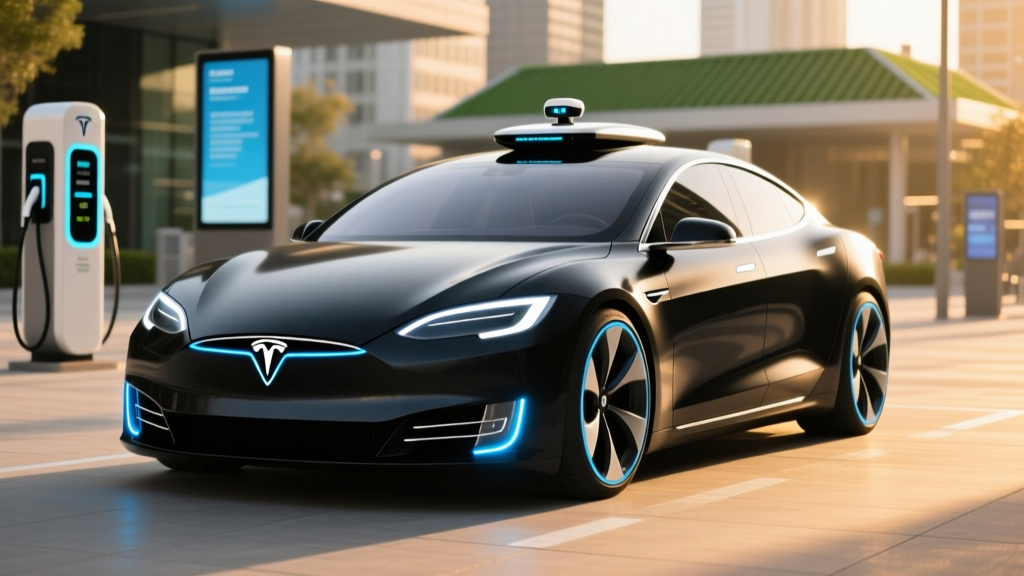
When Tesla unveiled the Cybercab prototype in late 2024, it was positioned as a purpose-built, no-steering-wheel robotaxi aimed at disrupting ride-hailing and personal EV ownership. As of early 2026, the vehicle remains in pre-production testing — not yet available for consumer purchase or commercial deployment. What follows is a detailed analysis of every confirmed and estimated specification Tesla has disclosed, paired with the real-world ownership and deployment context that spec sheets leave out.
Announced Specs: What Tesla Has Confirmed
| Specification | Cybercab Prototype (Announced/Estimated) |
|---|---|
| Status | Prototype / Pre-production — not on sale |
| EPA Range (Target) | ~200+ miles (unverified by EPA) |
| Battery (Estimated) | ~50-60 kWh usable, likely LFP |
| Max DC Fast Charge | ~200-250 kW peak (estimated) |
| 10-80% DC Charge Time | ~15-20 minutes (estimated) |
| Drivetrain | Rear-wheel drive, single motor |
| 0-60 mph | Not disclosed; likely ~6.5 sec |
| Seating | 2 passengers (no steering wheel) |
| Target Price | Under $30,000 (personal ownership TBD) |
| Production Target | 2026-2027 (Elon Musk timeline) |
Every figure above carries a significant caveat: Tesla has not submitted the Cybercab for EPA testing, and production-intent hardware may differ from the prototype shown at the October 2024 "We, Robot" event. Treat these as engineering targets, not buyer-ready specifications.
Range and Efficiency: Prototype Targets vs. Real-World Physics
The Cybercab's small battery is a deliberate design choice for a robotaxi use case. In ride-hailing, vehicles rarely need 300+ miles between charges — they charge opportunistically between rides. A smaller battery reduces weight, cost, and charging time, but it means range margins are thin.
Tesla's claimed efficiency of under 12 kWh/100 miles would be class-leading if achieved. For context, the 2025 Tesla Model 3 RWD achieves roughly 25-27 kWh/100 miles (approximately 132 MPGe combined per fueleconomy.gov). The Cybercab's lighter weight, two-seat configuration, and optimized aero could plausibly hit sub-15 kWh/100mi, but sub-12 remains aggressive for a production vehicle.
Charging Speed and Infrastructure
Tesla has confirmed the Cybercab will use the North American Charging Standard (NACS) connector and will charge on Tesla's Supercharger network. Based on the smaller battery pack and Tesla's current 4680 cell architecture, here is the estimated charging profile:
| Charging Level | Power (kW) | Rate / Time |
|---|---|---|
| Level 1 (120V outlet) | ~1.4 kW | ~4-5 mi/hr |
| Level 2 (240V / 48A) | ~11.5 kW | ~35-40 mi/hr |
| DC Fast (Supercharger V4) | ~200-250 kW peak | 10-80% in ~15-20 min |
The charge curve matters more than the peak number. A ~55 kWh battery charging at 250 kW represents roughly a 4.5C rate — aggressive but within the capability of Tesla's latest 4680 cells. However, expect the charge rate to taper significantly above 60-70% state of charge (SoC). A realistic 10-80% session will average closer to 150-175 kW sustained, not the full 250 kW peak.
For fleet operators, the Cybercab's small battery is an advantage: faster turnaround between rides. A 15-minute Supercharger stop can add ~120-140 miles of range — enough for 3-4 urban ride-hailing trips.
Autonomy, Hardware, and the Regulatory Gap
The Cybercab prototype features Tesla's next-generation vision-only sensor suite — no LiDAR, no radar. Tesla has stated it will use an enhanced camera array with higher-resolution sensors and an updated version of its FSD (Full Self-Driving) neural network, trained on billions of miles of fleet data from current Tesla vehicles.
Key questions remain unanswered:
- Operational Design Domain (ODD): Where will the Cybercab be permitted? City-only? Highway-capable? Geofenced to specific metro areas?
- Remote assistance: How will Tesla handle edge cases that stump the AI? Waymo employs remote human operators; Tesla has not detailed its approach.
- Safety validation: Tesla has not published the disengagement or incident-rate data that regulators typically require for Level 4 approval.
Pricing, Tax Credits, and Ownership Model
Tesla CEO Elon Musk has repeatedly stated a target price "under $30,000" for the Cybercab, with operating costs of roughly $0.20 per mile for fleet use. However, Tesla has not clarified whether consumers will be able to purchase a Cybercab for personal use, or whether it will be exclusively a Tesla-owned fleet vehicle (similar to how Waymo vehicles are not sold to individuals).
| Scenario | Estimated Price |
|---|---|
| Target MSRP (announced) | Under $30,000 |
| After §30D Federal Credit (if eligible) | ~$22,500 (if full $7,500 applies) |
| Fleet / Robotaxi Model | Not consumer-priced; per-ride cost TBD |
Federal tax credit (§30D) considerations: If the Cybercab becomes available for individual purchase, it would need to meet several IRS requirements to qualify for the full $7,500 credit:
- MSRP must be under $55,000 (sedan cap) — likely met at under $30K target
- Buyer modified adjusted gross income must fall below thresholds ($150K single / $300K joint)
- Battery critical minerals and components must meet escalating domestic-sourcing percentages (these thresholds tighten annually through 2032)
- The credit can be transferred to the dealer at point of sale for an instant price reduction
Because the Cybercab is not yet in production, battery sourcing compliance for the production year cannot be confirmed. Always verify current-year eligibility on IRS.gov before making purchase decisions.
Interior, Cargo, and Practicality
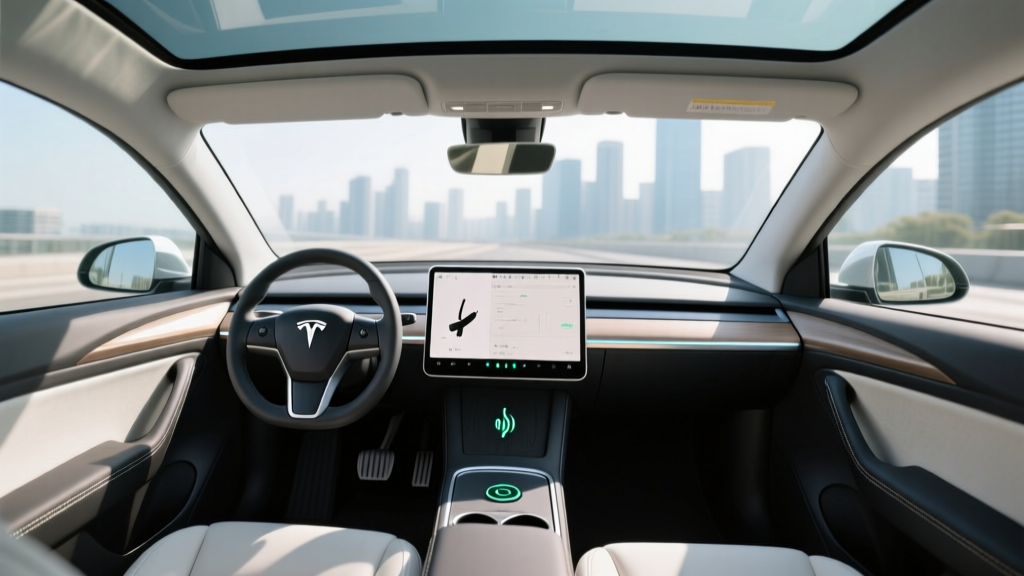
The Cybercab prototype is a two-seat vehicle with no steering wheel, pedals, or traditional controls. The interior features a single large central touchscreen, a wraparound bench-style seat for two, and ambient lighting. Tesla has described the experience as "riding in an elevator" — minimal, lounge-like, and entirely screen-controlled.
Cargo capacity: Tesla showed a front trunk (frunk) and a rear cargo area behind the seats. Based on prototype dimensions, expect roughly 15-20 cubic feet of combined cargo space — enough for a few suitcases or groceries, but not a family road-trip hauler. This is a purpose-built urban mobility pod, not a crossover.
Notable drawbacks:
- No manual override — if the system fails, there is no steering wheel or brake pedal for a passenger to use
- Two-seat configuration limits use cases (no family transport, no carpooling beyond one companion)
- Entirely dependent on connectivity and Tesla's backend — no offline operation
- No confirmed timeline for production, pricing, or regulatory approval
Cybercab vs. the Competition
The Cybercab has no direct consumer competitor because no other manufacturer is selling a purpose-built, steering-wheel-free robotaxi to individuals. However, in the robotaxi service space, the comparison is clear:
- Waymo (Jaguar I-PACE based): Currently operational in 4+ U.S. cities. Level 4. LiDAR + camera + radar sensor suite. Millions of paid rides completed. Vehicles are not sold to consumers.
- Zoox (Amazon-owned): Purpose-built bidirectional robotaxi prototype. Testing in Las Vegas and California. Not commercially deployed at scale.
- Tesla Cybercab: Vision-only. Not yet operational. Ambitious cost target but no regulatory pathway confirmed.
For consumers looking to buy a Tesla today with the most advanced driver-assist available, the 2026 Model 3 with FSD (Supervised) remains a Level 2 system requiring full driver engagement, starting around $38,990 with an EPA range of up to 363 miles.
- Choose to wait if: You're interested in robotaxi investment or fleet economics, and you're tracking Tesla's autonomy progress over a 2-3 year horizon.
- Choose to buy now instead if: You need a real EV today. The Model 3, Model Y, or competitors like the Hyundai Ioniq 5 and Chevy Equinox EV are available, tested, EPA-rated, and tax-credit-eligible right now.
Warranty and Longevity (Projected)
Tesla has not published warranty terms for the Cybercab. Based on Tesla's current consumer vehicle warranties, a reasonable projection for a production version would be:
- Basic vehicle: 4 years / 50,000 miles
- Battery and drive unit: 8 years / 100,000-120,000 miles (with a minimum 70% capacity retention threshold)
For fleet robotaxi use, Tesla has suggested the Cybercab could achieve 1 million miles of service life, similar to claims made for the Model 3 drive unit. Battery degradation with a ~55 kWh LFP pack would likely be moderate — LFP chemistry typically retains 85-90% capacity after 1,000 full charge cycles, which translates to roughly 150,000-200,000 miles before hitting the 70% warranty threshold.
Frequently Asked Questions
What is the real-world range of the Tesla Cybercab?
Tesla targets 200+ miles, but this is not EPA-verified. With a ~55 kWh battery, expect real-world highway range of roughly 160-180 miles and cold-weather range of 130-150 miles. The small battery is optimized for urban ride-hailing, not long-distance travel.
How fast does the Cybercab charge?
Estimated peak DC fast-charge rate is 200-250 kW via NACS on Tesla's Supercharger network, with a 10-80% session taking approximately 15-20 minutes. Home Level 2 charging at 11.5 kW would add roughly 35-40 miles per hour of charging.
Can I buy a Tesla Cybercab for personal use?
Not as of 2026. Tesla has not confirmed whether the Cybercab will be available for individual purchase or exclusively as a Tesla-operated fleet vehicle. Production has not begun.
Does the Cybercab qualify for the federal EV tax credit?
If it becomes available for consumer purchase at under $30,000, it would meet the MSRP cap. However, eligibility depends on the buyer's income, the model year's battery-sourcing requirements, and whether Tesla has hit any manufacturer phase-out thresholds. Verify on IRS.gov before any purchase.
Is the Cybercab self-driving?
The Cybercab is designed for Level 4 autonomy — no driver required in its approved operating area. However, it has not received regulatory approval for driverless commercial operation in any U.S. jurisdiction. This is fundamentally different from Tesla's current FSD (Supervised), which is Level 2 and requires constant driver attention.
How does the Cybercab compare to Waymo?
Waymo is operational now in multiple U.S. cities using LiDAR-equipped Jaguar I-PACE vehicles. Tesla's Cybercab relies on cameras only, costs significantly less to build (target), but has zero commercial deployment and no confirmed regulatory pathway. Waymo has a multi-year head start in real-world validated miles.
When will the Cybercab be available?
Tesla has targeted production start in 2026-2027. Elon Musk's timelines have historically been optimistic — the original Tesla Roadster, Cybertruck, and Semi all experienced multi-year delays. Independent analysts suggest 2028-2029 is more realistic for any meaningful deployment, contingent on regulatory approval.
Pros (If Delivered as Announced)
- Sub-$30K price point would be the cheapest Tesla ever
- Ultra-low operating cost for fleet/robotaxi use
- Fast DC charging with small battery (~15-20 min 10-80%)
- Purpose-built design optimized for ride-hailing
- Access to Tesla Supercharger network (NACS)
- LFP battery chemistry for long cycle life
Cons (Current Reality)
- Not available for purchase — no production date confirmed
- No EPA range, safety, or efficiency data exists
- No regulatory approval for driverless operation
- Two-seat, no-steering-wheel design limits personal use
- Range (~200 mi target) is modest for road trips
- Vision-only autonomy remains unproven at Level 4
- Historical pattern of Tesla timeline delays
Editor's note: This article covers an announced prototype vehicle. All specifications are based on Tesla disclosures, event presentations, and informed estimates. They are subject to change and have not been independently verified by the EPA, NHTSA, or IIHS. We will update this profile when production-intent specifications and regulatory approvals are confirmed.