Quick Verdict: Cybercab Production Is Coming, But Not to Your Driveway
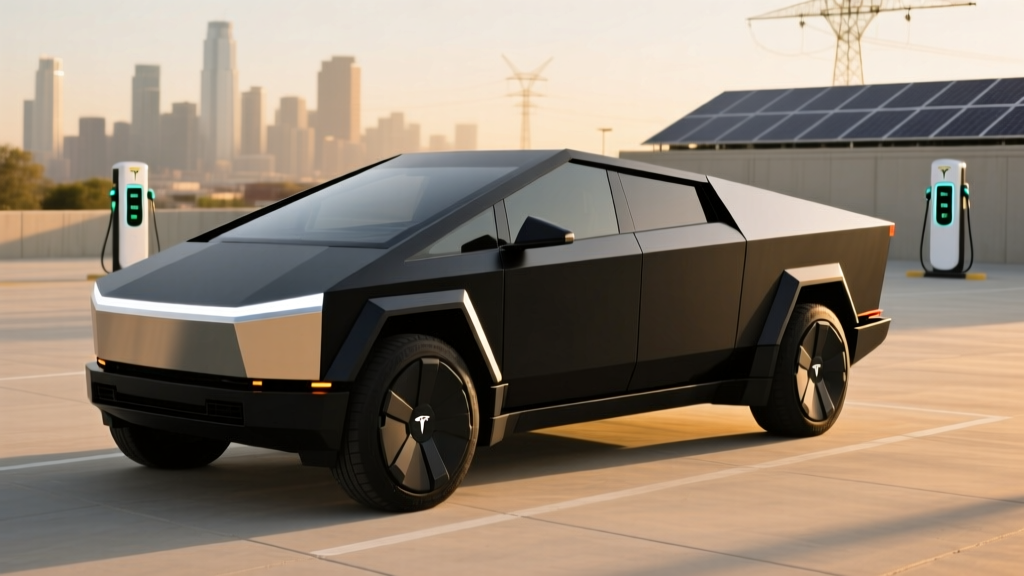
Tesla's Cybercab — the steering-wheel-free, two-seat robotaxi unveiled in October 2024 — remains one of the most anticipated and debated vehicles in the EV space. As of early 2026, Cybercab production has not yet begun, and Tesla has not delivered a single unit to a paying customer. Elon Musk has targeted a production start in 2026, with volume scaling into 2027, but Tesla's history of timeline slippage warrants skepticism.
This is not a vehicle you can order, configure, or drive. It is a purpose-built, Level 4 autonomous platform designed exclusively for Tesla's planned robotaxi network. If Cybercab production does materialize on schedule, it could reshape urban mobility economics — but the regulatory, manufacturing, and safety-validation hurdles are substantial. Here's a data-driven look at everything we know, what's confirmed, and what remains speculative.
Projected Specs: What Tesla Has Disclosed About Cybercab
Because Cybercab has not entered production, there are no EPA-certified figures, no IIHS crash-test results, and no independent third-party validation of any performance claim. The table below reflects Tesla's stated targets and industry estimates based on the prototype shown at the Warner Bros. studio event.
| Attribute | Projected / Stated Value |
|---|---|
| EPA Range (est.) | ~250 miles (Tesla target, unverified) |
| Battery Capacity | ~50 kWh usable (estimated, LFP chemistry likely) |
| Drivetrain | Single-motor RWD (expected) |
| Horsepower | Not disclosed |
| 0-60 mph | Not disclosed (irrelevant to robotaxi use case) |
| DC Fast Charge (peak) | Not disclosed; likely 150-250 kW (NACS) |
| 10-80% Charge Time | Estimated 20-30 minutes |
| Level 2 Home Charging | N/A — fleet-only, depot charging expected |
| Seats | 2 passengers |
| Cargo Volume | Minimal — small rear compartment (est. <5 cu ft) |
| Steering Wheel / Pedals | None — fully autonomous design |
| Autonomy Level | SAE Level 4 (targeted, geofenced) |
| Estimated Operating Cost | ~$0.20/mile (Tesla claim, unverified) |
| Projected Vehicle Cost | <$30,000 (Tesla target for fleet units) |
| Consumer Purchase | Not planned — fleet/robotaxi only |
Range, Battery, and Efficiency: The Robotaxi Math
The Cybercab's battery strategy is almost certainly LFP (lithium iron phosphate). Here's why that matters for a robotaxi:
- Cycle life: LFP cells tolerate 3,000-5,000+ full charge cycles before significant degradation — critical for a vehicle expected to run 16-20 hours daily.
- Cost: LFP is 15-20% cheaper per kWh than NMC, supporting Tesla's sub-$30,000 vehicle-cost target.
- Safety: LFP is more thermally stable, reducing fire risk in high-utilization fleet operations.
- Trade-off: Lower energy density means a heavier pack for the same range, but in a compact two-seater, this is manageable.
Efficiency for a small, lightweight, aerodynamic pod should be strong. Expect roughly 25-28 kWh/100 miles (equivalent to approximately 120-135 MPGe) in urban operation, though no official EPA figures exist.
Charging Strategy: Fleet Depot, Not Public Stations
The Cybercab is not designed for consumer ownership, so traditional charging metrics (home Level 2 install, public charger hunting) don't apply in the usual sense. Tesla's plan involves automated fleet depot charging — vehicles return to a centralized facility, plug in autonomously (or via robotic connectors), and recharge during off-peak hours.
| Charging Method | Power (kW) | Estimated Time (10-80%) | Notes |
|---|---|---|---|
| DC Fast Charge (Supercharger) | ~150-250 kW (peak) | ~20-30 min | NACS connector; charge curve taper above 80% SoC expected |
| Depot Level 2 (overnight) | ~19-22 kW | ~2-3 hours (full) | Fleet-only infrastructure; not consumer-accessible |
| Inductive/Wireless (speculative) | ~11-19 kW | ~3-4 hours | Tesla has hinted at wireless charging for Cybercab; unconfirmed |
A key operational advantage: a ~50 kWh battery charging at 200 kW can add roughly 150 miles of range in 15-20 minutes. For a robotaxi doing 100-150 miles per shift, a mid-day top-up during low-demand hours keeps utilization high. The Tesla Supercharger network would serve as backup, but fleet economics demand cheaper depot charging at commercial electricity rates ($0.06-$0.12/kWh in most US markets).
Autonomous Tech: SAE Level 4 and the Regulatory Gap
The Cybercab is designed for SAE Level 4 autonomy — meaning it can operate without a human driver within defined operational design domains (geofenced areas, specific weather conditions, mapped routes). This is fundamentally different from Tesla's current consumer vehicles, which run FSD (Supervised) at SAE Level 2 — requiring active driver engagement at all times. Level 4 is what Waymo currently operates in Phoenix, San Francisco, and Los Angeles.
Tesla's autonomy approach differs from Waymo's in a critical way: Tesla relies on a vision-only system (cameras, no lidar), while Waymo uses a sensor suite combining lidar, radar, and cameras. Tesla's "end-to-end neural network" approach has shown rapid improvement in its consumer FSD product, but scaling to Level 4 without a human fallback driver — in a vehicle with no steering wheel — requires a fundamentally higher safety-validation bar.
The regulatory path is the biggest unknown. The National Highway Traffic Safety Administration (NHTSA) currently requires vehicles without steering wheels and pedals to meet specific occupant-protection standards, and the FMVSS (Federal Motor Vehicle Safety Standards) exemption process is case-by-case. Tesla would also need approval from state-level regulators (California's DMV and CPUC, Arizona's ADOT, etc.) for each deployment city.
Key question: Can Tesla validate billions of miles of safe autonomous operation using its shadow-mode fleet data, or will regulators require the extensive real-world testing miles that Waymo accumulated over a decade? This is the make-or-break variable for Cybercab production timing.
Pricing, Economics, and the Robotaxi Business Model
You cannot buy a Cybercab. Tesla's stated plan is to manufacture, own, and operate the fleet — or allow Tesla vehicle owners to add their cars to the network. The economic thesis:
- Vehicle cost target: Under $30,000 per unit at scale
- Operating cost target: ~$0.20 per mile (electricity + maintenance + depreciation)
- Revenue per mile: Tesla has suggested pricing below Uber/Lyft rates but above operating cost — potentially $0.40-$0.80/mile to the rider
- Utilization: 16-20 hours/day, vs. ~1-2 hours/day for a personal vehicle
For context, Waymo's current robotaxi rides in San Francisco are priced comparably to UberX — roughly $1.00-$1.50 per mile depending on demand. Tesla's cost advantage, if achieved, would come from cheaper vehicles (no lidar, no safety driver) and lower energy costs (smaller battery, efficient platform).
Federal tax credit (§30D) note: The Cybercab is not expected to be sold to consumers, so the IRS clean vehicle credit is largely irrelevant to end users. If Tesla does sell units to fleet operators, commercial clean vehicle credits under §45W may apply, subject to MSRP caps, battery-sourcing requirements, and entity eligibility. This is uncharted regulatory territory.
Cybercab vs. Competitors: The Robotaxi Landscape in 2026
Cybercab production enters a market where competitors already have operational miles and regulatory approvals:
| Platform | Status | Cities Active | Sensor Suite | SAE Level |
|---|---|---|---|---|
| Waymo (Jaguar I-PACE / Zeekr) | Commercial service live | Phoenix, SF, LA, Austin (expanding) | Lidar + radar + cameras | Level 4 |
| Zoox (purpose-built) | Limited testing; pre-commercial | Las Vegas, Foster City | Lidar + radar + cameras | Level 4 |
| Cruise (GM/Bolt-based) | Suspended/restructuring (2024+) | None currently | Lidar + radar + cameras | Level 4 (was) |
| Tesla Cybercab | Announced; pre-production | None | Vision-only (cameras) | Level 4 (targeted) |
Waymo has a commanding lead with over 30 million paid autonomous miles driven and an established safety record. Tesla's advantage — if Cybercab production scales — is cost: a $30,000 vision-only vehicle vs. Waymo's estimated $100,000+ per-vehicle cost (including sensor suite). But cost means nothing without regulatory approval and demonstrated safety.
The Biggest Unknowns Blocking Cybercab Production
Potential Advantages
- Lowest per-mile cost if sub-$30K vehicle target is met
- Massive data advantage from Tesla's millions of FSD-equipped vehicles
- Vertically integrated: vehicle + software + charging + network
- LFP battery enables extreme cycle life for fleet use
- No lidar cost reduces per-unit capital expenditure
Significant Risks & Drawbacks
- No production vehicle exists; timeline has slipped before
- Vision-only Level 4 is unproven at scale without human fallback
- Federal and state regulatory approval timeline is uncertain
- NHTSA FMVSS exemption for no-steering-wheel vehicles is not guaranteed
- Insurance liability framework for Level 4 fleet operators is still evolving
- Two-seat layout limits use cases (no families, limited cargo)
- Public trust in Tesla autonomy after FSD incidents remains mixed
Frequently Asked Questions About Cybercab Production
When will Tesla Cybercab production actually start?
Tesla has stated a target of 2026 for initial production, with volume ramping in 2027. However, Tesla has a well-documented history of missing production deadlines (Cybertruck was announced in 2019 and began deliveries in late 2023). A realistic estimate places meaningful production volume no earlier than late 2026 or 2027, contingent on regulatory approvals.
Can I buy a Tesla Cybercab for personal use?
No. Tesla has stated the Cybercab is designed exclusively for its robotaxi network. There is no consumer purchase option, no configurator, and no reservation system. You would hail one via the Tesla app, similar to calling an Uber — not own one.
What is the real-world range of the Cybercab?
No real-world testing data exists. Tesla targets approximately 250 miles, which for a ~50 kWh LFP pack in urban stop-and-go driving could yield 175-220 real-world miles depending on temperature, speed, and HVAC load. For a geofenced robotaxi doing 100-150 miles per shift, this is sufficient with a mid-day charge.
How does Tesla plan to achieve Level 4 without lidar?
Tesla uses a camera-only "Tesla Vision" system powered by end-to-end neural networks trained on billions of miles of driving data from its consumer fleet. Whether this approach can meet the safety-validation threshold for unsupervised Level 4 operation — particularly in edge cases like construction zones, severe weather, and sensor occlusion — remains the central technical debate in the autonomous vehicle industry.
Will the Cybercab qualify for any federal tax credits?
Since the Cybercab is not planned for consumer sale, the IRS §30D new clean vehicle credit does not directly apply. Fleet operators may be eligible for the §45W commercial clean vehicle credit, but eligibility depends on battery sourcing, vehicle weight, and entity type. Consult a tax professional and review current IRS guidance for specifics.
How does Cybercab compare to taking an Uber or Lyft today?
Tesla's stated goal is to undercut ride-hailing prices — potentially $0.20-$0.40 per mile to operate, with rider pricing around $0.40-$0.80/mile. Current UberX rates average $1.00-$2.00/mile depending on market and demand. If Tesla achieves its cost targets and gains regulatory approval, Cybercab rides could be 40-60% cheaper than human-driven ride-hailing. That's a significant "if."
What cities will Cybercab launch in first?
Tesla has not announced specific launch cities. The most likely initial markets are those with favorable autonomous-vehicle regulation: Phoenix, Austin, Las Vegas, and parts of California (pending CPUC approval). States like Arizona and Texas have been more permissive than California, where Cruise's 2023 suspension created a more cautious regulatory environment.
Bottom Line: Should You Wait for Cybercab?
If you're a consumer looking to buy an EV, Cybercab production is irrelevant to your purchase decision — you can't buy one. If you're an investor, urban planner, or ride-hailing industry participant, Cybercab represents either a paradigm shift or an overpromised concept, depending on your confidence in Tesla's ability to solve the Level 4 vision-only problem and navigate the regulatory maze.
The most honest assessment: Cybercab production is technically plausible by late 2026 or 2027, but commercial robotaxi service at scale is a 2028+ proposition at the earliest. Waymo is years ahead in validated autonomous miles and regulatory relationships. Tesla's cost advantage, if real, could eventually close that gap — but "eventually" is doing a lot of heavy lifting in that sentence.
For now, monitor Tesla's quarterly earnings calls for production-line updates, watch for NHTSA FMVSS exemption filings, and track state-level regulatory approvals. We'll update this profile when verified production data becomes available.