The Tesla Cybercab — the company's dedicated robotaxi platform unveiled in late 2024 — remains one of the most closely watched electric vehicles in the industry. As of early 2026, Tesla Cybercab manufacturing preparations are intensifying at Gigafactory Texas, with tooling installations and supplier contracts signaling a targeted production start. But because this vehicle is still announced and not yet available for consumer purchase, every specification below should be treated as preliminary and subject to change before the first delivery.
This profile compiles everything Tesla has publicly confirmed or strongly indicated about the Cybercab, frames those figures against real-world EV ownership realities, and explains what the manufacturing ramp means for prospective riders and fleet buyers.
What the Cybercab Is — and Isn't
The Cybercab is a two-seat, steering-wheel-free, pedal-free electric vehicle designed from the ground up for autonomous ride-hailing. It is not a consumer car you can buy, drive, and park in your garage. Tesla has positioned it as a Level 4 robotaxi competitor to Waymo's Jaguar I-PACE fleet and the purpose-built Zoox vehicle, meaning it is engineered to operate without a human driver in defined geographic zones under specific conditions.
The Cybercab is designed for Level 4 autonomy — fully driverless within mapped operational design domains (specific cities, weather conditions, and road types). This is fundamentally different from Tesla's consumer vehicles, which use FSD (Supervised) at SAE Level 2, requiring continuous driver attention. Level 4 means no steering wheel, no pedals, and no expectation that a passenger will intervene.
Tesla CEO Elon Musk stated at the October 2024 "We, Robot" event that the Cybercab would use a vision-only sensor suite — no lidar — relying on an evolved version of Tesla's neural-network-based FSD stack. This architectural choice is the single biggest technical bet in the program: every other major robotaxi operator (Waymo, Cruise, Zoox) uses lidar as a redundant sensing layer.
Announced Specifications: Range, Battery, and Efficiency
Tesla has released limited hard numbers for the Cybercab. The following table reflects what has been publicly stated or reliably reported through supplier leaks and regulatory filings. All figures are preliminary estimates until EPA certification is published.
| Specification | Estimated Figure |
|---|---|
| EPA Estimated Range | ~250 miles (preliminary) |
| Battery Capacity | ~50-60 kWh usable (estimated, LFP chemistry likely) |
| Drivetrain | Rear-wheel drive, single motor |
| Horsepower | ~200 hp (estimated) |
| 0-60 mph | Not a priority metric; estimated ~7 sec |
| Efficiency Target | ~4.0 mi/kWh (~25 kWh/100 mi) |
| Seating | 2 passengers |
| Cargo Volume | Limited; rear trunk area ~10-15 cu ft (estimated) |
| Base MSRP (Fleet/Consumer) | ~$25,000-$30,000 (Musk claim; unverified) |
| Federal Tax Credit (§30D) | Unlikely — vehicle has no manual driving controls |
| Battery/Powertrain Warranty | TBD; Tesla typically offers 8 yr/100,000 mi on consumer EVs |
If the Cybercab achieves an EPA-estimated 250 miles, real-world robotaxi operations will rarely use that full range in a single shift. Urban ride-hailing cycles involve frequent stops, low average speeds, and heavy regenerative braking — conditions that actually favor EV efficiency. Expect roughly 200-230 miles of usable range in mixed urban/highway operation, and 170-200 miles in cold-weather cities (Chicago, New York, Minneapolis) where battery heating and cabin climate draw reduce throughput. For a robotaxi doing 150-180 miles per shift, this leaves adequate buffer for mid-shift opportunity charging.
Charging Architecture: Designed for Fleet Turnaround
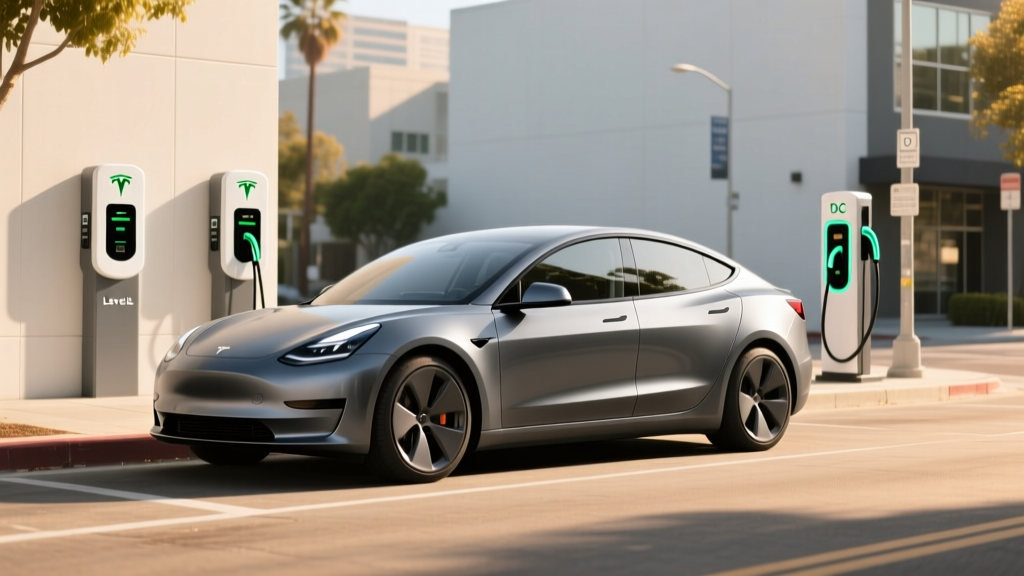
The Cybercab's charging strategy is the linchpin of its economic viability. A robotaxi that sits charging is a robotaxi that isn't earning revenue. Tesla has indicated the vehicle will support inductive (wireless) charging as its primary method, supplemented by NACS (North American Charging Standard) DC fast charging for rapid turnaround.
| Charging Method | Power (kW) | Estimated Speed |
|---|---|---|
| Inductive (Wireless) Pad | ~15-25 kW (est.) | ~60-100 mi/hr added; ideal for depot overnight charging |
| DC Fast Charge (NACS) | ~150-200 kW peak (est.) | 10-80% in ~20-25 minutes (smaller battery charges faster) |
| Level 2 (AC, depot) | ~11-19 kW | ~45-75 mi/hr added |
The smaller estimated battery (50-60 kWh) is a deliberate choice for a robotaxi: it reduces vehicle cost and weight, and a smaller battery charges to 80% faster on a DC fast charger even at moderate peak kW. The charge curve on a ~55 kWh LFP pack will likely sustain near-peak rates up to about 60% State of Charge before tapering — meaning a 10-80% session could average 120-140 kW rather than the peak number.
Inductive charging is the more interesting play. Tesla has been hiring for wireless charging system development, and depot-based inductive pads would allow Cybercabs to autonomously position themselves over a charging pad between shifts without human plug-in. This eliminates one of the biggest operational headaches for current robotaxi fleets: the need for human handlers to physically connect vehicles to chargers.
Tesla Cybercab Manufacturing Preparations: Timeline and Factory Readiness
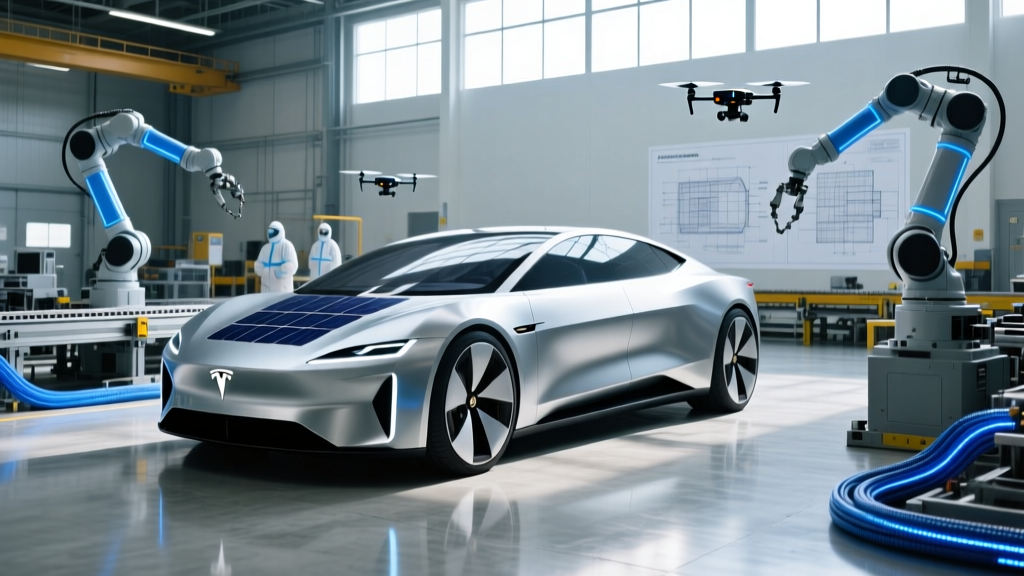
As of Q1 2026, Tesla Cybercab manufacturing preparations center on Gigafactory Texas (Giga Texas) in Austin. Key developments include:
- Tooling and Line Reconfiguration: Giga Texas is being reconfigured to accommodate a new, smaller vehicle platform alongside existing Model Y production. The Cybercab reportedly uses a next-generation "unboxed" manufacturing process that Tesla first described at its 2023 Investor Day — assembling sub-modules in parallel rather than sequentially on a single line, theoretically reducing factory footprint by ~40% and production cost per vehicle significantly.
- Supplier Contracts: Multiple reports indicate Tesla has locked in LFP battery cell supply from CATL (China) and potentially BYD, consistent with the cost-sensitive, high-cycle-life requirements of a fleet vehicle. LFP chemistry is the logical choice: it offers lower energy density than NMC but superior cycle life (3,000+ full cycles vs. ~1,500-2,000 for NMC), lower cost per kWh, and reduced fire risk — all critical for a vehicle expected to accumulate 200,000+ miles in ride-hailing service.
- Regulatory Filings: Tesla will need NHTSA approval for a vehicle without manual driving controls. The agency has an exemption process (FMVSS exemptions for autonomous vehicles), but the pathway is not guaranteed and has historically been slow. This is a major timeline risk.
- Production Target: Musk initially targeted a 2026 production start. Industry analysts consider late 2026 or early 2027 more realistic for meaningful volume, given the regulatory and manufacturing-process complexity.
The "unboxed" process is Tesla's biggest manufacturing bet since the Model 3 "production hell" of 2017-2018. If it works at scale, it could allow Tesla to produce the Cybercab at a cost per unit that undercuts Waymo's estimated $100,000+ per-vehicle cost (for the lidar-equipped Jaguar I-PACE) by a wide margin. If it encounters the kind of ramp-up issues Tesla experienced with the original Model 3 and the Cybertruck, delays will extend well into 2027.
Pricing, Tax Credits, and Fleet Economics
Elon Musk claimed at the "We, Robot" event that the Cybercab would cost under $30,000 and that riders would pay roughly $0.20 per mile — cheaper than a bus ticket in many cities. Let's unpack the economics.
| Cost Factor | Estimate |
|---|---|
| Claimed Base Price | $25,000-$30,000 |
| Federal §30D Tax Credit | Not eligible — no manual controls; §30D requires a vehicle "for use on public streets" with standard driving features |
| Commercial EV Credit (§45W) | Potentially eligible for up to $7,500 under the commercial clean vehicle credit for fleet operators |
| Estimated Per-Mile Operating Cost | $0.20-$0.35/mi (Tesla claim + independent analyst estimates, including electricity, maintenance, insurance, depreciation) |
| Consumer Purchase Availability | Unlikely at launch; Tesla has indicated fleet-first distribution |
The IRS §30D credit is designed for consumer-purchased clean vehicles with manual driving capability. A steering-wheel-free robotaxi does not fit the statutory definition. However, fleet operators purchasing Cybercabs for commercial ride-hailing service could potentially claim the §45W Commercial Clean Vehicle Credit, which offers up to $7,500 for qualifying vehicles under 14,000 lbs GVWR. Tax professionals should be consulted for eligibility, as these rules are subject to interpretation and future IRS guidance.
The $0.20/mile claim assumes very high vehicle utilization (15+ hours/day), low electricity costs (depot charging at commercial rates of ~$0.08-$0.12/kWh), and minimal maintenance costs — all plausible for an EV with no driver to pay. For comparison, Waymo currently charges riders roughly $1.00-$1.50 per mile in Phoenix and San Francisco, though that includes the cost of lidar-equipped vehicles and remote fleet monitoring.
Tech Features and the Autonomy Question
The Cybercab's technology stack is both its greatest asset and its greatest risk.
What Tesla Has Indicated
- Vision-Only Autonomy: Cameras only — no lidar, no radar (consistent with Tesla's current consumer FSD architecture). Tesla's neural network processes surround-view camera feeds to build a real-time 3D understanding of the driving environment.
- Next-Gen FSD Hardware (HW5/AI5): The Cybercab will reportedly debut Tesla's next-generation inference computer, offering significantly more processing power than the HW4 chip in current Model 3/Y vehicles.
- Interior: A minimalist two-seat cabin with a large central touchscreen for ride information, entertainment, and climate control. No steering wheel or pedals. Large butterfly-style doors for easy entry/exit.
- Self-Cleaning Cameras: Tesla has patented camera-cleaning systems critical for a vehicle that cannot pull over and ask a human to wipe a lens.
The Lidar Debate
Every major robotaxi competitor uses lidar. Waymo's fifth-generation system uses five lidar units per vehicle. The argument for lidar is redundancy: it provides precise depth information regardless of lighting conditions (night, direct sun, fog) and doesn't rely on neural network interpretation the way camera-only systems do. Tesla's bet is that sufficiently advanced vision AI can match or exceed lidar performance at a fraction of the cost. This remains unproven at scale in production robotaxi service.
Even at Level 4, the Cybercab will not drive everywhere in all conditions. Level 4 autonomy is geofenced — limited to pre-mapped areas with specific operational constraints. Expect initial service areas to be limited to a handful of Sun Belt cities (Austin, Phoenix, Las Vegas) with favorable weather and road conditions. Heavy rain, snow, construction zones, and unmapped areas will likely take the vehicle out of service until conditions clear or a remote operator intervenes.
Pros, Cons, and Who the Cybercab Suits
Pros
- Potentially the lowest-cost robotaxi platform ever produced if "unboxed" manufacturing works
- LFP battery chemistry offers long cycle life for high-mileage fleet use
- Vision-only approach dramatically reduces per-unit sensor cost vs. lidar
- Tesla's Supercharger and depot-charging infrastructure advantage
- Wireless inductive charging enables autonomous depot turnaround
Cons
- No lidar redundancy — a significant technical risk vs. Waymo and Zoox
- NHTSA FMVSS exemption approval is not guaranteed and has no clear timeline
- Two-seat layout limits ride-pooling revenue and airport/luggage runs
- Geofenced to limited cities initially; not a universal transportation solution
- Musk's timelines have historically been overly optimistic by 1-3 years
- Consumer purchase likely not an option at launch
Who This Suits
The Cybercab is not for individual buyers — at least not initially. It is designed for:
- Tesla's own robotaxi network (if Tesla operates a fleet directly, as Musk has suggested)
- Ride-hailing fleet operators seeking lower per-mile costs than human-driven Uber/Lyft
- Municipal transit agencies exploring on-demand microtransit
- Airport and campus shuttle services in geofenced, low-complexity environments
Cybercab vs. Competing Robotaxi Platforms
The Cybercab enters a market where Waymo is already operating commercial service in Phoenix, San Francisco, and Los Angeles, with NHTSA-monitored safety records. Here's how the platforms compare at a high level:
| Factor | Tesla Cybercab (Announced) | Waymo (Jaguar I-PACE) | Zoox (Purpose-Built) |
|---|---|---|---|
| Sensor Suite | Vision only (cameras) | Lidar + cameras + radar | Lidar + cameras + radar |
| Est. Vehicle Cost | $25,000-$30,000 | $100,000+ | Undisclosed (high) |
| Seating | 2 | 4 | 4 |
| Current Status | Pre-production | Commercial service (multiple cities) | Limited commercial service (Las Vegas, SF) |
| Manual Controls | None | None (modified I-PACE) | None |
FAQ: Tesla Cybercab Manufacturing and Availability
What is the real-world range of the Tesla Cybercab?
With an estimated EPA range of ~250 miles, real-world robotaxi operations should yield 200-230 miles in temperate urban driving and 170-200 miles in cold-weather conditions. The smaller battery and LFP chemistry are optimized for cycle life and cost rather than maximum range.
How fast does the Cybercab charge?
Estimated DC fast charging at 150-200 kW peak should deliver a 10-80% charge in roughly 20-25 minutes. Inductive (wireless) charging at depot pads is expected at 15-25 kW for slower, autonomous overnight charging. The smaller battery means faster absolute charge times even at moderate peak rates.
How much does the Cybercab cost after tax credits?
The claimed base price is $25,000-$30,000. It is not expected to qualify for the consumer §30D federal tax credit because it lacks manual driving controls. Fleet operators may qualify for the §45W commercial clean vehicle credit (up to $7,500). Consult a tax professional for current eligibility, as IRS guidance on robotaxi-specific vehicles is still evolving.
Is the Cybercab worth waiting for vs. competing robotaxi services?
If Tesla achieves its cost targets and gains regulatory approval, the Cybercab could offer significantly cheaper rides per mile than current Waymo or human-driven Uber/Lyft service. However, Waymo is already operating commercially today with proven safety data across millions of autonomous miles. The Cybercab is a future promise; Waymo is a present reality.
What are the biggest pros and cons?
The biggest pro is potential cost: a sub-$30,000 robotaxi with LFP durability and Tesla's manufacturing scale could make autonomous rides cheaper than public transit. The biggest con is technical risk: vision-only autonomy without lidar redundancy is unproven at Level 4 scale, and NHTSA regulatory approval for a steering-wheel-free vehicle is far from certain.
Can I buy a Cybercab for personal use?
Almost certainly not at launch. Tesla has indicated the Cybercab will operate as part of a fleet — either Tesla-owned or sold to commercial operators. A consumer version with manual controls has not been announced and would be a fundamentally different vehicle.
When will the Cybercab actually be available?
Tesla has targeted 2026 for production start, but industry analysts and Tesla's own history of timeline slippage suggest late 2026 at the earliest for limited production, with meaningful commercial service volume more likely in 2027 or beyond. NHTSA FMVSS exemption approval is a critical gating milestone with no guaranteed timeline.
Note: This article covers an announced, unreleased vehicle. All specifications are preliminary estimates based on Tesla public statements, supplier reports, and industry analysis. Final EPA-certified range, pricing, and regulatory status will differ. Check Tesla.com and NHTSA.gov for updates as production approaches.