Tesla Cybercab for Sale: Availability and What We Know So Far
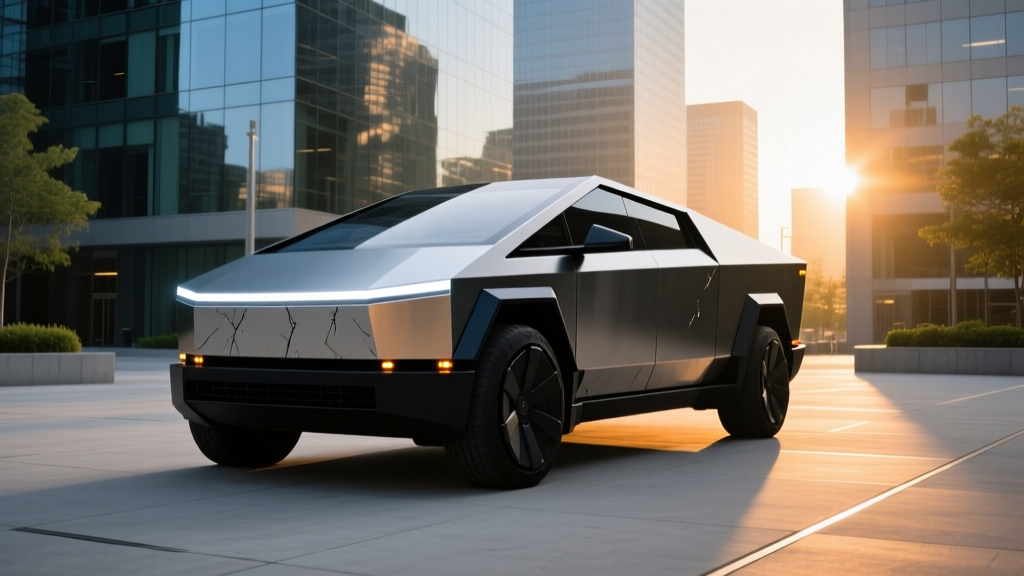
If you've been searching for a Cybercab for sale, you're not alone — the two-seat, steering-wheel-free robotaxi Tesla unveiled in October 2024 has generated enormous interest. But as of mid-2026, Tesla has not yet opened consumer orders for the Cybercab, and the vehicle remains in limited pilot production at the Austin Gigafactory. What's rolling off the line now is earmarked for Tesla's own ride-hailing network, not private buyers.
This profile compiles every confirmed and estimated specification available, contextualizes the Cybercab against existing robotaxi services, and explains what a private purchase would actually look like if Tesla opens sales — plus the tax-credit math, charging logistics, and ownership realities that early adopters will face.
Projected Specifications: Range, Battery, and Efficiency
Tesla has not published a full EPA certification for the Cybercab, but during the 2024 unveiling and subsequent earnings calls, the company targeted approximately 250 miles of range on a single charge. Given the vehicle's compact footprint, estimated curb weight under 3,500 lbs, and the efficiency gains Tesla has demonstrated with its next-gen platform, that figure is plausible — though it remains preliminary until EPA testing is complete.
| Attribute | Estimated / Confirmed Value |
|---|---|
| EPA Range | ~250 mi (preliminary, not yet EPA-certified) |
| Battery Capacity | ~50 kWh usable (estimated), LFP chemistry |
| Max DC Fast Charge | 250 kW (peak, V3 Supercharger compatible) |
| 10–80% DC Charge Time | ~15–18 minutes (estimated) |
| Level 2 Home Charge | ~11.5 kW / ~44 mi/hr (estimated) |
| 0–60 mph | Not disclosed (sub-5.0 sec estimated, single motor RWD) |
| Horsepower | ~200–250 HP (estimated, single rear motor) |
| Drivetrain | RWD (single motor) |
| Efficiency | ~130 MPGe / ~25 kWh/100 mi (estimated) |
| Seating | 2 passengers |
| Cargo Volume | Minimal — rear trunk area ~8–10 cu ft (estimated) |
| Base MSRP (if sold to consumers) | ~$25,000–$30,000 (announced target, unconfirmed) |
| Federal Tax Credit (§30D) | Eligibility uncertain — depends on battery sourcing and final MSRP |
| Battery/Powertrain Warranty | Expected 8 yr / 100,000 mi (consistent with Tesla's current EV warranties) |
The Cybercab is expected to use a lithium iron phosphate (LFP) battery pack. LFP chemistry trades some energy density for superior cycle life (3,000+ cycles before significant degradation), lower cost, and reduced reliance on cobalt and nickel. For a vehicle designed to accumulate 50,000+ miles per year in fleet service, LFP is the logical choice. Private buyers benefit from LFP's longevity, though they should expect slightly less range per kWh compared to NMC chemistry.
Charging Speed: DC Fast Charging and Home Setup
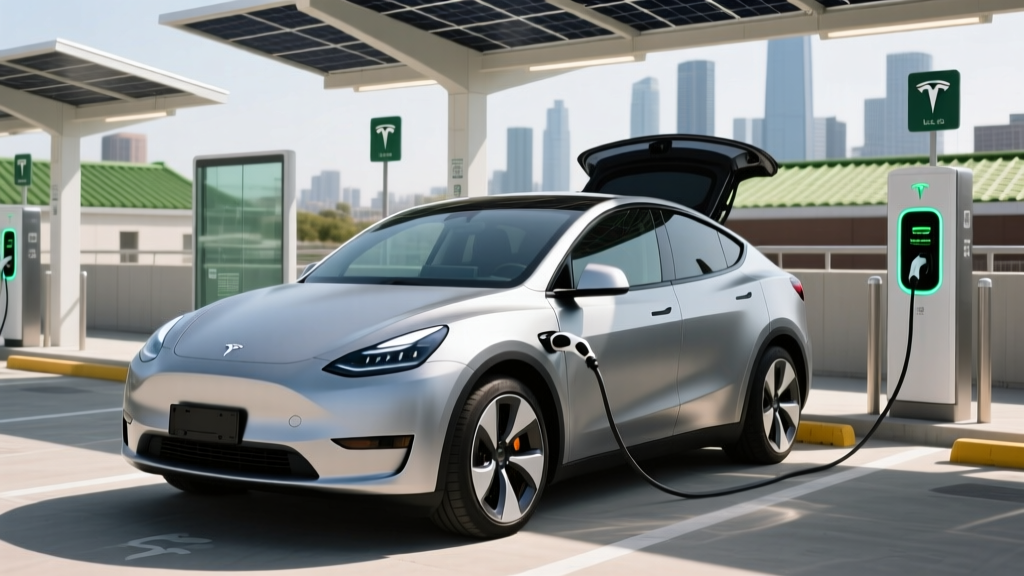
Charging speed is critical for any EV, and the Cybercab is expected to support Tesla's V3 and V4 Supercharger infrastructure at up to 250 kW peak. However, peak rate is not sustained rate — as with all EVs, the charge curve tapers significantly above 80% state of charge to protect battery health.
| Charge Level | Power (kW) | Miles Added per Hour | Notes |
|---|---|---|---|
| Level 1 (120V) | ~1.4 kW | ~5 mi/hr | Emergency/trickle only |
| Level 2 (240V, 48A) | ~11.5 kW | ~44 mi/hr | Full charge in ~5 hours |
| DC Fast (V3 Supercharger) | 250 kW peak | ~1,000 mi/hr (peak) | 10–80% in ~15–18 min; tapers above 80% |
For private owners, a home Level 2 charger is essential. Installation costs typically range from $800 to $2,500 depending on whether your electrical panel needs an upgrade (a 200-amp panel is recommended for 48-amp Level 2 circuits). Tesla's Wall Connector retails for around $475 and delivers up to 11.5 kW on a 60-amp circuit. For a ~50 kWh battery, that means a full overnight charge in roughly 4.5 to 5 hours.
One nuance: the Cybercab's anticipated NACS (North American Charging Standard) port means native compatibility with the entire Tesla Supercharger network — currently the most reliable DC fast-charging network in the U.S. by uptime metrics. However, if Tesla sells the Cybercab to consumers who need to use Electrify America or EVgo stations, a NACS-to-CCS adapter may be required depending on the station's connector.
Pricing, Tax Credits, and the Real Cost to Buy
Tesla CEO Elon Musk has publicly targeted a $25,000 to $30,000 price point for the Cybercab. If that holds, it would make the Cybercab one of the least expensive new EVs on the market — undercutting the Chevrolet Equinox EV and rivaling the base Nissan Leaf.
| Scenario | MSRP | §30D Credit | Net Price |
|---|---|---|---|
| Base Cybercab (est.) | $25,000 | $3,750–$7,500* | $17,500–$21,250 |
| Higher trim / options (est.) | $30,000 | $3,750–$7,500* | $22,500–$26,250 |
* Federal §30D credit amount depends on battery component sourcing and critical mineral requirements. As of 2026, the credit is split: $3,750 for meeting battery-component requirements and an additional $3,750 for critical-mineral sourcing. Income caps apply ($150K single / $300K joint). MSRP must be under $55,000 for sedans. Always verify current eligibility at IRS.gov.
The Cybercab's sub-$55,000 MSRP would clear the price cap under §30D. However, the battery-sourcing requirements are the wildcard. Tesla has been working to localize its LFP supply chain (currently dominated by CATL in China), but as of 2026, it's unclear whether a Cybercab battery would meet the critical-mineral and component-manufacturing thresholds for the full $7,500. Buyers should expect the partial $3,750 credit at minimum, with the full $7,500 possible if Tesla's sourcing qualifies.
- MSRP cap: Under $55,000 for sedans — Cybercab expected to qualify ✓
- Buyer income cap: AGI ≤ $150,000 (single) or $300,000 (joint) — verify your tax situation
- Battery component sourcing: Must be manufactured/assembled in North America (% threshold increases annually) — uncertain for Cybercab
- Critical minerals: Must be sourced from the U.S. or FTA partners — LFP supply chain is China-heavy, which may limit this half of the credit
- Point-of-sale transfer: Available under §30D — you can transfer the credit to the dealer for an immediate price reduction rather than claiming it on your tax return
Performance, Tech, and Interior: What Sets the Cybercab Apart
The Cybercab is not designed to be a performance vehicle. With an estimated single rear motor producing roughly 200–250 horsepower, 0–60 mph times will likely fall in the sub-5.0-second range — quick enough for highway merging but not sports-car territory. The focus is efficiency, cost-per-mile, and autonomous operation, not acceleration.
Inside, the cabin is radically minimal. With no steering wheel, pedals, or traditional instrument cluster, the interior is essentially a two-seat lounge with a large central touchscreen handling all infotainment, climate controls, and trip information. Tesla has shown images with butterfly-style doors and a bench-style seat, prioritizing passenger comfort and entry/exit ease over cargo capacity.
Standout tech features include:
- Full self-driving hardware suite: Multiple cameras (Tesla's vision-only approach — no LiDAR) with Tesla's latest HW5 computer for Level 4 autonomy
- Tesla Vision: Camera-based perception system replacing ultrasonic sensors and radar
- Over-the-air updates: Continuous software improvements, as with all Tesla vehicles
- Sentry Mode / remote monitoring: Expected to carry over from Tesla's consumer fleet
- Summon / Smart Summon evolution: The vehicle can drive itself to you in a parking lot without a driver inside
Cybercab vs. Competitors: Robotaxi and Consumer Alternatives
The Cybercab doesn't have a direct consumer competitor because no other automaker currently sells a purpose-built, steering-wheel-free Level 4 vehicle to individuals. But it's useful to compare it against both robotaxi services and affordable consumer EVs:
| Vehicle / Service | Type | Range | Seats | Price / Cost | Autonomy Level |
|---|---|---|---|---|---|
| Tesla Cybercab | Purpose-built robotaxi | ~250 mi (est.) | 2 | ~$25,000–$30,000 (if sold) | Level 4 |
| Waymo (Jaguar I-PACE) | Ride-hail service | ~220 mi | 4 | Per-ride (not for sale) | Level 4 |
| Zoox | Purpose-built robotaxi | ~200 mi (est.) | 4 | Service only (Amazon) | Level 4 |
| Chevrolet Equinox EV | Consumer crossover | 319 mi (EPA) | 5 | ~$33,000+ | Level 2 (Super Cruise available) |
| Tesla Model 3 | Consumer sedan | 363 mi (EPA, LR) | 5 | ~$38,990+ | Level 2 (FSD Supervised) |
If you're considering a Cybercab purchase but need something today, the Chevrolet Equinox EV offers more range, five seats, practical cargo space, and available Super Cruise (hands-free highway driving on mapped roads) for about $33,000 before credits. The Tesla Model 3 gives you access to FSD Supervised — which is not Level 4 autonomy and still requires full driver attention — but provides a practical sedan with Supercharger access.
Who Should Buy the Cybercab — and Who Shouldn't
- You want a low-cost, autonomous second vehicle for predictable urban/suburban commuting
- You're interested in deploying it on Tesla's ride-hailing network to generate income
- You live in a city where Tesla's Level 4 operational design domain is approved
- You don't need back seats, cargo space, or the ability to drive manually
- You need a primary vehicle for a family, road trips, or cargo
- You live in a rural area or region with extreme winter weather
- You want to drive yourself — the Cybercab has no manual controls
- You need a vehicle today — the Cybercab is not yet available for consumer purchase
For fleet operators and prospective ride-hailing entrepreneurs, the Cybercab's value proposition is compelling: Tesla has projected operating costs as low as $0.20 per mile, which undercuts Uber/Lyft driver costs significantly. But private consumers should approach with caution — this is a purpose-built autonomous pod, not a traditional car you can fall back on driving yourself.
Pros and Cons at a Glance
Pros
- Projected $25,000–$30,000 MSRP — one of the cheapest new EVs if pricing holds
- Level 4 autonomy — no driver attention required within geofenced areas
- LFP battery chemistry — long cycle life, lower degradation risk
- 250 kW DC fast charging — 10–80% in ~15–18 minutes
- Native Supercharger access (NACS connector)
- Potential income generation via Tesla's ride-hailing network
- Minimal maintenance (no steering column, pedals, or traditional controls to wear out)
Cons
- Not yet available for consumer purchase as of mid-2026
- No steering wheel or pedals — zero manual driving capability
- Only 2 seats and ~8–10 cu ft cargo — impractical for most household needs
- ~250-mile range is modest; cold weather drops it to ~160–180 mi
- Limited to Tesla's approved operational design domain (geofenced cities)
- Federal tax credit uncertain due to LFP battery sourcing (largely China-based supply chain)
- Insurance and liability framework for private Level 4 ownership still evolving
- No confirmed EPA testing or Monroney sticker yet
Frequently Asked Questions
Can I buy a Tesla Cybercab right now?
No. As of mid-2026, Tesla has not opened consumer orders for the Cybercab. The vehicles currently being produced in Austin are designated for Tesla's own autonomous ride-hailing fleet. Tesla has indicated consumer sales may follow, but no timeline has been confirmed. Any listing claiming a "Cybercab for sale" should be treated with extreme skepticism.
What is the real-world range of the Tesla Cybercab?
Tesla has targeted approximately 250 miles of range, but this is not yet EPA-certified. In real-world conditions — sustained highway speeds, cold weather, or hilly terrain — expect 160–220 miles depending on conditions. The ~50 kWh LFP battery prioritizes cycle life over maximum energy density.
How fast does the Cybercab charge?
Estimated peak DC fast-charge rate is 250 kW on a V3 Supercharger, achieving a 10–80% charge in approximately 15–18 minutes. On a home Level 2 charger (11.5 kW), a full charge takes about 4.5–5 hours. Remember: kW measures power (charge speed), while kWh measures energy (battery capacity).
How much will the Cybercab cost after tax credits?
If the base MSRP comes in at $25,000 and the vehicle qualifies for the full $7,500 §30D credit, the net price could be as low as $17,500. However, the LFP battery's China-heavy supply chain may limit the credit to $3,750, resulting in a net price around $21,250. Always verify eligibility against current IRS §30D rules and consult a tax professional.
Does the Cybercab qualify for the federal EV tax credit?
It's too early to confirm. The Cybercab's expected MSRP (under $55,000) clears the price cap, and most buyers would clear the income cap. The uncertainty lies in battery sourcing: the critical-mineral and component-manufacturing requirements under §30D may not be fully met if the LFP cells are sourced from Chinese suppliers. Tesla may qualify for the partial $3,750 credit even if the full $7,500 is unavailable.
Is the Cybercab self-driving — do I need a license?
The Cybercab is designed as a Level 4 autonomous vehicle, meaning it handles all driving tasks within its approved operational area without any human intervention. However, current U.S. regulations still require a licensed driver to be associated with the vehicle for registration, insurance, and liability purposes. Whether you'll need to hold a valid license to own a Cybercab depends on state-level regulations that are still being developed.
Is the Cybercab worth waiting for vs. buying a different EV now?
If you need a practical daily driver today, no — the Cybercab's two-seat layout, lack of manual controls, and uncertain availability make it unsuitable as a primary vehicle. If you're looking for an affordable second vehicle or a potential income-generating asset in a Tesla-approved ride-hailing city, it may be worth monitoring. In the meantime, the Chevrolet Equinox EV, Tesla Model 3, and Hyundai Ioniq 5 all offer practical, available alternatives with strong range and charging performance.
Sources: Tesla investor presentations and earnings calls; IRS §30D Clean Vehicle Credits; NHTSA Automated Vehicle Safety; EPA fueleconomy.gov (for comparable vehicle efficiency data). All Cybercab specifications cited are preliminary estimates based on Tesla disclosures and are subject to change. This article will be updated when EPA certification and consumer pricing are confirmed.