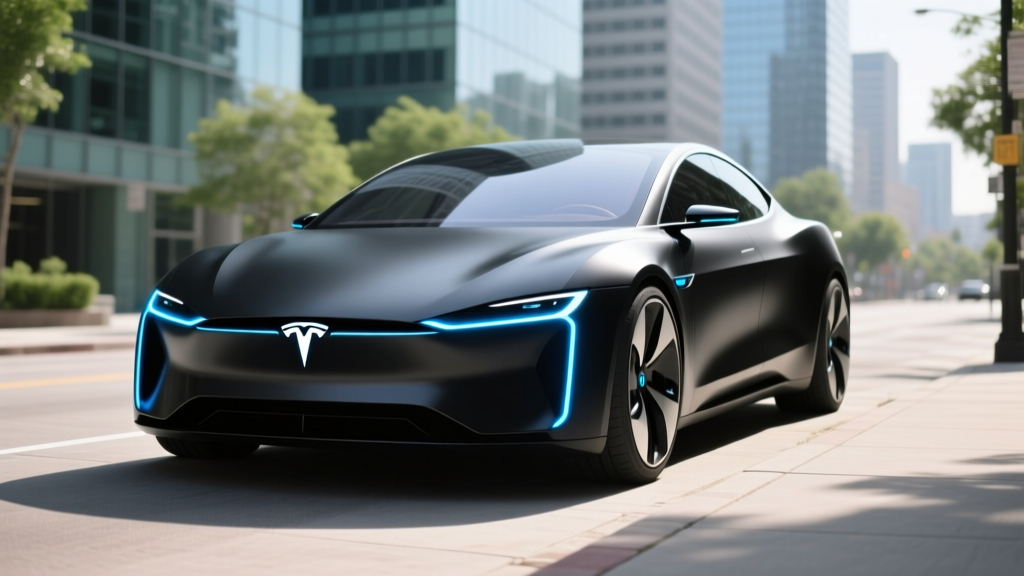
Tesla unveiled the Cybercab in October 2024, a two-seat, steering-wheel-free vehicle designed exclusively for autonomous ride-hailing. Since then, prospective riders, investors, and EV shoppers have asked one question: when will Cybercab be available? As of early 2026, the answer remains complicated — production has begun in limited form, but widespread public availability as a robotaxi service is still rolling out in phases.
This guide covers everything confirmed and estimated about the Cybercab, from its battery and range specs to its autonomous driving capabilities, projected pricing, and how it stacks up against Waymo and Cruise. If you're trying to understand whether this vehicle will affect your next EV purchase or your daily commute, here's the data.
The Cybercab is designed as a Level 4 autonomous vehicle — meaning it operates without any human driver in defined operational design domains (geofenced urban areas, specific weather conditions). This is fundamentally different from Tesla's consumer vehicles equipped with FSD (Supervised), which are Level 2 systems requiring full driver attention. The Cybercab has no steering wheel or pedals.
Cybercab Availability Timeline: What Tesla Has Confirmed
At the October 2024 "We, Robot" event, CEO Elon Musk stated that Tesla aimed to begin Cybercab production before 2027, with an initial target of late 2026. As of Q1 2026, here is where things stand:
- Prototype testing: Active in Austin, TX and the San Francisco Bay Area throughout 2025.
- Limited production start: Tesla confirmed low-volume manufacturing began at Giga Texas in late 2025, primarily for fleet validation and regulatory testing.
- Commercial robotaxi service launch: Targeted for mid-to-late 2026 in Austin, with expansion to other cities pending regulatory approval.
- Consumer purchase: Tesla has not confirmed whether the Cybercab will be available for individual ownership. The business model centers on Tesla operating its own ride-hailing network.
Regulatory approval remains the critical bottleneck. The National Highway Traffic Safety Administration (NHTSA) must certify the vehicle for public road use without a steering wheel or pedals, and state-level agencies (like California's DMV and CPUC) must grant autonomous vehicle deployment permits. NHTSA's automated vehicle safety framework continues to evolve, and no federal blanket approval for driverless vehicles currently exists.
Range, Battery, and Efficiency: What We Know
Because the Cybercab is not yet in consumer production, official EPA certification has not been published. However, Tesla has shared preliminary specifications, and industry analysis provides reasonable estimates based on the vehicle's platform.
| Specification | Estimated / Announced |
|---|---|
| Battery Capacity | ~50 kWh usable (LFP chemistry) |
| EPA Estimated Range | ~200–250 miles (unofficial; pending EPA certification) |
| Efficiency | ~130–140 MPGe (estimated); ~24–26 kWh/100 mi |
| Drivetrain | Rear-wheel drive, single motor |
| Horsepower | ~200 hp (estimated) |
| 0–60 mph | ~6.5 seconds (estimated) |
| Top Speed | ~100 mph (software-limited) |
The Cybercab's relatively small ~50 kWh battery and lightweight two-seat design are optimized for urban duty cycles — short trips, frequent stops, regenerative braking. In city robotaxi use, 200+ miles is achievable. However, sustained highway driving at 70 mph could reduce range to ~150–170 miles. Cold-weather operation (below 32°F) may cut range by 20–30%, bringing real-world winter range to approximately 140–175 miles. For a vehicle that returns to a depot to charge between ride clusters, this is manageable — but it is not a road-trip vehicle.
Tesla is expected to use LFP (lithium iron phosphate) battery chemistry in the Cybercab. LFP cells are lower in energy density than NMC (nickel manganese cobalt) but offer significant advantages for fleet use: lower cost, longer cycle life (3,000+ cycles vs. ~1,500 for NMC), no cobalt sourcing concerns, and the ability to charge regularly to 100% without accelerated degradation. For a robotaxi that may charge 1–2 times daily, LFP is the pragmatic choice.
Charging Speed: DC Fast, Wireless, and Depot Charging
The Cybercab is designed around Tesla's vision of high-utilization fleet operations, which means charging speed and convenience are central to the business model.
| Charging Level | Power | Speed / Notes |
|---|---|---|
| DC Fast Charging | Peak ~150 kW (estimated) | 10–80% in ~20–25 minutes (estimated) |
| Wireless Inductive Charging | ~11–19 kW (announced) | No plug-in required; vehicle parks over a pad. Ideal for autonomous depot charging. |
| Level 2 (Home/Depot) | ~11.5 kW / 48A | ~45–55 miles per hour of charging |
The headline feature is wireless inductive charging. Tesla confirmed the Cybercab will support pad-based charging, eliminating the need for a robotic arm or human to plug in. The vehicle drives over a ground-mounted pad and begins charging automatically — essential for a vehicle with no driver to handle a charging cable.
DC fast charging at ~150 kW is modest compared to vehicles like the Hyundai Ioniq 5 (peak 240 kW) or Lucid Air (peak 300+ kW), but with a smaller ~50 kWh battery, the absolute charge time remains practical. A 20-minute DC session can add roughly 120–150 miles of range — enough for several hours of urban rides between top-ups.
One important note: the Cybercab does not include a NACS charge port for consumer-style public charging. Fleet depot charging (wireless pads and proprietary connectors) will be the primary refueling method.
Autonomous Driving: Tesla's AI5 Hardware and the Level 4 Question
The Cybercab represents Tesla's most ambitious bet on full autonomy. Unlike its consumer vehicles, which ship with FSD (Supervised) — a Level 2 system requiring driver engagement — the Cybercab is designed from the ground up for Level 4 driverless operation.
- The Cybercab will operate only within approved geofenced zones — likely dense urban cores with mapped infrastructure.
- Adverse weather (heavy rain, snow, fog) may restrict or suspend service.
- Tesla has no public safety record for driverless operations at scale. Waymo has logged over 20 million driverless miles with published safety data; Tesla's autonomous track record is limited to supervised FSD.
- Regulatory approval for driverless operation is required city-by-city and state-by-state. Approval in Austin does not guarantee approval in Los Angeles or New York.
The Cybercab will run on Tesla's next-generation AI5 inference chip, which Tesla claims delivers approximately 10x the compute performance of the current HW4 (Hardware 4) platform. The sensor suite is camera-only — Tesla has rejected lidar and radar, relying entirely on its neural-network-based vision system.
This is a significant technical divergence from competitors. Waymo's 6th-generation driver system uses a combination of lidar, radar, and cameras. Cruise's Origin (before the program was paused) used a similar multi-sensor approach. Tesla's camera-only strategy for Level 4 is unproven at commercial scale and remains a point of debate among autonomous vehicle engineers.
Interior, Cargo, and Passenger Space
The Cybercab is a two-seat vehicle with a butterfly-style door design and a compact footprint roughly similar to a Mazda MX-5 Miata in length but with a more upright cabin.
- Seating: 2 passengers on a bench-style seat with a center console screen.
- Legroom: Estimated ~42 inches (generous for a compact vehicle due to the skateboard platform and no front engine/firewall).
- Cargo volume: Approximately 10–12 cubic feet behind the seats (rear trunk area). No front trunk (frunk) — space is occupied by compute hardware and HVAC systems.
- Infotainment: Single large center touchscreen (~15–17 inches). No driver display (no driver). Entertainment and ride information only.
- Climate: Standard HVAC with heat pump (expected, based on Tesla's current platform architecture).
This is not a family vehicle, a grocery hauler, or a road-trip machine. It is purpose-built for point-A-to-point-B urban rides — essentially an autonomous Uber for 1–2 passengers with a carry-on bag or backpack.
Pricing, Operating Cost, and the Tax Credit Question
Because the Cybercab is designed as a fleet vehicle and not (currently) for consumer purchase, traditional MSRP and tax credit analysis doesn't apply in the usual way. Here's what we know:
| Cost Factor | Details |
|---|---|
| Estimated Fleet Unit Cost | $25,000–$30,000 per vehicle (Tesla's stated target) |
| Consumer Purchase Price | Not confirmed; Tesla has not announced individual sales |
| Estimated Cost Per Ride | $0.20–$0.30 per mile (Tesla's projection); ~$5–$8 per typical urban trip |
| Federal Tax Credit (§30D) | Not applicable if Tesla retains ownership. If sold to consumers, eligibility would depend on MSRP cap ($55,000 for sedans), buyer income limits, and battery sourcing rules per IRS §30D guidelines. |
| Commercial Clean Vehicle Credit (§45W) | If purchased by a fleet operator (not Tesla-owned), up to $7,500 per vehicle may be available under the commercial credit, which has no MSRP or income caps. |
Tesla's long-term pitch is that the Cybercab will generate revenue for owners who purchase one and add it to the Tesla network — a concept Musk has compared to Airbnb or Turo. However, this "buy a Cybercab, earn passive income" model has not been detailed with specifics on revenue splits, utilization rates, insurance liability, or maintenance responsibilities.
Cybercab vs. Waymo: How Tesla's Robotaxi Compares
The Cybercab's primary competitor is not another EV — it's Waymo, Alphabet's robotaxi service that is already operating commercially in Phoenix, San Francisco, Los Angeles, and Austin as of early 2026.
- Lower vehicle cost (~$25–30K vs. Waymo's ~$70K+ per vehicle with sensor suite)
- Wireless charging enables fully autonomous depot operations
- Tesla's massive real-world driving data from FSD fleet (billions of miles)
- Potentially faster geographic expansion if regulatory approvals come through
- No commercial driverless track record (Waymo has 20M+ driverless miles)
- Camera-only sensor suite is unproven for Level 4 at scale
- Regulatory approval timeline is uncertain and jurisdiction-dependent
- Two-seat capacity limits ride-sharing and group trips
- No confirmed consumer purchase option
Waymo uses the Jaguar I-PACE (and is transitioning to the Zeekr RT) with a lidar-radar-camera sensor fusion approach. Each vehicle costs significantly more, but Waymo has demonstrated that its system works safely in complex urban environments with published safety performance data. Tesla must match that safety evidence before regulators will approve widespread Cybercab deployment.
Who Is the Cybercab For?
The Cybercab is not a vehicle you buy — at least not in the traditional sense. It's a mobility service you use. Here's who benefits most:
- Urban commuters without cars: If you live in a dense city and rely on Uber/Lyft, the Cybercab could offer lower per-ride costs once operational at scale.
- Investors and fleet operators: If Tesla opens fleet purchasing to third parties with a revenue-sharing model, commercial buyers may find ROI — but the financial model is unproven.
- EV shoppers reconsidering ownership: If robotaxi costs drop below $0.30/mile, some urban dwellers may decide they don't need to own a vehicle at all.
The Cybercab is not for families, road-trippers, rural residents, or anyone who needs cargo space, towing, or all-weather capability. It fills a narrow but potentially massive niche: autonomous urban point-to-point transport.
Frequently Asked Questions
When will Cybercab be available to ride?
Tesla targets a commercial robotaxi launch in Austin, TX in mid-to-late 2026, with limited service initially. Expansion to other cities (likely San Francisco, Los Angeles, and Miami) depends on regulatory approval timelines, which vary by jurisdiction. Widespread availability across multiple metro areas is not expected before 2027–2028.
Can I buy a Tesla Cybercab for personal use?
Tesla has not confirmed individual consumer sales. The announced business model is Tesla-owned fleet operation. Musk has referenced a future model where individuals could purchase a Cybercab and add it to the Tesla network for passive income, but no pricing, terms, or timeline for consumer purchases have been published.
What is the real-world range of the Cybercab?
Based on the estimated ~50 kWh LFP battery and compact design, expect approximately 200–250 miles in urban driving conditions. Highway use at sustained speeds will likely reduce this to 150–170 miles. Cold weather (below freezing) may cut range by 20–30%. For a robotaxi returning to a depot between ride clusters, this is adequate — but it limits intercity use.
How fast does the Cybercab charge?
Estimated DC fast charging peaks at ~150 kW, achieving a 10–80% charge in approximately 20–25 minutes. The signature feature is wireless inductive charging at ~11–19 kW, allowing the vehicle to charge autonomously by parking over a ground pad without any plug-in required.
Is the Cybercab self-driving? What SAE level is it?
Yes — the Cybercab is designed as an SAE Level 4 autonomous vehicle, meaning it operates without any human driver in defined geofenced areas. It has no steering wheel or pedals. This is distinct from Tesla's consumer FSD (Supervised), which is Level 2 and requires full driver attention at all times.
Does the Cybercab qualify for the federal EV tax credit?
If Tesla retains ownership and operates the fleet, the §30D consumer credit does not apply. If the Cybercab becomes available for consumer purchase and the MSRP is under $55,000 (sedan cap), it could qualify for up to $7,500 — subject to buyer income limits ($150K single / $300K joint), battery component sourcing requirements, and critical mineral rules per current IRS guidelines. Fleet operators may qualify for the §45W commercial credit instead.
Is the Cybercab safer than a human driver?
Tesla has not published independent safety data for the Cybercab's autonomous system. Waymo, by contrast, has published data showing its driverless vehicles are involved in fewer injury-causing collisions per million miles than human benchmarks. Until Tesla provides comparable, independently verified safety data, claims about Cybercab safety relative to human drivers remain unproven.
The Bottom Line: Should You Wait?
If you're asking "when will Cybercab be available?" because you want to ride in one, the realistic answer is late 2026 in Austin at the earliest, with limited availability. If you're asking because you're reconsidering your next vehicle purchase in hopes that robotaxis will make car ownership obsolete — that shift is still years away for most Americans outside major metro cores.
The Cybercab is a fascinating engineering exercise and a bold bet on Tesla's AI capabilities. But with no commercial driverless track record, unresolved regulatory hurdles, and a camera-only approach that diverges from the proven lidar-camera fusion used by Waymo, the Cybercab has more to prove than it has proven. For now, if you need an EV today, buy one. The robotaxi revolution is coming — just not as fast as the headlines suggest.