The Short Answer on Tesla and Cryptocurrency
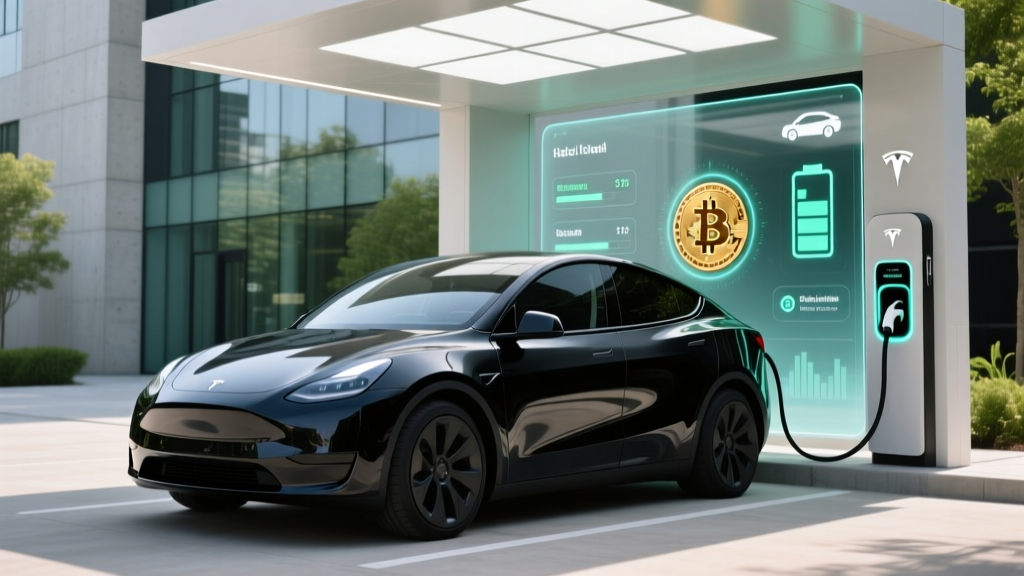
If you've searched "tesla cryptocurrency" hoping to buy a Model Y with Bitcoin, here's the reality in 2026: Tesla does not accept cryptocurrency as direct payment for vehicles. Elon Musk briefly enabled Bitcoin payments in early 2021 before suspending them just 49 days later, citing environmental concerns over Bitcoin mining energy consumption. While Tesla holds Bitcoin on its corporate balance sheet and Musk has championed Dogecoin for merchandise, the automaker has never reinstated crypto as a vehicle payment method.
That doesn't mean crypto holders are locked out. Third-party services like BitPay and Coinbase Commerce enable indirect crypto-to-fiat conversions, and some Tesla dealerships have facilitated crypto transactions through payment processors. But these workarounds convert your crypto to USD before Tesla ever sees the funds — you're effectively selling your Bitcoin and paying cash.
With that clarified, let's evaluate what you'd actually be buying. The 2026 Tesla Model Y remains the best-selling EV in America for good reason, but the competitive landscape has shifted dramatically. Here's the complete data-driven breakdown.
2026 Tesla Model Y: Core Specifications
| Attribute | Long Range RWD | Long Range AWD | Performance |
|---|---|---|---|
| EPA Range | 320 miles | 292 miles | 277 miles |
| Battery Capacity | 78.1 kWh usable (NMC) | 78.1 kWh usable (NMC) | 78.1 kWh usable (NMC) |
| Drivetrain | Rear-Wheel Drive | Dual-Motor AWD | Dual-Motor AWD |
| Horsepower | 346 hp | 384 hp | 456 hp |
| 0-60 mph | 5.8 seconds | 4.8 seconds | 3.5 seconds |
| Peak DC Fast Charge | 250 kW | 250 kW | 250 kW |
| 10-80% DC Charge Time | ~22 minutes | ~22 minutes | ~22 minutes |
| Level 2 Charge Rate | 11.5 kW (44 mi/hr) | 11.5 kW (44 mi/hr) | 11.5 kW (44 mi/hr) |
| MPGe (Combined) | 122 MPGe | 116 MPGe | 111 MPGe |
| Efficiency | 28 kWh/100 mi | 29 kWh/100 mi | 30 kWh/100 mi |
| Base MSRP | $44,990 | $47,990 | $52,490 |
| Battery Warranty | 8 yr / 120,000 mi | 8 yr / 120,000 mi | 8 yr / 120,000 mi |
Source: fueleconomy.gov and Tesla official specifications. Prices reflect 2026 model year MSRP before destination fees.
Real-World Range: What the EPA Number Doesn't Tell You
Real-World Expectation: 260-285 miles highway driving; 220-250 miles in sub-freezing temperatures
Tesla's efficiency remains best-in-class among compact electric SUVs, but the EPA combined cycle blends city and highway driving in ways that flatter the Model Y. On a sustained 75-mph highway run at 70°F, expect roughly 260-285 miles from the Long Range RWD before you're hunting for a charger. The Model Y's heat pump — standard across all trims — significantly reduces cold-weather range loss compared to resistive heating systems, but you'll still see 20-30% reduction in sub-30°F conditions.
The NMC (nickel manganese cobalt) battery chemistry prioritizes energy density over cycle life, meaning you'll see gradual capacity degradation over years of ownership. Tesla's battery management system is aggressive about protecting the pack — the usable 78.1 kWh sits within a larger gross capacity with buffers top and bottom to prevent overcharge and deep discharge damage.
For context, the Hyundai Ioniq 5 Long Range AWD achieves 303 miles EPA with a slightly larger 84 kWh pack, while the Ford Mustang Mach-E Extended Range AWD delivers 290 miles from 91 kWh usable. Tesla extracts more miles per kWh than almost any competitor, a genuine engineering advantage that reduces charging frequency and electricity costs.
Charging Speed: Supercharger Network Still Sets the Standard
| Charging Method | Power | Speed | Notes |
|---|---|---|---|
| Tesla Supercharger V3/V4 | Peak 250 kW | 10-80% in ~22 min | Preconditioning required for peak speed |
| CCS Fast Charger (adapter) | Peak 250 kW | 10-80% in ~25 min | Requires Tesla CCS adapter ($175) |
| Level 2 Home (48A) | 11.5 kW | 44 miles per hour | Full charge in ~7 hours |
| Level 2 Home (32A) | 7.7 kW | 30 miles per hour | Full charge in ~10 hours |
| Level 1 (120V) | 1.4 kW | 3-4 miles per hour | Emergency/trickle only |
The Model Y charges at a peak 250 kW on Tesla's Supercharger network, which now exceeds 6,000 stations in North America. However, peak rate is not sustained rate. The charge curve tapers significantly above 60% state of charge — you'll pull maximum power only between roughly 10-40% SoC. This is why Tesla quotes 10-80% times rather than 0-100%.
Preconditioning matters. Navigate to a Supercharger using the built-in navigation, and the Model Y will begin warming the battery 10-15 minutes before arrival. Skip this step (by entering the charger address manually or arriving with a cold-soaked battery) and you'll see peak rates closer to 150-180 kW, extending your stop to 28-35 minutes.
With Tesla's opening of the Supercharger network to non-Tesla EVs via NACS adapters, congestion at popular stations has increased. Plan road trips with buffer — arrive at chargers with 15-20% SoC rather than running the pack to single digits.
For home charging, the Tesla Wall Connector delivers 44 miles of range per hour at 48 amps, assuming you have a 60-amp dedicated circuit installed. Most owners charging overnight from 30% to 80% will wake to a full daily charge in 4-5 hours. Budget $500-$1,200 for professional Level 2 installation, potentially more if your electrical panel needs upgrading to 200 amps.
Pricing, Trims, and Federal Tax Credit Eligibility
| Trim | MSRP | Destination | Total Before Credit | Est. After §30D Credit |
|---|---|---|---|---|
| Long Range RWD | $44,990 | $1,390 | $46,380 | $38,880* |
| Long Range AWD | $47,990 | $1,390 | $49,380 | $41,880* |
| Performance | $52,490 | $1,390 | $53,880 | $46,380* |
*Assumes full $7,500 federal tax credit eligibility. Point-of-sale transfer available through participating dealers, reducing your out-of-pocket cost at purchase.
Federal tax credit reality check: The §30D clean vehicle credit offers up to $7,500, but eligibility depends on three factors that trip up many buyers:
- MSRP Cap: The Model Y qualifies as an SUV under IRS rules (MSRP cap: $80,000). All current trims clear this threshold.
- Income Limits: Modified adjusted gross income cannot exceed $150,000 (single), $225,000 (head of household), or $300,000 (joint filers).
- Battery Sourcing: At least 40% of critical minerals must be sourced from the US or free-trade-agreement countries, and battery components must meet domestic manufacturing thresholds. Tesla's battery supply chain has adapted, but always verify current-year eligibility at IRS.gov before purchasing.
The credit can now be transferred to the dealer at point of sale, functioning as an immediate $7,500 discount rather than a tax-time reconciliation. This is a significant cash-flow advantage if you qualify.
Cargo, Comfort, and Daily Livability
The Model Y's crossover form factor delivers genuine utility. Behind the second row, you get 30.2 cubic feet of cargo space — expanding to 72.1 cubic feet with the 60/40 split rear seats folded. The front trunk (frunk) adds 4.1 cubic feet for charging cables, groceries, or a small carry-on.
Passenger space remains competitive: 41.8 inches of front legroom and 38.4 inches rear. Three adults across the back seat works for short trips, but the sloping roofline cuts into headroom for anyone over 6 feet. Compare this to the Ioniq 5's boxier profile, which offers marginally better rear headroom and a flat floor, or the Mach-E's more traditional SUV seating position.
The minimalist interior — dominated by a 15.4-inch touchscreen — eliminates physical buttons entirely. Climate, mirrors, glovebox, and even wiper speed live in the display. This approach divides buyers: enthusiasts love the clean aesthetic; traditionalists find it distracting. After a week of ownership, muscle memory develops, but the learning curve is real.
Technology and Driver Assistance
Every Model Y includes Tesla's Basic Autopilot: adaptive cruise control, lane centering, and automatic emergency braking. This is a SAE Level 2 driver-assistance system — you must keep hands on the wheel and remain engaged at all times. It is not self-driving.
The system can control steering and acceleration simultaneously, but the driver must continuously supervise and be prepared to take over immediately. Tesla's Full Self-Driving (Supervised) package, a $8,000 option, adds automatic lane changes, navigation-based exits, and traffic light recognition — but remains Level 2. The driver is legally responsible for the vehicle at all times.
The infotainment system is best-in-class for responsiveness and over-the-air updates. Tesla regularly pushes software improvements that add features post-purchase — recent updates have improved regenerative braking customization, added new games to the arcade, and refined route planning algorithms. Netflix, YouTube, and Spotify stream natively when parked.
Notable drawbacks: no Apple CarPlay or Android Auto (Tesla uses its proprietary system exclusively), no heads-up display, and no physical instrument cluster. The absence of CarPlay frustrates iPhone users accustomed to seamless integration. Additionally, Tesla's build quality — while improved — still trails legacy automakers in panel gap consistency and interior material quality at this price point.
Pros, Cons, and the Verdict
Pros
- Best-in-class efficiency (28-30 kWh/100 mi)
- Supercharger network access (6,000+ stations, highest reliability)
- Class-leading cargo capacity (72.1 cu ft max)
- Strong resale value relative to EV segment
- Continuous OTA software improvements
- Competitive 0-60 performance across all trims
Cons
- No Apple CarPlay / Android Auto
- Minimalist interior divides opinion; no physical controls
- FSD remains Level 2 despite "Full Self-Driving" branding
- Ride quality firm on 20-inch wheels
- Insurance costs 20-40% higher than comparable ICE vehicles
- Panel gaps and build consistency still trail premium competitors
Who Should Buy the Model Y (and Who Shouldn't)
Buy it if: You prioritize charging network reliability, maximize cargo utility in a compact footprint, want strong performance without paying luxury-badge premiums, and are comfortable with touchscreen-only controls. The Model Y excels as a daily commuter and road-trip vehicle, particularly for Tesla Supercharger corridor residents.
Look elsewhere if: You demand CarPlay integration, prefer physical buttons and traditional luxury materials, need three-row seating (consider the Model X or Kia EV9), or prioritize ride comfort over sporty handling. The Hyundai Ioniq 5 and Ford Mustang Mach-E offer compelling alternatives with different design philosophies and, in some trims, faster peak charging speeds.
As for paying with cryptocurrency: convert to fiat first, verify your §30D eligibility with a tax professional, and focus on the vehicle's merits rather than the payment method. The Model Y in 2026 remains a data-driven choice for efficiency-focused EV buyers — regardless of how you fund the purchase.
Frequently Asked Questions
Does Tesla accept Bitcoin or other cryptocurrency for vehicle purchases?
No. Tesla suspended Bitcoin payments in May 2021 and has not reinstated cryptocurrency as a direct payment method. You can use third-party payment processors to convert crypto to USD, but Tesla receives fiat currency.
What is the real-world highway range of the 2026 Model Y Long Range?
Expect 260-285 miles at sustained highway speeds (70-75 mph) in moderate temperatures. Cold weather (below 30°F) reduces this to 220-250 miles despite the standard heat pump.
How long does it take to charge a Model Y at home?
With a 48-amp Level 2 charger (11.5 kW), you'll add 44 miles of range per hour. A full charge from 10% to 100% takes approximately 7 hours. Most owners charging overnight from 30% wake to a complete daily charge.
Does the 2026 Model Y qualify for the $7,500 federal tax credit?
Yes, if you meet income requirements (under $150K single / $300K joint) and the vehicle's battery sourcing meets current-year critical mineral and component thresholds. Always verify at IRS.gov before purchase, as sourcing rules evolve annually.
Is Tesla's Full Self-Driving actually autonomous?
No. FSD (Supervised) is a SAE Level 2 driver-assistance system. The driver must remain fully engaged, hands on wheel, and legally responsible for vehicle operation at all times. True Level 4 autonomous vehicles (Waymo, Zoox) operate without driver supervision in geofenced areas.
How does Model Y efficiency compare to competitors?
At 28 kWh/100 mi (Long Range RWD), the Model Y is 10-15% more efficient than the Hyundai Ioniq 5 AWD (30 kWh/100 mi) and Ford Mach-E AWD (32 kWh/100 mi). This translates to fewer charging stops and lower electricity costs over ownership.