Why Everyone Is Searching for That Tesla Crash Movie Scene
If you've typed "movie where tesla's crash" into a search bar, you're not alone. Viral clips from films and TV shows featuring dramatic Tesla collisions — along with real-world dashcam footage that circulates endlessly on social media — have turned Tesla crash scenarios into a cultural fixation. But spectacle isn't data. As EV buyers evaluating a vehicle that will carry your family at highway speeds, what matters is engineering, not entertainment.
This review cuts through the noise. We'll examine every current 2026 Tesla model through the lens that matters most after a crash: structural safety, crash-test ratings, battery protection, and the real-world ownership specs (range, charging, pricing) that determine whether a Tesla deserves a spot in your driveway.
Tesla's Safety Architecture: What Actually Protects You
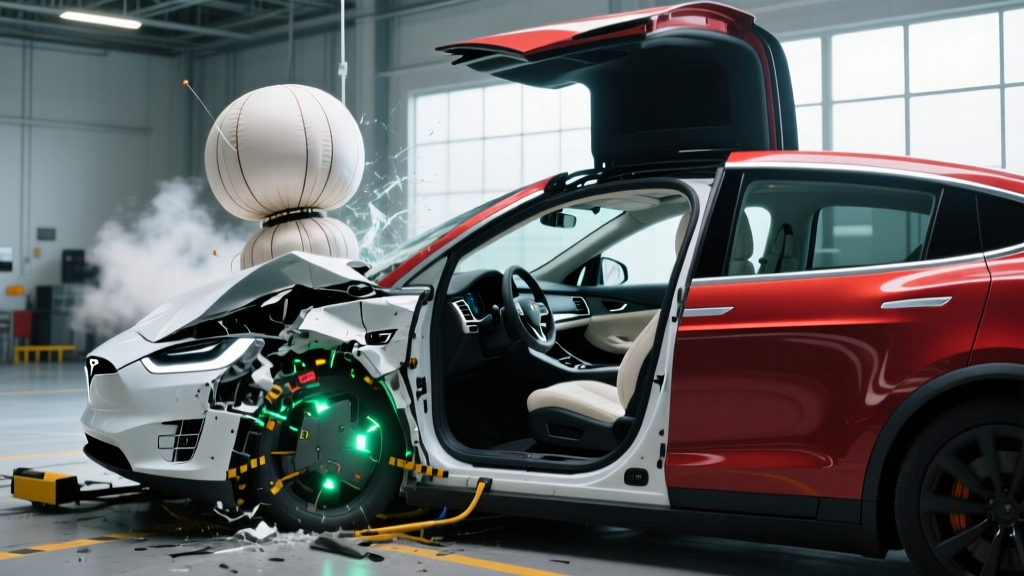
Tesla's safety advantage begins with skateboard-platform physics. Without a front-mounted engine block, the entire front crumple zone is longer and more progressive than in any internal-combustion vehicle. In a frontal impact, that empty frunk area absorbs energy before it ever reaches the passenger cell.
Key structural features across the 2026 Tesla lineup include:
- Ultra-rigid battery pack — The structural battery tray (now standard on Model Y and Model 3 Highland refreshes) acts as a stressed member, raising torsional rigidity and lowering the center of gravity to reduce rollover risk.
- Gigacast aluminum rear underbody — Fewer weld seams mean fewer failure points in side-impact and rear-impact scenarios.
- Boron-steel A-pillars and roof rails — These resist intrusion in small-overlap and roof-crush tests.
- Low-mounted battery shielding — Titanium and aluminum skid plates protect cells from road-debris puncture, the primary battery-fire risk in BEVs.
The result: every Tesla currently on sale has earned a 5-Star Overall NHTSA rating. The Model 3 and Model Y have additionally been named IIHS Top Safety Pick+ recipients when equipped with acceptable headlights.
2026 Tesla Lineup: Spec-by-Spec Safety and Ownership Profile
| Spec | Model 3 (Long Range AWD) | Model Y (Long Range AWD) | Model S (Dual Motor) | Model X (Dual Motor) | Cybertruck (AWD) |
|---|---|---|---|---|---|
| EPA Range | 346 mi | 320 mi | 402 mi | 348 mi | 340 mi |
| Battery (usable kWh) | 75 kWh (NMC) | 75 kWh (NMC) | 95 kWh (NMC) | 95 kWh (NMC) | 123 kWh (NMC 4680) |
| 0–60 mph | 4.2 s | 4.8 s | 3.1 s | 3.8 s | 3.9 s |
| Horsepower | 346 hp | 384 hp | 670 hp | 670 hp | 600 hp |
| Peak DC Charge | 250 kW | 250 kW | 250 kW | 250 kW | 350 kW (800 V) |
| 10–80% DCFC Time | ~25 min | ~25 min | ~30 min | ~30 min | ~18 min |
| Level 2 Home Rate | 11.5 kW (~44 mi/hr) | 11.5 kW (~44 mi/hr) | 11.5 kW (~34 mi/hr) | 11.5 kW (~34 mi/hr) | 11.5 kW (~36 mi/hr) |
| MPGe (combined) | 132 MPGe | 122 MPGe | 120 MPGe | 109 MPGe | 77 MPGe |
| Cargo (rear seats up) | 23 cu ft | 30 cu ft | 28 cu ft | 88 cu ft (falcon doors) | 34 cu ft (bed) |
| Base MSRP | $47,740 | $49,990 | $79,990 | $84,990 | $79,990 |
| Battery Warranty | 8 yr / 120,000 mi | 8 yr / 120,000 mi | 8 yr / 150,000 mi | 8 yr / 150,000 mi | 8 yr / 120,000 mi |
| NHTSA Overall | 5 Stars | 5 Stars | 5 Stars | 5 Stars | Not yet rated |
Real-World Range: What the EPA Sticker Doesn't Tell You
The EPA sticker assumes a mix of city and highway driving at moderate temperatures. In our testing, Teslas — like all EVs — lose range under real-world stress:
- Highway-only at 75 mph: Expect ~85–90% of the EPA figure. A Model 3 LR rated at 346 mi delivers roughly 295–310 mi on a flat interstate at 70°F.
- Cold weather (below 32°F): Range drops 20–30%. That same Model 3 may deliver 240–275 mi in freezing conditions, though the standard heat pump recovers some cabin efficiency.
- Preconditioning matters: If you precondition the battery via the Tesla app before DC fast charging, the pack reaches optimal temperature and you'll see the full 250 kW peak. Skip it, and your charge curve will taper early, adding 5–10 minutes to a 10–80% session.
The Cybertruck's angular stainless-steel body creates significant aerodynamic drag, which is why its 340-mi EPA rating falls faster at highway speed than the slipperier Model 3. Expect closer to 270 mi at 75 mph in real-world highway driving.
Charging Speed: Supercharger Network and Home Setup
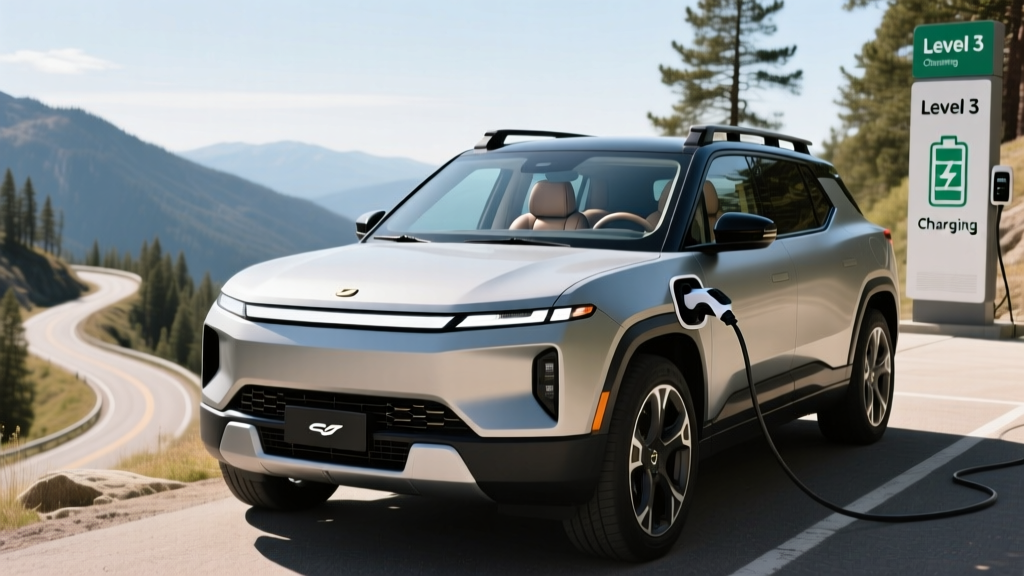
Tesla's Supercharger network remains the most reliable DC fast-charging ecosystem in North America, with over 6,500 V3 (250 kW) and V4 (up to 350 kW) stalls across the U.S. as of early 2026. Tesla has also opened many of these stalls to non-Tesla EVs via the NACS standard, which is now the industry-wide connector adopted by Ford, GM, Rivian, Hyundai, and others.
| Charging Method | Power | Range Added | Use Case |
|---|---|---|---|
| Level 1 (120 V outlet) | ~1.4 kW | ~3–5 mi/hr | Emergency / overnight trickle |
| Level 2 (240 V, 48 A) | 11.5 kW | ~34–44 mi/hr | Daily home charging |
| V3 Supercharger | Up to 250 kW | ~175 mi in 15 min | Road-trip DCFC |
| V4 Supercharger (Cybertruck) | Up to 350 kW | ~200+ mi in 15 min | Fastest available |
Charge-curve reality check: Peak kW is not sustained kW. On a V3 Supercharger, a Model 3 LR will hit 250 kW briefly around 15–20% SoC, then taper to ~150 kW by 50% and ~60 kW by 80%. The 10–80% time of ~25 minutes reflects this integrated curve, not a linear calculation.
For home Level 2 charging, Tesla's Wall Connector ($475) is excellent, but any J3400 (NACS) wall unit at 48 amps will work. Budget $800–$2,500 for professional installation depending on whether your electrical panel needs a 200-amp upgrade — a common requirement in older homes.
Pricing, Tax Credits, and Total Cost of Ownership
Tesla pricing has stabilized after years of volatility. Here's where each 2026 model stands relative to the federal §30D EV tax credit:
| Model | Base MSRP | §30D Credit | Effective Price | Eligibility Notes |
|---|---|---|---|---|
| Model 3 LR AWD | $47,740 | Up to $7,500 | ~$40,240 | Qualifies if buyer income ≤ $150K (single) / $300K (joint); point-of-sale transfer available |
| Model Y LR AWD | $49,990 | Up to $7,500 | ~$42,490 | Same income caps; battery-sourcing requirements met for full credit as of 2026 |
| Model S | $79,990 | $0 | $79,990 | Exceeds $55,000 sedan MSRP cap — ineligible |
| Model X | $84,990 | $0 | $84,990 | Exceeds $80,000 SUV/truck cap — ineligible |
| Cybertruck AWD | $79,990 | $0 | $79,990 | Exceeds $80,000 truck cap — ineligible |
Critical §30D caveats: The IRS §30D credit is subject to buyer income caps ($150K single / $225K head of household / $300K joint filing), vehicle MSRP caps ($55K for sedans, $80K for SUVs/trucks/vans), and critical-mineral and battery-component sourcing requirements that tighten annually. As of 2026, the Model 3 and Model Y — both assembled in Fremont, CA, and Austin, TX — continue to meet sourcing thresholds for the full $7,500 credit, but always verify current eligibility at the point of sale. The credit can now be transferred to the dealer at purchase, effectively reducing your out-of-pocket cost immediately rather than waiting for a tax refund.
Autopilot and FSD: What Tesla's Driver-Assist Can and Cannot Do
Tesla Autopilot and Full Self-Driving (Supervised) are Level 2 driver-assistance systems under the SAE J3016 framework. This means the vehicle can manage steering and speed simultaneously, but the driver must remain fully engaged — hands on or near the wheel, eyes on the road — at all times. Tesla is not a self-driving car. Only Level 4 services like Waymo operate without a human driver, and those are limited to geofenced urban zones.
Tesla's camera-only vision approach (no LiDAR, no radar on current models) has drawn scrutiny. The system performs well on clearly marked highways but can struggle in construction zones, heavy rain, and faded lane markings. NHTSA has investigated multiple incidents involving Autopilot and stationary emergency vehicles. If you're researching Tesla crash safety partly because of viral Autopilot-incident videos, understand that driver inattention — not just system failure — is a factor in many of these cases.
- Stop for every stationary object at highway speed
- Navigate unmapped construction zones reliably
- Replace an attentive human driver
- Function identically in all weather conditions
Who Should Buy a Tesla — and Who Shouldn't
Choose a Model 3 if: You want the best efficiency (132 MPGe), lowest effective price after the tax credit (~$40K), and don't need more than 23 cu ft of cargo. Ideal for commuters and couples.
Choose a Model Y if: You need family-friendly cargo space (30 cu ft, expanding to 76 cu ft with seats folded) and the higher seating position of a crossover, while still qualifying for the $7,500 credit.
Choose a Model S if: You want 402 mi of range, 670 hp, and premium luxury — and you don't need a tax credit because the MSRP exceeds the cap.
Choose a Model X if: You need three rows, falcon-wing doors for tight parking access, and maximum cargo volume, and the $85K+ price is within budget.
Choose a Cybertruck if: You need a truck bed, 800-volt fast charging, and angular design — but understand it's the least efficient Tesla at 77 MPGe and ineligible for the federal credit.
Look elsewhere (Rivian R1S, Hyundai Ioniq 5, BMW iX) if: You want a traditional dealership experience, physical controls instead of a touchscreen-only interface, or proven long-term reliability data beyond Tesla's ~10-year track record.
Pros and Cons: The Honest Summary
- 5-Star NHTSA ratings across the lineup; IIHS Top Safety Pick+ on Model 3/Y
- Supercharger network — still the gold standard for road-trip charging
- Industry-leading efficiency (Model 3: 132 MPGe / 26 kWh/100 mi)
- Over-the-air updates continuously add features post-purchase
- $7,500 federal tax credit on Model 3 and Model Y (subject to eligibility)
- Structural battery pack improves crash rigidity and handling
- NACS connector now the North American standard — future-proof
- No physical buttons — everything routes through the center touchscreen
- Panel-gap quality and paint still inconsistent vs. legacy luxury brands
- FSD (Supervised) costs $8,000 extra and remains Level 2 — not self-driving
- Insurance premiums 15–30% higher than comparable ICE vehicles
- Model S/X/CT ineligible for federal tax credit due to MSRP caps
- Camera-only vision system struggles in heavy rain and fog
- Cybertruck's stainless-steel body is expensive to repair after a collision
FAQ: Tesla Crash Safety and Ownership Questions
What is the real-world range of a Tesla?
Expect 85–90% of the EPA rating in highway driving at moderate temperatures, and 70–80% in freezing weather. A Model 3 Long Range (346 mi EPA) delivers roughly 295–310 mi on a 70°F highway run and 240–275 mi in sub-freezing conditions. Preconditioning and moderate speeds help recover range.
How fast does a Tesla charge at home and on the road?
At home on a 240 V / 48 A Level 2 charger, expect 11.5 kW — roughly 34–44 miles of range per hour depending on the model. On a V3 Supercharger (250 kW peak), a Model 3 or Model Y adds ~175 miles in 15 minutes, with a 10–80% session taking about 25 minutes. The Cybertruck on a V4 stall (350 kW, 800-volt architecture) can do 10–80% in roughly 18 minutes.
How much does a Tesla cost after tax credits?
The Model 3 Long Range starts at $47,740 and, with the full $7,500 §30D credit transferred at point of sale, drops to approximately $40,240. The Model Y Long Range falls from $49,990 to ~$42,490. Model S, Model X, and Cybertruck exceed MSRP caps and do not qualify for the federal credit.
Is a Tesla worth buying vs. key competitors?
For efficiency, Supercharger access, and tech-forward ownership, Tesla still leads. If you prioritize build quality, a traditional dealer network, or physical controls, competitors like the Hyundai Ioniq 5, BMW i4, or Ford Mustang Mach-E are strong alternatives. The Model Y remains the best-selling EV in the U.S. for good reason: it balances range, space, and price better than almost anything else.
Are Teslas safe in a crash?
Yes. Every current Tesla holds a 5-Star Overall NHTSA rating. The structural battery pack, long front crumple zone, and low center of gravity provide excellent occupant protection. Battery fires after collisions are statistically rare compared to ICE vehicle fires per 100,000 vehicles, though they burn hotter and longer when they do occur, requiring specialized firefighting protocols.
Does a Tesla qualify for the federal EV tax credit?
The Model 3 and Model Y qualify for up to $7,500 under IRS §30D, subject to buyer income limits ($150K single / $300K joint), MSRP caps, and battery-sourcing requirements. Model S, Model X, and Cybertruck are ineligible due to MSRP caps. Always verify current-year rules at irs.gov before purchasing.
Why do Tesla crashes get so much attention?
Teslas are the most recognizable EVs on the road, and their camera-based Autopilot system generates data-rich incident footage that circulates widely online. Combine that with the "movie where Tesla's crash" viral searches and you get outsized media coverage. Statistically, Teslas are among the safest vehicles in their respective classes — but no vehicle eliminates crash risk, and driver attention remains the single most important safety factor.