Understanding Tesla Crash Fire Risk: The Data vs. The Headlines
Search for "Tesla car crash fire" and you'll find a steady stream of viral videos and sensational headlines. But as a data-driven EV publication, our job is to separate emotional reactions from engineering reality. Lithium-ion battery fires in electric vehicles are real, but they are also rare — and understanding the actual risk profile requires looking at NHTSA data, battery chemistry, and vehicle design rather than isolated incidents.
This review examines Tesla's current lineup — focusing on the 2026 Model Y and Model 3 — through the lens of battery safety, crash performance, and the broader ownership picture. We'll cover the engineering that mitigates thermal runaway, the real-world fire statistics, and everything else you need to know about range, charging, pricing, and tax credits.
How Tesla's Battery Design Addresses Crash Fire Risk
Tesla uses two primary battery chemistries across its 2026 lineup, and understanding the difference matters for both safety and longevity:
| Attribute | LFP (Lithium Iron Phosphate) | NMC (Nickel Manganese Cobalt) |
|---|---|---|
| Used In | Model 3 RWD, Model Y RWD | Model 3 Long Range, Model Y Long Range/Performance |
| Thermal Stability | Higher — onset of thermal runaway ~270°C | Lower — onset ~210°C, more energy-dense |
| Energy Density | Lower (heavier pack for same range) | Higher (more range per kg) |
| Cycle Life | 3,000+ cycles | 1,000–2,000 cycles |
| Crash Fire Propensity | Lower — more resistant to thermal runaway propagation | Higher energy release if compromised, but structural protection mitigates |
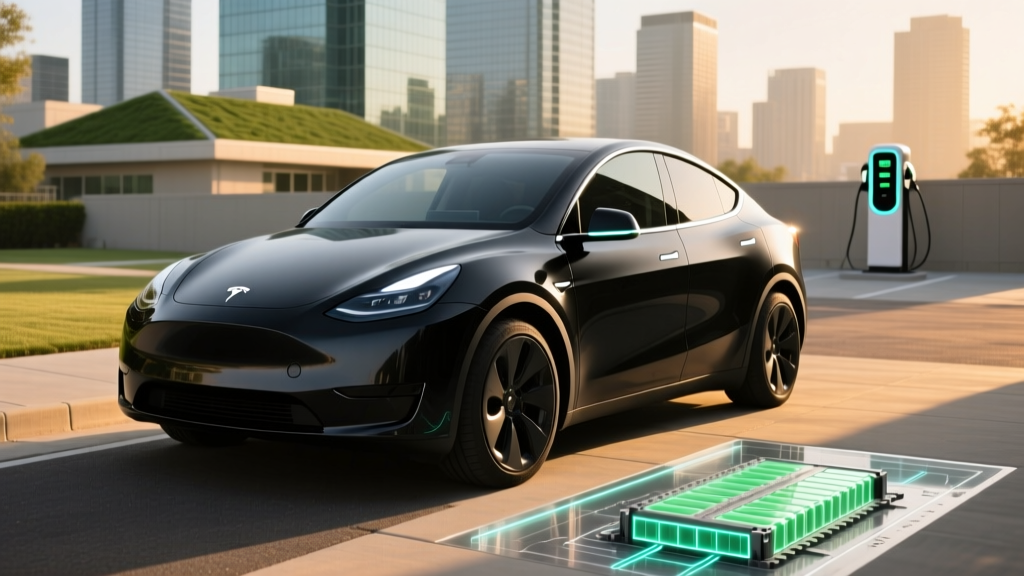
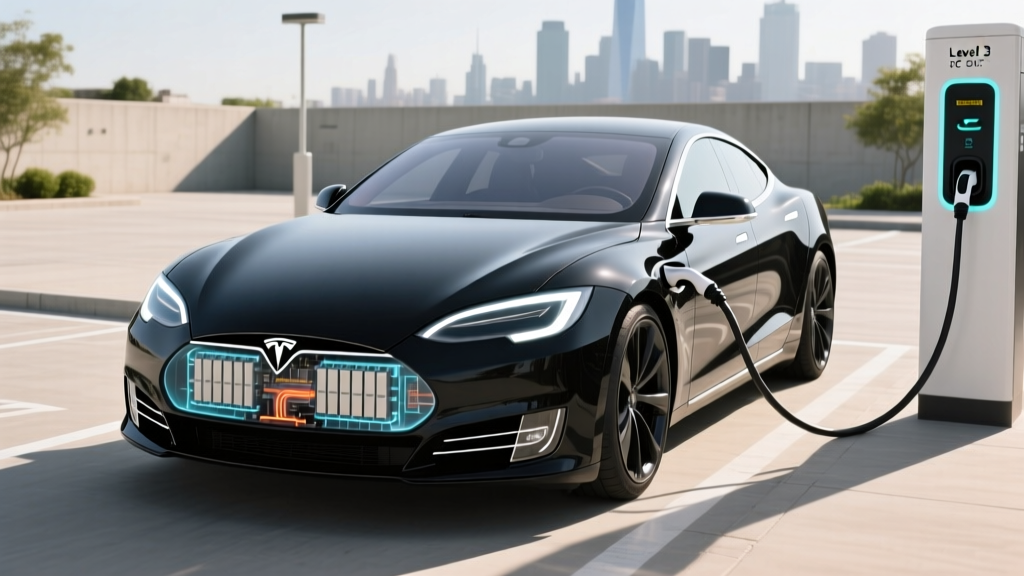
Tesla's structural battery pack (introduced with the 4680 cell architecture) uses the cells themselves as a structural member of the vehicle chassis. This design increases torsional rigidity and lowers the center of gravity, which improves crash dynamics. The battery pack sits within a reinforced enclosure with crumple zones designed to absorb impact energy before it reaches the cells.
In NHTSA's crash testing, the Model Y has consistently earned a 5-star overall safety rating, with 5 stars in frontal crash, side crash, and rollover categories. The IIHS has named the Model Y a Top Safety Pick+ in recent testing cycles.
2026 Tesla Model Y: Full Specifications
The Model Y remains Tesla's best-selling vehicle and the most relevant model for buyers weighing safety, space, and practicality. Here are the exact numbers:
| Spec | Long Range AWD | Performance |
|---|---|---|
| EPA Range | 320 miles | 298 miles |
| Battery (usable) | ~75 kWh, NMC | ~75 kWh, NMC |
| Max DC Fast Charge | 250 kW (V3 Supercharger) | 250 kW |
| 10–80% DC Time | ~27 minutes | ~27 minutes |
| Level 2 Home Charge | 11.5 kW (~44 mi/hr) | 11.5 kW (~44 mi/hr) |
| 0–60 mph | 4.8 seconds | 3.5 seconds |
| Horsepower | 384 hp | 456 hp |
| Drivetrain | Dual-motor AWD | Dual-motor AWD |
| Efficiency | 122 MPGe / 28 kWh/100mi | 117 MPGe / 29 kWh/100mi |
| Cargo Volume | 30.2 cu ft (rear seats up) / 72.1 cu ft (folded) | 30.2 / 72.1 cu ft |
| Rear Legroom | 37.3 inches | 37.3 inches |
| Base MSRP | $44,990 | $49,990 |
Charging Speed and Infrastructure
Charging speed is where Tesla retains a significant practical advantage — not because of peak kW numbers, but because of the Supercharger network's reliability and density. Here's the breakdown:
| Level | Power (kW) | Miles Added/Hour | Best Use |
|---|---|---|---|
| Level 1 (120V) | ~1.4 kW | ~5 mi/hr | Emergency / overnight trickle |
| Level 2 (240V, 48A) | 11.5 kW | ~44 mi/hr | Home overnight charging |
| DC Fast (V3 Supercharger) | 250 kW peak | ~1,000 mi/hr (peak) | Road trips, 10–80% in ~27 min |
Charging curve reality: The 250 kW peak rate applies only between roughly 10–30% State of Charge. Above 50%, the rate tapers significantly — by 80%, you're typically at 60–80 kW. This is standard lithium-ion behavior to protect cell health, not a Tesla-specific limitation. Plan road-trip stops around 10–80% sessions for optimal speed; charging from 80–100% on DC is painfully slow and unnecessary for most trips.
The Model Y uses the NACS (North American Charging Standard) connector natively. With Tesla opening the Supercharger network to other EVs via Magic Dock adapters, Tesla owners benefit from both the largest fast-charging network in North America and increasing cross-compatibility.
Pricing, Tax Credits, and Ownership Cost
| Trim | MSRP | Est. After §30D Credit | Credit Eligibility |
|---|---|---|---|
| Long Range AWD | $44,990 | ~$37,490* | Partial ($3,750) or Full ($7,500)** |
| Performance | $49,990 | ~$42,490* | Partial ($3,750) or Full ($7,500)** |
*Assumes full $7,500 credit eligibility and point-of-sale transfer. Actual credit amount depends on battery sourcing compliance.
**Under IRS §30D rules for 2026, the Tesla Model Y qualifies for the new clean vehicle credit, but the exact amount ($3,750 or $7,500) depends on critical mineral and battery component sourcing requirements that shift annually. Buyer income caps apply: $150,000 single / $225,000 head of household / $300,000 joint MAGI. The Model Y's MSRP is under the $80,000 SUV cap. Consult a tax professional and check the latest IRS guidance before purchase.
- MSRP Cap: Model Y qualifies (under $80,000 SUV threshold) ✓
- Income Cap: Buyer must be under MAGI limits ($150K/$225K/$300K) — verify with tax pro
- Battery Sourcing: Critical minerals and component requirements tighten annually; check fueleconomy.gov for current Tesla eligibility status
- Point-of-Sale Transfer: Available — credit can be applied at purchase, reducing out-of-pocket cost immediately
- Assembly: Must be assembled in North America (Tesla Fremont/Austin — qualifies) ✓
Tesla Crash Fire Incidents: What the Data Shows
High-profile Tesla crash fires — particularly those involving high-speed impacts with stationary objects — have drawn media attention and regulatory scrutiny. Here's what the data actually tells us:
Frequency: Tesla's own Impact Report states that from 2012 to 2023, there was approximately one vehicle fire for every 130 million miles traveled in Tesla vehicles. For context, the NFPA reports that conventional vehicles experience one fire for every 19 million miles traveled. EVs, including Teslas, catch fire at a significantly lower rate per mile driven.
Severity and behavior: When lithium-ion battery packs are structurally compromised in severe impacts, the resulting fire behaves differently than a gasoline fire. Battery fires can reignite hours or even days after initial extinguishment due to thermal propagation between cells. This is why NHTSA issued guidance for first responders on EV fire protocols, and why Tesla publishes detailed Emergency Response Guides for each model.
Structural protection: The Model Y's skateboard architecture places the battery pack low and within a reinforced enclosure. In IIHS moderate overlap and side-impact testing, the battery enclosure has maintained structural integrity. The vast majority of Tesla battery fires have occurred in extreme-impact scenarios (e.g., high-speed collisions with concrete barriers or underride incidents) that would be unsurvivable in most vehicles regardless of powertrain.
Autopilot, FSD, and Active Safety Systems
Tesla's driver-assistance systems are relevant to crash prevention — and to understanding crash causation. The 2026 Model Y ships with:
- Basic Autopilot (included): Traffic-aware cruise control, lane centering, automatic emergency braking, blind-spot monitoring
- Enhanced Autopilot ($6,000): Adds auto lane change, navigate on Autopilot, auto park, summon
- Full Self-Driving Supervised ($8,000): Adds traffic light/stop sign recognition, city street steering assist
Warranty, Battery Longevity, and Replacement
Tesla's warranty coverage for the Model Y:
- Basic Vehicle: 4 years / 50,000 miles
- Battery & Drive Unit: 8 years / 120,000 miles (Long Range/Performance) with minimum 70% capacity retention
- RWD (if available): 8 years / 100,000 miles with 70% retention threshold
Degradation reality: Tesla fleet data shows average battery degradation of approximately 12–15% over 150,000 miles for NMC packs. LFP packs (in RWD trims) degrade more slowly and tolerate regular 100% charging, which is an advantage for daily-use commuters. Full battery replacement out of warranty costs approximately $12,000–$16,000 depending on pack size, though replacements are rare within the warranty period.
Who Should Buy the 2026 Tesla Model Y?
Choose the Model Y if:
- You want access to the most reliable and extensive DC fast-charging network in North America
- You value top-tier crash safety ratings (5-star NHTSA, IIHS TSP+)
- You need crossover cargo space (72.1 cu ft) with sedan-like efficiency (122 MPGe)
- You have home Level 2 charging access and a daily commute under 150 miles
- You want OTA software updates that add features post-purchase
Look elsewhere if:
- You need a traditional dealership service experience (Tesla's mobile service and service center availability varies by region)
- You want physical controls for climate, volume, and mirrors (everything is touchscreen-based)
- You regularly tow heavy loads (3,500-lb max tow rating is modest for the class)
- You're uncomfortable with the camera-only vision approach to driver assists (no lidar or radar)
- Best-in-class Supercharger network (17,000+ stalls in North America)
- Excellent crash safety ratings across all test categories
- Low battery fire rate per mile driven vs. ICE vehicles
- Strong efficiency (28 kWh/100mi) for a dual-motor AWD crossover
- Spacious cargo area with front trunk (frunk) storage
- Over-the-air updates continuously improve the vehicle
- Touchscreen-only interface frustrates some drivers
- FSD Supervised remains Level 2 despite $8,000 price tag
- Ride quality is firm; road noise is noticeable at highway speed
- Service center wait times can be long in some metro areas
- NMC battery in Long Range/Performance requires charge-limit discipline (80% daily)
- Panel gaps and build consistency still vary unit to unit
Frequently Asked Questions
Are Tesla vehicles more likely to catch fire than gas cars?
No. Per NHTSA and NFPA data, EVs including Teslas experience fires at a rate of approximately 25 per 100,000 vehicles, compared to roughly 1,530 per 100,000 for internal combustion vehicles. However, when EV battery fires do occur, they can be more difficult to extinguish due to thermal runaway chemistry in lithium-ion cells.
What is the real-world range of the 2026 Model Y?
The EPA rates the Model Y Long Range at 320 miles. Real-world highway driving at 70–75 mph in moderate temperatures yields approximately 270–290 miles. In cold weather (below 32°F), expect 220–250 miles of highway range due to battery chemistry limitations and cabin heating demands.
How fast does the Model Y charge at home and on road trips?
At home on a Level 2 (240V/48A) charger, the Model Y adds approximately 44 miles of range per hour — a full overnight session easily replenishes daily driving. On V3 Superchargers, it peaks at 250 kW and charges from 10–80% in approximately 27 minutes, though the rate tapers significantly above 50% SoC.
Does the 2026 Tesla Model Y qualify for the federal EV tax credit?
The Model Y is assembled in the US and its MSRP is under the $80,000 SUV cap, so it meets those §30D requirements. The exact credit amount ($3,750 or $7,500) depends on current-year battery sourcing and critical mineral compliance, which changes annually. Buyer income caps ($150K single / $300K joint) also apply. Verify current eligibility on fueleconomy.gov and consult a tax professional.
Is the Model Y worth buying vs. the Hyundai Ioniq 5 or Ford Mustang Mach-E?
The Model Y wins on charging network access and efficiency. The Ioniq 5 offers faster peak charging (350 kW on 800V architecture), a more comfortable ride, and physical controls. The Mach-E provides a more traditional crossover feel and competitive range. If Supercharger access and Tesla's software ecosystem are priorities, the Model Y remains the default choice. If ride quality and service-center accessibility matter more, test-drive the Ioniq 5 and Mach-E before committing.
What happens if a Tesla's battery is damaged in a crash?
Tesla's battery pack is housed in a reinforced structural enclosure. In most crash scenarios tested by NHTSA and IIHS, the battery enclosure maintains integrity. In severe impacts that do compromise the pack, thermal runaway can occur, and the vehicle should be moved to an open area away from structures. First responders follow specific EV protocols outlined in Tesla's Emergency Response Guides. Battery replacement after crash damage is covered by insurance, not the owner.