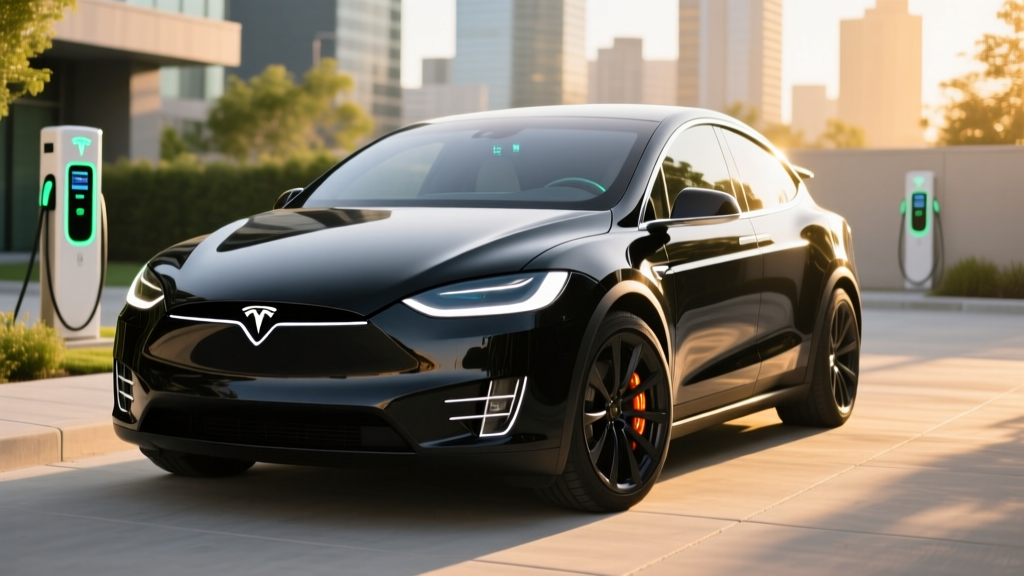
If you landed here after searching "tesla crafts imitation dream catchers," you may have taken a wrong turn on the internet — Tesla doesn't make dream catchers, imitation or otherwise. What Tesla does make is the 2026 Model Y, one of the best-selling electric vehicles on the planet and a benchmark compact electric SUV. So while we can't help you find handmade macramé accessories from Elon Musk's workshop, we can give you the most thorough, data-driven Model Y review available — the kind of analysis that helps you decide whether this EV actually fits your life and budget.
This review covers the 2026 Tesla Model Y Long Range AWD and Performance trims with exact EPA figures, real-world range expectations, charging speeds, pricing, and federal tax credit eligibility under current IRS §30D rules.
Quick Verdict: The 2026 Tesla Model Y at a Glance
| Spec | Long Range AWD | Performance |
|---|---|---|
| EPA Range | 320 miles | 293 miles |
| Battery (usable) | ~78 kWh (NMC) | ~78 kWh (NMC) |
| Drivetrain | Dual Motor AWD | Dual Motor AWD |
| Horsepower | 384 hp | 456 hp |
| 0–60 mph | 4.8 seconds | 3.5 seconds |
| Max DC Fast Charge | 250 kW | 250 kW |
| 10–80% DC Charge | ~25 minutes | ~25 minutes |
| Level 2 Home Charge | 11.5 kW (~44 mi/hr) | 11.5 kW (~44 mi/hr) |
| MPGe (combined) | 111 MPGe | 102 MPGe |
| Base MSRP | $48,990 | $53,990 |
Range and Efficiency: EPA Sticker vs. Real-World Miles
The 2026 Model Y Long Range AWD achieves its 320-mile EPA rating thanks in part to Tesla's continued efficiency optimization — the heat pump, aerodynamic refinements from the "Juniper" refresh, and low-rolling-resistance tires all contribute to a combined 111 MPGe (roughly 30 kWh/100 mi). According to fueleconomy.gov, this places the Model Y among the most efficient electric SUVs in its class.
Efficiency in practice depends heavily on driving style and conditions. City driving with frequent regenerative braking opportunities often yields results close to or even exceeding the EPA estimate. Sustained highway speeds above 75 mph, roof cargo boxes, and cold temperatures all erode range predictably. Owners in northern climates should budget a 15–25% range reduction during winter months. The Model Y's preconditioning feature — which warms the battery before you drive or before arriving at a Supercharger — helps mitigate some of this loss and is critical for maximizing DC fast-charge speeds in cold weather.
Charging Speed: DC Fast, Level 2, and Level 1
| Charging Level | Power / Rate | Miles Added per Hour | Notes |
|---|---|---|---|
| Level 1 (120V) | ~1.4 kW | ~5 mi/hr | Emergency/trickle only |
| Level 2 (240V, 48A) | 11.5 kW | ~44 mi/hr | Home Wall Connector; full charge ~7–8 hr |
| DC Fast (Supercharger V3) | Peak 250 kW | ~162 mi in 15 min | 10–80% in ~25 min; tapers sharply above 80% |
| DC Fast (CCS adapter) | Up to 250 kW | Varies by network | Works with Electrify America, EVgo, etc. |
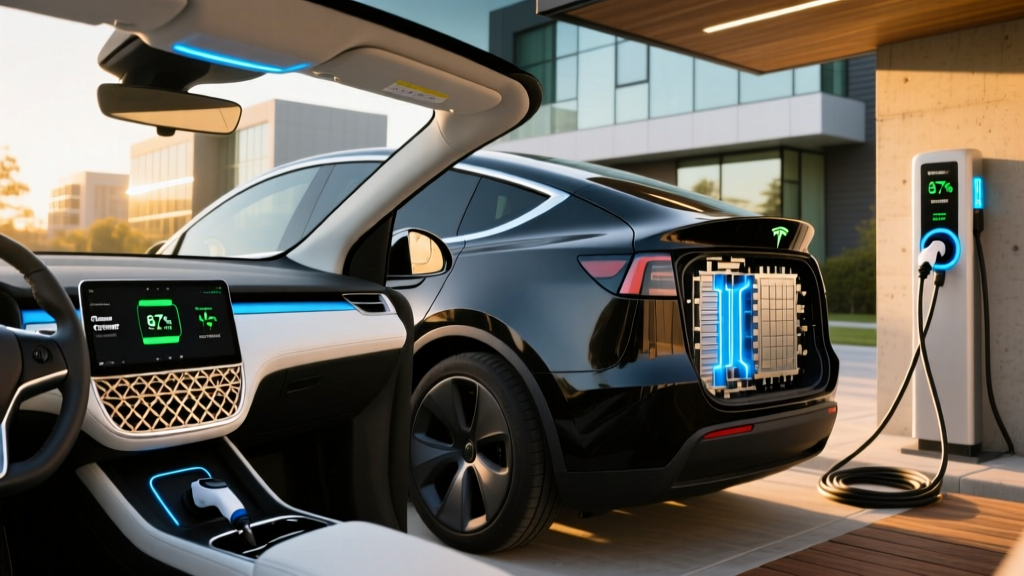
The Model Y charges at a peak rate of 250 kW on Tesla Supercharger V3 stalls, which remains among the fastest in its segment. The charge curve is the important detail most spec sheets omit: the Model Y sustains peak charging rates up to roughly 50–55% state of charge, then progressively tapers. A 10–80% session takes approximately 25 minutes under ideal conditions (warm battery, V3 stall). Charging from 80–100% adds another 20+ minutes — plan your road trip stops around the 10–80% window for the best time efficiency.
At home, a Tesla Wall Connector on a 60-amp circuit delivers 11.5 kW (48 amps), adding roughly 44 miles of range per hour of charging. A full overnight session easily replenishes a depleted battery. Installation costs for a 240V/60A circuit typically range from $500 to $2,000 depending on panel proximity and local electrical codes — always get a quote from a licensed electrician before committing. Tesla also includes a CCS adapter with newer deliveries, opening access to non-Tesla DC fast-charging networks, though Tesla's own Supercharger network remains the most reliable option in most US regions.
Starting late 2024 and expanding through 2025–2026, Tesla opened select Supercharger stalls to non-Tesla EVs via the NACS standard. This is actually a benefit for Tesla owners: the network is expanding rapidly with funding from the NEVI program, and stall reliability remains significantly higher than most third-party networks.
Performance and Drivetrain
The Long Range AWD pairs dual permanent-magnet motors producing a combined 384 horsepower, launching the Model Y to 60 mph in 4.8 seconds. That's genuinely quick for a family crossover and makes highway merging and passing effortless. The Performance trim bumps output to 456 hp and drops the 0–60 time to 3.5 seconds — sports-car territory in a vehicle with over 70 cubic feet of cargo space.
Both trims feature Tesla's dual-motor all-wheel-drive system, which provides excellent traction in rain and light snow. The regenerative braking system is aggressive enough to enable one-pedal driving in most situations, and Tesla's heat pump ensures cabin heating doesn't gut your range the way older resistive heaters did. The ride quality on the Juniper-refreshed Model Y has improved noticeably over earlier generations, with better damping and reduced road noise, though it still leans toward firm compared to comfort-oriented competitors like the Hyundai Ioniq 5.
Interior, Cargo, and Technology
The 2026 Model Y interior reflects Tesla's minimalist ethos: a single 15.4-inch center touchscreen handles virtually all vehicle functions, from climate control to glovebox release. The Juniper update introduced ambient lighting, ventilated front seats, a rear-seat touchscreen, and improved materials throughout — addressing the most common complaints about earlier Model Y cabins.
Practical dimensions remain a strong point:
- Cargo volume: 30.2 cu ft (rear seats up) / 72.1 cu ft (rear seats folded)
- Front trunk (frunk): 4.1 cu ft
- Rear legroom: 40.5 inches
- Front headroom: 40.8 inches
- Seating: 5 passengers standard (7-seat option available on Long Range, though third row is best for small children only)
Tech highlights include Tesla's infotainment system with native navigation, streaming services, and over-the-air updates that continue to add features post-purchase. The optional Enhanced Autopilot ($6,000) and Full Self-Driving (Supervised) package ($8,000) provide advanced driver-assistance capabilities.
Pricing, Trims, and Federal Tax Credit Eligibility
| Trim | Base MSRP | Destination | Est. Max §30D Credit | Effective Price* |
|---|---|---|---|---|
| Long Range AWD | $48,990 | $1,390 | Up to $7,500 | ~$42,880 |
| Performance | $53,990 | $1,390 | Up to $7,500 | ~$47,880 |
*Effective price assumes full $7,500 federal credit eligibility. Actual credit varies based on buyer income, battery sourcing, and IRS rules.
The Model Y qualifies for the federal §30D clean vehicle credit, but eligibility is not automatic. Current IRS rules impose several requirements:
- MSRP cap: SUVs/vans must be at or below $80,000 — both Model Y trims clear this easily.
- Buyer income cap: Modified adjusted gross income must not exceed $150,000 (single), $225,000 (head of household), or $300,000 (joint filers).
- Battery sourcing: The vehicle must meet critical minerals and battery component requirements that phase in more strictly each year. Tesla's US-built battery packs have largely met these requirements for recent model years, but verify current-year compliance on the IRS eligible vehicle list before purchasing.
- Point-of-sale transfer: As of 2024, buyers can transfer the credit to the dealer at purchase, reducing the purchase price directly rather than waiting for a tax refund.
Consult a tax professional to confirm your personal eligibility. State and local incentives vary by jurisdiction — check your state's energy office or the AFDC state incentive database for additional savings.
Warranty, Battery Longevity, and Ownership Costs
Tesla covers the Model Y with the following warranty structure:
- Basic vehicle: 4 years / 50,000 miles
- Battery and drive units: 8 years / 120,000 miles (Long Range & Performance) with a guaranteed minimum 70% capacity retention
The battery uses NMC (nickel manganese cobalt) chemistry, which offers high energy density but is more sensitive to sustained high states of charge. Tesla recommends daily charging to 80% for NMC packs and reserving 100% charges for road trips. Long-term degradation data from Tesla's fleet suggests approximately 10–12% capacity loss over 150,000 miles — well within the warranty threshold. A full battery replacement outside of warranty currently ranges from $12,000 to $16,000 depending on the pack, though this cost has been trending downward.
Insurance costs for the Model Y tend to run 15–30% higher than comparable gas-powered crossovers, averaging roughly $1,800–$2,600 annually depending on location, driving record, and coverage level. Get quotes before purchasing. On the savings side, electricity costs approximately $0.14/kWh nationally (varies significantly by utility), putting the Model Y's fuel cost at roughly $4.20 per 100 miles — compared to $12–$15 per 100 miles for a 25-MPG gas SUV at $3.20/gallon.
Pros, Cons, and Who Should Buy the Model Y
Pros
- 320-mile EPA range (Long Range) covers most commutes and road trips easily
- Supercharger network reliability is unmatched
- 250 kW DC fast charging with strong charge curve
- Class-leading cargo space and available 7-seat option
- Continuous OTA updates add features over time
- Low running costs vs. gas competitors
Cons
- Firm ride quality compared to comfort-focused rivals
- Minimalist interior frustrates some — no physical buttons, no instrument cluster
- Insurance premiums run 15–30% higher than average
- FSD (Supervised) is expensive and still requires full driver attention
- No Apple CarPlay or Android Auto
- Service center wait times can be long in some metro areas
Decision Framework: Who Is the Model Y For?
- Choose the Model Y if: You want a proven, efficient electric SUV with best-in-class charging infrastructure, strong range, and a tech-forward ownership experience. Ideal for daily commuters, small families, and road-trippers who value Supercharger access.
- Look elsewhere if: You prioritize a plush ride and traditional controls (consider the Hyundai Ioniq 5 or Kia EV6), need serious towing capacity (the Rivian R1S or Ford F-150 Lightning are better suited), or require Apple CarPlay integration.
Frequently Asked Questions
What is the real-world range of the 2026 Tesla Model Y?
The Long Range AWD is EPA-rated at 320 miles. In real-world highway driving at 70+ mph, expect 270–290 miles. In cold weather below 30°F, plan for 230–260 miles. The Performance trim's 293-mile EPA rating translates to roughly 240–260 highway miles and around 210 in winter conditions.
How fast does the Model Y charge at home and on the road?
On a Tesla V3 Supercharger, the Model Y peaks at 250 kW and charges from 10–80% in approximately 25 minutes. At home on a 240V/48A Wall Connector, it charges at 11.5 kW, adding about 44 miles per hour — a full charge takes 7–8 hours overnight.
Does the 2026 Model Y qualify for the $7,500 federal EV tax credit?
Both trims fall under the $80,000 SUV MSRP cap and are eligible in principle. However, your personal eligibility depends on income limits ($150K single / $300K joint), battery sourcing compliance for the current year, and your tax liability. Verify on the IRS clean vehicle credit page and consult a tax professional. The credit can be applied at point of sale.
Is the Model Y worth buying over competitors like the Ioniq 5 or EV6?
The Model Y wins on Supercharger network access, cargo volume, and proven long-term reliability data. The Hyundai Ioniq 5 and Kia EV6 offer a more comfortable ride, physical controls, Apple CarPlay, and 800V architecture enabling slightly faster peak charging (up to 350 kW on compatible chargers). If Supercharger access matters most to you, the Model Y remains the default choice. If ride comfort and traditional ergonomics rank higher, drive the Hyundai/Kia alternatives before deciding.
What are the biggest drawbacks of the Model Y?
The most common owner complaints center on the firm ride, absence of Apple CarPlay/Android Auto, touchscreen-only controls (no physical buttons for climate or volume), and higher-than-average insurance costs. The FSD package, at $8,000, remains a Level 2 system requiring constant driver supervision — evaluate whether it's worth the cost for your use case.
Does Tesla sell dream catchers or crafts?
No. Tesla, Inc. is an automotive and energy company. It does not manufacture, sell, or endorse dream catchers, crafts, or macramé products. If you're searching for artisan crafts, Etsy or local craft fairs are better starting points. If you're researching Tesla vehicles, you're in the right place.