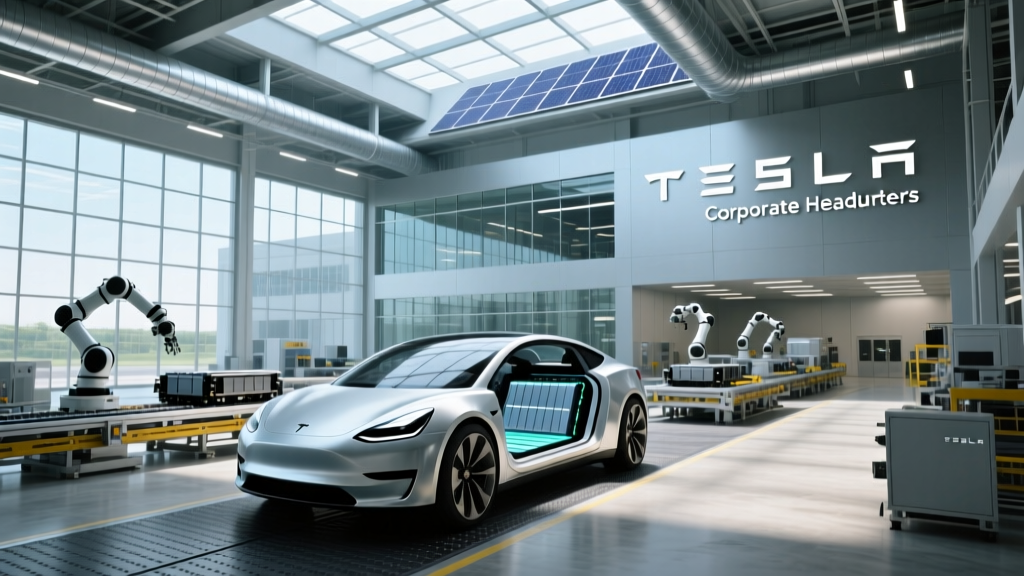
When EV shoppers search for Tesla corporate headquarters, they're usually looking for an address. The answer is 1 Tesla Road, Austin, TX 78725 — the sprawling Gigafactory Texas complex that has served as Tesla's global HQ since December 2021. But for buyers and owners, the more useful question is what actually comes out of that campus: which vehicles, at what specs, and how the Austin operation influences the 2026 lineup you can order today.
This profile uses the headquarters as a lens to walk through Tesla's current U.S. consumer EV portfolio — the refreshed Model Y (Juniper), Model 3 Highland, Model S, Model X, and Cybertruck — with the exact numbers buyers need: EPA range, battery chemistry, DC fast-charge curves, real-world efficiency, and §30D tax-credit eligibility under the rules in effect for 2026.
Why Tesla's Austin HQ Matters for 2026 Buyers
The move from Palo Alto to Austin wasn't just a change of mailing address. Gigafactory Texas is where the structural-battery-pack Model Y is built for North America, where 4680-cell production has ramped, and where Tesla's engineering, software (FSD Supervised), and energy teams now sit under one roof. For buyers, the practical consequences show up in three places: build quality consistency on Texas-built VINs, the availability of 4680-equipped Long Range AWD variants, and the pace of over-the-air updates that originate from this campus.
| Model | EPA Range | Battery (usable) | Chemistry | 0-60 mph | Drivetrain | Base MSRP |
|---|---|---|---|---|---|---|
| Model 3 RWD | 363 mi | ~60 kWh | LFP | 5.8 s | RWD | $38,990 |
| Model 3 Long Range AWD | 363 mi | ~75 kWh | NMC | 4.2 s | Dual-motor AWD | $42,490 |
| Model Y Long Range AWD | 320 mi | ~75 kWh | NMC/4680 | 4.8 s | Dual-motor AWD | $44,990 |
| Model S LR | 402 mi | ~95 kWh | NMC | 3.1 s | Dual-motor AWD | $74,990 |
| Model X LR | 335 mi | ~95 kWh | NMC | 3.8 s | Dual-motor AWD | $79,990 |
| Cybertruck AWD | 340 mi | ~123 kWh | NMC 4680 | 4.1 s | Dual-motor AWD | $79,990 |
Sources: EPA fueleconomy.gov, Tesla.com. Specs reflect 2026 model-year listings and may vary by build week.
Real-World Range: What the EPA Sticker Doesn't Tell You
EPA range is a blended test cycle, and Tesla's efficiency engineering — heat pump standard across the lineup, integrated octovalve thermal management, low-drag bodywork — tends to score well on it. Real-world results depend on speed, temperature, and elevation.
Rule of thumb for the 2026 lineup: expect roughly 85–92% of EPA range on mixed 65–75 mph highway driving in moderate weather. In sub-freezing conditions, plan for 20–30% reduction on LFP-equipped Model 3 RWD and 15–22% on NMC/4680 Long Range variants. City regen-heavy driving often beats the EPA sticker by 5–10%.
Concretely: a Model Y Long Range AWD rated at 320 miles will typically deliver 270–290 miles at 70 mph on a summer road trip, and 220–250 miles on a 25°F winter interstate run. Model S Long Range, with its larger pack and lower drag coefficient, is the most highway-forgiving sedan in the lineup — a realistic 340–360 miles at 75 mph is achievable in mild weather.
Charging Speed, Curve Behavior, and the Supercharger Advantage
Peak kW numbers are marketing-friendly but the charge curve — how long the vehicle sustains high power — is what determines actual stop time. Tesla's V4 Supercharger cabinets (now widely deployed) and the vehicle-side thermal preconditioning make the 10–80% window competitive even where peak kW isn't class-leading.
| Model | Peak DC kW | 10–80% (DC) | Level 2 (11.5 kW / 48A) | Mi/hr at L2 |
|---|---|---|---|---|
| Model 3 RWD (LFP) | 170 kW | ~28 min | 11.5 kW | ~44 mi/hr |
| Model 3 LR AWD | 250 kW | ~22 min | 11.5 kW | ~48 mi/hr |
| Model Y LR AWD | 250 kW | ~24 min | 11.5 kW | ~46 mi/hr |
| Model S LR | 250 kW | ~27 min | 11.5 kW | ~41 mi/hr |
| Model X LR | 250 kW | ~29 min | 11.5 kW | ~36 mi/hr |
| Cybertruck AWD | 350 kW (800V) | ~19 min | 11.5 kW | ~34 mi/hr |
Two nuances matter. First, LFP packs (Model 3 RWD) tolerate regular 100% charges and benefit from them for cell balancing — Tesla recommends periodic full charges, unlike NMC where daily 80% is preferred. Second, Cybertruck's 800-volt architecture lets it use the full 350 kW at V4 posts; on older 250 kW V3 cabinets it's capped accordingly. For home charging, a Wall Connector on a 60A circuit delivers the 11.5 kW figures above — budget $800–$1,800 for a licensed electrician to install, plus $475 for the Wall Connector itself, with possible panel upgrades adding $1,500–$3,500 on older homes.
Efficiency: MPGe and kWh per 100 Miles
Efficiency is where Tesla's vertical integration — powertrain, software, thermal management — pays measurable dividends. Per fueleconomy.gov, the 2026 figures break down as follows:
- Model 3 RWD: 132 MPGe combined / 25 kWh/100mi
- Model 3 Long Range AWD: 130 MPGe combined / 26 kWh/100mi
- Model Y Long Range AWD: 117 MPGe combined / 29 kWh/100mi
- Model S LR: 116 MPGe combined / 29 kWh/100mi
- Model X LR: 103 MPGe combined / 33 kWh/100mi
- Cybertruck AWD: 79 MPGe combined / 43 kWh/100mi
MPGe (miles per gallon equivalent) normalizes electricity to the energy content of a gallon of gas — useful for cross-shopping against hybrids. kWh/100mi is the more actionable number: multiply it by your local electricity rate (U.S. average ~$0.17/kWh in 2026) to get cost per 100 miles. A Model 3 RWD at 25 kWh/100mi costs roughly $4.25 per 100 miles at home; a Cybertruck at 43 kWh/100mi runs about $7.30.
Pricing, Trims, and the 2026 Federal EV Tax Credit
Tesla's MSRP structure is simpler than legacy automakers' — no dealer markups, transparent online ordering — but the §30D federal credit is where complexity enters. Under the rules in effect for 2026, eligibility hinges on three moving targets: vehicle MSRP caps, buyer adjusted gross income caps, and battery-component/critical-mineral sourcing thresholds that tighten each year.
| Model | Base MSRP | MSRP Cap Met? | Credit (if sourcing/income met) | Effective Floor |
|---|---|---|---|---|
| Model 3 RWD | $38,990 | Yes (sedan <$55k) | Up to $7,500 | ~$31,490 |
| Model 3 LR AWD | $42,490 | Yes | Up to $7,500 | ~$34,990 |
| Model Y LR AWD | $44,990 | Yes (SUV <$80k) | Up to $7,500 | ~$37,490 |
| Model S LR | $74,990 | Yes (sedan <$55k? No — over cap) | $0 | $74,990 |
| Model X LR | $79,990 | Yes (SUV <$80k) | Up to $7,500 | ~$72,490 |
| Cybertruck AWD | $79,990 | Yes (truck <$80k) | Up to $7,500 | ~$72,490 |
Critical caveats per IRS.gov §30D guidance:
- Income caps (2026): $300k joint / $225k head-of-household / $150k single MAGI.
- MSRP caps: $55,000 for sedans; $80,000 for SUVs, vans, and pickup trucks. Model S exceeds the sedan cap and does not qualify.
- Battery sourcing: Critical-mineral and component thresholds phase up annually. A vehicle that qualified in 2025 may fall out of eligibility in 2026 depending on supply-chain shifts. Always verify the specific VIN on FuelEconomy.gov before purchase.
- Point-of-sale transfer: Buyers can elect to transfer the credit to the dealer at delivery, reducing the cash-outlay day one — Tesla's checkout flow supports this.
Consult a tax professional; state credits (California, Colorado, Massachusetts, etc.) stack independently and have separate rules.
Interior, Cargo, and Passenger Space
Tesla's minimalist cabin philosophy polarizes — no physical stalks on refreshed models, nearly everything routes through the central touchscreen — but the packaging efficiency is hard to argue with.
- Model 3: 23 cu ft trunk + ~3 cu ft frunk; rear legroom 35.2 in.
- Model Y: 30 cu ft behind second row, 72 cu ft folded; ~4 cu ft frunk; rear legroom 41.6 in (class-leading for the segment).
- Model S: 28 cu ft rear hatch + ~6 cu ft frunk; rear legroom 35.4 in.
- Model X: Up to 88 cu ft with seats folded (5-seat config); ~7 cu ft frunk; optional 6- or 7-seat layouts.
- Cybertruck: 6.5-ft bed (43 cu ft lockable vault) + front trunk; 2,500-lb payload, 11,000-lb tow rating.
Model Y remains the default family crossover pick; Cybertruck is the only Tesla that actually competes on work-truck utility rather than passenger volume.
Warranty, Battery Longevity, and Service Footprint
Tesla's warranty structure is straightforward and has been stable for several model years:
- Basic vehicle: 4 years / 50,000 miles
- Battery & drive unit: 8 years / 100,000 mi (RWD Model 3/Y with LFP); 8 years / 120,000 mi (Long Range, Performance, Model S/X)
- Capacity retention threshold: 70% of original during the warranty period
Out-of-warranty pack replacement runs roughly $12,000–$18,000 depending on model and chemistry. Real-world fleet data (aggregated by Teslanomics and TeslaFi communities) shows NMC packs averaging 10–12% degradation at 100,000 miles, with LFP packs showing slightly higher early-calendar fade but flatter long-term curves. The Austin-built structural packs integrate cells as a stressed chassis member — great for rigidity and weight, but it means pack replacement is a body-shop-scale job, not a quick swap.
Tech, Driver Assistance, and What FSD Supervised Actually Is
Every 2026 Tesla ships with the HW4 computer, 8-camera vision suite, and Basic Autopilot (lane-centering + adaptive cruise). Full Self-Driving (Supervised) is an $8,000 option or $99/month subscription — and the parenthetical is load-bearing.
SAE Automation Level: Level 2. FSD Supervised is a driver-assistance system, not a self-driving system. The driver must remain attentive, hands-available, and legally responsible at all times. Only Waymo and Zoox robotaxi services currently operate at Level 4 in geofenced U.S. zones. Do not treat any Tesla feature as a substitute for an engaged driver.
Standout tech includes the native Supercharger network integration (auto-routed preconditioning, plug-and-charge billing), over-the-air updates that have materially added features post-sale, and the Tesla mobile app's remote climate/Sentry Mode controls. Drawbacks: the removal of ultrasonic sensors means Park Assist relies on Tesla Vision, which is less reliable in low-contrast or rain-heavy conditions; the yoke steering option on Model S/X remains controversial for low-speed maneuvers; and panel-gap consistency, while improved at Gigafactory Texas, still lags German and Korean competitors at similar price points.
Pros
- Class-leading efficiency and real-world range delivery
- Supercharger network remains the most reliable U.S. DC fast-charging ecosystem
- OTA updates add features post-purchase
- Transparent, no-dealer-markup pricing
- LFP option on Model 3 RWD enables daily 100% charging
Cons
- Minimalist cabin and touchscreen-only controls aren't for everyone
- FSD Supervised is expensive and still Level 2
- Panel gaps and service-center wait times vary by region
- Model S exceeds MSRP cap — no federal credit
- Cybertruck efficiency and size limit practicality vs. conventional trucks
Who Each Tesla Actually Fits — and Who Should Look Elsewhere
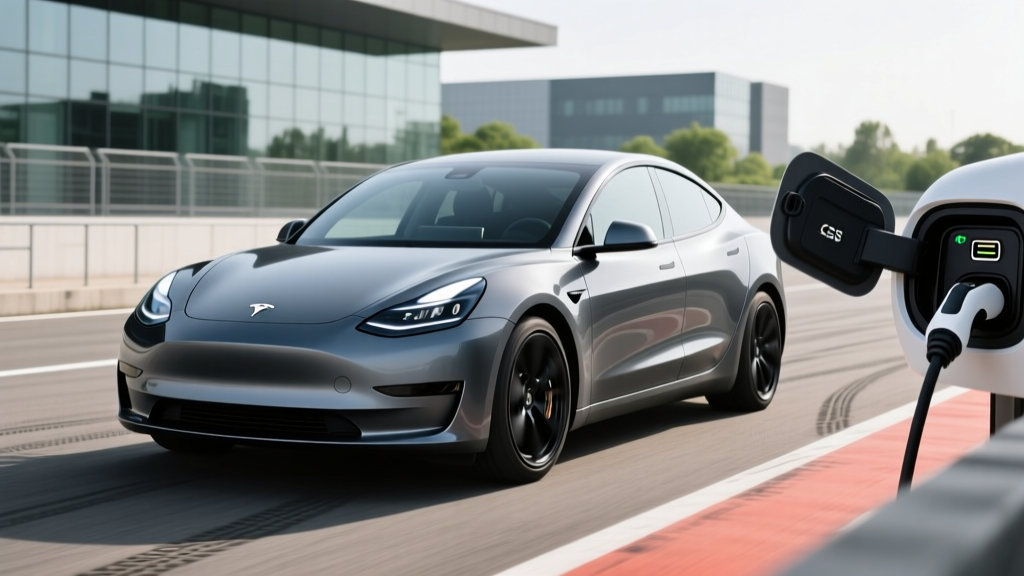
- Choose Model 3 RWD if you want the lowest effective price (after credit), commute under 60 miles daily, and have reliable home Level 2 charging.
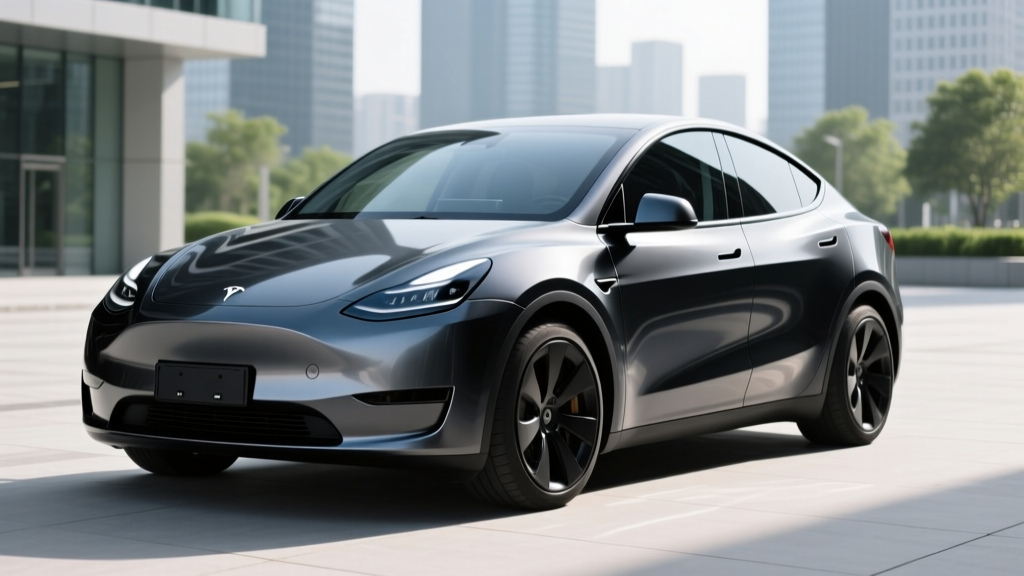
- Choose Model Y Long Range AWD if you need family cargo space, AWD for winter, and one-vehicle road-trip duty.
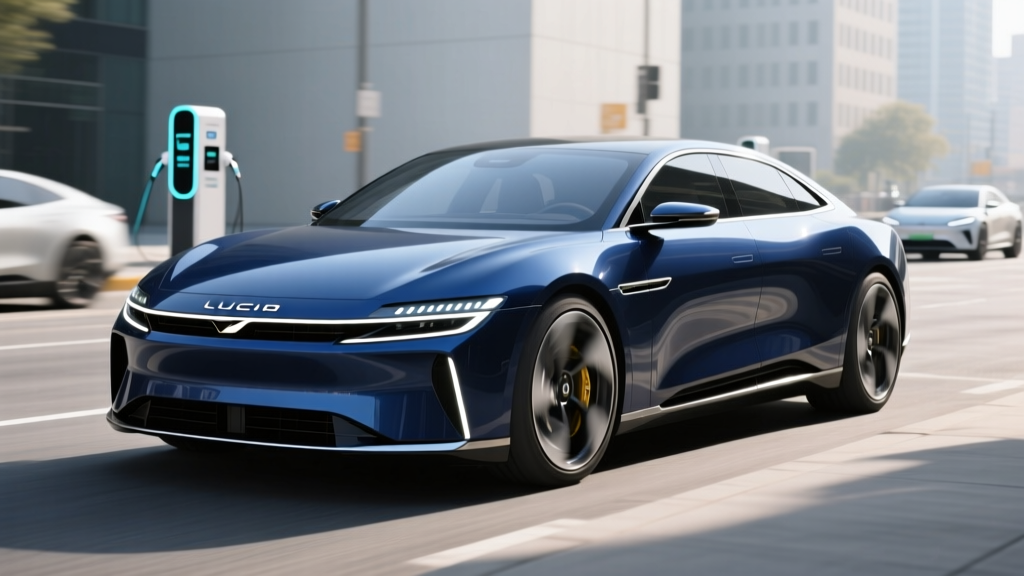
- Choose Model S LR if you want the longest sedan range and don't need the federal credit — cross-shop the Lucid Air Pure.
- Choose Model X only if you need 6/7 seats in an EV and accept the efficiency penalty vs. the Rivian R1S.
- Choose Cybertruck if you need a bed and towing; skip it if you just want a conversation piece — the F-150 Lightning is cheaper and more practical for most truck duties.
Frequently Asked Questions
Where is Tesla's corporate headquarters located?
1 Tesla Road, Austin, TX 78725 — the Gigafactory Texas campus. It has served as Tesla's global HQ since December 2021 and handles engineering, vehicle production (Model Y for North America), and executive operations.
Does Tesla still operate in California?
Yes. The former Palo Alto HQ now functions as an engineering office, and the Fremont factory continues to build Model S, Model X, and many Model 3 and Model Y units for the U.S. market. Your VIN's 11th character indicates the build plant (F = Fremont, T = Texas).
What is the real-world range of a 2026 Tesla Model Y?
EPA-rated at 320 miles; expect 270–290 miles on a 70 mph summer highway drive, 220–250 miles in freezing interstate conditions, and potentially 330+ miles in low-speed city driving with regen.
Which 2026 Teslas qualify for the $7,500 federal tax credit?
As of current 2026 rules, Model 3, Model Y, Model X, and Cybertruck can qualify — subject to buyer MAGI limits ($150k/$225k/$300k), MSRP caps, and battery-sourcing requirements that tighten yearly. Model S does not qualify due to the $55k sedan MSRP cap. Always verify the VIN on FuelEconomy.gov before ordering.
Is Tesla FSD actually self-driving?
No. FSD Supervised is SAE Level 2 driver assistance. You must remain attentive and ready to take over. Only Waymo and Zoox currently operate Level 4 driverless services in limited U.S. geofenced areas.
How fast does a 2026 Tesla charge at home?
On a Tesla Wall Connector fed by a 60A/240V circuit, expect 11.5 kW — roughly 34 to 48 miles of range per hour depending on the model. A full overnight charge from 20% to 90% takes about 7–8 hours on any variant.