Quick Verdict: Tesla's Cooled Seats Are a Climate Necessity, Not a Luxury
If you live anywhere that regularly sees 85°F+ summers, ventilated front seats shift from "nice to have" to daily-essential comfort hardware. Tesla began rolling out cooled (ventilated) seats across its lineup starting with the 2021 Model S and Model X refresh, and expanded the feature to the Model 3 Highland refresh and the current Model Y. But availability, effectiveness, and the trim packages required to get them vary significantly across the four-vehicle fleet.
This guide breaks down exactly which 2026 Tesla models offer cooled seats, how the system performs in real-world heat, and pairs that with the full ownership picture — EPA range, DC fast-charge speeds, battery chemistry, §30D tax credit eligibility, and total cost. Whether you're cross-shopping a Model 3 Long Range against a Hyundai Ioniq 6 or deciding between a Model Y and a Ford Mustang Mach-E, the seat-ventilation question often tips the scale for hot-climate buyers.
Which Tesla Models Have Cooled (Ventilated) Seats in 2026?
Not every Tesla trim includes ventilated seats as standard. Here's the current availability matrix across the lineup:
| Model | Trim(s) with Cooled Seats | Standard or Optional? | Rear Seat Ventilation? |
|---|---|---|---|
| Model S | Long Range, Plaid | Standard (all trims) | No — front only |
| Model X | Long Range, Plaid | Standard (all trims) | No — front only |
| Model 3 | Long Range AWD, Performance | Standard on these trims | No — front only |
| Model Y | Long Range AWD, Performance | Standard on these trims | No — front only |
Key takeaway: The base Model 3 RWD and base Model Y RWD do not include ventilated seats. You must step up to the Long Range AWD or Performance trims to get them. This adds roughly $4,000–$7,000 to the base price depending on the model, but also unlocks dual-motor AWD, longer range, and — critically — a different battery chemistry in some cases.
How Tesla's Cooled Seat System Actually Works
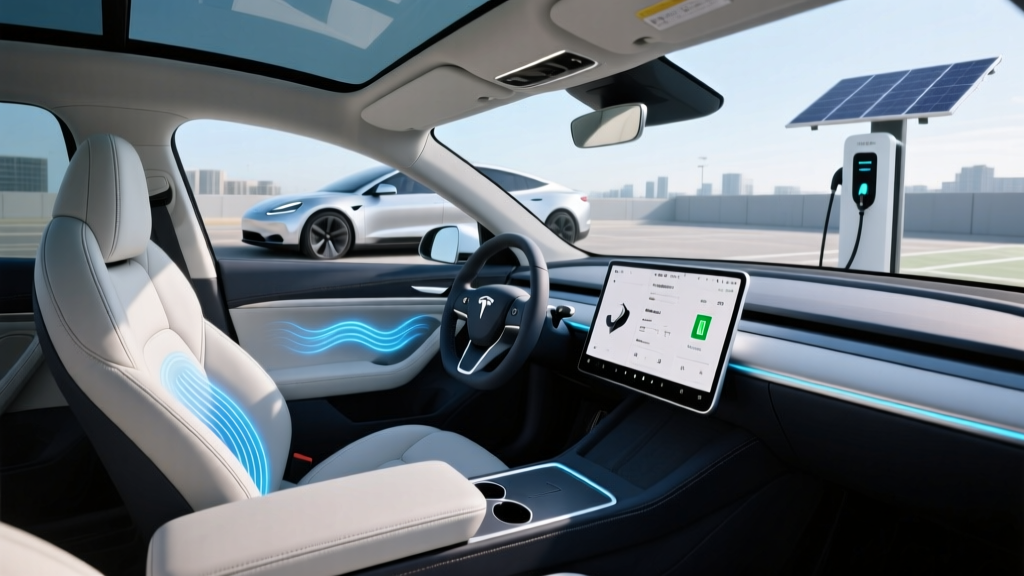
Tesla's ventilated seats use small fans embedded in the seat cushion and backrest that pull ambient cabin air through perforations in the synthetic leather (Tesla's "vegan leather" / polyurethane material). The system offers three fan-speed levels, controllable via the center touchscreen or the Tesla mobile app during preconditioning.
Unlike some luxury competitors (Mercedes, BMW) that use actively chilled air from a dedicated refrigeration loop, Tesla's system moves ambient cabin air. This means the cooling effect depends heavily on cabin temperature. If you precondition the car via the app before entering, the ventilated seats feel noticeably effective within 2–3 minutes. If you jump into a heat-soaked cabin at 120°F+ interior temps, the fans initially blow warm air until the HVAC system cools the cabin — typically 4–6 minutes with the Tesla heat pump running at full blast.
Full Specs: Range, Battery, Charging & Performance by Model
Below is the complete spec breakdown for every 2026 Tesla model that offers cooled seats. All figures reflect EPA-published data and Tesla's official specifications as of the current model year.
| Spec | Model 3 LR AWD | Model Y LR AWD | Model S LR | Model X LR |
|---|---|---|---|---|
| EPA Range | 363 mi | 320 mi | 402 mi | 335 mi |
| Battery (usable) | ~75 kWh | ~75 kWh | ~95 kWh | ~95 kWh |
| Chemistry | NMC (LG) | NMC (LG/Panasonic) | NMC (Panasonic) | NMC (Panasonic) |
| Drivetrain | Dual-motor AWD | Dual-motor AWD | Dual-motor AWD | Dual-motor AWD |
| Horsepower | ~346 hp | ~384 hp | ~670 hp | ~670 hp |
| 0–60 mph | 4.2 sec | 4.8 sec | 3.1 sec | 3.8 sec |
| MPGe (combined) | 134 MPGe | 122 MPGe | 124 MPGe | 111 MPGe |
| kWh/100 mi | 25 kWh | 28 kWh | 27 kWh | 30 kWh |
| Max DC Charge | 250 kW | 250 kW | 250 kW | 250 kW |
| 10–80% DC Time | ~25 min | ~27 min | ~30 min | ~32 min |
| Level 2 Rate | 11.5 kW (~44 mi/hr) | 11.5 kW (~44 mi/hr) | 11.5 kW (~36 mi/hr) | 11.5 kW (~33 mi/hr) |
| Battery Warranty | 8 yr / 120,000 mi | 8 yr / 120,000 mi | 8 yr / 150,000 mi | 8 yr / 150,000 mi |
Sources: EPA Fuel Economy, Tesla Model S specs
Real-World Range: What the EPA Sticker Doesn't Tell You
• Model 3 LR AWD: EPA 363 mi — expect ~300–320 mi on a 75-mph highway trip in moderate temps; ~240–270 mi in sub-30°F winter conditions.
• Model Y LR AWD: EPA 320 mi — expect ~265–285 mi highway; ~215–240 mi in cold weather.
• Model S LR: EPA 402 mi — expect ~340–360 mi highway; ~280–310 mi in cold weather.
• Model X LR: EPA 335 mi — expect ~275–295 mi highway; ~220–250 mi in cold weather.
Cold-weather range loss of 15–25% is typical for NMC chemistry. Tesla's heat pump (standard on all current models) mitigates cabin-heating energy draw but cannot fully offset battery chemistry slowdown at low temperatures.
For hot-climate buyers specifically seeking cooled seats, the news is better: running the HVAC at 72°F in 95°F ambient heat reduces range by roughly 5–8% versus mild-weather driving. The ventilated seats themselves draw negligible power (under 50W combined for both front seats) — the range hit comes from cabin cooling, not seat fans.
Charging Speed & Home Setup: What You Need to Know
All four Tesla models with cooled seats use the NACS (North American Charging Standard) connector natively — no adapter needed at Tesla Superchargers. Here's what charging looks like in practice:
| Charging Level | Power | Miles Added per Hour | Use Case |
|---|---|---|---|
| Level 1 (120V outlet) | ~1.4 kW | ~4–5 mi/hr | Emergency / trickle |
| Level 2 (240V, 48A Wall Connector) | 11.5 kW | ~33–44 mi/hr | Daily home charging |
| DC Fast (V3 Supercharger) | Peak 250 kW | ~180 mi in 15 min | Road trips |
Charging curve reality check: The 250 kW peak rate only holds between roughly 10–30% state of charge. By 50% SoC, the rate tapers to ~150 kW. By 80%, it drops to ~75 kW. This is why Tesla quotes 10–80% times rather than 0–100% — charging above 80% is painfully slow and should be avoided on road trips unless you need the final miles to reach your destination.
Home installation cost: A Tesla Wall Connector ($420) plus a licensed electrician installing a 60A/240V circuit typically runs $800–$2,000 depending on panel proximity and local permit fees. If your home's electrical panel needs an upgrade to 200A service, add $1,500–$3,000. The federal residential clean energy credit covers 30% of home charging equipment costs (up to $1,000).
Pricing, Trims & Federal Tax Credit Eligibility
Here's the current pricing landscape for Tesla models equipped with cooled seats, along with §30D federal tax credit status:
| Model / Trim | Base MSRP | §30D Credit Eligible? | Effective Price (est.) |
|---|---|---|---|
| Model 3 Long Range AWD | $47,740 | Yes — up to $7,500 | ~$40,240 |
| Model Y Long Range AWD | $49,630 | Yes — up to $7,500 | ~$42,130 |
| Model S Long Range | $79,990 | No — exceeds $55,000 sedan cap | $79,990 |
| Model X Long Range | $84,990 | No — exceeds $80,000 SUV cap | $84,990 |
- MSRP caps: Sedans ≤ $55,000 | SUVs/pickups ≤ $80,000
- Buyer income caps: AGI ≤ $150K single / $225K head of household / $300K joint
- Battery sourcing: Critical minerals and battery components must meet escalating North American / FTA-partner thresholds — Tesla's Model 3 and Model Y currently meet these requirements, but verify at IRS.gov before purchase
- Point-of-sale transfer: You can transfer the credit to the dealer at purchase, reducing your out-of-pocket cost immediately rather than waiting for tax filing
The Model S and Model X miss the §30D credit entirely due to their MSRPs exceeding the vehicle-class caps. For these models, the only federal incentive available is the used-EV credit (if buying pre-owned and meeting the $25,000 price cap) or state-level incentives, which vary widely by jurisdiction.
Interior Space, Tech & Driver Assistance
Beyond the cooled seats themselves, here's how the cabin and tech stack up across the cooled-seat-equipped lineup:
| Dimension | Model 3 | Model Y | Model S | Model X |
|---|---|---|---|---|
| Front legroom | 42.7 in | 41.8 in | 42.7 in | 41.2 in |
| Rear legroom | 35.2 in | 41.6 in | 35.4 in | 40.9 in |
| Cargo (rear seats up) | 23 cu ft | 30 cu ft | 28 cu ft | 37 cu ft |
| Cargo (rear seats folded) | 60 cu ft | 72 cu ft | 54 cu ft | 82 cu ft |
| Frunk | 3.1 cu ft | 4.1 cu ft | 5.3 cu ft | 6.6 cu ft |
Infotainment: All models run Tesla's proprietary 15.4-inch (Model 3/Y) or 17-inch (Model S/X) touchscreen with no Apple CarPlay or Android Auto. Navigation, Spotify, Netflix (while parked), and a built-in browser are included. The Model S and X add a rear-seat 8-inch touchscreen for climate and media control.
Driver assistance: Every Tesla ships with Basic Autopilot (adaptive cruise + lane centering). Full Self-Driving (Supervised) remains an $8,000 option or $99/month subscription.
Pros, Cons & Who Should Buy
Pros
- Ventilated seats effective when paired with preconditioning
- Supercharger network — most reliable DC fast-charging in the US
- Best-in-class efficiency (kWh/100mi) across Model 3 and Model Y
- Over-the-air updates continuously improve features
- Strong resale value relative to EV market average
- Heat pump standard — reduces cold-weather cabin-heating energy draw
Cons
- Cooled seats not available on base RWD trims — must upgrade
- No Apple CarPlay or Android Auto
- Ventilated seats use ambient air, not actively chilled — less effective than some luxury competitors
- Model S/X priced out of §30D tax credit entirely
- Rear seats not ventilated on any model
- Panel gap and interior material quality inconsistent across build lots
- FSD (Supervised) remains Level 2 despite the "Full Self-Driving" name
Decision Framework: Which Tesla With Cooled Seats Is Right for You?
Choose the Model 3 Long Range AWD if: You're a commuter or couple prioritizing maximum range per dollar, want the §30D credit, and don't need cargo space. At ~$40,240 after the credit, it's the best value cooled-seat EV sedan on the market.
Choose the Model Y Long Range AWD if: You need family cargo space (30 cu ft rear up, 72 cu ft folded) and rear-seat legroom (41.6 in), still want the tax credit, and can accept ~40 fewer miles of range than the Model 3.
Choose the Model S Long Range if: Budget is flexible ($79,990+), you want 402 miles of EPA range, 670 hp, and premium cabin materials — and you accept losing the §30D credit.
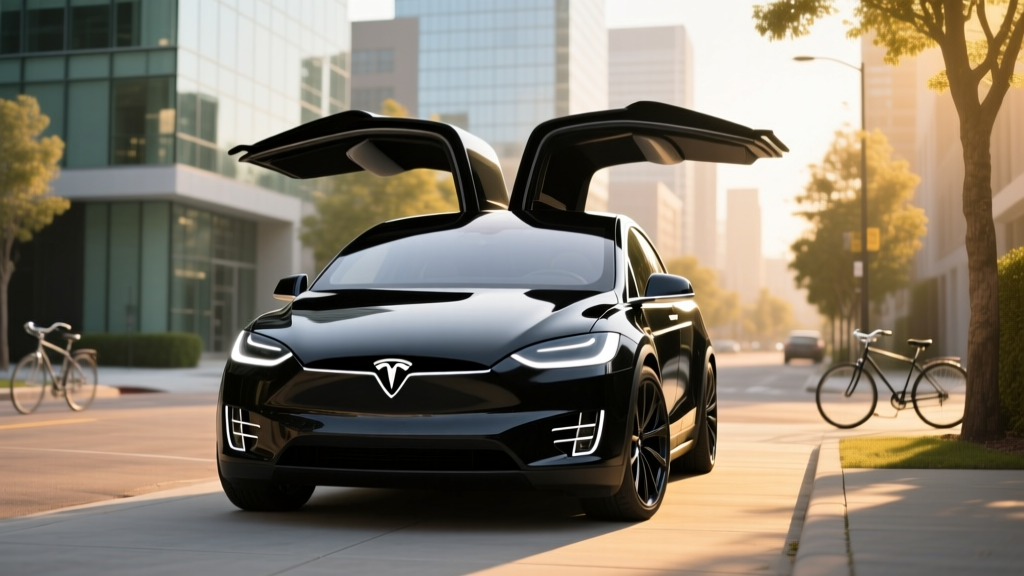
Choose the Model X Long Range if: You need three-row seating (up to 7 passengers), falcon-wing rear doors for tight parking access, and 335 miles of range in a luxury SUV package.
Frequently Asked Questions
Do Tesla's cooled seats actually cool you down, or just blow air?
Tesla's ventilated seats move ambient cabin air through perforations in the seat surface — they do not actively chill the air like a refrigerated system. The cooling effect is real and measurable but depends on cabin temperature. With preconditioning running, they reduce perceived heat and back moisture within 2–3 minutes. Without preconditioning in extreme heat, expect 5+ minutes before the effect becomes noticeable.
Can I add cooled seats to a base Model 3 or Model Y after purchase?
No. Tesla does not offer retrofits for ventilated seats. The hardware (perforated seat surfaces, embedded fans, dedicated wiring harness) is only installed at the factory on Long Range and Performance trims. This is a buy-it-right-the-first-time feature.
Do the ventilated seats affect range or energy consumption?
Negligibly. The seat fans draw under 50 watts combined — roughly equivalent to running the interior reading lights. The range impact from seat ventilation alone is under 1 mile per full day of use. The meaningful range cost in hot weather comes from cabin air conditioning, not the seats.
Does the Model 3 Performance also have cooled seats?
Yes. Both the Model 3 Performance and Model Y Performance trims include ventilated front seats as standard equipment, along with sport bolsters. The Performance trims also include track mode, larger brakes, and a lower suspension setup.
How do Tesla's cooled seats compare to competitors?
Hyundai/Kia (Ioniq 5/6, EV6/EV9) offer ventilated seats that use a similar fan-based ambient-air approach and are comparably effective. GM's Ultium-based vehicles (Cadillac Lyriq, Chevy Blazer EV) use a similar system. Luxury brands like Mercedes-Benz and Genesis sometimes use actively cooled (Peltier or refrigerant-loop) systems that blow genuinely cold air — these outperform Tesla's system in extreme heat but come at a higher price point.
Is the Tesla Model 3 Long Range worth buying over competitors for hot-climate drivers?
For buyers prioritizing cooled seats alongside range and charging infrastructure, the Model 3 LR AWD at ~$40,240 (after §30D) with 363 miles of EPA range and Supercharger access remains the strongest overall package. The Hyundai Ioniq 6 SEL ($42,715 before incentives) offers comparable ventilated seats and slightly faster 10–80% charging (~18 min at 350 kW) but falls short on range (305 mi EPA) and lacks Supercharger access (though CCS networks are improving). The choice tilts Tesla for road-trippers and Hyundai for those who prefer CarPlay and a more traditional dealership experience.