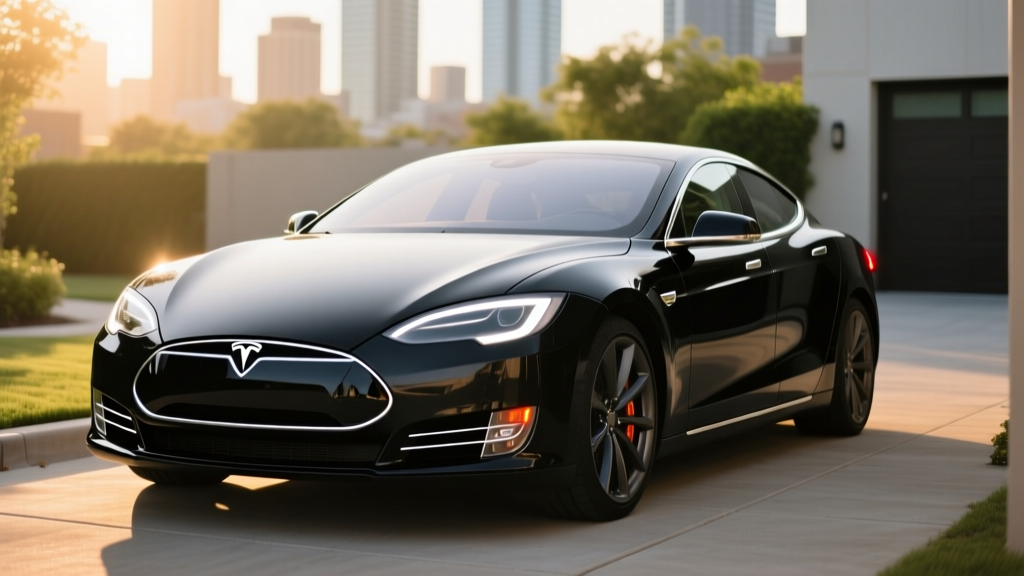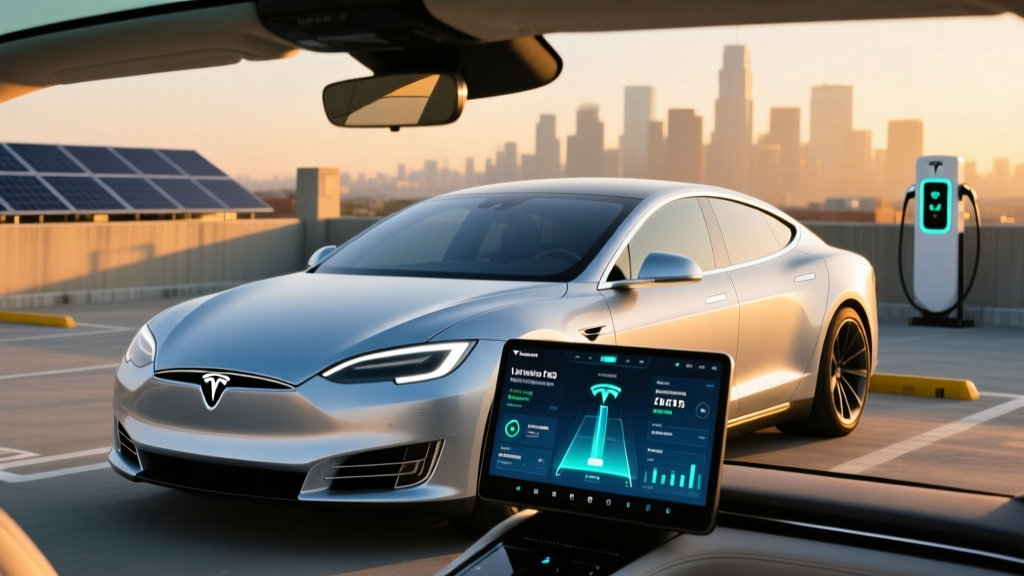
When shoppers search for "Tesla computer," they're usually asking about one of two things: the infotainment touchscreen that controls nearly every vehicle function, or the onboard AI processor that runs Autopilot and Full Self-Driving (FSD). In Tesla's current 2025–2026 lineup, both are handled by tightly integrated silicon — the AMD Ryzen-based media control unit (MCU) for the cabin, and the Hardware 4 (HW4) AI computer for driver-assistance and active safety. Neither is sold separately; both come bundled into the vehicle's price, and their capabilities differ meaningfully across the Model 3, Model Y, Model S, and Model X.
This guide breaks down what Tesla's computer systems actually do, which trims include which hardware, and how the compute stack affects real ownership — from FSD performance to over-the-air updates. We'll anchor the discussion in the highest-volume model, the 2026 Tesla Model Y, with full specs, charging data, and tax-credit context so you can decide whether Tesla's tech advantage justifies the price.
What Is the Tesla Computer? Two Systems, One Vehicle
Tesla runs two distinct computing platforms in every current vehicle:
- MCU (Media Control Unit): An AMD Ryzen-based processor with RDNA 2 GPU architecture (similar to a PlayStation 5 chip) that drives the 15.4-inch center touchscreen, navigation, media, gaming, climate controls, and vehicle settings. It replaced the older Intel Atom MCU in 2022 and is standard on all 2025–2026 Teslas.
- AI Computer (HW4): A custom Tesla-designed dual-chip system with two independent AI inference processors running in parallel for redundancy. HW4 processes input from up to 8 cameras (no ultrasonic sensors or radar in current builds — Tesla uses "Tesla Vision" camera-only perception). It powers Autopilot, Enhanced Autopilot, and FSD (Supervised).
If you're evaluating a used Tesla from 2019–2022, it likely has HW3 (also called FSD Computer 1.0), which is slower and has lower-resolution camera processing. HW3 vehicles are not receiving the latest FSD features, and Tesla has not announced a retrofit program. Buying new in 2026 guarantees HW4.
2026 Tesla Model Y: Full Specs at a Glance
The refreshed Model Y (sometimes called "Juniper") is Tesla's volume leader and the best lens for understanding what Tesla's computer systems deliver in practice. Here are the key figures:
| Spec | Long Range AWD | Performance AWD |
|---|---|---|
| EPA Range | 320 miles | 294 miles |
| Battery (usable) | ~75 kWh (NMC) | ~75 kWh (NMC) |
| Drivetrain | Dual-motor AWD | Dual-motor AWD |
| Horsepower | ~384 hp | ~456 hp |
| 0–60 mph | 4.8 sec | 3.5 sec |
| Max DC Fast Charge | 250 kW | 250 kW |
| 10–80% DC Time | ~25 min | ~25 min |
| Level 2 Home Rate | 11.5 kW (~44 mi/hr) | 11.5 kW (~44 mi/hr) |
| MPGe (combined) | 122 MPGe | 111 MPGe |
| Efficiency | 28 kWh/100 mi | 30 kWh/100 mi |
| Cargo (rear seats up) | 30.2 cu ft | 30.2 cu ft |
| Cargo (rear seats down) | 72.0 cu ft | 72.0 cu ft |
| Rear Legroom | 40.5 in | 40.5 in |
| Base MSRP | $49,990 | $54,990 |
Sources: fueleconomy.gov, Tesla Model Y specs.
Real-World Range vs. the EPA Sticker
Real-World Highway (70–75 mph, mild weather): ~260–285 miles
Real-World Winter (32°F, highway): ~215–245 miles
City / Suburban Mixed: ~290–310 miles
Tesla's EPA ratings are among the more conservative in the industry, but highway driving at sustained speed and cold weather still reduce range materially. The Model Y's heat pump (standard on all current trims) mitigates cold-weather cabin heating losses compared to older resistive-heater EVs, but battery chemistry itself loses efficiency below freezing. Expect roughly a 20–30% range reduction in sustained sub-freezing highway driving. If your commute is mostly city and suburban with regenerative braking opportunities, you'll land closer to the EPA number.
The Model Y uses an NMC (nickel manganese cobalt) battery pack, which offers higher energy density than LFP but is more sensitive to sustained 100% state-of-charge storage. Tesla recommends daily charging to 80–90% for NMC packs and 100% only for road trips — a nuance that affects usable daily range versus the headline figure.
Charging Speed: DC Fast, Level 2, and the Curve
Tesla's Supercharger network remains the most reliable public DC fast-charging ecosystem in the US, and the Model Y takes full advantage of it:
| Level | Power | Miles Added per Hour | Notes |
|---|---|---|---|
| Level 1 (120V outlet) | ~1.4 kW | ~4–5 mi/hr | Emergency/trickle only |
| Level 2 (240V, 48A home) | 11.5 kW | ~44 mi/hr | Full overnight charge in ~8 hrs |
| DC Fast (Supercharger V3) | Peak 250 kW | ~1,000 mi/hr at peak | 10–80% in ~25 min; tapers sharply above 80% |
| DC Fast (non-Tesla CCS via adapter) | Up to 150–175 kW typical | Varies | Adapter required; network reliability varies |
Charging curve reality: The Model Y peaks at 250 kW only between roughly 10–30% state-of-charge. From 30–60%, sustained rates drop to ~170–200 kW. Above 80%, the car tapers aggressively to protect the NMC battery — charging from 80–100% at a DC fast charger can take as long as 10–80%. For road trips, plan stops around 10–80% and move on rather than waiting for a full charge.
Tesla now provides a CCS adapter (included or available depending on delivery date) so the Model Y can access Electrify America, EVgo, and other non-Tesla networks. With NACS adoption by Ford, GM, Rivian, and others in 2025–2026, Tesla's Supercharger network has become the de facto standard, which is a meaningful ownership advantage.
Autopilot, FSD, and the HW4 Computer: What You Actually Get
Tesla offers three tiers of driver-assistance, all running on the HW4 computer:
- Basic Autopilot (included): Traffic-aware cruise control and lane centering on highways. Functional and competitive with Toyota Safety Sense or Honda Sensing, but not class-leading versus GM's Super Cruise or Ford's BlueCruise on mapped highways.
- Enhanced Autopilot ($6,000 one-time): Adds automatic lane changes, navigate-on-autopilot (highway on/off ramps), auto-park, and Summon. Useful for frequent highway commuters.
- FSD (Supervised) ($8,000 one-time or $99/month): Tesla's most advanced system, capable of handling most surface streets, intersections, and traffic lights with driver supervision. As of early 2026, FSD v13.x is substantially improved over earlier versions but still requires active monitoring — it can misjudge construction zones, complex unprotected left turns, and edge-case pedestrian behavior. NHTSA continues to investigate Tesla's Autopilot/FSD crash data, and buyers should treat FSD as an expensive convenience feature, not a replacement for attention.
The HW4 computer processes camera data at higher resolution and frame rate than HW3, and it's the reason newer Teslas can run the latest FSD neural networks. If you care about Tesla's computer capabilities, buying new (or a recent HW4-equipped used vehicle) is essential — HW3 vehicles are effectively legacy hardware for FSD purposes.
Pricing, Trims, and Federal Tax Credit Eligibility
| Trim | Base MSRP | §30D Credit Eligibility | Effective Price (if eligible) |
|---|---|---|---|
| Long Range AWD | $49,990 | Up to $7,500 (see caveats) | ~$42,490 |
| Performance AWD | $54,990 | Up to $7,500 (see caveats) | ~$47,490 |
The federal EV tax credit under IRS §30D is not a guaranteed $7,500 for every buyer. Eligibility depends on multiple factors that shift annually:
- Buyer income caps: Modified AGI ≤ $150,000 (single), $225,000 (head of household), $300,000 (joint).
- MSRP cap: SUVs (including Model Y) must have MSRP ≤ $80,000 — both trims qualify.
- Battery sourcing: Critical minerals and battery components must meet increasing percentages of US/free-trade-agreement sourcing each year. Tesla's supply chain has generally met these thresholds for 2025–2026, but the exact credit amount ($3,750 or $7,500) depends on the specific battery batch and current IRS guidance.
- Point-of-sale transfer: As of 2024, eligible buyers can transfer the credit to the dealer at purchase, reducing the out-of-pocket price immediately rather than waiting for a tax refund.
Confirm eligibility with your tax professional before purchase — the rules are complex and subject to change. The IRS maintains a list of eligible vehicles and battery sourcing compliance at irs.gov.
Warranty, Ownership Costs, and Long-Term Considerations
Tesla's warranty structure:
- Basic Vehicle: 4 years / 50,000 miles
- Battery & Drive Unit: 8 years / 120,000 miles (Long Range/Performance), with a guaranteed minimum 70% capacity retention over the warranty period
The 8-year battery warranty is competitive with Hyundai/Kia (10 yr/100,000 mi) and slightly longer in mileage than some rivals. NMC batteries in Teslas have shown moderate degradation — typically 10–15% loss over 100,000 miles based on fleet data, though individual results vary with charging habits and climate.
Insurance: Teslas carry higher insurance premiums than comparable non-Tesla EVs, partly due to repair costs and partly due to Tesla's proprietary collision repair network. Budget 15–30% more for insurance versus a similarly priced Hyundai Ioniq 5 or Ford Mustang Mach-E.
Maintenance: Minimal — no oil changes, no transmission fluid. Cabin air filter replacement (~$30–60 every 2 years), tire rotation, and wiper fluid are the primary recurring costs. Brake pads last well beyond 100,000 miles thanks to regenerative braking.
Who the Model Y (and Tesla's Computer Stack) Suits Best
Consider alternatives if: You want traditional physical controls, a heads-up display, Apple CarPlay/Android Auto, or the longest battery warranty. The Hyundai Ioniq 5, Kia EV6, and Ford Mustang Mach-E offer competitive range, more conventional interfaces, and in some cases lower insurance costs.
Pros and Cons
- Supercharger network access — best public charging reliability in the US
- HW4 computer enables best-in-class camera-based driver-assist (with caveats)
- Class-leading cargo space (72 cu ft) and frunk storage
- Over-the-air updates add features post-purchase
- Strong efficiency (28 kWh/100 mi) keeps charging costs low
- No Apple CarPlay / Android Auto — Tesla-only infotainment
- Higher insurance premiums than rival EVs
- FSD ($8,000) is expensive and still requires driver supervision
- NMC battery requires 80–90% daily charge limit for longevity
- Minimalist interior lacks physical buttons, HUD, or traditional instrument cluster
Frequently Asked Questions
What is the real-world range of the 2026 Tesla Model Y?
The EPA rates the Long Range AWD at 320 miles, but real-world highway driving at 70–75 mph yields roughly 260–285 miles in mild weather and 215–245 miles in freezing temperatures. City driving with regenerative braking gets you closer to the EPA figure.
How fast does the Model Y charge?
On a Tesla V3 Supercharger, the Model Y peaks at 250 kW and charges from 10–80% in approximately 25 minutes. At home on a 48-amp Level 2 charger, it adds roughly 44 miles of range per hour, fully replenishing overnight.
Does the Tesla Model Y qualify for the federal EV tax credit?
Yes, both trims fall under the $80,000 SUV MSRP cap. However, the actual credit ($3,750 or $7,500) depends on your income, the battery's critical-mineral sourcing compliance, and current IRS rules. Confirm with a tax professional before purchasing.
Is Tesla's HW4 computer worth it over a used HW3 Tesla?
If you care about FSD or future driver-assist improvements, yes. HW4 processes higher-resolution camera data at faster frame rates and runs the latest neural networks. HW3 vehicles are not receiving the newest FSD features, making them effectively legacy hardware for autonomy purposes.
How does the Model Y compare to the Hyundai Ioniq 5 or Ford Mach-E?
The Ioniq 5 charges faster on CCS (800V architecture, 10–80% in ~18 min) and offers Apple CarPlay. The Mach-E has a more conventional interior. The Model Y wins on Supercharger network access, cargo space, and software updates — but loses on insurance cost and physical-controls preference.
Is FSD (Supervised) self-driving?
No. FSD is SAE Level 2, meaning the driver must remain fully engaged and responsible for the vehicle at all times. It handles most driving scenarios but can fail unpredictably in construction zones, complex intersections, and adverse weather. Treat it as an advanced convenience feature, not a replacement for attention.