The Chinese EV Threat: Separating Hype From Reality
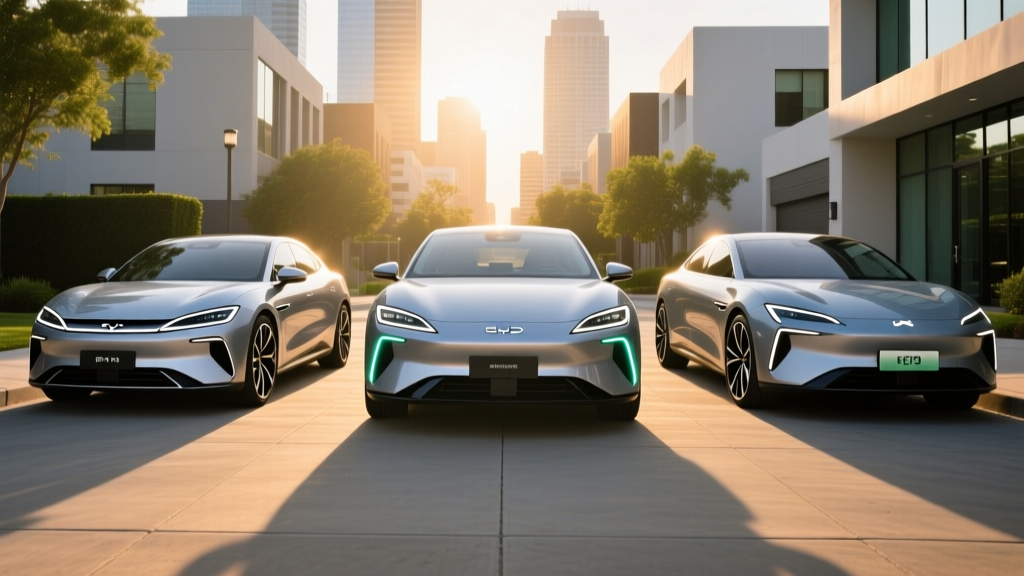
Search for "tesla competitors china" and you'll find headlines about BYD outselling Tesla globally, NIO's battery-swap network, and Zeekr's blistering charging speeds. But for US-based EV shoppers, the real question isn't who sells the most units in Shenzhen — it's whether any Chinese-brand electric vehicle can actually serve your daily driving needs, access reliable charging, qualify for federal tax credits, and hold resale value in North America.
As of 2026, the answer is nuanced. Several Chinese EVs are technically impressive on paper, but tariff structures, charging network compatibility, parts availability, and §30D tax credit sourcing rules create significant barriers. Here's a data-driven look at the most-discussed Chinese EV brands and how they stack up against the Tesla Model Y, Model 3, and established competitors from Hyundai, Ford, and Volkswagen.
BYD Seal: The Model 3 Challenger
The BYD Seal is the Chinese automaker's most direct Tesla Model 3 competitor — a midsize electric sedan with competitive range, sharp styling, and aggressive pricing in export markets. BYD uses its proprietary Blade Battery (LFP chemistry) across the Seal lineup, prioritizing safety and cycle life over maximum energy density.
| Spec | Value |
|---|---|
| EPA-Estimated Range | Not EPA-rated (US market unavailable); WLTP up to 354 mi |
| Battery Capacity | 82.5 kWh usable (LFP Blade) |
| Max DC Fast Charge | 150 kW peak |
| 10–80% DC Charge Time | ~26 minutes |
| Level 2 Home Charge Rate | 11 kW AC (~30 mi/hr) |
| 0–60 mph | 5.9 sec (RWD); 3.8 sec (AWD Performance) |
| Horsepower | 313 hp (RWD); 530 hp (AWD) |
| Drivetrain | RWD or Dual-Motor AWD |
| Efficiency (WLTP) | ~3.9 mi/kWh (~25.6 kWh/100 mi) |
| Cargo Volume | 14.1 cu ft trunk + 1.8 cu ft frunk |
| Wheelbase / Rear Legroom | 111.8 in / ~35.4 in |
| Battery Warranty | 8 yr / 100,000 mi (export markets) |
| Base Price (Europe/Australia) | ~€45,000 / ~A$65,000 |
The US problem: BYD does not sell passenger vehicles in the United States as of 2026. A 100% tariff on Chinese-made EVs (raised from 25% in 2024) makes importing the Seal economically unviable. Even if BYD built a US factory, the vehicle would need NHTSA crash certification, CCS or NACS charging port integration (the Seal currently uses GB/T in China and CCS2 in Europe), and a dealer/service network. For US buyers, the Seal remains a benchmark to compare against, not a purchase option.
NIO ET5: Battery Swap and Premium Ambitions
NIO positions itself as a premium brand competing with Tesla, BMW, and Mercedes. The NIO ET5 is a compact executive sedan with a distinctive feature: swappable battery packs. NIO's Power Swap stations can exchange a depleted battery for a fully charged one in roughly 5 minutes, addressing range anxiety and battery degradation concerns simultaneously.
| Spec | Value |
|---|---|
| EPA-Estimated Range | Not EPA-rated; WLTP up to 342 mi (75 kWh pack) |
| Battery Capacity | 75 kWh (NMC) standard; 100 kWh optional |
| Max DC Fast Charge | ~130 kW peak (limited by swap-compatible pack design) |
| 10–80% DC Charge Time | ~30 minutes (75 kWh pack) |
| Level 2 Home Charge Rate | 7 kW AC (~20 mi/hr) / 11 kW optional |
| 0–60 mph | 4.3 sec (dual-motor AWD) |
| Horsepower | 483 hp (dual-motor) |
| Drivetrain | Dual-Motor AWD standard |
| Cargo Volume | ~12.7 cu ft trunk (no frunk) |
| Battery Warranty | Lifetime for original owner (China); 8 yr / 100,000 mi (export) |
| Base Price (Europe, BaaS) | ~€42,000 + €169/mo battery subscription |
Battery-as-a-Service (BaaS): NIO's subscription model separates vehicle and battery cost. You buy the car without the battery and pay a monthly fee (~$170–$230 depending on pack size) for battery access. This lowers the purchase price and eliminates degradation risk, but means you never own the battery outright. In China, this model has proven popular; whether US consumers would accept monthly battery payments is untested.
US availability: NIO has repeatedly announced US market entry plans but has not launched as of 2026. The company faces the same tariff and homologation barriers as BYD. Additionally, NIO's battery-swap infrastructure — over 2,500 stations in China — does not exist in North America. Without swap stations, the ET5's key differentiator vanishes, leaving it as a conventional (if somewhat slower-charging) electric sedan.
Zeekr 007: The Charging-Speed King
Geely-owned Zeekr has generated the most technical buzz among Chinese EVs with the Zeekr 007, which features an 800-volt architecture enabling exceptional DC fast-charging speeds. On paper, the 007's charging performance rivals or exceeds the Porsche Taycan and Hyundai Ioniq 5.
| Spec | Value |
|---|---|
| EPA-Estimated Range | Not EPA-rated; CLTC up to 425 mi (100 kWh) |
| Battery Capacity | 75 kWh (LFP) or 100 kWh (NMC Qilin) |
| Max DC Fast Charge | Up to 475 kW peak (100 kWh NMC pack) |
| 10–80% DC Charge Time | ~10.5 minutes (claimed, 100 kWh pack at capable charger) |
| Level 2 Home Charge Rate | 11 kW AC (~30 mi/hr) |
| 0–60 mph | 2.84 sec (AWD Performance); 5.4 sec (RWD) |
| Horsepower | 637 hp (AWD Performance) |
| Drivetrain | RWD or Dual-Motor AWD |
| Cargo Volume | ~16.4 cu ft trunk + 2.1 cu ft frunk |
| Battery Warranty | 8 yr / 100,000 mi (export markets) |
| Base Price (China) | ~¥210,000 (~$29,000 USD) |
US availability: Zeekr has expressed interest in the US market, potentially through a Geely-owned brand like Polestar or Volvo's distribution network. However, no Zeekr-badged vehicle is sold in the US as of 2026. The Geely group's experience with Volvo and Polestar gives Zeekr a potential pathway that BYD and NIO lack, but tariff barriers remain a fundamental obstacle.
The Tariff Wall: Why Chinese EVs Aren't in US Showrooms
Understanding the competitive landscape requires understanding the trade barriers. As of 2026, Chinese-made electric vehicles face:
- 100% tariff on Chinese-manufactured EVs (raised from 25% effective August 2024 under Section 301)
- 25% tariff on lithium-ion EV batteries from China
- §30D tax credit exclusion: The federal EV tax credit explicitly disqualifies vehicles with battery components or critical minerals sourced from a "foreign entity of concern" (FEOC) — which includes Chinese companies. This makes it nearly impossible for a Chinese-sourced battery pack to qualify for the $7,500 credit.
- NHTSA homologation: Any vehicle sold in the US must meet Federal Motor Vehicle Safety Standards (FMVSS), requiring crash testing and certification that adds millions in development cost.
The combined effect: a BYD Seal that costs ~$35,000 in Australia would cost $70,000+ after tariffs in the US, before even accounting for dealer markup, shipping, or compliance modifications. That eliminates the price advantage entirely.
Head-to-Head: Chinese EVs vs. US-Available Alternatives
Since Chinese EVs aren't purchasable in the US, here's how their specs compare to vehicles you can actually buy and charge today:
| Spec | BYD Seal | NIO ET5 | Zeekr 007 | Tesla Model 3 LR | Hyundai Ioniq 6 LR |
|---|---|---|---|---|---|
| Range (EPA/WLTP*) | 354 mi* (WLTP) | 342 mi* (WLTP) | 425 mi* (CLTC) | 363 mi (EPA) | 361 mi (EPA) |
| Battery | 82.5 kWh LFP | 75 kWh NMC | 100 kWh NMC | 79 kWh NMC | 77.4 kWh NMC |
| Peak DC Charge | 150 kW | ~130 kW | 475 kW | 250 kW | 350 kW (800V) |
| 10–80% Time | ~26 min | ~30 min | ~10.5 min† | ~25 min | ~18 min |
| 0–60 mph | 5.9s / 3.8s | 4.3s | 2.84s / 5.4s | 4.2s | 5.1s |
| US Price | N/A | N/A | N/A | $47,740 | $42,715 |
| §30D Credit | N/A | N/A | N/A | Partial‡ | $7,500§ |
| US Charging Port | CCS2/GB/T | CCS2/GB/T | GB/T/CCS2 | NACS | CCS1→NACS adapter |
* WLTP and CLTC figures overstate range vs. EPA by 15–25%. † Requires 500+ kW charger, virtually unavailable in US. ‡ Model 3 RWD qualifies; AWD Long Range eligibility varies by battery sourcing. § Verify current-year eligibility at IRS.gov — sourcing rules change frequently.
What Chinese EVs Get Right (and Where They Fall Short)
Strengths
- Price-to-spec ratio: In markets without tariffs, Chinese EVs offer 10–20% more range or performance per dollar than Western competitors
- LFP battery adoption: BYD's Blade Battery has demonstrated excellent safety (nail penetration tests) and long cycle life (3,000+ cycles to 80% capacity)
- 800V architecture: Zeekr and XPeng are deploying 800V platforms faster than most legacy automakers, enabling genuine ultra-fast charging
- Infotainment innovation: NIO's NOMI AI assistant and Zeekr's gaming-capable infotainment push in-cabin tech forward
- Battery swap (NIO): A genuinely differentiated solution for apartment dwellers and high-mileage drivers who can't rely on home charging
Weaknesses
- No US sales, service, or parts: Zero dealership or service center presence; a collision repair could take months for parts
- Charging port mismatch: Chinese domestic models use GB/T connectors; export models use CCS2 — neither natively fits US CCS1 or NACS infrastructure without adapters
- Software localization: Navigation, voice assistants, and app ecosystems are built for Chinese platforms (WeChat, Baidu Maps); Western app integration is limited
- Resale value unknown: No track record in Western markets means depreciation is a complete gamble
- ADAS calibration for US roads: Driver-assist systems trained on Chinese lane markings, signage, and traffic patterns may underperform on US highways
- Data security concerns: US government scrutiny of connected Chinese vehicles (similar to Huawei telecom restrictions) could result in future bans or restrictions
Should US Buyers Wait for Chinese EVs?
The short answer: no, not in any practical timeframe. Even if tariff policy shifted, building a US dealer network, service infrastructure, parts supply chain, and NHTSA certification pipeline takes 3–5 years minimum. BYD, NIO, and Zeekr are focused on Europe, Southeast Asia, South America, and the Middle East — markets without 100% tariffs and with less complex regulatory requirements.
The longer answer: Chinese EVs are already influencing the US market indirectly. Their aggressive pricing pressures Tesla to cut prices. Their LFP battery adoption validates chemistry choices that Tesla, Ford, and others are now pursuing. Their 800V platforms push Hyundai, Kia, and Porsche to accelerate similar architectures. The competition is real — it just doesn't show up in your local showroom.
- If you want BYD Seal value: The Hyundai Ioniq 6 ($42,715, 361 mi EPA, 350 kW charging, full $7,500 credit) delivers comparable range and faster real-world charging with US service infrastructure.
- If you want NIO's premium feel: The BMW i4 eDrive40 ($57,975, 307 mi EPA) or Genesis Electrified G80 offer European/Korean luxury with established US dealer networks.
- If you want Zeekr's charging speed: The Hyundai Ioniq 5 N or Kia EV6 GT (800V architecture, ~18 min 10–80%) provide the fastest real-world charging available on US infrastructure today.
- If you want battery-swap flexibility: No US equivalent exists. Your best alternative is prioritizing vehicles with excellent DC fast charging and planning routes around reliable charger networks.
Frequently Asked Questions
What is the real-world range of the best Chinese EVs?
The Zeekr 007 with its 100 kWh NMC pack claims up to 425 miles under China's CLTC cycle, but CLTC overstates range by roughly 25–30% compared to EPA methodology. Expect roughly 300–320 EPA-equivalent miles, or ~260–280 miles in real-world highway driving. The BYD Seal's 354-mile WLTP figure translates to approximately 280–300 EPA miles, with ~240–260 miles achievable at highway speeds.
How fast do Chinese EVs charge compared to Tesla?
The Zeekr 007's 475 kW peak is faster than any Tesla (Model 3/Y peak at 250 kW), but only on ultra-high-power chargers that don't exist in the US. On typical 350 kW US chargers, the 007 would charge comparably to a Hyundai Ioniq 5 (~18 min 10–80%). The BYD Seal's 150 kW peak is actually slower than Tesla's 250 kW, making it less competitive for road-trip charging.
Do Chinese EVs qualify for the US federal EV tax credit?
No. Under IRS §30D rules, vehicles must meet final assembly in North America requirements, MSRP caps ($55,000 sedans / $80,000 SUVs), buyer income limits, and battery component/critical mineral sourcing requirements that explicitly exclude Chinese-sourced materials (FEOC rules). Even if a Chinese brand assembled vehicles in the US, battery sourcing rules would likely disqualify them.
Are Chinese EVs reliable?
Long-term reliability data is limited, as most Chinese EV brands are less than a decade old. BYD's LFP Blade Battery has shown strong durability in testing (minimal degradation over 3,000+ charge cycles), but vehicle-level reliability — electronics, build quality, software stability — has received mixed reviews from European early adopters. J.D. Power China studies show BYD and NIO performing near the industry average, not significantly above or below.
Will Chinese EVs ever be sold in the US?
Possibly, but not before 2028–2030 at the earliest, and only if tariff policy changes. The most likely pathway is through an established brand — Geely could theoretically introduce Zeekr models through Volvo/Polestar dealerships, or a Chinese automaker could build a North American factory (as BYD has done for electric buses in California). However, current trade policy and geopolitical tensions make this unlikely in the near term.
What's the best Tesla alternative available in the US right now?
For Model 3 buyers: the Hyundai Ioniq 6 offers comparable range (361 mi EPA), faster charging (350 kW peak, 800V), and qualifies for the full $7,500 federal tax credit. For Model Y buyers: the Hyundai Ioniq 5 or Kia EV6 provide similar crossover utility with 800V fast charging. Check current eligibility at fueleconomy.gov for the latest EPA data and tax credit status.