Tesla remains the default name in electric vehicles, but a decade-plus of mass-market EV ownership has revealed a clear pattern of strengths and recurring issues. If you're researching Tesla problems before buying a Model 3, Model Y, Model S, or Model X in 2026, you need data — not anecdotes. This guide breaks down the most documented issues across Tesla's current lineup, contextualized with real EPA figures, charging specs, ownership costs, and how Tesla stacks up against its now-mature competition.
We'll cover the full current fleet (Model 3 Highland refresh, Model Y Juniper, and the legacy Model S/X), address the most-searched pain points — from phantom braking to panel gaps — and give you a practical framework for deciding whether a Tesla is the right EV for your garage.
Tesla at a Glance: 2026 Lineup Specs
Before we dig into known issues, here's what you're working with across Tesla's current consumer lineup. All figures reflect the latest EPA data and manufacturer specifications for the 2025–2026 model years.
| Spec | Model 3 Long Range AWD | Model Y Long Range AWD | Model S Long Range | Model X Long Range |
|---|---|---|---|---|
| EPA Range | 341 mi | 320 mi | 402 mi | 335 mi |
| Battery (usable, est.) | ~75 kWh (NMC) | ~75 kWh (NMC) | ~95 kWh (NMC) | ~95 kWh (NMC) |
| Peak DC Charge | 250 kW | 250 kW | 250 kW | 250 kW |
| 10–80% DC Time | ~27 min | ~27 min | ~33 min | ~33 min |
| Level 2 Rate | 11.5 kW (~44 mi/hr) | 11.5 kW (~44 mi/hr) | 11.5 kW (~34 mi/hr) | 11.5 kW (~34 mi/hr) |
| 0–60 mph | 4.2 sec | 4.8 sec | 3.1 sec | 3.8 sec |
| Horsepower | 346 hp | 384 hp | 670 hp | 670 hp |
| Drivetrain | Dual-motor AWD | Dual-motor AWD | Dual-motor AWD | Dual-motor AWD |
| MPGe (combined) | 132 MPGe | 122 MPGe | 120 MPGe | 103 MPGe |
| Efficiency | 25 kWh/100mi | 28 kWh/100mi | 28 kWh/100mi | 33 kWh/100mi |
| Cargo (rear+frunk) | 23 cu ft + 3 cu ft | 72 cu ft + 4 cu ft | 28 cu ft + 3 cu ft | 88 cu ft + 7 cu ft |
| Base MSRP | $47,740 | $49,990 | $79,990 | $84,990 |
| Battery Warranty | 8 yr / 120,000 mi | 8 yr / 120,000 mi | 8 yr / 150,000 mi | 8 yr / 150,000 mi |
Sources: EPA fueleconomy.gov, Tesla.com specifications. Prices reflect MSRP before destination or incentives. Model Y RWD with LFP battery available at lower price point with 260-kWh battery and reduced range.
Real-World Range vs. EPA Sticker: Where Tesla Owners Lose Miles
The EPA range figure on a Tesla's window sticker is achievable — under ideal conditions. But real-world driving introduces variables that can meaningfully reduce your usable range. Tesla's efficiency is among the best in the EV industry, but physics still applies.
Model 3 Long Range (EPA 341 mi): Expect ~280–300 mi in mixed driving, ~250–270 mi sustained highway at 75+ mph, and ~220–250 mi in freezing temperatures (below 32°F).
Model Y Long Range (EPA 320 mi): Expect ~260–280 mi mixed, ~230–250 mi highway, and ~200–230 mi in cold weather.
Model S Long Range (EPA 402 mi): Expect ~330–360 mi mixed, ~300–330 mi highway, and ~270–300 mi in cold weather.
Highway speeds, headwinds, elevation gain, and HVAC use all reduce range. Tesla's heat pump (standard since ~2021) significantly mitigates cold-weather loss compared to older resistive-heating EVs.
The problem buyers report: New EV owners unfamiliar with range variables often feel their Tesla "doesn't hit the advertised range." This isn't a defect — it's how all EVs work. However, Tesla's in-car range estimator (the "rated range" display) has historically been optimistic compared to competitors that show a dynamic estimate based on recent driving. Tesla added a percentage-based SoC display and trip energy graphs that help, but the gap between the EPA sticker and daily reality remains a top complaint among first-time EV buyers.
What you can do: Use the trip energy graph and navigate to Superchargers with preconditioning enabled. Preconditioning warms the battery before fast charging, which also improves range accuracy by bringing the pack to optimal operating temperature.
Charging: Speed, Reliability, and the NACS Advantage
Tesla's Supercharger network is the strongest charging ecosystem in North America — and it's the single biggest reason many buyers choose Tesla over competitors. But charging isn't without its frustrations.
| Level | Power | Miles Added per Hour | Typical Use Case |
|---|---|---|---|
| Level 1 (120V) | ~1.4 kW | ~3–5 mi/hr | Emergency / overnight trickle |
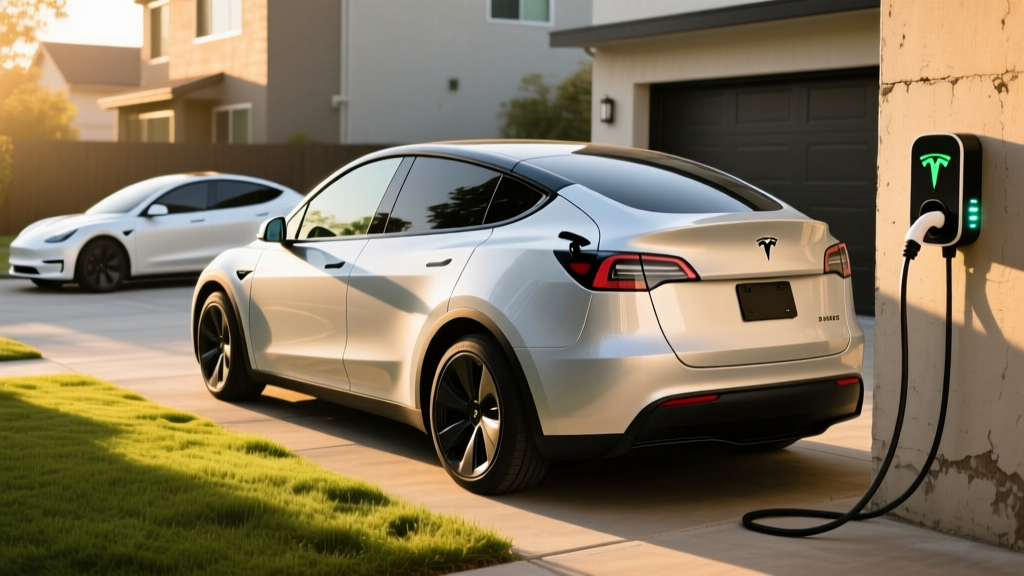
| Level 2 (240V, 48A) | 11.5 kW | ~34–44 mi/hr | Home daily charging |
| DC Fast (V3 Supercharger) | Up to 250 kW | ~175 mi in 15 min (peak) | Road trips |
| DC Fast (V4 Supercharger) | Up to 250+ kW | Similar; improved cable mgmt | Road trips (newer stations) |
Known charging problems:
- Charge curve taper: Teslas peak at 250 kW only at low states of charge (typically 10–30% SoC). By 60% SoC, speeds drop to ~100 kW, and above 80% they fall to ~50 kW or less. This is normal for NMC lithium-ion chemistry, but it means a "10–80% in 27 minutes" claim doesn't mean 0–100% in 40 minutes. Plan road-trip stops around 10–80% sessions.
- Supercharger reliability: While Tesla's network uptime is the best in the industry (~97%+ by most third-party surveys), individual stalls can be broken, occupied by non-charging vehicles, or limited to lower speeds. The Tesla app shows real-time stall availability, but you can still arrive to find 2 of 8 stalls functional.
- CCS adapter dependency (older models): Pre-2025 Teslas shipped with a proprietary connector. While Tesla has transitioned to the NACS standard (which is now the North American industry standard adopted by Ford, GM, Rivian, Hyundai, and others), owners of 2021–2024 models may need a CCS adapter to access Electrify America or other non-Tesla networks. The NACS transition has largely resolved this going forward.
- Home charging installation cost: Installing a 240V / 60A circuit for a Tesla Wall Connector typically costs $800–$2,500 depending on panel proximity and local labor rates. Older homes with 100A electrical panels may require a $2,000–$5,000 panel upgrade.
Build Quality and Hardware Issues: The Persistent Complaint
If you search "Tesla problems" on any owner forum, build quality surfaces immediately. Tesla has improved significantly since the early Model 3 production ramp (2018–2019), but inconsistencies remain — especially compared to legacy automakers like Hyundai, BMW, or Toyota.
Most reported build-quality issues:
- Panel gaps: Uneven gaps between body panels (doors, trunk, frunk) are the most documented cosmetic complaint. Tesla's Fremont factory has improved, but Shanghai-built Model 3/Y vehicles (sold in some markets) generally show tighter tolerances. In the US, Austin-built Model Y vehicles have shown better consistency than earlier Fremont units.
- Paint quality: Thin paint, orange-peel texture, and micro-scratches from factory delivery are common reports. Many owners invest $500–$1,500 in paint correction and ceramic coating immediately after delivery.
- Interior rattles and squeaks: The minimalist interior (especially in Model 3/Y) uses fewer sound-deadening materials. Rattles from the dashboard, door panels, and the rear glass shelf on the Model 3 are documented across model years.
- Water ingress (rare but documented): Some owners report water leaking into the cabin through door seals or the trunk seal during heavy rain or car washes. This has been addressed under warranty but remains a concern in quality surveys.
Context: These issues are largely cosmetic and don't affect drivetrain reliability or safety. However, at $48,000–$85,000, buyers reasonably expect fit and finish comparable to vehicles in the same price range from BMW or Genesis. Tesla's approach has always prioritized powertrain and software innovation over traditional luxury craftsmanship — whether that's acceptable depends on your priorities.
Software, Autopilot, and Phantom Braking
Tesla's software is simultaneously its greatest strength and a recurring source of frustration. The infotainment system, over-the-air (OTA) updates, and driver-assistance features are industry-leading in capability — but not in consistency.
Tesla Autopilot and Full Self-Driving (Supervised) are Level 2 driver-assistance systems under the SAE J3016 standard. This means the driver must remain fully engaged, hands on or near the wheel, and eyes on the road at all times. These systems do NOT make the vehicle self-driving. Only Level 4 services like Waymo operate without a human driver, and only in geofenced areas.
Key software and Autopilot problems:
- Phantom braking: This is the most safety-relevant complaint. Teslas using Autopilot or Traffic-Aware Cruise Control have been documented braking unexpectedly on highways — sometimes decelerating from 70+ mph to 40 mph with no obstacle present. NHTSA has investigated this issue. Tesla has issued multiple OTA updates to address it, but owner reports persist as of 2025–2026. This remains an active area of regulatory scrutiny.
- FSD (Supervised) capability vs. marketing: Tesla sells Full Self-Driving (Supervised) for $8,000 (one-time purchase) or $99/month. Despite the name, FSD is a Level 2 system that requires full driver supervision. It can navigate city streets, stop lights, and roundabouts, but it makes errors that require immediate human intervention. Buyers who purchased FSD expecting imminent autonomy have filed complaints and lawsuits. As of 2026, FSD remains a supervised assist system — impressive in capability, but not a replacement for an attentive driver.
- OTA update variability: Tesla pushes frequent over-the-air updates that can add features, change UI, or alter driving dynamics. While generally positive, some updates have introduced new bugs, reduced regen braking intensity, or changed energy consumption profiles. Unlike legacy OEMs that issue occasional firmware updates, Tesla's rapid iteration means your car can feel different month to month — which some owners love and others find unsettling.
- Touchscreen dependency: The Model 3 and Model Y route nearly all vehicle controls through the central touchscreen — including climate, mirrors, glove box, and wiper settings. If the screen freezes or reboots (a rare but documented issue), you temporarily lose access to these controls. Tesla has added redundancy for critical functions, but the single-screen architecture remains a concern for some buyers.
Battery Degradation, Warranty, and Long-Term Costs
Battery longevity is one of the most searched Tesla topics — and one where the data is largely reassuring, with important caveats.
Tesla battery chemistry (2026):
| Model/Trim | Chemistry | Key Characteristics |
|---|---|---|
| Model 3 RWD (base) | LFP (Lithium Iron Phosphate) | Longer cycle life, less energy density, can charge to 100% daily, lower cost |
| Model 3 Long Range / Performance | NMC (Nickel Manganese Cobalt) | Higher energy density, better cold performance, recommended 80% daily charge |
| Model Y RWD (base) | LFP | Same as Model 3 RWD — durable, lower range |
| Model Y Long Range / Performance | NMC | Same as Model 3 LR — best range, cold-weather advantage |
| Model S / Model X | NMC | Large pack, highest range, premium pricing |
Degradation data: Tesla's own impact reports and third-party fleet data (from sources like Teslanorth fleet tracking) show that NMC Tesla batteries typically retain 88–92% of original capacity after 100,000 miles. LFP packs show even slower degradation, with many retaining 93–96% at similar mileage. A 10% loss over 100k miles on a 341-mile Model 3 Long Range means ~307 miles of usable range — still excellent.
Battery warranty:
- Model 3/Y Long Range & Performance: 8 years / 120,000 miles, whichever comes first, with at least 70% capacity retention.
- Model 3/Y RWD (LFP): 8 years / 100,000 miles, 70% retention.
- Model S/X: 8 years / 150,000 miles, 70% retention.
Out-of-warranty replacement cost: If a battery fails outside warranty, replacement costs range from $12,000–$20,000+ depending on the model and pack size. This is the single largest financial risk of long-term EV ownership, though catastrophic battery failure is statistically rare in Teslas. Most degradation is gradual and stays within warranty thresholds.
Drive unit reliability: Tesla's electric motors (drive units) have proven highly reliable, with failure rates well below 1% in fleet data. The single-speed reduction gear requires no fluid changes in normal service. This is a significant advantage over internal combustion engines with complex transmissions, timing chains, and emissions systems.
Pricing, Tax Credits, and Total Cost of Ownership
Tesla's pricing has shifted frequently — sometimes monthly — in recent years. Here's where the lineup stands for 2026, including federal tax credit context.
| Model / Trim | Base MSRP | §30D Federal Credit | Effective Price (est.) |
|---|---|---|---|
| Model 3 RWD | $38,990 | Up to $7,500* | ~$31,490 |
| Model 3 Long Range AWD | $47,740 | Up to $7,500* | ~$40,240 |
| Model Y RWD | $41,990 | Up to $7,500* | ~$34,490 |
| Model Y Long Range AWD | $49,990 | Up to $7,500* | ~$42,490 |
| Model S Long Range | $79,990 | $0 (MSRP cap) | $79,990 |
| Model X Long Range | $84,990 | $0 (MSRP cap) | $84,990 |
*Eligibility for the IRS §30D Clean Vehicle Credit depends on multiple factors: buyer income caps ($150K single / $300K joint AGI), vehicle MSRP caps ($55K for sedans / $80K for SUVs), and battery critical-mineral and component sourcing requirements that change annually. The credit can be transferred to the dealer as a point-of-sale discount. Always verify current-year eligibility on IRS.gov and with your tax professional before purchasing.
Cost of ownership context: Tesla's electricity cost averages $0.13–$0.16/kWh nationally for home charging (varies significantly by utility). At 25–33 kWh/100mi, that's $3.25–$5.28 per 100 miles driven. A comparable gas car at 28 MPG and $3.50/gallon costs $12.50 per 100 miles. Over 15,000 miles/year, a Tesla saves roughly $1,100–$1,400 annually on fuel. Maintenance savings (no oil changes, minimal brake wear due to regen) add another $300–$600/year.
Insurance reality: Tesla insurance premiums are 20–40% higher than comparable gas sedans and SUVs, according to industry data. Average annual premiums range from $1,800–$3,200 depending on model, location, and driving history. Tesla offers its own insurance product in many states that uses real-time driving data to set rates, which can be competitive for safe drivers.
Tesla vs. the Competition: Is It Still the Default Choice?
In 2020, recommending a Tesla was almost automatic — nothing else matched the Supercharger network, range, or software. In 2026, the competitive landscape is fundamentally different.
Where Tesla still wins:
- Supercharger network access (even as competitors gain NACS access, Tesla owners get priority and best pricing)
- Energy efficiency (kWh/100mi) — Tesla's drivetrains remain among the most efficient in the industry
- OTA update cadence and software feature depth
- Resale value (though it has declined from peak levels)
Where competitors have caught up or surpassed Tesla:
- Build quality and interior materials — Hyundai Ioniq 5/6, BMW i4/iX, and Genesis GV60 offer significantly better fit and finish at similar prices
- Charging speed — Hyundai/Kia's E-GMP platform charges at up to 350 kW (10–80% in ~18 minutes on a 350 kW charger), outpacing Tesla's 250 kW peak
- Driver-assistance reliability — GM's Super Cruise and Ford's BlueCruise have lower phantom-braking complaint rates on compatible highways
- Physical controls — Most competitors retain physical knobs for climate and volume, avoiding Tesla's touchscreen-only approach
Choose Tesla if: You prioritize Supercharger access for frequent road trips, value OTA software updates, want the most energy-efficient drivetrain, and are comfortable with a minimalist interior.
Choose a competitor if: Build quality and luxury materials matter to you, you want faster DC charging (Hyundai/Kia), you prefer physical controls, or you want hands-free highway driving on mapped routes (GM Super Cruise / Ford BlueCruise).
The Biggest Tesla Pros and Cons
- Best-in-class Supercharger network
- Industry-leading energy efficiency (kWh/100mi)
- Strong real-world range across lineup
- Excellent over-the-air update ecosystem
- Low maintenance costs vs. ICE vehicles
- Strong performance even in base trims
- Extensive third-party accessory and service ecosystem
- Build quality inconsistent vs. legacy OEMs
- Phantom braking incidents on Autopilot
- Touchscreen-only controls (Model 3/Y)
- DC fast charge speed capped at 250 kW (trails Hyundai 350 kW)
- FSD (Supervised) is Level 2, not autonomous — despite the name
- Insurance premiums 20–40% above segment average
- Model S/X priced above §30D MSRP cap — no federal credit
- Service center wait times can be long in some regions
Frequently Asked Questions
What is the real-world range of a Tesla?
For the most popular model — the Model 3 Long Range AWD — the EPA rates it at 341 miles. In real-world mixed driving, expect 280–300 miles. Sustained highway driving at 75+ mph drops this to roughly 250–270 miles, and freezing temperatures can reduce it further to 220–250 miles. The Model Y Long Range (EPA 320 mi) delivers roughly 260–280 miles in mixed use.
How fast does a Tesla charge at home and on the road?
At home on a 240V Level 2 charger (11.5 kW), a Model 3 or Model Y adds approximately 44 miles of range per hour — enough to fully recharge overnight. On a V3 Supercharger (250 kW DC), Tesla quotes roughly 175 miles in 15 minutes at peak rates. A 10–80% session takes about 27 minutes for Model 3/Y and 33 minutes for Model S/X. Charging slows significantly above 80% SoC due to battery protection protocols.
How much does a Tesla cost after tax credits?
A Model 3 RWD starts at $38,990 and may qualify for up to $7,500 in federal tax credits under IRS §30D, bringing the effective price to roughly $31,490 — if you meet income caps ($150K single / $300K joint), the vehicle meets battery sourcing requirements, and you elect the point-of-sale transfer. Model S and Model X exceed the MSRP cap for the credit and do not qualify. Always verify current-year rules at IRS.gov.
Is a Tesla worth buying vs. competitors in 2026?
It depends on your priorities. Tesla still leads in charging infrastructure (Superchargers), energy efficiency, and software. But competitors like the Hyundai Ioniq 5, BMW i4, Ford Mustang Mach-E, and Kia EV6 now match or exceed Tesla in build quality, DC charging speed, and interior comfort. If road-trip charging access is your top priority, Tesla remains the strongest choice. If luxury feel, physical controls, or faster DC charging matter more, shop the competition.
What are the most common Tesla problems?
The most documented issues are: (1) panel gap inconsistencies and paint quality, (2) phantom braking on Autopilot/TACC, (3) interior rattles, (4) touchscreen dependency for basic controls, and (5) FSD marketing vs. actual Level 2 capability. Battery degradation has proven modest — most packs retain 88–92% capacity at 100,000 miles.
Does Tesla qualify for the federal EV tax credit?
Model 3 and Model Y variants under the MSRP cap ($55,000 for sedans, $80,000 for SUVs) can qualify for up to $7,500 under §30D, subject to buyer income limits and battery sourcing requirements that update annually. Model S ($79,990) qualifies under the SUV cap but is a sedan — verify classification. Model X ($84,990) exceeds the $80,000 SUV cap and does not qualify. Rules change frequently; confirm at IRS.gov before purchasing.
How reliable are Tesla batteries long-term?
Tesla's NMC batteries retain approximately 88–92% of original capacity at 100,000 miles based on fleet data. LFP batteries (in base Model 3/Y RWD) show even less degradation, often 93–96% retention at similar mileage. All Tesla batteries carry an 8-year warranty with a 70% retention threshold. Out-of-warranty replacement costs $12,000–$20,000+, but catastrophic failure is statistically rare.