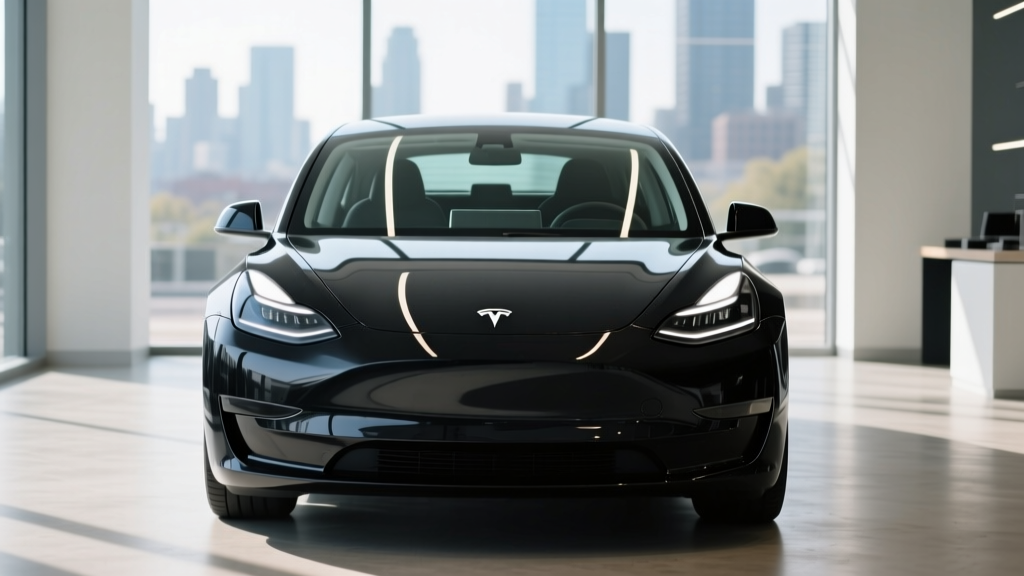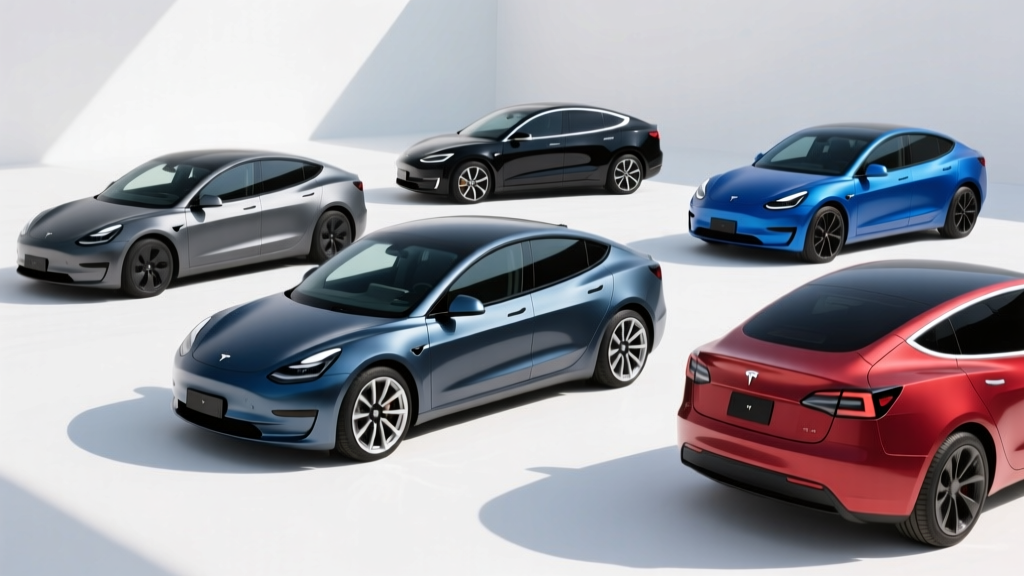
Choosing a Tesla isn't just about the powertrain — the exterior color you select affects resale value, delivery timelines, and in some cases, thermal efficiency. For 2026, Tesla's paint lineup has evolved with new premium multi-coat options and the continuation of its no-cost Pearl White Multi-Coat standard across most models. This guide breaks down every available Tesla color by model, then dives deep into the specs, real-world range, charging performance, and ownership economics that actually matter when you're configuring your order.
2026 Tesla Color Options by Model
Tesla's color palette varies significantly across its lineup. Below is a comprehensive breakdown of every exterior paint option available at time of writing for the 2026 model year, including pricing for premium colors.
| Color | Model 3 | Model Y | Model S | Model X | Cybertruck |
|---|---|---|---|---|---|
| Pearl White Multi-Coat | No cost | No cost | No cost | No cost | No cost |
| Solid Black | $2,000 | $2,000 | — | — | — |
| Deep Blue Metallic | $2,000 | $2,000 | $2,500 | $2,500 | — |
| Midnight Silver Metallic | $2,000 | $2,000 | $2,500 | $2,500 | — |
| Red Multi-Coat | $2,500 | $2,500 | $3,000 | $3,000 | — |
| Ultra Red | — | — | $3,000 | $3,000 | — |
| Quicksilver | — | — | — | — | $3,000 |
| Satin Black (PPF wrap) | — | — | — | — | $3,000 |
Pro tip: Pearl White and Cybertruck's bare stainless steel are the no-cost defaults. White vehicles also show less visible dust and minor swirl marks compared to black, which is notorious for revealing every wash imperfection. If you're prioritizing delivery speed, white and black tend to have the shortest lead times since they're produced in the highest volume at Giga Texas and Giga Berlin.
Model 3: Specs, Range & Real-World Efficiency
The refreshed Model 3 (Highland and subsequent updates) remains Tesla's volume leader and entry point into the brand. Here's what the numbers look like across trims.
| Spec | RWD | Long Range AWD | Performance |
|---|---|---|---|
| EPA Range | 272 mi | 341 mi | 315 mi |
| Battery (usable) | ~60 kWh (LFP) | ~75 kWh (NMC) | ~75 kWh (NMC) |
| Drivetrain | RWD single motor | AWD dual motor | AWD dual motor |
| 0-60 mph | 5.8 sec | 4.2 sec | 2.9 sec |
| Horsepower | 283 hp | 346 hp | 510 hp |
| Max DC Fast Charge | 170 kW | 250 kW | 250 kW |
| 10-80% DCFC Time | ~28 min | ~25 min | ~25 min |
| Level 2 Home Charge | 11.5 kW (~44 mi/hr) | 11.5 kW (~44 mi/hr) | 11.5 kW (~44 mi/hr) |
| MPGe (combined) | 132 MPGe | 125 MPGe | 118 MPGe |
| Efficiency | 25 kWh/100mi | 27 kWh/100mi | 29 kWh/100mi |
| Cargo Volume | 23 cu ft (trunk + frunk) | ||
| Rear Legroom | 35.2 in | ||
| Base MSRP | $38,990 | $47,740 | $54,990 |
Model Y: The Family SUV Benchmark
The Model Y continues as America's best-selling EV, and the 2026 Juniper refresh brought updated styling, improved suspension tuning, and a quieter cabin. Color availability mirrors the Model 3 with slight pricing variations.
| Spec | RWD | Long Range AWD | Performance |
|---|---|---|---|
| EPA Range | 280 mi | 320 mi | 293 mi |
| Battery (usable) | ~60 kWh (LFP) | ~75 kWh (NMC) | ~75 kWh (NMC) |
| Drivetrain | RWD single motor | AWD dual motor | AWD dual motor |
| 0-60 mph | 6.5 sec | 4.8 sec | 3.5 sec |
| Horsepower | 295 hp | 384 hp | 456 hp |
| Max DC Fast Charge | 170 kW | 250 kW | 250 kW |
| 10-80% DCFC Time | ~28 min | ~25 min | ~25 min |
| Level 2 Home Charge | 11.5 kW (~40 mi/hr) | 11.5 kW (~40 mi/hr) | 11.5 kW (~40 mi/hr) |
| MPGe (combined) | 125 MPGe | 119 MPGe | 111 MPGe |
| Cargo Volume (rear seats up) | 30 cu ft | ||
| Cargo Volume (rear seats folded) | 72 cu ft | ||
| Rear Legroom | 37.0 in | ||
| Base MSRP | $44,990 | $49,990 | $54,990 |
Why it matters: The Model Y's 72 cu ft of cargo space with seats folded beats nearly every compact SUV in its class, gas or electric. For families who road-trip with strollers, bikes, or camping gear, this is a genuine differentiator. The LFP RWD trim is the value play — you sacrifice 40 miles of EPA range and AWD traction, but save $5,000 and gain an LFP battery that tolerates daily 100% charging without degradation concerns.
Model S, Model X & Cybertruck: Flagship Specs
Tesla's premium trio commands higher prices and offers distinct use cases. The Model S excels as a long-range grand tourer, the Model X provides falcon-wing drama and family seating for up to seven, and the Cybertruck targets the truck buyer with stainless-steel exoskeleton aesthetics.
| Spec | Model S LR | Model S Plaid | Model X LR | Model X Plaid | Cybertruck AWD | Cyberbeast |
|---|---|---|---|---|---|---|
| EPA Range | 402 mi | 359 mi | 335 mi | 300 mi | 340 mi | 320 mi |
| Battery (usable) | ~95 kWh (NMC) | ~95 kWh (NMC) | ~95 kWh (NMC) | ~95 kWh (NMC) | ~123 kWh (NMC) | ~123 kWh (NMC) |
| 0-60 mph | 3.1 sec | 1.99 sec | 3.8 sec | 2.5 sec | 4.1 sec | 2.6 sec |
| Horsepower | 670 hp | 1,020 hp | 670 hp | 1,020 hp | 600 hp | 845 hp |
| Max DC Fast Charge | 250 kW | 250 kW | 250 kW | 250 kW | 250 kW (est.) | 250 kW (est.) |
| 10-80% DCFC | ~30 min | ~30 min | ~30 min | ~30 min | ~35 min | ~35 min |
| Base MSRP | $74,990 | $89,990 | $79,990 | $94,990 | $79,990 | $99,990 |
Federal Tax Credit Eligibility: What You'll Actually Pay
The IRS §30D federal tax credit offers up to $7,500 for qualifying new EVs, but eligibility hinges on MSRP caps, buyer income limits, and battery component/mineral sourcing requirements. As of 2026, the point-of-sale transfer option allows you to apply the credit directly at purchase rather than waiting until tax filing.
- MSRP Caps: Vans, SUVs (including Model Y, Model X, Cybertruck): $80,000. Sedans (Model 3, Model S): $55,000.
- Buyner Income Caps (AGI): $300,000 joint / $225,000 head of household / $150,000 single.
- Battery Sourcing: The $7,500 credit is split into two $3,750 halves — one for critical minerals sourcing, one for battery component manufacturing. Vehicles that meet only one requirement qualify for $3,750.
| Model/Trim | MSRP | MSRP Cap? | Est. Credit | Effective Price |
|---|---|---|---|---|
| Model 3 RWD | $38,990 | Under $55K ✓ | $3,750–$7,500* | $31,490–$35,240 |
| Model 3 Long Range | $47,740 | Under $55K ✓ | $3,750–$7,500* | $40,240–$44,000 |
| Model 3 Performance | $54,990 | Under $55K ✓ | $3,750–$7,500* | $47,490–$51,240 |
| Model Y RWD | $44,990 | Under $80K ✓ | $3,750–$7,500* | $37,490–$41,240 |
| Model Y Long Range | $49,990 | Under $80K ✓ | $3,750–$7,500* | $42,490–$46,240 |
| Model S Long Range | $74,990 | Over $55K ✗ | $0 | $74,990 |
| Model X Long Range | $79,990 | Under $80K ✓ | $3,750–$7,500* | $72,490–$76,240 |
| Cybertruck AWD | $79,990 | Under $80K ✓ | $3,750–$7,500* | $72,490–$76,240 |
*Credit amount depends on battery sourcing compliance at time of delivery. Tesla's sourcing has shifted as supply chains evolve. Always verify current eligibility at fueleconomy.gov before ordering. Income and MSRP caps apply.
Autopilot, FSD & Smart Driving Technology
Every 2026 Tesla ships with Basic Autopilot (traffic-aware cruise control and autosteer within a single lane). Full Self-Driving (Supervised) remains an $8,000 add-on or $99/month subscription.
The 2026 Tesla vision stack runs on the Hardware 4.0 (AI4) computer, which processes camera data at higher resolution and frame rates than the legacy HW3. In practice, FSD (Supervised) handles suburban and highway driving with increasing competence, but still requires intervention in construction zones, unmapped areas, and complex intersections. For the data: Tesla reports FSD (Supervised) has accumulated over 4 billion miles driven, though independent safety comparisons to human baselines remain contested.
Battery Warranty, Degradation & Long-Term Ownership
Tesla's battery and drive unit warranty provides coverage that's competitive but not class-leading:
- Model 3 RWD (LFP): 8 years / 100,000 miles, whichever comes first, with minimum 70% capacity retention.
- Model 3 Long Range/Performance, Model Y (NMC): 8 years / 120,000 miles, 70% retention.
- Model S / Model X: 8 years / 150,000 miles, 70% retention.
- Cybertruck: 8 years / 120,000 miles, 70% retention.
LFP vs. NMC — what it means for you: The LFP (lithium iron phosphate) battery in the RWD trims is heavier and offers less energy density, but it tolerates regular 100% charging without accelerating degradation. Tesla actually recommends charging LFP vehicles to 100% at least once a week for accurate SoC calibration. NMC batteries in Long Range and Performance trims perform best when daily-charged to 80-90%, reserving 100% for road trips. Real-world data from high-mileage Teslas shows typical degradation of 8-12% over the first 100,000 miles, with the steepest drop occurring in the first 15,000-20,000 miles before leveling off.
Who Should Buy Which Tesla?
Choose Model 3 RWD if:
- You're a commuter with home charging
- Budget is the priority (under $40K before credit)
- You don't need AWD
- You want LFP's daily-charge-to-100% convenience
Choose Model Y Long Range if:
- You have a family and need cargo space
- You road-trip frequently (320 mi EPA)
- AWD is necessary for your climate
- You want the strongest resale value
Choose Model S Long Range if:
- You want 400+ miles of range for cross-country touring
- Premium sedan comfort is a priority
- Tax credit ineligibility doesn't deter you
Choose Cybertruck if:
- You need a truck bed and towing (11,000 lb rated)
- You want the stainless-steel aesthetic
- You accept the polarizing design and large footprint
Pros, Cons & Final Verdict
✅ Pros
- Supercharger network — the most reliable DC fast-charging ecosystem in North America (now also open to other brands via NACS adoption)
- Best-in-class efficiency — Tesla's kWh/mi figures consistently beat competitors
- Over-the-air updates that add features post-purchase
- Strong resale value, especially Model Y and Model 3
- LFP option on RWD trims simplifies charging habits
❌ Cons
- No Apple CarPlay or Android Auto — Tesla's proprietary infotainment only
- Build quality still inconsistent (panel gaps, paint imperfections on some deliveries)
- FSD (Supervised) remains Level 2 despite the name — $8,000 is steep for driver assist
- Model S excluded from §30D credit due to $55K sedan MSRP cap
- Limited color palette vs. legacy automakers — no green, no brown, no matte options from factory
Frequently Asked Questions
What Tesla color holds its resale value best?
Pearl White Multi-Coat and Midnight Silver Metallic consistently show the strongest resale performance. White is the no-cost option and appeals to the broadest buyer pool. Red Multi-Coat, while striking, typically sees the steepest depreciation premium loss at resale since buyers won't pay extra for a used car's color upgrade.
Does the Tesla color I choose affect delivery time?
Yes. Pearl White and Solid Black are produced in the highest volumes and typically have the shortest delivery windows — often 2-4 weeks. Premium colors like Red Multi-Coat and Ultra Red may add 2-6 weeks to your estimated delivery date, depending on factory paint shop scheduling at Giga Texas or Giga Berlin.
What is the real-world range of a Tesla on a road trip?
At sustained highway speeds of 70-75 mph in moderate temperatures, expect 82-88% of the EPA sticker range. For a Model Y Long Range (320 mi EPA), that's approximately 260-280 miles between charges. In winter conditions below freezing, plan for 65-75% of EPA range due to battery heating and cabin climate demands.
How fast does a Tesla charge at home on Level 2?
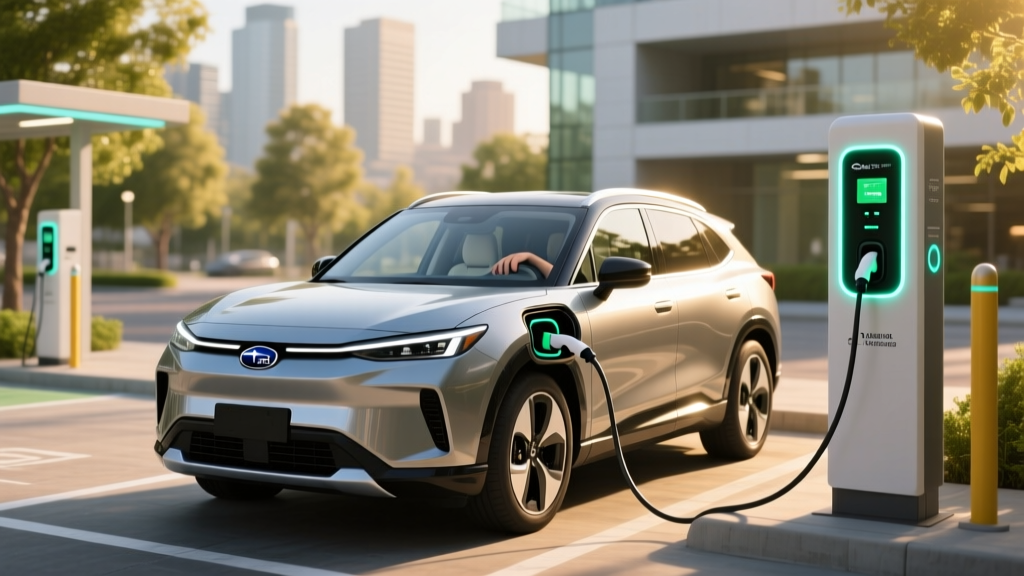
With a Tesla Wall Connector on a 60-amp circuit, you'll get 11.5 kW of charge power, adding roughly 40-44 miles of range per hour. A full charge from 10-100% takes approximately 7-9 hours depending on battery size. Most owners charge overnight and wake up to a full battery every morning — the biggest practical advantage of home charging.
Does every Tesla qualify for the $7,500 federal tax credit?
No. The Model S exceeds the $55,000 MSRP cap for sedans and is ineligible. Other models qualify based on MSRP caps ($80,000 for SUVs/trucks), buyer income limits ($150K single / $300K joint), and battery sourcing requirements. The actual credit may be $3,750 or $7,500 depending on critical mineral and battery component compliance at time of delivery. Consult a tax professional and verify at irs.gov.
Can I wrap my Tesla in a custom color?
Absolutely. Many owners order in Pearl White (no-cost) and apply a vinyl wrap or PPF (paint protection film) in their preferred color. A quality full-body wrap costs $3,000-$5,000 installed and is reversible. Tesla now offers a factory Satin Black PPF option on the Cybertruck for $3,000, which signals the brand's growing acceptance of non-paint finishes.