Every EV loses range when the temperature drops — that's chemistry, not a defect. But Tesla has engineered a suite of systems designed to minimize that loss and keep winter driving practical. If you've been searching for what is Tesla cold weather feature, the answer isn't a single button. It's an integrated thermal management system spanning battery preconditioning, a high-efficiency heat pump, heated surfaces, and smart software that together reduce the cold-weather penalty that plagues many competitors.
This guide explains exactly how these systems work, what real-world winter range loss looks like across the 2026 Tesla lineup, and what you need to know before buying a Tesla if you live where winters bite.
Tesla's Cold Weather System: How It Actually Works
Tesla's cold-weather capability is built on three interconnected systems:
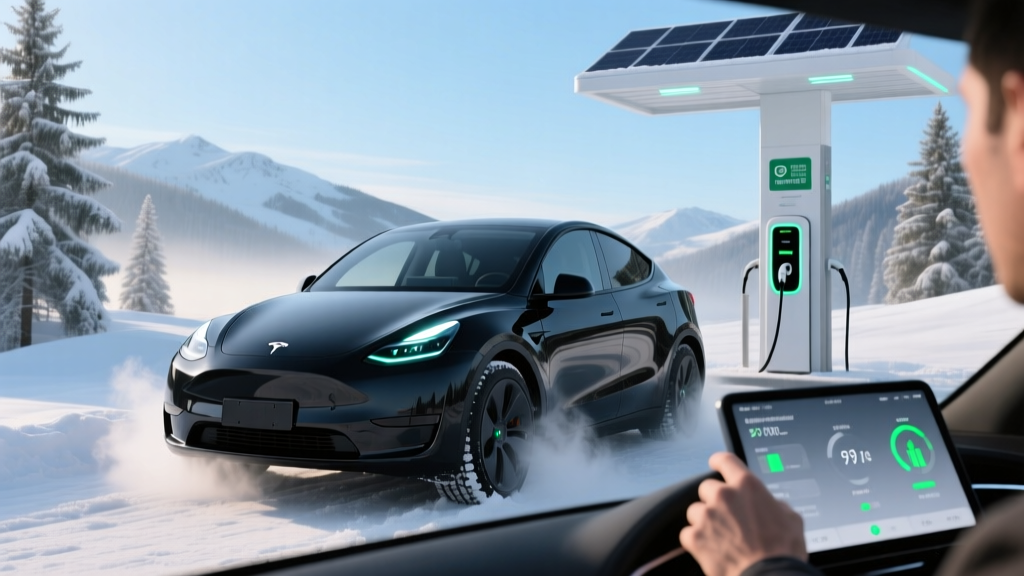
1. Battery Preconditioning. When you navigate to a Supercharger or set a departure time in the Tesla app, the car begins warming the battery pack to its optimal operating temperature (roughly 50–95°F depending on chemistry). A cold battery accepts charge far more slowly and delivers less power. Preconditioning uses energy from the grid (if plugged in) or the pack itself (if unplugged) to bring the cells into their efficiency sweet spot before you drive or charge.
2. Octavalve Heat Pump (Model Y, refreshed Model 3, Cybertruck). Introduced with the Model Y and now standard on most Tesla vehicles, this system scavenges waste heat from the battery, drive motors, and even ambient air to heat the cabin. A conventional resistive heater converts electricity to heat at a 1:1 ratio. Tesla's heat pump achieves a coefficient of performance (COP) of roughly 3:1 to 4:1 in moderate cold — meaning it moves three to four units of heat for every one unit of electricity consumed. In extreme cold (below ~10°F), the COP drops and supplemental resistive heating kicks in, but the efficiency gain in typical winter conditions (20–45°F) is substantial.
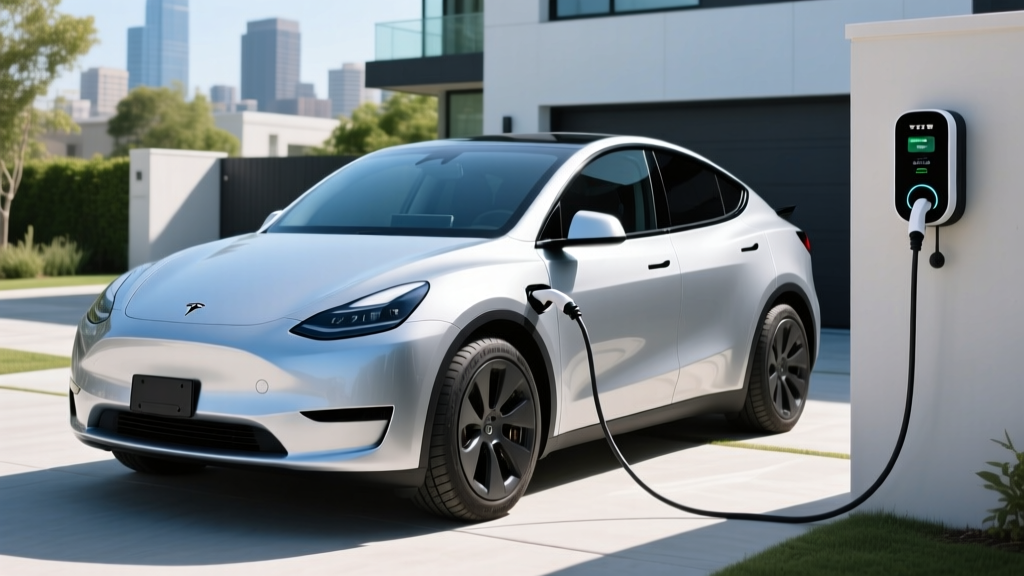
3. Heated Surfaces & Cabin Preconditioning. All 2026 Teslas include heated front and rear seats, a heated steering wheel, and the ability to precondition the cabin via the app while still plugged in at home. This means you start your commute with a warm cabin without depleting the battery — the energy comes from your home's grid, not the pack.
2026 Tesla Lineup: Range, Battery & Cold-Weather Impact
Real-world winter range depends on temperature, driving style, terrain, and whether you precondition. The table below pairs EPA estimates with observed cold-weather performance across the current 2026 lineup.
| Model / Trim | Battery (kWh, usable) | Chemistry | EPA Range | Real-World Winter Range (20–30°F, highway) | MPGe (combined) |
|---|---|---|---|---|---|
| Model 3 RWD | ~60 kWh | LFP | 272 mi | ~185–215 mi | 132 MPGe |
| Model 3 Long Range AWD | ~75 kWh | NMC | 341 mi | ~240–280 mi | 134 MPGe |
| Model 3 Performance | ~75 kWh | NMC | 315 mi | ~220–260 mi | 121 MPGe |
| Model Y Long Range AWD | ~75 kWh | NMC | 320 mi | ~225–265 mi | 122 MPGe |
| Model Y Performance | ~75 kWh | NMC | 298 mi | ~210–245 mi | 115 MPGe |
| Model S LR / Plaid | ~95 kWh | NMC | 402 / 396 mi | ~285–335 mi | 124 / 116 MPGe |
| Model X LR / Plaid | ~95 kWh | NMC | 335 / 326 mi | ~235–280 mi | 112 / 106 MPGe |
| Cybertruck AWD / Cybeast | ~123 kWh | NMC (4680) | 340 / 320 mi | ~240–285 mi | ~79 MPGe |
LFP vs. NMC in Cold Weather
The Model 3 RWD uses a lithium iron phosphate (LFP) battery, while Long Range, Performance, Model S/X, and Cybertruck trims use nickel manganese cobalt (NMC). LFP cells are more resistant to long-term degradation and can be charged to 100% daily — but they are more sensitive to cold. In sub-freezing temperatures, LFP packs may show slightly higher range loss and slower DC fast-charge acceptance until preconditioned. Tesla's preconditioning system mitigates this, but LFP owners in cold climates should be especially disciplined about preheating before driving or charging.
Charging Speed in Cold Weather: What Changes
A cold battery cannot accept a fast charge safely. Without preconditioning, a Tesla arriving at a Supercharger with a cold-soaked pack may be limited to 30–50 kW initially, ramping up only as the cells warm. With preconditioning enabled (by navigating to a Supercharger in the car's nav system), the battery arrives warm and can accept peak charge rates immediately.
| Model | Max DC Fast Charge | 10–80% Time (preconditioned) | Level 2 Home Rate | Miles Added per Hour (L2) |
|---|---|---|---|---|
| Model 3 (all trims) | 250 kW (V3 Supercharger) | ~25–28 min | 11.5 kW (48A) | ~37–44 mi/hr |
| Model Y (all trims) | 250 kW | ~25–30 min | 11.5 kW (48A) | ~34–40 mi/hr |
| Model S / X | 250 kW | ~28–35 min | 11.5 kW (48A) | ~30–44 mi/hr |
| Cybertruck | 350 kW (V4 Supercharger capable) | ~15–20 min (est.) | 11.5 kW (48A) | ~28–34 mi/hr |
Charging curve reality: Peak kW is not sustained kW. A Model 3 Long Range may hit 250 kW briefly between 10–20% state of charge (SoC), then taper to ~150 kW by 50%, and drop below 75 kW past 80%. The 10–80% time is the practical metric — and preconditioning is essential to achieving it in cold weather.
Performance, Cargo Space & Standout Tech
| Model | 0–60 mph | Horsepower | Drivetrain | Cargo (rear + frunk) | Rear Legroom |
|---|---|---|---|---|---|
| Model 3 LR AWD | 4.2 sec | ~384 hp | Dual-motor AWD | 23 cu ft + 3.1 cu ft | 35.2 in |
| Model Y LR AWD | 4.8 sec | ~384 hp | Dual-motor AWD | 34 cu ft + 4.1 cu ft (76 cu ft max) | 37.0 in |
| Model S LR | 3.1 sec | ~670 hp | Dual-motor AWD | 28 cu ft + 3.1 cu ft | 35.4 in |
| Cybertruck AWD | 3.9 sec | ~600 hp | Dual-motor AWD | 67 cu ft bed + 7 cu ft frunk | N/A (pickup) |
Standout Tech Features
- Heat Pump (Octavalve): Industry-leading cabin heating efficiency in cold weather, reducing range penalty versus resistive heaters.
- Scheduled Departure / Preconditioning: Set a daily departure time via the app; the car warms the battery and cabin while plugged in.
- Over-the-Air Updates: Tesla continuously refines thermal management algorithms — your car may improve after purchase.
- Autopilot / FSD (Supervised): SAE Level 2 driver assistance. The driver must remain fully engaged at all times. FSD is not self-driving.
- Sentry Mode & Dog Mode: Climate and security features that maintain cabin conditions even when parked.
Notable Drawbacks
- No physical buttons: Climate, wipers, and glovebox are controlled via touchscreen — frustrating with gloves on.
- LFP cold sensitivity: Model 3 RWD owners in cold climates experience more pronounced winter range loss and slower cold-soak charging.
- Phantom drain: Sentry Mode, cabin overheat protection, and connectivity can drain 1–3% per day in cold weather even when parked.
- No Apple CarPlay / Android Auto: Tesla's proprietary infotainment is capable but a dealbreaker for some.
Pricing, Tax Credits & Total Cost
| Model / Trim | Base MSRP | As-Tested (typical config) | Federal §30D Credit | Effective Price (after credit) |
|---|---|---|---|---|
| Model 3 RWD | $38,990 | $40,490 | Up to $7,500* | ~$31,490–$32,990 |
| Model 3 Long Range AWD | $42,490 | $45,990 | Up to $7,500* | ~$34,990–$38,490 |
| Model Y Long Range AWD | $44,990 | $48,490 | Up to $7,500* | ~$37,490–$40,990 |
| Model S Long Range | $79,990 | $86,490 | $0 (MSRP exceeds cap) | $79,990–$86,490 |
| Model X Long Range | $79,990 | $88,490 | Up to $7,500* | ~$72,490–$80,990 |
| Cybertruck AWD | $79,990 | $84,990 | $0 (MSRP exceeds truck cap) | $79,990–$84,990 |
*§30D Federal Tax Credit Eligibility — Critical Rules (2026):
- MSRP caps: Sedans (Model 3) must be under $55,000. SUVs (Model Y, Model X) and trucks must be under $80,000. Model S and Cybertruck exceed their respective caps.
- Buyer income caps: Modified AGI must not exceed $150,000 (single), $225,000 (head of household), or $300,000 (joint).
- Battery sourcing requirements: The credit is split into two $3,750 halves — one for critical minerals sourcing and one for battery component manufacturing. Eligible vehicles must meet increasingly strict domestic-content thresholds. Check IRS.gov §30D guidelines for current eligibility before purchasing.
- Point-of-sale transfer: Eligible buyers can transfer the credit to the dealer at purchase, reducing the upfront price rather than waiting for a tax refund.
Warranty & Battery Longevity in Cold Climates
Tesla's battery and drive unit warranty provides strong coverage for cold-climate owners concerned about long-term degradation:
- Model 3 / Model Y: 8 years / 100,000 miles (RWD) or 120,000 miles (Long Range / Performance), whichever comes first, with minimum 70% capacity retention.
- Model S / Model X: 8 years / 150,000 miles, minimum 70% capacity retention.
- Cybertruck: 8 years / 120,000 miles, minimum 70% capacity retention.
Cold weather itself does not cause permanent battery degradation — it temporarily reduces available capacity. The real long-term risk is repeated DC fast charging from cold-soaked states without preconditioning, which can accelerate wear. Tesla's software-enforced preconditioning and thermal management significantly mitigate this risk compared to EVs without active thermal management.
Who Should Buy a Tesla for Cold-Weather Driving?
Tesla Is Ideal If:
- You have home Level 2 charging and can precondition daily
- You live in a region with reliable Supercharger coverage
- You value OTA updates that improve winter performance over time
- You want a heat pump that outperforms most competitors' cabin heating efficiency
- You commute in moderate cold (15–45°F) where the heat pump's COP advantage is greatest
Consider Alternatives If:
- You lack home charging and must rely on public chargers in extreme cold
- You regularly drive in temperatures below -10°F where all EVs suffer heavily
- You need physical climate controls for gloved operation
- You want Apple CarPlay or Android Auto integration
- You need a compact EV — Tesla's smallest option is the mid-size Model 3
Frequently Asked Questions
What is Tesla's cold weather feature called?
Tesla doesn't brand its cold-weather system under a single name. It's an integrated suite: battery preconditioning (triggered by navigation to a charger or scheduled departure), the Octavalve heat pump (on Model Y, refreshed Model 3, and Cybertruck), heated seats and steering wheel, and cabin preconditioning via the app. Together these systems reduce the cold-weather range penalty to roughly 20–30% — better than many EVs relying on resistive cabin heaters.
How much range do Teslas lose in winter?
Based on aggregated owner data and testing, expect 20–30% range loss at highway speeds in 20–30°F weather with a preconditioned battery. Without preconditioning (cold-soaked pack), losses can reach 35–40%. LFP-equipped Model 3 RWD tends toward the higher end of that range in extreme cold. These figures are consistent with industry-wide EV behavior — no current battery chemistry is immune to cold.
Does preconditioning use a lot of energy?
If you precondition while plugged in at home, the energy comes from your grid connection — not your battery. This is the optimal setup. If you precondition while unplugged, the car draws from the pack, which can use 1–3 kWh depending on ambient temperature and duration. The range you spend warming the battery is typically recovered through faster charging and more efficient driving once the pack is at temperature.
Do all 2026 Teslas have a heat pump?
The Octavalve heat pump is standard on the Model Y, the refreshed Model 3 (Highland and later), and the Cybertruck. Older Model 3 vehicles (pre-2024 production) and the Model S/X use a combination of resistive heating and thermal management that is effective but less efficient. If maximum winter efficiency matters to you, prioritize a model with the heat pump.
Is it worth buying a Tesla vs. competitors for cold weather?
Tesla's thermal management is among the best in the industry, and the Supercharger network remains the most reliable DC fast-charging ecosystem in North America — a major advantage when cold weather makes charging speed and predictability critical. Key competitors like the Hyundai Ioniq 5, BMW i4, and Ford Mustang Mach-E offer competitive range and their own heat pump systems, but Tesla's integrated preconditioning-to-charger workflow and OTA refinement give it a practical edge for cold-climate owners who charge at home. If Supercharger access matters to you and you can install a Level 2 charger, a Tesla remains one of the strongest cold-weather EV choices available in 2026.