Understanding the Tesla Class Action Suit Landscape
Recent litigation against Tesla has centered on several key issues that directly affect EV buyers: Autopilot and Full Self-Driving (FSD) capability claims, range accuracy advertising, and build quality consistency. Multiple class action suits filed between 2023-2025 have alleged that Tesla's marketing materials overstated vehicle capabilities, particularly regarding autonomous driving features and real-world range performance.
The most prominent cases involve claims that Tesla's "Full Self-Driving" terminology misled consumers about the actual SAE Level 2 automation capabilities of the system. As of 2026, FSD Supervised remains a driver-assistance system requiring constant human oversight—not the Level 4 autonomous capability the name might suggest. This distinction matters significantly for buyers evaluating Tesla's technology premium.
Range-related litigation has questioned whether Tesla's EPA-estimated range figures adequately represent real-world driving conditions, particularly for highway travel and extreme weather scenarios. While all EVs experience range variance based on driving conditions, plaintiffs argued that Tesla's marketing didn't sufficiently communicate these limitations to consumers.
2026 Tesla Model Lineup: Specifications and Performance
| Model | EPA Range | Battery (kWh) | 0-60 mph | Horsepower | Starting MSRP |
|---|---|---|---|---|---|
| Model 3 RWD | 272 mi | 60 (LFP) | 5.8 sec | 283 hp | $38,990 |
| Model 3 Long Range AWD | 341 mi | 82 (NMC) | 4.2 sec | 346 hp | $42,990 |
| Model Y RWD | 260 mi | 60 (LFP) | 6.6 sec | 295 hp | $43,990 |
| Model Y Long Range AWD | 330 mi | 82 (NMC) | 4.8 sec | 384 hp | $47,990 |
| Model S Dual Motor | 402 mi | 100 (NMC) | 3.1 sec | 670 hp | $74,990 |
| Model X Dual Motor | 348 mi | 100 (NMC) | 3.8 sec | 670 hp | $79,990 |
Real-World Range Expectations
Tesla's EPA estimates provide a useful baseline, but actual range depends heavily on driving patterns and environmental conditions. For highway driving at sustained speeds above 65 mph, expect approximately 85-90% of EPA range. A Model 3 Long Range with 341 EPA miles typically delivers 290-310 miles in mixed highway use.
Cold weather presents the most significant range challenge. Lithium-ion batteries lose efficiency in low temperatures, and cabin heating draws substantial power. In temperatures below 32°F, range reductions of 25-30% are common. Tesla's heat pump system (standard on all 2026 models) mitigates some of this loss compared to resistive heating, but physics remains the limiting factor.
City driving with frequent regenerative braking opportunities often yields range close to or slightly above EPA estimates, particularly in moderate temperatures. The LFP chemistry in standard-range models shows less cold-weather degradation than NMC but also has slightly lower energy density.
Charging Infrastructure and Speed
| Charging Method | Power (kW) | Miles Added Per Hour | 10-80% Time |
|---|---|---|---|
| Level 1 (120V) | 1.4 kW | 3-5 mi/hr | N/A (overnight) |
| Level 2 (240V Home) | 11.5 kW | 30-44 mi/hr | 8-10 hours |
| Tesla Supercharger V3 | 250 kW peak | 200+ mi/hr (peak) | 15-20 minutes |
| Tesla Supercharger V4 | 350 kW peak | 250+ mi/hr (peak) | 12-18 minutes |
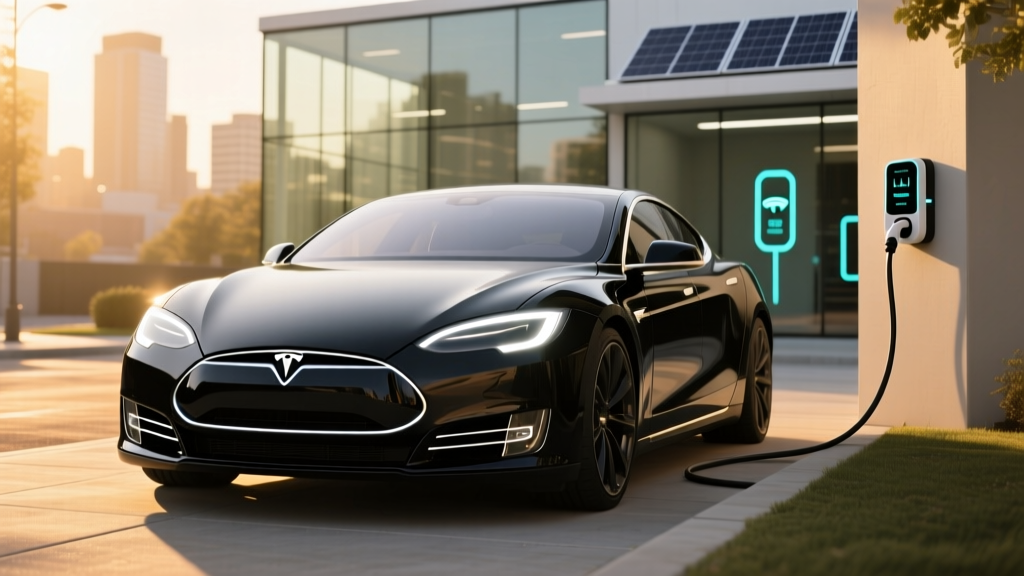
Tesla's charging ecosystem remains a significant competitive advantage. The Supercharger network offers reliable, fast charging with minimal downtime. Peak charging rates of 250 kW (V3) and up to 350 kW (V4) enable rapid 10-80% charging sessions, though sustained rates taper significantly above 60% state of charge.
Home charging with a Tesla Wall Connector on a 60-amp circuit delivers up to 11.5 kW, adding approximately 44 miles of range per hour for Long Range models. Most owners charge overnight, making daily charging time essentially zero for typical commuting patterns.
The charging curve reality matters: while Tesla advertises peak rates, actual charging sessions average lower power due to taper. A 15-minute Supercharger session typically adds 150-200 miles of range, sufficient for most road trip needs but requiring planning for longer journeys.
Federal Tax Credit Eligibility and Pricing
| Model | MSRP | Federal Credit Potential | Effective Price | Credit Eligibility Notes |
|---|---|---|---|---|
| Model 3 RWD | $38,990 | Up to $7,500 | ~$31,490 | Qualifies if income/sourcing requirements met |
| Model 3 Long Range | $42,990 | Up to $7,500 | ~$35,490 | Subject to battery component sourcing rules |
| Model Y RWD | $43,990 | Up to $7,500 | ~$36,490 | MSRP under $80k SUV cap |
| Model Y Long Range | $47,990 | Up to $7,500 | ~$40,490 | Qualifies under SUV MSRP limit |
| Model S | $74,990 | $0 | $74,990 | Exceeds $55k sedan MSRP cap |
| Model X | $79,990 | Up to $7,500 | ~$72,490 | Under $80k SUV cap, subject to sourcing rules |
Federal EV tax credit eligibility under IRS Section 30D involves multiple requirements beyond simple vehicle purchase. For 2026, buyers must meet income caps ($150k single, $300k joint filers), vehicle MSRP limits ($55k for sedans, $80k for SUVs/trucks), and increasingly stringent battery component and critical mineral sourcing requirements.
Tesla's North American manufacturing provides an advantage for battery sourcing compliance, though specific credit amounts vary by model and production date. The point-of-sale transfer option allows buyers to receive the credit as an immediate price reduction rather than waiting for tax filing.
Important caveat: Tax credit rules continue evolving. Battery sourcing requirements tighten annually, and specific Tesla configurations may qualify for partial credits ($3,750) or full credits ($7,500) depending on when they were built and their component origins. Consult IRS guidance or a tax professional for your specific situation.
Technology and Driver Assistance Systems
Tesla's technology stack centers on a minimalist interior dominated by a central touchscreen controlling nearly all vehicle functions. The infotainment system offers responsive performance, over-the-air updates, and features like Sentry Mode, Dog Mode, and extensive app integration. Build quality has improved significantly since 2023, though panel gaps and interior material quality remain below luxury competitors like BMW i4 or Mercedes EQE.
Autopilot (standard) provides adaptive cruise control and lane-centering assistance. FSD Supervised ($8,000 option or $99/month subscription in 2026) adds automatic lane changes, traffic light/stop sign recognition, and navigation-based route following. Despite the name, FSD requires constant driver supervision and performs inconsistently in complex scenarios like construction zones or unclear lane markings.
The class action litigation specifically targeted FSD marketing claims, arguing that consumers reasonably interpreted "Full Self-Driving" as implying autonomous capability. Tesla has since added "Supervised" to the product name and enhanced warning systems, but the gap between marketing language and actual capability remains a consideration for buyers.
Ownership Considerations and Warranty Coverage
Tesla's warranty structure provides 4-year/50,000-mile basic coverage and 8-year/100,000-mile battery and drive unit warranty (120,000 miles for Long Range models). The battery warranty guarantees at least 70% capacity retention during the warranty period. Real-world degradation data shows most Tesla batteries retain 85-90% capacity after 100,000 miles, though this varies based on charging habits and climate.
Insurance costs for Teslas typically run 20-40% higher than comparable gas vehicles due to repair costs and parts pricing. Tesla Insurance is available in some states and may offer competitive rates, but availability varies by jurisdiction.
Maintenance requirements are minimal compared to ICE vehicles—no oil changes, fewer brake replacements due to regenerative braking, and no transmission fluid. However, tire wear can be accelerated due to instant torque delivery and vehicle weight.
Competitive Positioning: Is Tesla Still the Best Choice?
The EV market in 2026 offers credible alternatives across all Tesla segments. The Hyundai Ioniq 5 and Kia EV6 match or exceed Tesla's charging speeds with 800V architecture. The Ford Mustang Mach-E provides competitive range with more conventional styling. The BMW i4 offers superior interior quality at similar price points.
Tesla's advantages remain the Supercharger network (though now opening to other brands via NACS adoption), software integration, and price competitiveness after tax credits. However, build quality consistency, service center wait times, and the gap between FSD marketing and reality are legitimate concerns highlighted by the litigation.
Pros
- Extensive Supercharger network with reliable uptime
- Competitive pricing after federal tax credits
- Strong software integration and regular OTA updates
- Excellent energy efficiency (kWh/100mi)
- Spacious interiors with generous cargo capacity
- Strong performance across all trim levels
Cons
- Build quality inconsistency and panel gap issues
- FSD marketing vs. actual capability gap (Level 2 only)
- Minimalist interior lacks physical controls some prefer
- Insurance costs higher than segment average
- Service center capacity can mean long wait times
- Real-world range can fall significantly short of EPA estimates in cold/highway conditions
Frequently Asked Questions
What is the real-world range of a Tesla Model 3 Long Range?
While the EPA estimates 341 miles, expect 290-310 miles in mixed highway driving and 240-270 miles in cold weather (below 32°F). City driving with regenerative braking often achieves close to EPA estimates in moderate temperatures.
How fast does Tesla charge at home and on road trips?
Home Level 2 charging adds 30-44 miles per hour depending on model and circuit capacity. Supercharger sessions typically add 150-200 miles in 15 minutes, though peak rates of 250-350 kW taper significantly above 60% state of charge.
Does the Tesla Model Y qualify for the federal tax credit?
Yes, Model Y variants under the $80,000 SUV MSRP cap can qualify for up to $7,500 in federal tax credits, subject to buyer income limits and battery sourcing requirements. Verify current eligibility on IRS.gov as rules change annually.
Is Tesla's Full Self-Driving actually autonomous?
No. FSD Supervised is an SAE Level 2 driver-assistance system requiring constant human supervision. Despite the name, it cannot drive autonomously and performs inconsistently in complex scenarios. The driver remains fully responsible for vehicle operation.
How does Tesla's warranty compare to competitors?
Tesla offers 8-year/100,000-mile battery warranty (120,000 for Long Range), which matches or exceeds most competitors. The 70% capacity retention guarantee is standard for the industry, though real-world degradation typically stays well above this threshold.
Are the class action lawsuits a reason to avoid buying a Tesla?
The lawsuits highlight legitimate concerns about FSD marketing and range communication, but don't necessarily indicate fundamental vehicle defects. Buyers should understand that FSD is Level 2 driver-assist (not autonomous) and that real-world range varies significantly from EPA estimates based on conditions. Make your purchase decision based on actual capabilities, not marketing language.