What Is the Tesla Christmas Update?
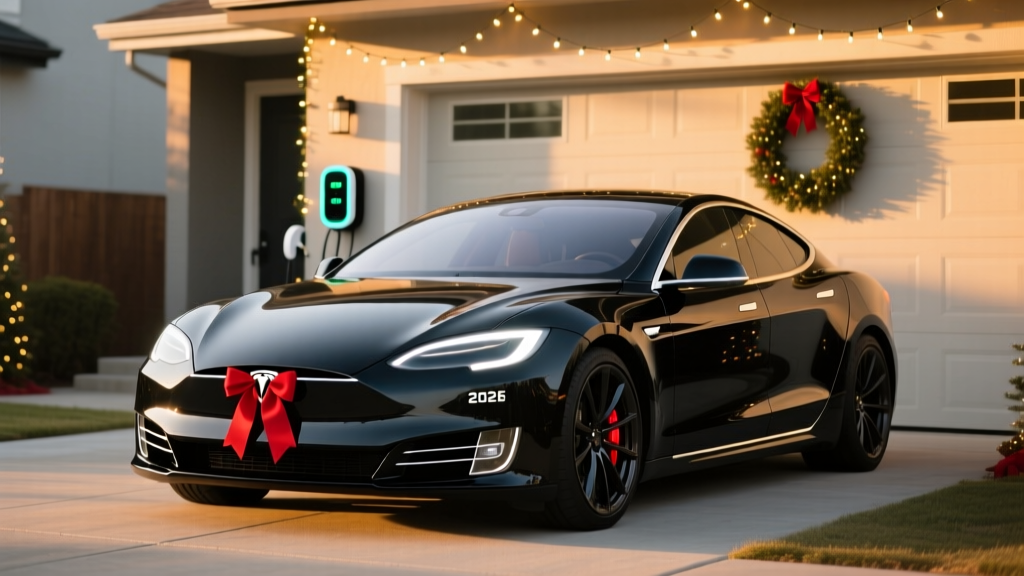
Every December, Tesla rolls out a themed over-the-air (OTA) software release colloquially known as the Tesla Christmas Update. Unlike major version upgrades that overhaul Autopilot or add new drive modes, the holiday release typically layers seasonal features — light shows, toybox games, Easter eggs, and UI tweaks — on top of whatever the current firmware branch happens to be. For 2026, the Christmas Update arrives as a sub-version of the v12.x firmware family and is being pushed to Model 3, Model Y, Model S, and Model X vehicles running the latest software baseline.
While the holiday bells and animated snowflakes are fun, the real value for prospective buyers and current owners lies in understanding how Tesla's OTA cadence works, what the current software platform enables, and how the underlying vehicle specs — range, charging, battery chemistry, and pricing — stack up against 2026 competitors. Below, we break down the update itself, then provide a full spec-and-value profile of the current Tesla fleet to help you decide if now is the right time to buy or upgrade.
What's New in the 2026 Holiday Release
Based on Tesla's release notes and early owner reports, the 2026 Christmas Update includes:
- Holiday Light Show 2.0: Expanded choreography sequences synced to new tracks, including a custom holiday medley. Works on all models with matrix LED headlights (Model S/X standard, Model 3/Y Highland/Juniper refresh).
- Festive Toybox Additions: A new "Snowball Fight" multiplayer game playable on the center touchscreen (parked only), plus a holiday-themed Tesla Arcade title.
- Seasonal UI Theme: Optional winter landscape navigation map skin, animated snowfall on the instrument cluster, and a Santa Mode that swaps the vehicle avatar for a sleigh on the app tracker.
- Smart Preconditioning Reminder: A new notification prompts owners to schedule preconditioning for cold-weather range optimization — a genuinely useful addition tied to the thermal management system.
- Minor FSD (Supervised) Tuning: Incremental neural-net adjustments to urban intersection handling, carried over from the v12.x branch. This is not a major FSD version bump — just holiday-branch refinements.
Current Tesla Fleet: 2026 Specs at a Glance
The Christmas Update rides on top of whatever vehicle you own or are considering. Here's how the 2026 Tesla lineup breaks down in hard numbers. All range figures are EPA estimates from fueleconomy.gov; real-world expectations are noted below each model.
| Spec | Model 3 RWD | Model 3 Long Range AWD | Model Y Long Range AWD | Model S Long Range | Model X Long Range |
|---|---|---|---|---|---|
| EPA Range | 272 mi | 341 mi | 320 mi | 402 mi | 348 mi |
| Battery (usable kWh) | 57.5 kWh (LFP) | 75 kWh (NMC) | 75 kWh (NMC) | 95 kWh (NMC) | 95 kWh (NMC) |
| Max DC Fast Charge | 170 kW | 250 kW | 250 kW | 250 kW | 250 kW |
| 10-80% DC Time | ~28 min | ~25 min | ~25 min | ~30 min | ~30 min |
| Level 2 Home Rate | 11.5 kW (~37 mi/hr) | 11.5 kW (~44 mi/hr) | 11.5 kW (~44 mi/hr) | 11.5 kW (~52 mi/hr) | 11.5 kW (~42 mi/hr) |
| 0-60 mph | 5.8 sec | 4.2 sec | 4.8 sec | 3.1 sec | 3.8 sec |
| Horsepower | 271 hp | 441 hp | 384 hp | 670 hp | 670 hp |
| Drivetrain | RWD | Dual-Motor AWD | Dual-Motor AWD | Dual-Motor AWD | Dual-Motor AWD |
| MPGe (combined) | 132 MPGe | 125 MPGe | 120 MPGe | 120 MPGe | 108 MPGe |
| Efficiency (kWh/100mi) | 25 | 27 | 28 | 28 | 31 |
| Cargo (rear seats up) | 23 cu ft | 23 cu ft | 30 cu ft | 28 cu ft | 15 cu ft (+frunk 7) |
| Rear Legroom | 35.3 in | 35.3 in | 40.5 in | 38.0 in | 40.9 in |
| Base MSRP | $38,990 | $44,990 | $47,990 | $74,990 | $79,990 |
- Highway (70+ mph): Expect 10-15% less than EPA. A Model 3 LR rated at 341 mi typically delivers 290-305 mi at sustained highway speeds.
- Cold weather (below 32°F): Range drops 20-30% depending on cabin heating use. LFP-equipped Model 3 RWD is more susceptible — preconditioning via the new holiday-update reminder is essential.
- City/regen-heavy: You may match or slightly exceed EPA in stop-and-go traffic thanks to regenerative braking.
Charging: Home and DC Fast-Charge Breakdown
One of Tesla's strongest ownership advantages remains the Supercharger network — now exceeding 6,000 stations and 60,000 connectors in North America as of late 2026. But charging specs vary meaningfully by trim, especially the LFP vs. NMC battery split.
| Charging Level | Power | Model 3 RWD (LFP) | Model 3/Y LR (NMC) | Model S/X (NMC) |
|---|---|---|---|---|
| Level 1 (120V) | ~1.4 kW | ~4 mi/hr | ~5 mi/hr | ~5 mi/hr |
| Level 2 (240V, 48A) | 11.5 kW | ~37 mi/hr | ~44 mi/hr | ~42-52 mi/hr |
| DC Fast Charge | Peak kW | 170 kW | 250 kW | 250 kW |
| DC 10-80% Time | — | ~28 min | ~25 min | ~30 min |
Charge curve reality: Peak 250 kW is only sustained between roughly 10-30% state of charge (SoC). Above 50%, the rate tapers significantly — by 80%, you're typically at 40-60 kW. This is why the 10-80% metric matters more than peak kW. The final 80-100% can add another 25-35 minutes, so plan road-trip stops accordingly.
LFP vs. NMC charging note: Tesla recommends charging LFP batteries (Model 3 RWD) to 100% at least once a week for calibration. NMC packs (Long Range, Performance) should be daily-charged to 80% and reserved at 100% only for trips. The holiday update's preconditioning reminder is especially useful for LFP owners in cold climates.
Pricing, Trims, and Federal Tax Credit Eligibility
Tesla's 2026 pricing has stabilized after years of volatility, but federal tax credit eligibility under IRS §30D remains a moving target due to battery-sourcing and critical-mineral requirements that tighten annually.
| Model | Base MSRP | Federal Credit (est.) | Effective Price | Eligibility Notes |
|---|---|---|---|---|
| Model 3 RWD | $38,990 | $3,750 | $35,240 | Qualifies for partial credit; some battery minerals fail sourcing threshold |
| Model 3 Long Range AWD | $44,990 | $3,750 | $41,240 | Partial credit; below $55K sedan MSRP cap |
| Model Y Long Range AWD | $47,990 | $7,500 | $40,490 | Full credit when sourcing rules met; below $80K SUV cap |
| Model S Long Range | $74,990 | $0 | $74,990 | Exceeds $55K sedan MSRP cap — ineligible |
| Model X Long Range | $79,990 | $0 | $79,990 | Under $80K SUV cap but critical-mineral sourcing currently falls short |
- MSRP caps: Sedans ≤ $55,000; SUVs/pickups ≤ $80,000
- Income caps: $300K joint / $225K head of household / $150K individual (modified AGI)
- Battery sourcing: Increasing percentages of critical minerals and battery components must come from the US or FTA partners — thresholds tighten each year
- Point-of-sale transfer: You can apply the credit at purchase to reduce your down payment (dealer must be IRS-registered)
- VIN registration: Dealer must report your VIN to the IRS at time of sale
Warranty and Long-Term Battery Outlook
Tesla's warranty structure remains competitive but not class-leading:
- Basic vehicle: 4 years / 50,000 miles
- Battery & drive unit (Model 3 RWD LFP): 8 years / 100,000 miles, 70% capacity retention minimum
- Battery & drive unit (Model 3/Y LR, S, X): 8 years / 120,000 miles (LR) or 150,000 miles (S/X), 70% retention minimum
For context, Hyundai and Kia offer 10-year/100,000-mile battery warranties. However, Tesla's real-world degradation data is encouraging: fleet studies consistently show 8-12% degradation at 100,000 miles for NMC packs, and LFP packs tend to degrade even more slowly in terms of cycle life, though they are more sensitive to cold-weather range loss due to lower energy density.
Who Should Buy a Tesla in 2026?
- You want the most mature public DC fast-charging network (Supercharger reliability consistently exceeds 95% uptime)
- OTA software updates matter to you — Tesla's cadence is unmatched, and the Christmas Update exemplifies the ongoing feature-delivery model
- You value a minimalist interior and touchscreen-centric workflow
- You commute or road-trip frequently and want proven long-range efficiency
- You prefer physical buttons, a traditional instrument cluster, or Apple CarPlay/Android Auto (Tesla offers neither)
- You need longer battery warranty coverage (10 yr / 100K from Hyundai/Kia)
- You want a 3-row EV SUV — Model X is aging and priced steeply; Rivian R1S or Kia EV9 offer more practical third rows
- Build quality consistency is a priority — Tesla's panel gaps and paint remain variable despite Fremont/Austin improvements
Pros and Cons of the Current Tesla Lineup
- Best-in-class Supercharger network with NACS connector now adopted industry-wide
- Outstanding energy efficiency (25-31 kWh/100mi across lineup)
- Continuous OTA improvements — the Christmas Update is one of dozens per year
- Strong real-world range, especially Long Range trims with NMC chemistry
- Competitive pricing on Model 3/Y after partial or full tax credit
- Excellent regenerative braking and one-pedal driving experience
- No Apple CarPlay or Android Auto — Tesla's ecosystem is closed
- Model S/X pricing makes them ineligible for the federal tax credit (sedan cap) or borderline on sourcing
- Build quality inconsistency — panel gaps and paint vary unit to unit
- FSD (Supervised) remains Level 2 and requires full driver attention despite the $8,000 option cost
- LFP Model 3 RWD loses more range in cold weather than NMC trims
- 4-year/50,000-mile basic warranty is shorter than many competitors
Frequently Asked Questions
What is the real-world range of a Tesla in 2026?
Real-world range depends on trim, driving style, and weather. A Model 3 Long Range (EPA 341 mi) typically delivers 290-305 mi on the highway at 70-75 mph, and 250-270 mi in sub-freezing temperatures with cabin heat. The Model 3 RWD with LFP (EPA 272 mi) sees more pronounced cold-weather loss — expect 190-210 mi in winter highway driving. Always precondition your battery via the Tesla app before driving in cold weather; the new holiday-update reminder makes this easier.
How fast does a Tesla charge at home and on the road?
At home on a Level 2 (240V, 48A) Wall Connector, expect 37-52 miles of range per hour depending on the model — a full overnight charge from 20% to 80% takes roughly 5-6 hours. On DC fast chargers, NMC trims peak at 250 kW and hit 10-80% in about 25 minutes. The LFP Model 3 RWD peaks at 170 kW with a 10-80% time of about 28 minutes. Remember: peak kW is sustained only briefly — the charge curve tapers significantly above 50% SoC.
How much does a Tesla cost after the federal tax credit?
The Model Y Long Range AWD is the value leader at $47,990 MSRP, potentially dropping to $40,490 with the full $7,500 §30D credit (subject to battery-sourcing rules and income caps). The Model 3 RWD falls to roughly $35,240 with a $3,750 partial credit. Model S and X are generally ineligible due to MSRP cap rules (sedans capped at $55K) or sourcing shortfalls. Verify current eligibility at irs.gov.
Is a Tesla worth buying versus competitors in 2026?
For most buyers, the Model 3 and Model Y remain compelling due to Supercharger access, efficiency, and OTA updates like the Christmas Update. The Hyundai Ioniq 5 is a strong alternative if you want 800V architecture for faster DC charging and physical controls. The BMW i4 offers a more premium interior. For families needing three rows, the Kia EV9 or Rivian R1S are more practical than the aging Model X. Test-drive at least two competitors before committing.
Does the Tesla Christmas Update add any performance or range improvements?
No. The Christmas Update is primarily a feature and UI release — light shows, games, themes, and minor software refinements. It does not alter battery capacity, motor output, or EPA range. However, the new smart preconditioning reminder can indirectly help you preserve range in cold weather by prompting you to warm the battery before driving.
What is the biggest drawback of owning a Tesla?
The closed software ecosystem (no CarPlay/Android Auto) and variable build quality are the most common owner complaints. Additionally, FSD (Supervised) at $8,000 remains a Level 2 driver-assist system — it does not drive autonomously, and buyers expecting self-driving capability will be disappointed. For Model S/X buyers, the lack of federal tax credit eligibility also stings.