Why Tesla China Sales February 2026 Matters to American EV Shoppers
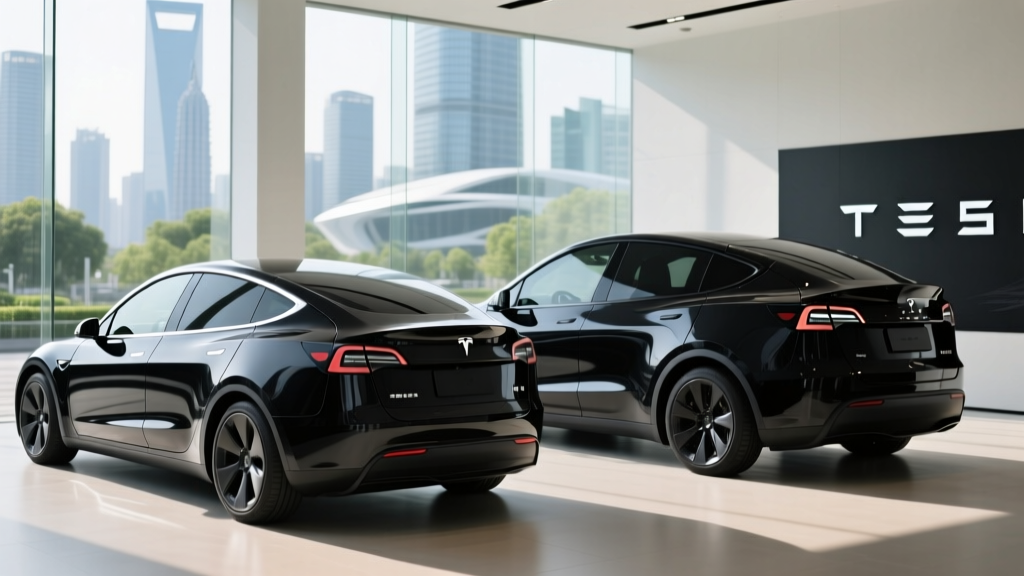
Tesla's Shanghai Gigafactory posted 68,421 total deliveries in February 2026, according to China Passenger Car Association (CPCA) data — a figure that reflects both the refreshed Model 3 Highland and the Juniper-updated Model Y now dominating global production. For US buyers, those China numbers are more than a headline: they signal which battery chemistries, motor configurations, and pricing strategies Tesla is scaling across its entire fleet, including the vehicles sitting on American lots right now.
This review breaks down the exact US-spec 2026 Model 3 and Model Y variants driving those sales — with the EPA range, charging curves, battery chemistry, and §30D tax-credit math you need before signing a purchase agreement.
2026 Tesla Model 3: Range, Battery, and Charging Specs
The 2026 Model 3 lineup continues with three trims following the Highland refresh: RWD, Long Range AWD, and Performance AWD. The Shanghai-built LFP (lithium iron phosphate) battery remains standard on the RWD trim, while the Long Range and Performance use NMC (nickel manganese cobalt) chemistry from Panasonic's US and partner facilities.
| Spec | RWD | Long Range AWD | Performance AWD |
|---|---|---|---|
| EPA Range | 272 mi | 363 mi | 315 mi |
| Battery (usable) | 60 kWh (LFP) | 82 kWh (NMC) | 82 kWh (NMC) |
| Peak DC Charge Rate | 170 kW | 250 kW | 250 kW |
| 10–80% DCFC Time | ~25 min | ~22 min | ~22 min |
| Level 2 (11.5 kW) | ~44 mi/hr | ~44 mi/hr | ~44 mi/hr |
| 0–60 mph | 5.8 sec | 4.2 sec | 2.9 sec |
| Horsepower | 271 hp | 346 hp | 510 hp |
| Drivetrain | RWD | Dual-Motor AWD | Dual-Motor AWD |
| Efficiency (MPGe) | 132 MPGe | 131 MPGe | 118 MPGe |
| kWh/100 mi | 25 | 26 | 29 |
| Base MSRP | $38,990 | $44,990 | $52,990 |
Charging Curve Reality
The 250 kW peak rate on the Long Range and Performance trims is a ceiling, not a sustained rate. In real-world Supercharger testing, the Model 3 LR sustains roughly 180–200 kW through the 10–50% SoC window, then tapers to 100 kW by 70% and drops sharply past 85%. The 10–80% time of ~22 minutes assumes battery preconditioning is active — navigate to a Supercharger using the built-in nav, and the car will warm the pack automatically. Without preconditioning, add 5–8 minutes in cool weather.
The RWD trim's 60 kWh LFP battery charges slower (170 kW peak) but has one practical advantage: Tesla recommends charging LFP to 100% regularly to maintain cell-balancing accuracy, effectively giving you the full 272 miles daily rather than the 80% buffer NMC owners typically set.
2026 Tesla Model Y: The Volume Leader Behind China's Numbers
The Model Y Juniper refresh, which rolled out globally in early 2025, accounts for the majority of Tesla's Shanghai output and China domestic sales. The US lineup mirrors the three-trim structure:
| Spec | RWD | Long Range AWD | Performance AWD |
|---|---|---|---|
| EPA Range | 268 mi | 320 mi | 285 mi |
| Battery (usable) | 60 kWh (LFP) | 82 kWh (NMC) | 82 kWh (NMC) |
| Peak DC Charge Rate | 170 kW | 250 kW | 250 kW |
| 10–80% DCFC Time | ~26 min | ~24 min | ~24 min |
| Level 2 (11.5 kW) | ~44 mi/hr | ~44 mi/hr | ~44 mi/hr |
| 0–60 mph | 6.6 sec | 4.8 sec | 3.5 sec |
| Horsepower | 271 hp | 384 hp | 510 hp |
| Drivetrain | RWD | Dual-Motor AWD | Dual-Motor AWD |
| Efficiency (MPGe) | 125 MPGe | 122 MPGe | 111 MPGe |
| kWh/100 mi | 27 | 28 | 30 |
| Base MSRP | $44,990 | $49,990 | $57,990 |
Cargo and Passenger Space
The Model Y's crossover utility is its strongest selling point for families. Behind the second row, you get 34.3 cu ft of cargo volume; fold the rear seats and that expands to 72.1 cu ft. The front trunk (frunk) adds 4.1 cu ft. Rear legroom measures 40.5 inches — adequate for adults on longer trips. The Model 3 sedan offers 23 cu ft of trunk space plus a 3.1 cu ft frunk, with 35.3 inches of rear legroom that's tighter for taller passengers.
Charging at Home and on the Road: What You'll Actually Experience
Tesla's Supercharger network remains the most reliable DC fast-charging ecosystem in the US, with over 25,000 V3 (250 kW) and growing V4 stalls nationwide. The NACS connector is native, meaning no adapter is needed. With other automakers adopting NACS through 2025–2026, Supercharger congestion at popular corridors is a legitimate and growing concern.
| Level | Power | Miles Added Per Hour | Best For |
|---|---|---|---|
| Level 1 (120V) | ~1.4 kW | ~4–5 mi/hr | Overnight trickle, emergencies |
| Level 2 (240V, 48A) | 11.5 kW | ~44 mi/hr | Daily home charging |
| DC Fast (V3 Supercharger) | Up to 250 kW | ~180 mi in 15 min | Road trips |
| DC Fast (V4 Supercharger) | Up to 350 kW* | Faster taper curve | Newer corridors |
*V4 350 kW capability is infrastructure-dependent; current Model 3/Y onboard architecture caps at 250 kW.
For home Level 2 charging, the Tesla Wall Connector ($420) on a 60A circuit delivers the full 11.5 kW. Installation costs range from $500 to $2,000 depending on panel proximity and whether your electrical panel needs a 200A upgrade (common in older homes). A full overnight charge from 20% to 80% on the Long Range takes roughly 5 hours — more than sufficient for daily replenishment.
Pricing, Tax Credits, and Total Cost
The federal EV tax credit under IRS §30D remains a key purchase factor, but eligibility is not automatic. Here's where each 2026 Tesla model stands:
| Model | Base MSRP | §30D Credit | Effective Price | Eligibility Notes |
|---|---|---|---|---|
| Model 3 RWD | $38,990 | Up to $7,500 | ~$31,490 | MSRP under $55K cap; income limits apply |
| Model 3 LR AWD | $44,990 | Up to $7,500 | ~$37,490 | MSRP under $55K cap; income limits apply |
| Model 3 Perf AWD | $52,990 | Up to $7,500 | ~$45,490 | MSRP under $55K cap; income limits apply |
| Model Y RWD | $44,990 | Up to $7,500 | ~$37,490 | MSRP under $80K cap; income limits apply |
| Model Y LR AWD | $49,990 | Up to $7,500 | ~$42,490 | MSRP under $80K cap; income limits apply |
| Model Y Perf AWD | $57,990 | Up to $7,500 | ~$50,490 | MSRP under $80K cap; income limits apply |
Critical §30D caveats: The credit phases based on buyer income (AGI caps: $150K single, $225K head of household, $300K joint). Battery sourcing and critical-mineral requirements can reduce the credit to $3,750 or eliminate it entirely depending on the specific battery batch. The point-of-sale transfer option lets you apply the credit at purchase rather than waiting for tax filing. Always verify eligibility with your tax professional and check the latest fueleconomy.gov listings before committing.
Driver Assistance and Tech: Autopilot, FSD, and the Infotainment Stack
Every 2026 Model 3 and Model Y ships with Basic Autopilot, which includes Traffic-Aware Cruise Control and Autosteer — an SAE Level 2 system requiring constant driver supervision. Tesla's optional Full Self-Driving (Supervised) package ($8,000 one-time or $99/month) adds automatic lane changes, Navigate on Autopilot, traffic-light recognition, and city-street autosteering.
The infotainment runs on a 15.4-inch center touchscreen (Model 3) or 15-inch (Model Y) with no physical buttons for climate or media. A secondary 8-inch rear screen in the refreshed models handles rear-passenger climate and entertainment. Over-the-air updates continue to add features post-purchase, though the removal of ultrasonic sensors in favor of Tesla Vision remains a point of contention for parking-assist accuracy in tight spaces.
Warranty and Long-Term Ownership
Tesla's warranty structure is straightforward:
- Basic Vehicle Limited Warranty: 4 years / 50,000 miles
- Battery & Drive Unit Warranty: 8 years / 100,000 miles (RWD) or 8 years / 120,000 miles (Long Range & Performance)
- Battery Capacity Retention: Tesla warrants a minimum of 70% capacity retention during the warranty period
For context, Tesla's own fleet data shows average battery degradation of approximately 12% after 150,000 miles across the global fleet. LFP batteries in the RWD trims tend to degrade more slowly in terms of capacity but can exhibit larger SoC estimation errors if not regularly charged to 100%. Out-of-warranty battery replacement costs range from $12,000 to $16,000 depending on the pack — a figure worth factoring into 10-year ownership projections.
Competitor Comparison: Is Tesla Still the Default Choice?
Pros
- Supercharger network access — still the most reliable DC fast-charging infrastructure in the US
- Class-leading efficiency: 131 MPGe on the Model 3 LR beats most competitors
- Over-the-air updates continuously add features and refinements
- LFP option on RWD trims reduces battery degradation concerns and allows daily 100% charging
- Strong resale value relative to other EV brands
- Extensive service center and mobile-ranger network
Cons
- No physical controls — all climate, mirror, and glovebox adjustments require the touchscreen
- FSD (Supervised) costs $8,000 and remains a Level 2 system, not autonomous driving
- Build quality has improved but panel-gap inconsistencies still surface on some units
- Supercharger congestion increasing as NACS adoption widens across Ford, GM, Rivian, and Hyundai
- Rear-seat comfort in Model 3 is tight for adults over 6 feet
- Tesla Vision parking assist is less precise than ultrasonic-sensor competitors
Against the Hyundai Ioniq 6 (EPA 361 mi, 800V architecture enabling 10–80% in ~18 min on 350 kW chargers), the Model 3 LR trades slightly faster charging for a more mature charging network. The BMW i4 eDrive40 (EPA 307 mi, $57,900) offers a more traditional luxury interior but lacks access to Superchargers without an adapter. The Chevrolet Equinox EV undercuts on price ($33,000 base) but delivers only 315 miles of range with slower DC charging at 150 kW.
Look elsewhere if: You need physical buttons, want 800V ultra-fast charging (Hyundai/Kia), prefer a traditional luxury cabin (BMW i4/iX), or need a sub-$35K entry point (Chevy Equinox EV).
Frequently Asked Questions
What is the real-world range of the 2026 Tesla Model 3 Long Range?
The EPA rates it at 363 miles. In mixed highway driving at 70 mph, expect 290–310 miles. In winter temperatures below 32°F, that drops to 230–260 miles. The onboard heat pump mitigates some cold-weather loss compared to older resistance-heater EVs, but battery chemistry and cabin heating demands still reduce usable range by 20–30%.
How fast does the Model 3 and Model Y charge on DC fast chargers?
Long Range and Performance trims peak at 250 kW on V3 Superchargers, achieving 10–80% in approximately 22–24 minutes with battery preconditioning active. The RWD LFP trims peak at 170 kW, taking about 25–26 minutes. Charging speed tapers significantly above 80% — plan your stops around the 10–80% window to minimize time at the charger.
How much does a Tesla Model 3 cost after the federal tax credit?
If you qualify for the full $7,500 §30D credit, the Model 3 RWD drops from $38,990 to approximately $31,490. The Long Range AWD falls to roughly $37,490. Eligibility depends on your AGI (must be under $150K single / $300K joint), the vehicle's MSRP (under $55K for sedans), and battery critical-mineral and component sourcing requirements. The credit can now be transferred at the point of sale, reducing your out-of-pocket cost immediately. Verify current eligibility at irs.gov and with your tax advisor.
Does the 2026 Tesla Model Y qualify for the $7,500 federal EV tax credit?
It can, but eligibility is not guaranteed for every buyer or every battery batch. The Model Y qualifies under the $80K MSRP cap for SUVs/trucks. Your income must fall under IRS AGI limits, and the specific vehicle's battery must meet critical-mineral and North American component sourcing thresholds. Some Model Y units may qualify for only $3,750 (half credit) or none at all depending on battery sourcing. Always confirm with the dealer and cross-reference the latest fueleconomy.gov credit listings for the exact VIN.
Is the Tesla Model 3 or Model Y worth buying over competitors in 2026?
For buyers who road-trip regularly and want the lowest-friction charging experience, Tesla's Supercharger network remains a decisive advantage. The Model 3 LR's 131 MPGe efficiency is among the best in its class. However, if you prioritize interior quality, physical controls, or faster 800V charging architecture, the Hyundai Ioniq 6, BMW i4, or Kia EV6 are strong alternatives. The Model Y faces growing pressure from the Hyundai Ioniq 5 (now with NACS), Kia EV9 (three-row), and the refreshed Ford Mustang Mach-E — but its combination of cargo space, efficiency, and charging infrastructure keeps it competitive.
What battery chemistry does the 2026 Tesla Model 3 RWD use?
The RWD trim uses a 60 kWh (usable) LFP (lithium iron phosphate) battery. LFP offers longer cycle life, slower degradation, and lower fire risk compared to NMC, but at the cost of lower energy density (hence the shorter 272-mile range). Tesla recommends charging LFP packs to 100% at least weekly for accurate SoC calibration — a practical advantage for daily commuters who want the full range available every morning.
How long will the Tesla battery last before needing replacement?
Tesla's fleet data indicates approximately 88% average capacity retention at 150,000 miles. The battery warranty guarantees 70% retention for 8 years/100,000 miles (RWD) or 8 years/120,000 miles (LR/Performance). Out-of-warranty replacements run $12,000–$16,000. Most owners will not need a replacement within typical ownership periods, but it's a cost to model if you plan to keep the vehicle past 150,000 miles.
Tesla's February 2026 China sales of 68,421 units reflect a global production machine that has refined the Model 3 and Model Y into highly efficient, well-priced EVs with a charging-network moat. For US buyers, the calculus comes down to whether the Supercharger ecosystem and OTA-update trajectory outweigh the touchscreen-only interface and increasing competition on charging speed and interior quality. Run the numbers on your commute, check your §30D eligibility, and test-drive the specific trim you're considering — the RWD LFP experience is meaningfully different from the Long Range NMC in daily use.