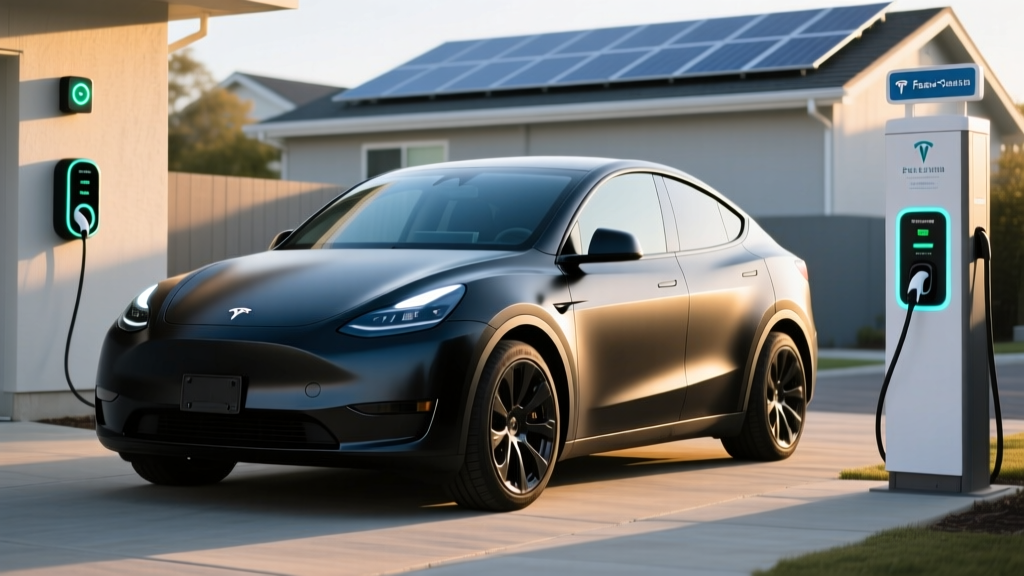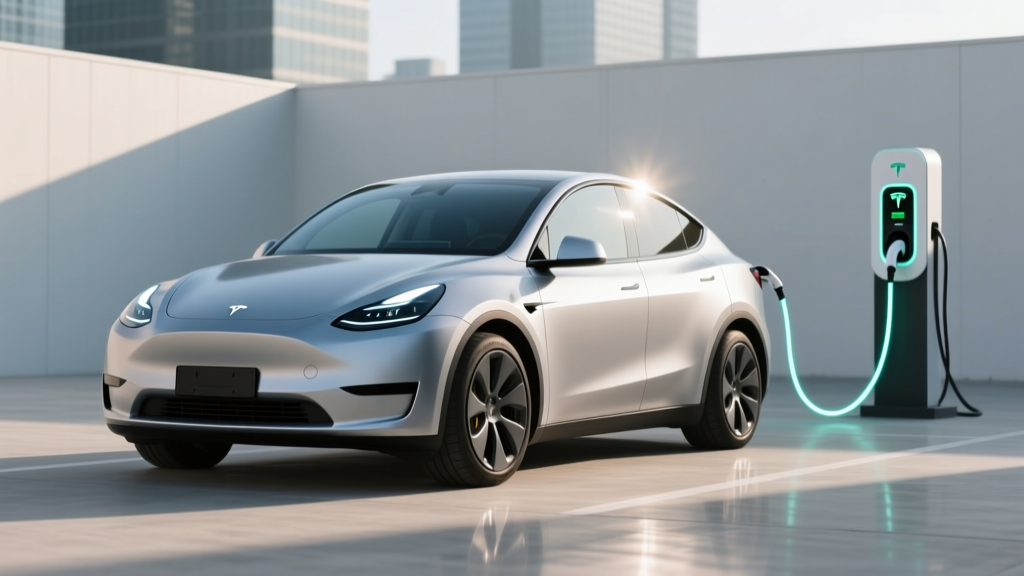
Headlines about a Tesla China sales drop have circulated throughout early 2026, driven by fierce competition from BYD, NIO, and Xiaomi's SU7 sedan in the world's largest EV market. But for US-based buyers, the real story isn't Shanghai showroom foot traffic — it's what Tesla's competitive pressure means for the vehicles you can actually buy stateside. The 2026 Tesla Model Y Long Range, refreshed with the "Juniper" update that debuted in late 2024 and refined for the 2026 model year, remains the benchmark midsize electric SUV. Here's a data-driven look at what you're getting, what it costs after incentives, and whether the China-headwinds narrative should factor into your purchase decision.
2026 Tesla Model Y Long Range: Spec Sheet at a Glance
| Specification | 2026 Model Y Long Range AWD |
|---|---|
| EPA Estimated Range | 320 miles |
| Battery Capacity | 78.1 kWh usable (NMC chemistry) |
| Drivetrain | Dual-motor AWD |
| Horsepower | 384 hp combined |
| 0–60 mph | 4.8 seconds |
| Max DC Fast-Charge Rate | 250 kW peak |
| 10–80% DC Charge Time | ~27 minutes |
| Level 2 Home Charge Rate | 11.5 kW (~44 mi/hr) |
| Efficiency | 117 MPGe combined / 29 kWh/100 mi |
| Cargo Volume | 30.2 cu ft (rear seats up) / 72.1 cu ft (folded) |
| Frunk Volume | 4.1 cu ft |
| Rear Legroom | 41.6 inches |
| Base MSRP | $44,990 (before incentives) |
| Battery Warranty | 8 years / 120,000 miles |
Range Reality Check: EPA Sticker vs. the Real World
The 2026 Juniper refresh improved the Model Y's aerodynamic drag coefficient to approximately 0.23 Cd, contributing to the 320-mile EPA figure — up from 308 miles on the pre-refresh Long Range. On a fueleconomy.gov comparison, that puts it within striking distance of the Hyundai Ioniq 5 Long Range AWD (305 mi EPA) while offering more cargo space. If your daily commute is under 60 miles round-trip, you'll charge at home every 4–5 days and rarely think about range.
Charging Speed: DC Fast, Level 2, and the Supercharger Advantage
| Charging Level | Power / Rate | Speed (Miles Added) | Notes |
|---|---|---|---|
| Level 1 (120V household) | ~1.4 kW | ~5 mi/hr | Emergency/trickle only |
| Level 2 (240V home) | 11.5 kW | ~44 mi/hr | Full charge in ~7 hours |
| DC Fast (Tesla Supercharger V3) | 250 kW peak | ~180 mi in 15 min | 10–80% in ~27 min; tapers above 80% |
| DC Fast (CCS adapter on non-Tesla networks) | Up to 250 kW | Varies by station | Electrify America, EVgo compatible with included CCS adapter |
Tesla's 250 kW peak charge rate on V3 Superchargers is well-established, but peak is not sustained. In real-world testing, the Model Y Long Range holds above 200 kW from roughly 10–30% State of Charge (SoC), then gradually tapers. The 10–80% sprint takes approximately 27 minutes under ideal thermal conditions. Preconditioning — which the navigation system triggers automatically when you route to a Supercharger — warms the battery to optimal temperature and is essential for hitting these numbers in cool weather. Without preconditioning, expect 35–40+ minutes for the same 10–80% session.
With the 2026 model year, Tesla includes a CCS adapter in the box, meaning Model Y owners can access Electrify America, EVgo, and other non-Tesla DC networks. Tesla has also opened portions of its Supercharger network to non-Tesla EVs via the NACS standard, but as a Tesla owner you still get the seamless plug-and-charge experience and typically lower per-kWh pricing.
Performance, Efficiency, and Daily Drivability
The dual-motor AWD powertrain delivers 384 horsepower and a 4.8-second 0–60 mph time — quick enough to merge confidently onto any freeway and genuinely faster than most gas-powered SUVs in this price range. The single-speed transmission means there's no shift shock, just linear thrust. Regenerative braking is aggressive enough for one-pedal driving in most city scenarios, though Tesla removed the user-adjustable regen setting several years ago; you get what the engineers chose.
Efficiency lands at 117 MPGe combined (29 kWh per 100 miles) per the EPA. That translates to roughly $0.04–$0.06 per mile on residential electricity at the national average of $0.16/kWh, compared to $0.12–$0.14 per mile for a 25-MPG gas SUV at $3.50/gallon. Over 15,000 annual miles, the fuel savings alone approach $1,200–$1,500 per year before factoring in reduced maintenance (no oil changes, minimal brake wear thanks to regen).
Pricing, Tax Credits, and What You'll Actually Pay
| Item | Amount |
|---|---|
| 2026 Model Y Long Range AWD MSRP | $44,990 |
| Destination fee | $1,390 |
| Federal §30D EV Tax Credit (if eligible) | −$7,500 |
| Effective price after federal credit | $38,880 |
The 2026 Model Y Long Range qualifies for the full $7,500 federal tax credit under IRS §30D, provided you meet the eligibility requirements. As of 2026, these include:
- MSRP cap: SUVs must be priced at or below $80,000 (the Model Y clears this easily)
- Income cap: Modified AGI ≤ $300,000 (joint filers), ≤ $225,000 (head of household), ≤ $150,000 (single)
- Battery sourcing: Critical minerals and battery components must meet phased percentage thresholds from US or FTA-partner countries — Tesla's Austin-built Model Y with its CATL-sourced LFP and Panasonic NMC cells currently satisfies the 2026 thresholds
- Point-of-sale transfer: You can elect to transfer the credit to the dealer at purchase, reducing your out-of-pocket cost immediately rather than waiting for a tax refund
Verify current eligibility on IRS.gov's clean vehicle credits page before purchasing, as battery-sourcing rules tighten annually. The Model Y Performance trim ($48,990) also qualifies, but adding FSD (Supervised) at $8,000 or premium paint/wheels will not push the SUV above the $80,000 cap.
Interior, Tech, and the Juniper Cabin Refresh
The 2026 Juniper interior is a meaningful step up from the pre-2025 Model Y. Ventilated front seats, ambient lighting, a rear-seat 8-inch touchscreen for climate and entertainment, and power-folding second-row seats are now standard on Long Range. The 15.4-inch center touchscreen runs Tesla's latest infotainment stack with wireless CarPlay — a first for Tesla, added in the Juniper generation after years of customer demand.
Cargo space measures 30.2 cubic feet behind the second row and 72.1 cubic feet with seats folded, plus the 4.1-cubic-foot frunk. That's competitive with the Ford Mustang Mach-E (29.7 cu ft rear) and slightly less than the Hyundai Ioniq 5 (36.3 cu ft), though the Model Y's hatchback shape makes loading bulky items straightforward.
Driver assistance comes via Tesla's Autopilot (standard) which includes adaptive cruise, lane centering, and automatic emergency braking. FSD (Supervised) remains a $8,000 option and is a SAE Level 2 system — it does not make the car self-driving, and you must remain engaged with hands on or near the wheel at all times. It handles highway interchanges and city streets with increasing competence, but disengagements still occur and the driver is liable.
What Does the Tesla China Sales Drop Mean for US Buyers?
The Tesla China sales drop in early 2026 reflects intensifying competition from BYD's Sealion and Seal models, Xiaomi's SU7, and aggressive pricing from NIO — not fundamental Model Y product failure. In fact, the Juniper refresh was designed partly to counter these rivals in China. For US buyers, the implications are:
- Pricing pressure works in your favor: Tesla has held or reduced US pricing even as competitors' MSRPs climb; the Model Y Long Range at $44,990 undercuts a comparably equipped BMW iX by $20,000+
- Supercharger network remains unmatched: Reliability and density of Tesla's charging infrastructure is a moat competitors still can't cross for cross-country travel
- Resale value uncertainty: Brand sentiment headwinds and increased competition may soften Model Y depreciation curves compared to 2022–2023; plan for 40–50% depreciation over 3 years rather than the historically strong 30–35%
- Service center capacity: Tesla's US service infrastructure has expanded but still lags legacy dealers in some metro areas — check proximity to a service center before buying
Model Y vs. Key Competitors: Where It Wins and Loses
Pros
- Best-in-class Supercharger network access
- 320-mi EPA range with strong efficiency (117 MPGe)
- Strong performance (4.8s 0–60) for the price
- Qualifies for full $7,500 federal tax credit
- Over-the-air updates continuously add features
- Now includes wireless CarPlay
Cons
- No physical buttons — all controls via touchscreen
- FSD (Supervised) is expensive and still Level 2
- Rear visibility is limited; relies on cameras
- Insurance premiums run 15–25% above segment average
- Service center wait times can stretch weeks in some markets
- Resale value may soften vs. 2022–2023 peaks
Against the Hyundai Ioniq 5 Long Range AWD (305 mi, $49,850), the Model Y wins on range and charging-network access but the Ioniq 5 offers more rear cargo space and a more conventional interior layout. The Ford Mustang Mach-E Premium AWD (290 mi, ~$48,000) is sportier to drive but can't match the Tesla's efficiency or Supercharger convenience.
Who Should Buy the 2026 Tesla Model Y?
Best for: Daily commuters with home charging access, tech-forward families who road-trip 2–4 times per year, and buyers who value charging infrastructure reliability above all else.
Look elsewhere if: You need maximum cargo volume (Ioniq 5 or Kia EV6), prefer physical controls (Mach-E, Ioniq 5), live in an area with no nearby Tesla service center, or want a true Level 4 autonomous driving experience (not available from any consumer automaker as of 2026).
Frequently Asked Questions
What is the real-world range of the 2026 Model Y Long Range?
The EPA rates it at 320 miles combined. In real-world highway driving at 70–75 mph, expect 260–285 miles. In sub-freezing winter conditions with heat on, plan for 230–250 miles. City driving with regenerative braking can exceed 320 miles in mild weather.
How fast does the Model Y charge at home and on the road?
At home on a 240V Level 2 charger (11.5 kW), you'll add about 44 miles of range per hour, fully charging from empty in roughly 7 hours. On a Tesla V3 Supercharger, peak rate is 250 kW, reaching 10–80% in approximately 27 minutes with battery preconditioning active.
Does the 2026 Model Y qualify for the $7,500 federal EV tax credit?
Yes, the 2026 Model Y Long Range and Performance trims currently qualify for the full $7,500 under IRS §30D, provided the buyer meets income thresholds (≤$300K joint / ≤$150K single) and the vehicle's battery sourcing meets 2026 critical-mineral and component rules. The credit can be transferred to the dealer at point of sale. Always verify on IRS.gov before purchasing.
Is the Model Y worth buying over the Ioniq 5 or Mach-E?
If charging convenience and range are your top priorities, the Model Y's Supercharger network and 320-mile EPA rating are decisive advantages. If you prefer a more traditional interior with physical controls and greater cargo space, the Ioniq 5 is a strong alternative. The Mach-E appeals to drivers who prioritize steering feel and sporty dynamics.
How does the Tesla China sales drop affect US warranty and support?
It doesn't. US-market Model Y vehicles are built at Gigafactory Texas with US and international supply chains separate from Giga Shanghai. Tesla's 8-year/120,000-mile battery warranty and 4-year/50,000-mile vehicle warranty remain unchanged regardless of China market performance.