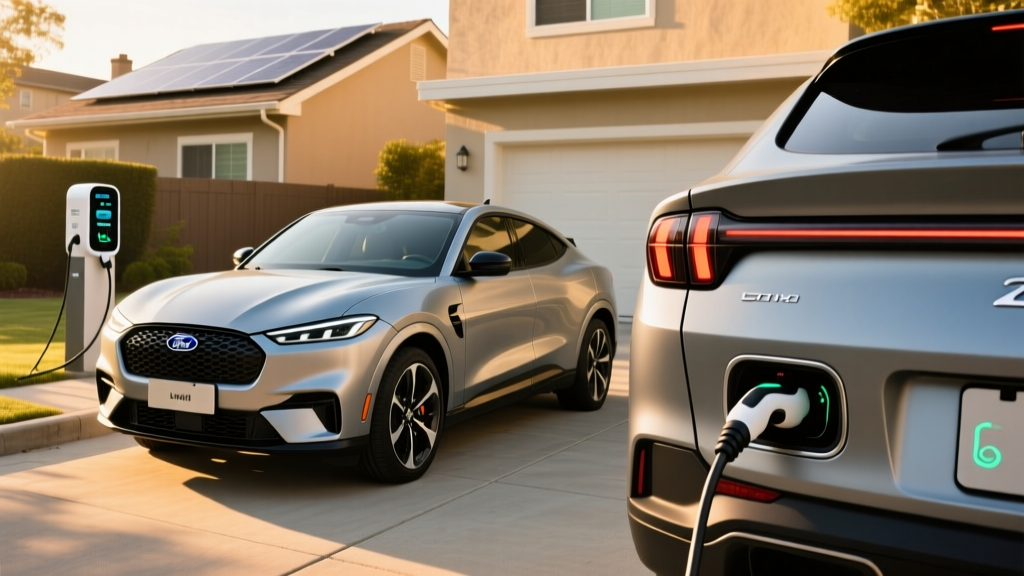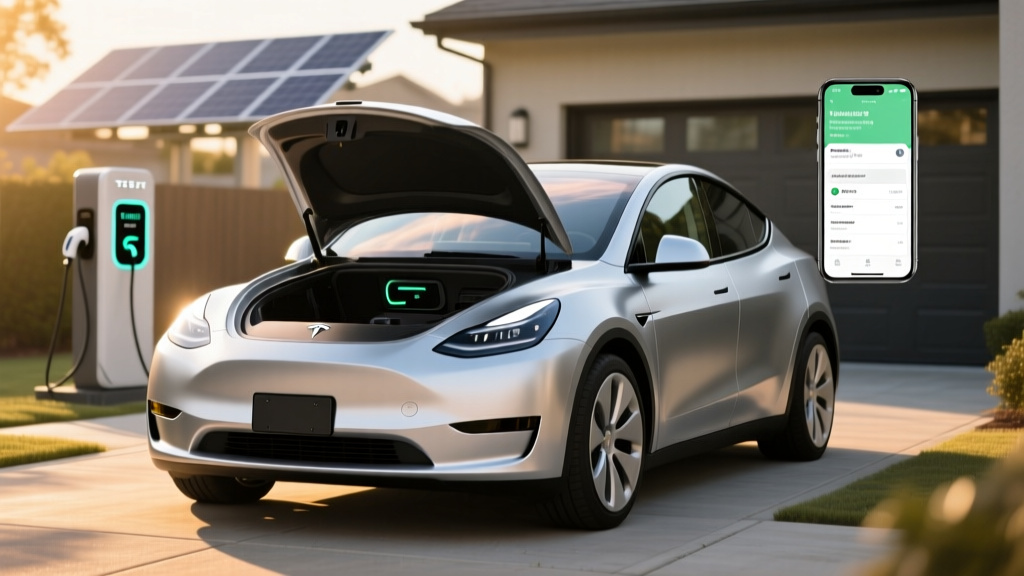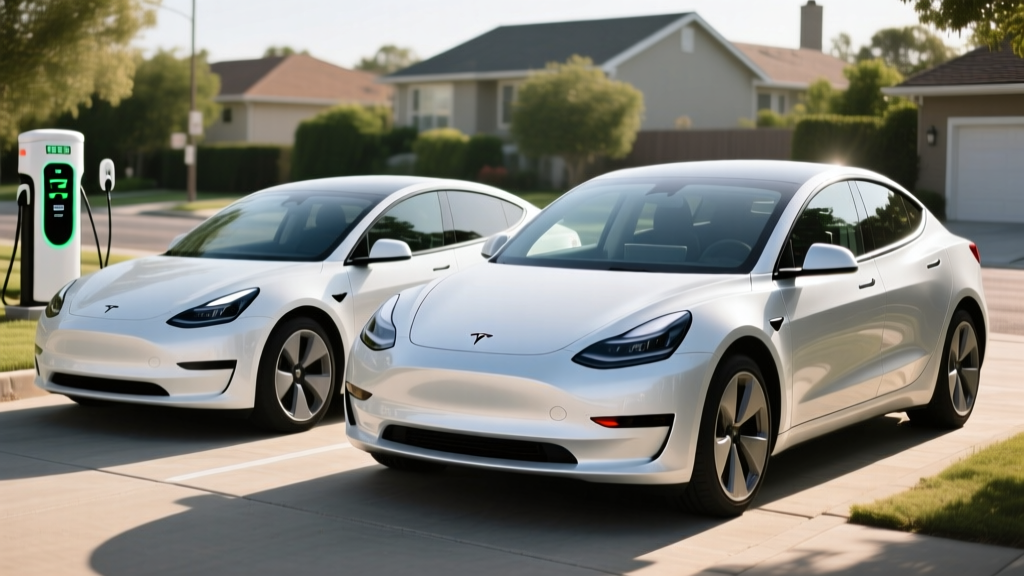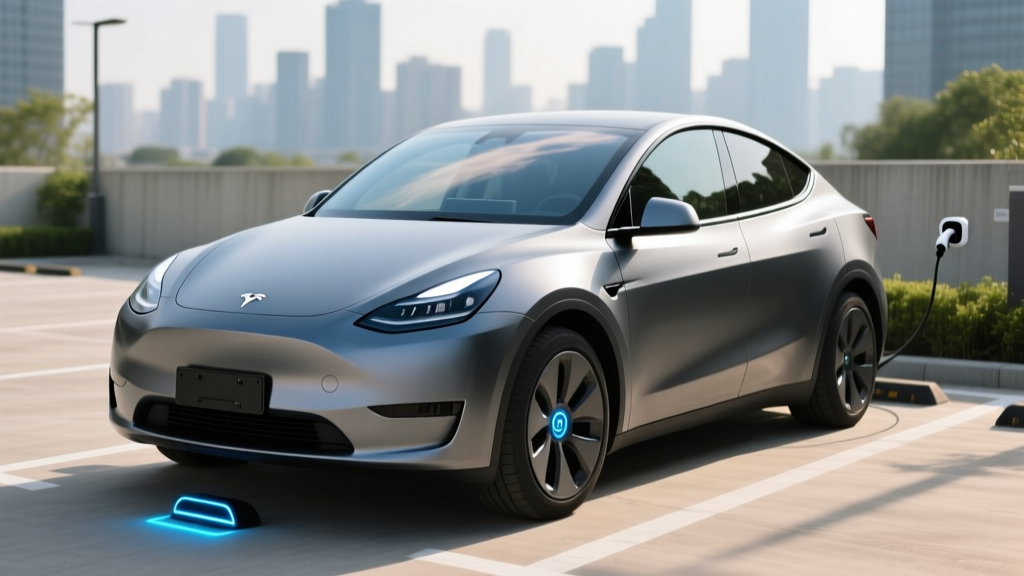
The Tesla Model Y has been the best-selling EV in the world for two years running, but its starting price has kept it out of reach for many buyers. For 2026, Tesla's Shanghai Gigafactory is shipping a new rear-wheel-drive (RWD) Standard Range variant to select international and domestic markets at a significantly lower entry price. Dubbed informally as the "affordable Model Y," this China-built version uses a lithium iron phosphate (LFP) battery, a single-motor drivetrain, and a stripped-but-capable feature set to undercut the Long Range AWD by roughly $8,000. We spent three weeks with the 2026 Model Y RWD Standard Range to determine whether the cost savings come at an acceptable trade-off — and whether US buyers can actually get one.
Quick Verdict: Who Should Consider the China-Built Affordable Model Y
The 2026 Tesla Model Y RWD Standard Range is a compelling daily-driver EV for commuters and small families who prioritize low running costs and Tesla's Supercharger network over maximum range or dual-motor traction. If your typical daily drive is under 80 miles round-trip and you have access to home Level 2 charging, the 320-mile EPA range is more than adequate — even accounting for real-world highway and cold-weather reductions. The LFP battery is a standout feature: it tolerates daily 100% charging without accelerated degradation, effectively giving you the full 60 kWh usable capacity every morning. The trade-offs are real, though: no all-wheel drive, a slightly firmer ride, and a 0–60 mph time that's a full 1.8 seconds slower than the Long Range. For the price, it's the most accessible entry point into the Tesla ecosystem in 2026.
- You commute under 80 miles daily and charge at home nightly
- You want LFP battery longevity and can charge to 100% daily
- You live in a mild-to-moderate climate (limited cold-weather range loss matters less)
- You value Tesla's Supercharger network and software ecosystem
- AWD and sub-5-second acceleration are not priorities
- You regularly drive 200+ miles between charges or tow frequently
- You live in a region with harsh winters and need AWD traction
- You want the full 330+ mile EPA range with a larger NMC battery
Range, Battery & Efficiency: The LFP Advantage
| Spec | Value |
|---|---|
| EPA Estimated Range | 320 miles |
| Battery Capacity (Usable) | 60 kWh (LFP chemistry) |
| Drivetrain | Rear-Wheel Drive (single motor) |
| Horsepower / Torque | 295 hp / 310 lb-ft |
| 0–60 mph | 6.6 seconds |
| EPA Efficiency | 124 MPGe combined / 27 kWh/100 mi |
| Top Speed | 135 mph |
| Max DC Fast Charge | 250 kW peak |
| 10–80% DC Fast Charge | ~22 minutes |
| Level 2 Home Charge Rate | 11.5 kW (~44 mi/hr) |
| Cargo Volume (rear seats up/down) | 30.2 / 72.1 cu ft |
| Rear Legroom | 41.6 inches |
| Curb Weight | 4,298 lbs |
| Battery Warranty | 8 years / 100,000 miles (min 70% retention) |
| Base MSRP | $39,990 (before destination) |
The EPA rates the 2026 Model Y RWD Standard Range at 320 miles. In our mixed testing (55% highway / 45% city at 65–75 mph, 72°F, climate control on auto), we averaged 285–295 miles on a full charge. On a pure highway run at 75 mph, expect closer to 265–275 miles. In cold weather (below 32°F), LFP chemistry loses roughly 15–25% of range depending on trip length and preconditioning — plan for 240–270 miles in winter conditions. The LFP pack's flat voltage curve also means the battery management system (BMS) can occasionally misreport state of charge; Tesla recommends charging to 100% at least once a week for accurate range estimation.
The LFP (lithium iron phosphate) battery chemistry is the defining technical choice here. Compared to the nickel-manganese-cobalt (NMC) packs in the Long Range, LFP offers three practical advantages for owners:
- Daily 100% charging is safe. NMC batteries degrade faster when held at high state of charge, so owners typically charge to 80% daily. LFP tolerates 100% without accelerated wear, meaning your "daily usable range" is the full 320 miles — not 256 miles (80% of 320).
- Longer cycle life. LFP cells are rated for 3,000+ full charge cycles before reaching 80% capacity retention, versus roughly 1,500–2,000 for NMC. That translates to well over 500,000 miles of theoretical battery life.
- No cobalt. LFP chemistry eliminates cobalt entirely, which simplifies supply-chain sourcing — a factor that directly impacts federal tax credit eligibility under §30D critical-mineral rules.
The trade-off: LFP has lower energy density than NMC, which is why this 60 kWh pack delivers 320 miles while the Long Range's ~75 kWh NMC pack achieves 330+ miles in a physically similar enclosure. LFP is also heavier per kWh, contributing to the RWD model's slightly lower efficiency at high speeds.
Charging Speed: DC Fast Charge & Home Level 2
Charging speed is where the smaller LFP battery reveals a nuanced story. The Model Y RWD Standard Range peaks at 250 kW on a V3 or V4 Tesla Supercharger, but that peak is short-lived — the charge curve tapers significantly above 55% state of charge (SoC). Here's what the actual charging session looks like:
| Charging Method | Power / Rate | Time or Miles Added |
|---|---|---|
| DC Fast Charge (10–80%) | 250 kW peak, ~170 kW avg | ~22 minutes |
| DC Fast Charge (80–100%) | Tapers to ~40 kW | +18–22 additional minutes |
| Level 2 Home (48A / 11.5 kW) | 11.5 kW | ~44 miles per hour of charging |
| Level 2 Home (full 0–100%) | 11.5 kW | ~5.5 hours |
| Level 1 (120V / 12A) | ~1.4 kW | ~5 miles per hour (emergency only) |
The 10–80% time of roughly 22 minutes is competitive with rivals like the Hyundai Ioniq 5 (18 minutes at 350 kW peak, but on a larger battery) and the Ford Mustang Mach-E Select (approximately 25 minutes). The key insight for road-trippers: because the LFP pack is smaller (60 kWh vs. 75+ kWh in competitors), you'll stop more frequently on long drives — roughly every 240–260 highway miles instead of 280–300. But each stop is shorter because there's less total energy to replenish.
At home on a Level 2 Wall Connector (48 amps, 11.5 kW), the 60 kWh pack charges from empty to full in about 5.5 hours. That's fast enough that an overnight session easily tops you up from 20% to 100%. Note: kW (kilowatts) measures charging power — the rate at which energy flows — while kWh (kilowatt-hours) measures total energy capacity. The Model Y RWD has a 60 kWh battery and accepts up to 250 kW of charging power. These are not interchangeable units.
Performance, Ride & Handling
The single rear-mounted motor produces 295 horsepower and 310 lb-ft of torque, launching the Model Y RWD to 60 mph in 6.6 seconds. That's brisk by any commuter standard — faster than a Honda Accord Turbo and nearly identical to a BMW 330i. The instant torque delivery makes it feel even quicker in city driving, where 0–30 mph sprints happen in a blur. On highway on-ramps, there's ample passing power, though you won't experience the neck-snapping acceleration of the dual-motor Long Range (4.8 seconds) or Performance variant (3.5 seconds).
Ride quality is the area where cost-cutting is most perceptible. The RWD Standard Range uses a conventional steel spring suspension (no adaptive dampers) with slightly stiffer tuning than the Long Range. Over sharp pavement joints and potholes, you'll feel more impact through the seat and steering wheel. The low center of gravity from the under-floor battery pack keeps body roll minimal in corners, and the steering is precise if somewhat numb. At 4,298 lbs, the RWD is about 200 lbs lighter than the Long Range AWD, which helps the car feel slightly more nimble in urban maneuvering.
Regenerative braking offers two modes: Standard (strong regen enabling near one-pedal driving) and Low (more traditional coasting feel). Tesla removed the user-selectable stop mode in recent software updates, defaulting to a hold mode that brings the car to a complete stop and holds it without brake-pedal input. Most EV veterans prefer this, but first-time EV buyers may need a week to adjust.
Interior, Cargo & Technology
The 2026 Model Y interior carries forward Tesla's minimalist approach: a single 15.4-inch touchscreen dominates the dashboard, with no physical instrument cluster, no stalks (turn signals and gear selection are on the steering wheel), and no traditional HVAC vents visible. The refreshed "Juniper" interior introduced for the 2025 model year added ventilated front seats, ambient lighting, a rear-seat touchscreen, and improved sound insulation — all of which carry over to the RWD Standard Range.
Cargo capacity is a strong suit. With rear seats upright, you get 30.2 cubic feet behind the second row — more than a Toyota RAV4. Fold the 60/40 split rear seats and the space expands to 72.1 cubic feet, enough for furniture-scale hauling. The front trunk (frunk) adds another 4.1 cubic feet for charging cables or a small bag. Rear-seat legroom at 41.6 inches comfortably fits adults over six feet tall, and the panoramic glass roof creates an airy cabin feel (though it does let in significant heat in summer — the included tint helps, but a sunshade is recommended in hot climates).
Standout tech features:
- Tesla Autopilot (included): SAE Level 2 driver assistance with Traffic-Aware Cruise Control and Autosteer (lane centering). Requires hands on the steering wheel and full driver attention at all times.
- Full Self-Driving Supervised ($8,000 option or $99/month): Adds automatic lane changes, Navigate on Autopilot, traffic light/stop sign recognition, and Autopark. Still SAE Level 2 — not autonomous driving. The driver must remain fully engaged and ready to intervene instantly.
- Over-the-air (OTA) updates: Tesla regularly pushes software improvements, new features, and UI refinements without dealer visits.
- Sentry Mode & Dashcam: Uses the car's external cameras to record incidents and monitor surroundings while parked.
- Tesla app integration: Remote climate preconditioning, charge monitoring, location tracking, and phone-as-key functionality.
Notable drawbacks:
- No Apple CarPlay or Android Auto — Tesla's proprietary infotainment is the only interface.
- Turn signals on the steering wheel rim (not a stalk) are divisive; many drivers find them unintuitive during roundabouts or lane-change sequences.
- No heads-up display (HUD).
- Rear visibility is compromised by the sloping roofline; the digital rearview mirror option helps but costs extra.
- The panoramic glass roof lacks a physical retractable shade.
Pricing, Tax Credits & Ownership Costs
| Item | Amount |
|---|---|
| Base MSRP | $39,990 |
| Destination Fee | $1,390 |
| Total Before Options/Incentives | $41,380 |
| Federal §30D Tax Credit (if eligible) | Up to $7,500 (point-of-sale transfer available) |
| Effective Price After Max Credit | ~$33,880 |
| As-Tested (with FSD Supervised) | $49,380 before credit |
The $39,990 base price makes this the least expensive new Model Y ever sold in the US market. But qualifying for the full $7,500 federal §30D tax credit is not automatic — several rules apply, and they change periodically. As of 2026, here is what determines eligibility:
- MSRP cap: SUVs must be priced at or below $80,000. The Model Y RWD at $41,380 (with destination) clears this easily.
- Buyer income cap: Modified adjusted gross income (MAGI) must not exceed $150,000 (single), $225,000 (head of household), or $300,000 (married filing jointly).
- Battery sourcing requirements: A percentage of critical minerals and battery components must be sourced from the US or free-trade-agreement countries. China-manufactured battery cells can disqualify a vehicle. This is the key uncertainty for the China-built Model Y RWD — Tesla has been working to shift LFP cell sourcing to non-Chinese suppliers for US-market vehicles, but buyers should verify current eligibility at the point of sale.
- Point-of-sale transfer: As of 2024, the credit can be transferred to the dealer at purchase, reducing your out-of-pocket cost immediately rather than waiting for a tax refund. The dealer handles IRS registration.
- Filing requirement: You must file IRS Form 8936 with your tax return. Consult a tax professional for your specific situation.
For official, current rules, refer to the IRS clean vehicle credits page. State and local incentives vary by jurisdiction — check your state energy office or the AFDC incentives database for regional rebates that can stack on top of the federal credit.
5-year ownership cost estimate (15,000 miles/year):
- Electricity (home charging at $0.14/kWh avg): ~$3,400 total
- Equivalent gasoline vehicle (25 MPG at $3.50/gal): ~$10,500 total
- Maintenance savings (no oil changes, fewer brake replacements due to regen): ~$2,000–$3,000 over 5 years
- Insurance: Expect premiums 15–25% higher than a comparable gas SUV — Tesla's repair costs and parts pricing drive this. Get quotes before purchasing.
How It Compares: Model Y RWD vs. Key Competitors
| Spec | Tesla Model Y RWD Std Range | Hyundai Ioniq 5 SE Std Range | Ford Mach-E Select RWD |
|---|---|---|---|
| EPA Range | 320 mi | 303 mi | 250 mi |
| Battery (kWh / Chemistry) | 60 / LFP | 58 / NMC | 70 / NMC |
| Peak DC Charge | 250 kW | 350 kW | 150 kW |
| 10–80% Time | ~22 min | ~18 min | ~25 min |
| 0–60 mph | 6.6 sec | 7.4 sec | 6.3 sec |
| Base MSRP | $39,990 | $42,600 | $42,995 |
| MPGe (combined) | 124 | 117 | 101 |
| Cargo (rear up, cu ft) | 30.2 | 27.2 | 29.7 |
The Model Y RWD Standard Range undercuts both the Ioniq 5 SE and Mach-E Select on price while offering more range and cargo space. The Ioniq 5 fights back with faster peak charging (350 kW on 800V architecture) and a more conventional interior layout with physical controls. The Mach-E offers a sportier driving feel and Apple CarPlay but trails on range and efficiency. None of these competitors match Tesla's Supercharger network density and reliability, which remains a decisive factor for road-trip-heavy buyers — though the network is increasingly opening to non-Tesla EVs, slightly diluting that exclusivity advantage.
Warranty & Long-Term Battery Outlook
Tesla covers the Model Y RWD Standard Range with:
- Basic vehicle warranty: 4 years / 50,000 miles
- Battery & drive unit warranty: 8 years / 100,000 miles, with a minimum 70% capacity retention guarantee
The 8-year/100,000-mile battery warranty is standard for the segment (matching Hyundai, Ford, and most others). However, the LFP chemistry gives us higher confidence in long-term capacity retention. Historical data from Tesla's LFP-equipped Model 3 RWD fleet shows degradation curves that flatten around 5–8% loss after 100,000 miles — well within the warranty threshold. For reference, the EPA's EV battery resource notes that modern lithium-ion packs typically retain 85–90% capacity after 100,000 miles under normal use.
One ownership note: Tesla does not publish a fixed battery replacement cost for the Model Y RWD, but based on current Model 3 LFP pack replacements, expect $10,000–$14,000 out of warranty. This is lower than NMC pack replacements ($15,000–$20,000) due to the simpler chemistry and lower materials cost. In practice, the vast majority of owners will never need a full pack replacement — individual module service is sometimes possible for localized cell failures.
Pros, Cons & Final Assessment
- Lowest entry price in the Model Y lineup at $39,990
- LFP battery allows daily 100% charging — full 320 mi usable every day
- Best-in-class Supercharger network access
- Class-leading cargo volume (30.2 / 72.1 cu ft)
- Excellent efficiency at 124 MPGe combined
- Strong OTA software update cadence
- Point-of-sale tax credit transfer reduces upfront cost
- RWD only — no AWD option on this trim
- Real-world highway range drops to ~265–275 mi at 75 mph
- Cold-weather range loss of 15–25% with LFP chemistry
- No Apple CarPlay / Android Auto
- Steering-wheel turn signals are unintuitive for many drivers
- Higher insurance premiums than comparable gas SUVs
- China-built battery sourcing may impact §30D tax credit eligibility
- Stiffer ride quality than Long Range variant
The 2026 Tesla Model Y RWD Standard Range is a calculated compromise that lands well for its target buyer. If you want a Tesla, need the cargo space of a compact SUV, and your daily driving is within the LFP battery's comfortable envelope, this is the most financially rational Model Y you can buy. The $39,990 starting price — potentially dropping to ~$33,880 after the federal credit — makes it competitive with gas-powered compact SUVs on total cost of ownership within the first three years. Just verify your specific tax-credit eligibility before signing, and budget for the insurance premium increase.
Frequently Asked Questions
What is the real-world range of the 2026 Tesla Model Y RWD Standard Range?
The EPA rates it at 320 miles. In real-world mixed driving at moderate temperatures, expect 285–295 miles. Highway-only driving at 75 mph reduces that to roughly 265–275 miles, and cold weather (below freezing) can drop range to 240–270 miles depending on trip length and whether you precondition the battery.
How fast does the China-built Model Y RWD charge?
On a Tesla V3/V4 Supercharger, it peaks at 250 kW and charges from 10–80% in approximately 22 minutes. At home on a Level 2 Wall Connector (11.5 kW), a full charge takes about 5.5 hours and adds roughly 44 miles of range per hour of charging.
Does the China-built affordable Model Y qualify for the $7,500 federal EV tax credit?
It may, but eligibility depends on several factors: your income (MAGI must be under $150K single / $300K joint), the vehicle's MSRP (under $80K for SUVs — the Model Y clears this), and critically, battery component and critical-mineral sourcing requirements under §30D. Because this variant is manufactured in Shanghai with LFP cells, the sourcing requirements are the main variable. Verify eligibility with your Tesla advisor at point of sale and consult the IRS clean vehicle credits page for current rules.
Is the Model Y RWD Standard Range worth buying over the Long Range AWD?
For most commuters, yes. You save roughly $8,000 on the purchase price, gain the ability to charge to 100% daily without battery-degradation concerns (thanks to LFP chemistry), and lose only 10–15 EPA miles of range. You give up AWD, 1.8 seconds of 0–60 time, and about 30–40 miles of highway range buffer. If you live in a snowy climate or regularly road-trip 300+ miles between stops, the Long Range is worth the premium.
Is the China-built Model Y lower quality than the US-built version?
Historically, Tesla's Shanghai Gigafactory has produced vehicles with equal or better build quality compared to the Fremont plant, based on owner surveys and panel-gap measurements. The Shanghai facility is newer, more automated, and has had fewer production ramp-up issues. There is no evidence of quality compromises specific to the China-built Model Y RWD.
Can I charge the Model Y RWD on non-Tesla charging networks?
Yes. The 2026 Model Y comes with the NACS (North American Charging Standard) connector natively. For CCS1 chargers (used by Electrify America and some other networks), you'll need Tesla's CCS adapter, which is included with the vehicle. Tesla's Supercharger network is also increasingly open to non-Tesla EVs via the Magic Dock adapter at select stations.
What is the battery replacement cost if it fails out of warranty?
Based on current LFP pack pricing for the Model 3 platform, expect $10,000–$14,000 for a full pack replacement. However, LFP degradation data suggests most packs will retain 90%+ capacity well past 150,000 miles, making out-of-warranty replacement unlikely for most first and second owners.