What Is Tesla Chill Mode, Exactly?
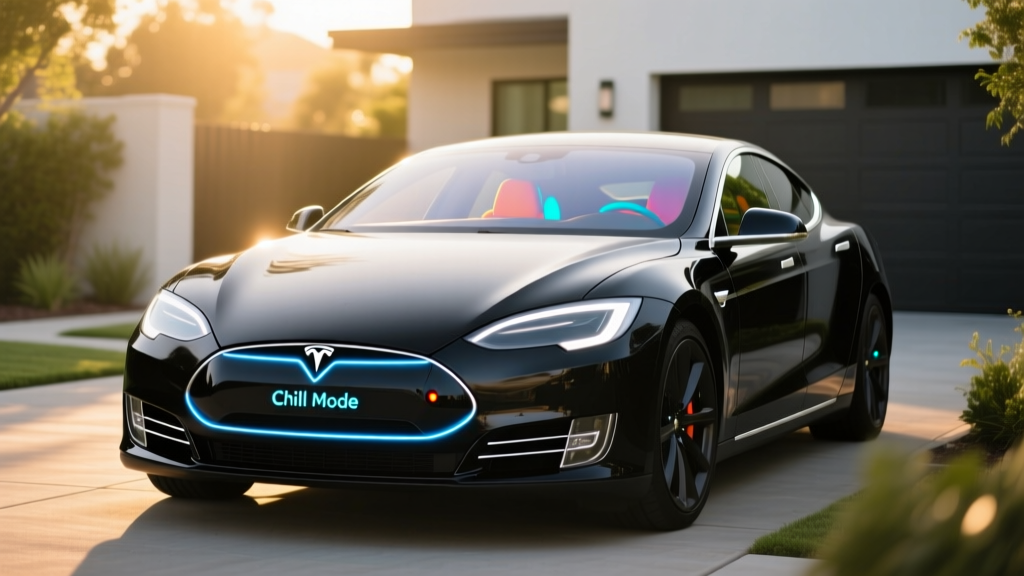
Tesla Chill Mode is a software-limited acceleration setting available on most Tesla vehicles — including the Model 3, Model Y, Model S, and Model X — that restricts the electric motors' torque output to deliver a smoother, more gradual launch from a stop. Instead of the instant, neck-snapping torque that EVs are famous for, Chill Mode ramps power delivery progressively, mimicking the feel of a well-tuned gasoline sedan rather than a performance EV.
You'll find Chill Mode in the Tesla mobile app or on the vehicle's touchscreen under Pedal & Steering settings. When activated, it typically caps 0–60 mph times at roughly 50–70% of the vehicle's full capability, depending on the model and powertrain. A Long Range Dual Motor Model Y that sprints to 60 mph in about 4.8 seconds in standard mode will take closer to 7.0–7.5 seconds with Chill Mode engaged.
But Chill Mode isn't just a gimmick for cautious drivers. It has practical implications for efficiency, passenger comfort, tire wear, and traction in low-grip conditions. Let's break down exactly what happens when you toggle it on — and whether it meaningfully changes your ownership experience.
How Chill Mode Affects Acceleration and Drivetrain Behavior
Tesla's electric motors can deliver maximum torque from 0 RPM. In standard acceleration mode, the inverter dumps full current to the motors immediately when you floor the pedal. Chill Mode introduces a torque ramp — essentially a software curve that limits how quickly the inverter can increase power delivery.
Here's what that looks like across popular Tesla models in 2025–2026:
| Model & Trim | Standard 0–60 (sec) | Chill Mode 0–60 (est.) | Drivetrain | Horsepower |
|---|---|---|---|---|
| Model 3 Long Range AWD | 4.2 | ~6.5–7.0 | Dual Motor AWD | 346 hp |
| Model 3 Performance | 2.9 | ~5.5–6.0 | Dual Motor AWD | 510 hp |
| Model Y Long Range AWD | 4.8 | ~7.0–7.5 | Dual Motor AWD | 384 hp |
| Model Y Performance | 3.5 | ~5.5–6.0 | Dual Motor AWD | 456 hp |
| Model S Plaid | 1.99 | ~4.5–5.0 | Tri-Motor AWD | 1,020 hp |
The effect is most noticeable in high-performance trims. A Model S Plaid with 1,020 horsepower is borderline absurd in standard mode — Chill Mode turns it into something a passenger can actually enjoy without gripping the grab handle. For the Long Range variants, the difference is subtler but still meaningful for daily commuting and school drop-offs.
Does Chill Mode Improve Range or Efficiency?
This is the question most Tesla owners search for, and the answer is nuanced: Chill Mode can marginally improve efficiency in stop-and-go city driving, but it does not meaningfully extend highway range.
Here's the physics. Energy wasted during hard acceleration isn't just about speed — it's about overcoming inertia. A rapid 0–40 mph sprint draws significantly more peak current from the battery than a gradual ramp to the same speed. Higher current draw means more resistive losses (heat) in the battery cells, inverter, and wiring. Chill Mode reduces these losses by limiting peak current draw.
In city driving with frequent stops, owners and independent testers have reported efficiency improvements of roughly 2–5% with Chill Mode active. On a Model Y Long Range with an EPA-estimated 116 MPGe combined (approximately 29 kWh/100 mi), that could translate to saving about 0.6–1.5 kWh per 100 miles of city driving.
On the highway, Chill Mode is essentially irrelevant. You're already at speed, and maintaining velocity requires steady, moderate power — well within the torque curve that Chill Mode allows. If range is your primary concern, reducing speed from 75 to 65 mph, minimizing cabin heating, and using seat heaters instead will yield far greater gains than any acceleration mode.
Battery, Charging, and the Chill Mode Connection
Chill Mode doesn't change your battery capacity or charging speed, but it does interact with battery health in a subtle way. High-current draws generate more heat in the battery cells. Repeated hard launches — especially from low states of charge where internal resistance is higher — contribute incrementally to long-term degradation.
| Specification | Value |
|---|---|
| Battery Capacity (usable) | ~75 kWh |
| Battery Chemistry | NMC (Nickel Manganese Cobalt) |
| Max DC Fast Charge Rate | 250 kW (peak) |
| 10–80% DC Fast Charge Time | ~25–28 minutes |
| Level 2 Home Charging (48A) | 11.5 kW (~44 mi/hr) |
| Level 2 Home Charging (32A) | 7.7 kW (~30 mi/hr) |
| Battery Warranty | 8 years / 120,000 miles (70% capacity retention) |
By limiting peak current draw, Chill Mode slightly reduces thermal stress on the NMC cells during acceleration events. This isn't a substitute for good battery care practices — avoiding frequent 100% charges, minimizing DC fast charging to when you need it, and letting the battery precondition before charging remain far more impactful. But for owners who already drive gently, Chill Mode is directionally aligned with long-term battery health.
One important note: the base Model 3 RWD uses an LFP (lithium iron phosphate) battery, which is more tolerant of high states of charge and repeated full charges. Tesla recommends charging LFP vehicles to 100% at least weekly. Chill Mode is still available on these models but the battery longevity argument is less relevant since LFP chemistry is inherently more robust against calendar and cycle degradation.
When Chill Mode Makes the Most Sense
There are specific driving scenarios where Chill Mode earns its keep:
- Passenger comfort: New EV passengers — especially children, elderly riders, or anyone prone to motion sickness — often find Tesla's default acceleration jarring. Chill Mode smooths the transition and reduces the "elevator drop" sensation.
- Wet, icy, or snowy roads: While Tesla's traction control is excellent, limiting torque at the wheels reduces the chance of momentary slip on low-friction surfaces. Chill Mode acts as a crude but effective launch-control limiter for winter driving.
- Valet or teen driver scenarios: If you're handing your Tesla to a less experienced driver, Chill Mode reduces the risk of an unintentionally aggressive launch. Some owners pair it with Tesla's speed limiter for an extra layer of restraint.
- Tire longevity: Hard launches are the enemy of tire tread. Owners running expensive performance tires (the Model Y Performance ships with 21" Pirelli P Zeros) will see measurably longer tire life with gentler acceleration.
- Towing: When towing near the Model Y's 3,500-pound limit, Chill Mode reduces drivetrain shock and provides smoother, more controlled starts — especially on inclines.
What Chill Mode Does NOT Do
- Chill Mode does not change regenerative braking behavior. Regen strength is controlled separately in Tesla's settings (though recent software updates have removed the adjustable regen option on most new Teslas, defaulting to standard/high regen).
- It does not affect Autopilot or FSD (Supervised) behavior. Tesla's driver-assistance systems are SAE Level 2 — you must remain engaged with hands on the wheel and eyes on the road regardless of acceleration mode.
- It does not limit top speed or highway passing power. Kick-down above 40 mph feels largely the same.
- It does not unlock or change any thermal management or battery preconditioning behavior.
Tesla Model Y Long Range: Full Spec Sheet (2025 Model Year)
Since the Model Y is the most popular Tesla — and the vehicle where Chill Mode is most commonly used — here's the complete spec breakdown for the current Long Range AWD:
| Category | Specification |
|---|---|
| EPA Range | 320 miles |
| Efficiency | 116 MPGe combined / 29 kWh/100 mi |
| Battery | ~75 kWh usable, NMC |
| 0–60 mph | 4.8 seconds (standard) / ~7.0 sec (Chill) |
| Horsepower | 384 hp (dual motor) |
| Drivetrain | Dual Motor AWD |
| Max DC Fast Charge | 250 kW peak |
| 10–80% DC Charge | ~25–28 minutes |
| Level 2 Charge Rate | 11.5 kW (48A) / ~44 mi/hr |
| Cargo Volume | 30.2 cu ft (rear seats up) / 72.1 cu ft (folded) |
| Front Legroom | 41.8 inches |
| Rear Legroom | 35.2 inches |
| Towing Capacity | 3,500 lbs |
| Base MSRP | ~$44,990 (before incentives) |
| Battery Warranty | 8 yr / 120,000 mi (≥70% capacity) |
| Basic Vehicle Warranty | 4 yr / 50,000 mi |
For the latest EPA figures, see the official listing at fueleconomy.gov.
Pricing and Federal Tax Credit Eligibility
Tesla pricing shifts frequently, but as of the 2025 model year, the Model Y Long Range AWD starts at approximately $44,990 before destination charges and options. A Performance trim pushes closer to $49,990.
| Trim | Base MSRP | Federal Credit (est.) | Effective Price |
|---|---|---|---|
| Long Range AWD | $44,990 | Up to $7,500* | ~$37,490 |
| Performance AWD | $49,990 | Up to $7,500* | ~$42,490 |
*Federal EV tax credit eligibility under IRS §30D depends on multiple factors:
- MSRP cap: SUVs (including Model Y) must have an MSRP at or below $80,000. All current Model Y trims qualify.
- Buyer income cap: Modified adjusted gross income must not exceed $150,000 (single), $225,000 (head of household), or $300,000 (joint filing).
- Battery sourcing: A percentage of critical minerals and battery components must be sourced from the U.S. or free-trade-agreement countries. These thresholds increase annually. Tesla's supply chain has adapted, but confirm current-year eligibility on the IRS qualified vehicles list before purchasing.
- Point-of-sale transfer: As of 2024, you can transfer the credit to the dealer at purchase, reducing your out-of-pocket cost directly rather than waiting for a tax refund.
Consult a tax professional to confirm your personal eligibility. State and local incentives vary and may stack on top of the federal credit.
Chill Mode vs. Competitor Acceleration Modes
Tesla isn't the only automaker offering adjustable acceleration profiles. Here's how Chill Mode stacks up against similar features:
| Brand / Model | Mode Name | What It Does |
|---|---|---|
| Tesla (all models) | Chill Mode | Limits torque ramp, softens 0–30 mph launch |
| Hyundai Ioniq 5 | Eco Mode | Reduces throttle sensitivity + limits climate power |
| Ford Mustang Mach-E | Whisper Drive Mode | Softens throttle + adds steering weight reduction |
| BMW i4 / iX | Efficiency Mode | Limits power output + adjusts climate + coasting regen |
| Rivian R1T / R1S | Conserve Mode | Limits power + adjusts suspension + reduces climate draw |
Tesla's Chill Mode is narrower in scope than competitors — it only affects acceleration. Hyundai, Ford, and BMW bundle throttle mapping with climate control, steering, and sometimes suspension adjustments. This means Chill Mode has a smaller efficiency upside but also fewer trade-offs: your HVAC works exactly the same, and steering feel is unchanged.
Frequently Asked Questions About Tesla Chill Mode
Does Chill Mode void my Tesla warranty?
No. Chill Mode is an official Tesla software feature. Using it has zero impact on your battery, powertrain, or vehicle warranty. In fact, by reducing peak current draw, it's arguably gentler on drivetrain components.
Can I set Chill Mode as the default for a specific driver profile?
Yes. Tesla allows you to link Chill Mode to a specific driver profile. If two people share the vehicle, one can default to Chill while the other uses standard acceleration. The car will automatically apply the correct setting when it recognizes the key fob or phone.
Does Chill Mode work with Autopilot or FSD Supervised?
Yes, but with a caveat. When Autopilot or FSD (Supervised) is engaged, the system controls acceleration independently. Chill Mode primarily affects manual driving — when you're pressing the accelerator pedal yourself. Remember, IIHS and NHTSA both emphasize that Level 2 driver-assist systems require continuous driver supervision.
Will Chill Mode help in snow and ice?
It can. By limiting initial torque, Chill Mode reduces the likelihood of wheel slip when pulling away from a stop on low-traction surfaces. Combined with Tesla's electronic traction control and winter tires, it's a useful tool for winter driving. It's not a substitute for proper winter tires, however — all-season tires on ice will still struggle regardless of acceleration mode.
How do I turn Chill Mode on and off?
On the vehicle touchscreen: tap the car icon → Pedals & Steering → Acceleration → select "Chill." You can also toggle it from the Tesla mobile app under your vehicle's settings. The change takes effect immediately.
Does Chill Mode affect my insurance rate?
There's no evidence that using Chill Mode affects insurance premiums. Insurers base rates on the vehicle model, your driving record, location, and coverage level — not on which acceleration setting you use. That said, Tesla Insurance in some states uses real-time driving data (including hard acceleration events) to calculate monthly premiums. Chill Mode could indirectly lower your score by reducing hard-launch events.