The Truth About Tesla's Children's Car Offerings in 2026
If you've been searching for a "Tesla children's car," you've likely encountered a confusing mix of ride-on toys, discontinued products, and actual Tesla vehicles that families purchase for their daily driving. Let's clear this up immediately: Tesla does not manufacture a full-size, street-legal vehicle designed specifically for children. What exists is a product ecosystem that spans battery-powered ride-on toys for kids and the real electric vehicles—primarily the Tesla Model Y—that parents drive to cart those kids around.
This guide covers the full landscape: the Tesla Cyberquad for Kids (a ride-on toy, not a car), the Tesla Model S ride-on by Radio Flyer, and then the actual Tesla Model Y—the vehicle most families considering Tesla actually end up buying. We'll give you exact specs, real-world range data, charging times, pricing, and federal tax credit eligibility so you can make an informed decision.
Tesla Cyberquad for Kids: The Ride-On Toy Explained
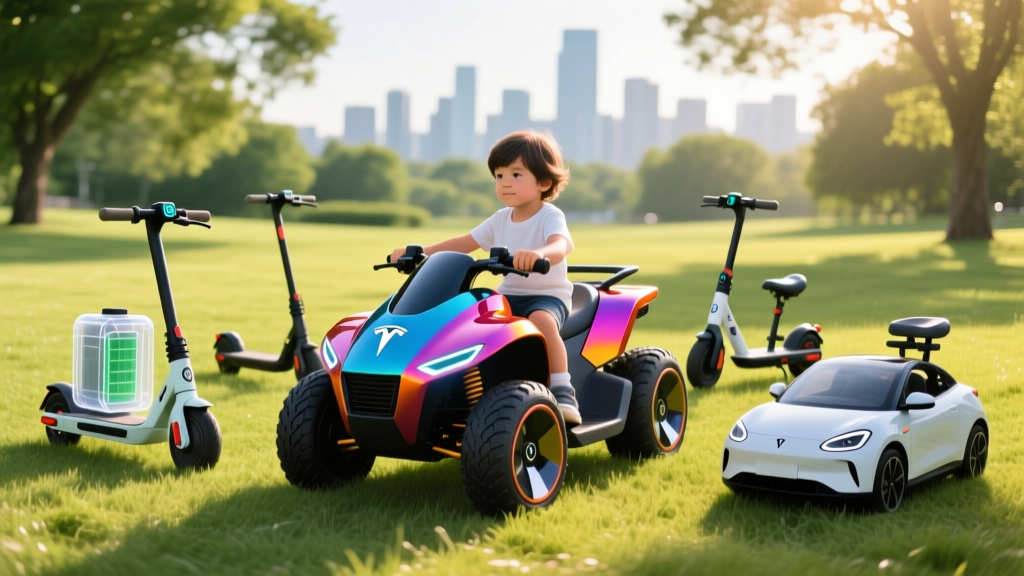
The Tesla Cyberquad for Kids was announced alongside the Cybertruck in 2019 as a miniature electric ATV styled to match Tesla's angular pickup. It's designed for children ages 8 and up, powered by a lithium-ion battery, and features adjustable suspension, a digital dashboard, and a top speed of around 10 mph. However, its availability has been inconsistent.
The original Cyberquad for Kids faced a CPSC recall in 2022 due to a crash hazard related to its suspension design. Tesla and Radio Flyer issued a recall and offered repairs. As of 2026, the product's availability on Tesla's online store has been sporadic—appearing and disappearing from inventory. It's priced in the range of $1,900 when available, which puts it firmly in the premium ride-on toy category.
What it is: A battery-powered ride-on ATV toy for children, not a vehicle you can register, insure, or drive on public roads.
What it isn't: A car. It has no EPA range rating, no NCAP safety rating, no airbags, and no driver-assistance systems. It's a toy—albeit one with the Tesla brand on it.
The Tesla Model S Ride-On: Radio Flyer Collaboration
Before the Cyberquad, Tesla partnered with Radio Flyer to produce the Tesla Model S for Kids—a ride-on toy car styled after the Model S sedan. Designed for children ages 3-8, it featured a working horn, MP3 player, LED headlights, and two speed modes (3 mph and 6 mph). The battery provided roughly 1-2 hours of continuous driving on a full charge.
This product has been available through Radio Flyer's website and select retailers, typically priced between $300-$500. It remains one of the most recognizable Tesla-branded children's products and is frequently what parents mean when they search for a "Tesla children's car."
The Real EV Families Actually Buy: 2026 Tesla Model Y
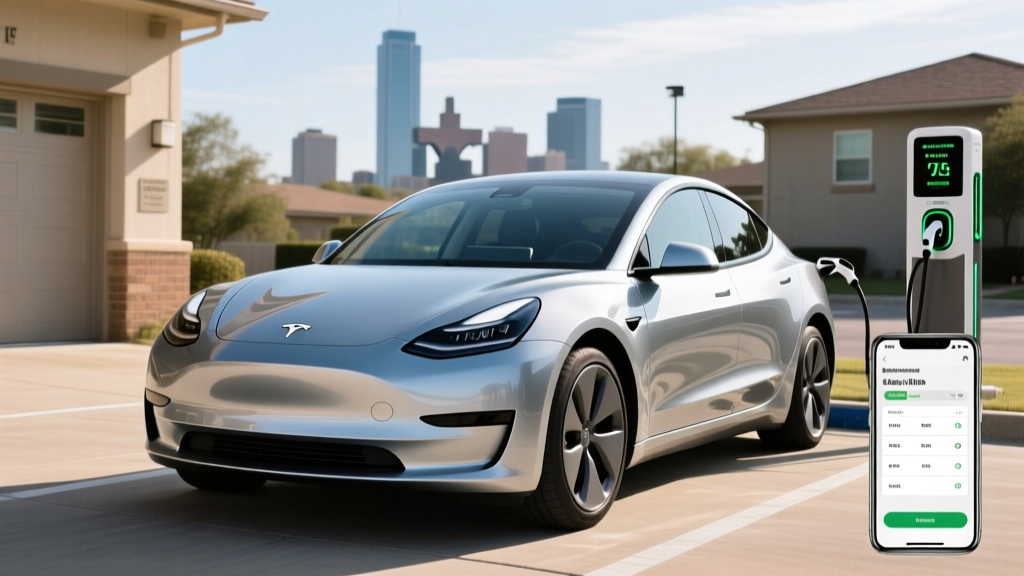
Setting aside the ride-on toys, the vehicle that dominates Tesla family purchases is the 2026 Tesla Model Y. It's the best-selling EV in the United States for good reason: practical cargo space, access to the Supercharger network, competitive range, and a starting price that—after incentives—makes it accessible to a wide range of buyers. Here are the exact numbers you need.
| Specification | Model Y Long Range AWD | Model Y Performance |
|---|---|---|
| EPA Range | 320 miles | 295 miles |
| Battery (usable) | ~75 kWh (NMC) | ~75 kWh (NMC) |
| Drivetrain | Dual-Motor AWD | Dual-Motor AWD |
| Horsepower | ~384 hp | ~510 hp |
| 0-60 mph | 4.8 seconds | 3.5 seconds |
| MPGe (combined) | 111 MPGe | 104 MPGe |
| Efficiency | 30 kWh/100 mi | 32 kWh/100 mi |
| Cargo Volume | 76 cu ft (rear seats folded) | 76 cu ft (rear seats folded) |
| Rear Legroom | 41.6 inches | 41.6 inches |
| Max DC Fast Charge | 250 kW (CCS/NACS) | 250 kW (CCS/NACS) |
| 10-80% DCFC Time | ~25 minutes | ~25 minutes |
| Level 2 Home Charge | 11.5 kW (~44 mi/hr) | 11.5 kW (~44 mi/hr) |
| Base MSRP | $44,990 | $50,990 |
| Warranty (Battery) | 8 yr / 120,000 mi | 8 yr / 120,000 mi |
Source: fueleconomy.gov and Tesla's official specifications.
The EPA rates the Model Y Long Range at 320 miles. In real-world driving, expect approximately 270-290 miles on mixed highway trips at 70-75 mph. In cold weather (below 30°F), plan for 220-260 miles of usable range due to battery chemistry limitations and cabin heating demand. Tesla's heat pump helps mitigate this compared to older EVs, but physics still applies—lithium-ion cells are less efficient in the cold. For a family road trip from Denver to Moab (350 miles), you'll need one Supercharger stop.
Charging the Model Y: Home, Public, and Supercharger Speeds
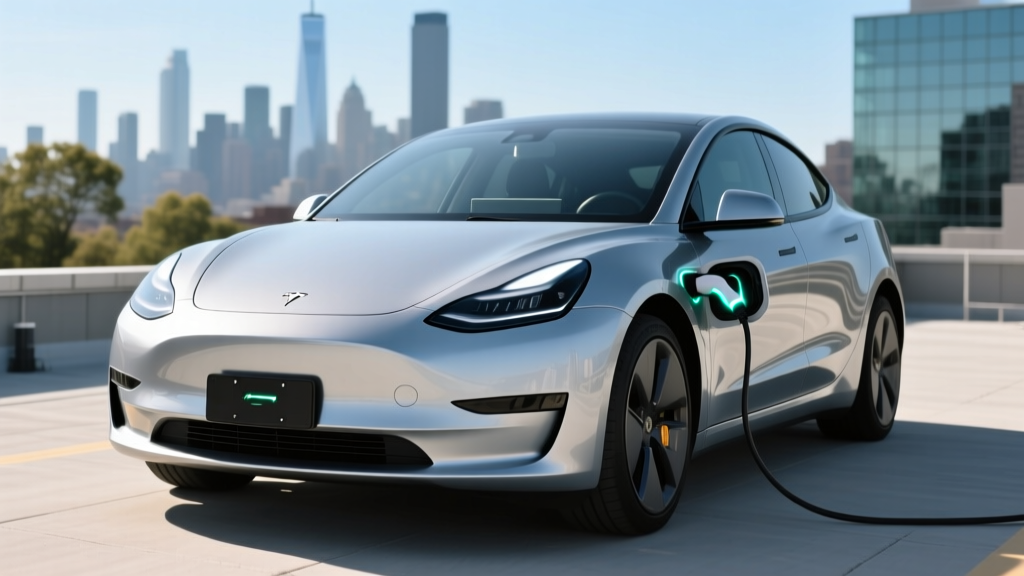
Charging speed is the number-one concern for EV buyers, and the Model Y's capability here is strong—especially given Tesla's proprietary Supercharger network, now transitioning to the NACS standard that other automakers are adopting.
| Charging Level | Power | Miles Added Per Hour | Typical Use Case |
|---|---|---|---|
| Level 1 (120V household) | ~1.4 kW | ~3-5 mi/hr | Emergency / overnight trickle |
| Level 2 (240V home) | 11.5 kW | ~44 mi/hr | Daily home charging |
| DC Fast Charge (Supercharger V3) | Up to 250 kW | ~1,000+ mi/hr (peak) | Road trips; 10-80% in ~25 min |
A critical detail that spec sheets gloss over: charge curve taper. The Model Y will peak at 250 kW only when the battery is preconditioned and at a low state of charge (around 10-20%). As the battery fills past 50%, charging power drops significantly—by 80% SoC, you're looking at roughly 50-70 kW. This is why Tesla (and the industry) quotes 10-80% times rather than 0-100%. Charging from 80-100% at a DC fast charger is painfully slow and unnecessary for road trips.
For home charging, a Level 2 wall connector on a 60-amp circuit delivers the full 11.5 kW, adding roughly 44 miles of range per hour of charging. Most owners charge overnight and wake up to a full battery every morning. Installation costs typically run $500-$1,500 depending on your electrical panel capacity and the distance from the panel to your garage. If your home has a 200-amp electrical panel, you're likely set. A 100-amp panel may require an upgrade ($1,500-$3,000) before adding a dedicated 60-amp EV circuit.
Pricing, Trims, and Federal Tax Credit Eligibility
The 2026 Tesla Model Y is available in two primary configurations: Long Range AWD and Performance. Both qualify for evaluation under the IRS §30D federal clean vehicle credit, but eligibility is not guaranteed and depends on several factors that change periodically.
| Trim | Base MSRP | MSRP Cap Met? | Max Potential Credit | Effective Price (if eligible) |
|---|---|---|---|---|
| Long Range AWD | $44,990 | Yes (under $55,000 SUV cap) | $7,500 | $37,490 |
| Performance | $50,990 | Yes (under $55,000 SUV cap) | $7,500 | $43,490 |
Key §30D eligibility requirements (2026 tax year):
- Buyer income caps: Modified AGI must not exceed $150,000 (single), $225,000 (head of household), or $300,000 (married filing jointly).
- MSRP caps: The vehicle must be under $55,000 for sedans or $80,000 for SUVs/trucks. The Model Y is classified as an SUV, clearing this threshold.
- Battery sourcing: A percentage of critical minerals and battery components must be sourced from the US or free-trade-agreement countries. These thresholds tighten annually. Tesla's US-built vehicles with their evolving supply chain have generally met at least partial credit requirements, but the full $7,500 depends on the current-year sourcing percentages published by the IRS.
- Point-of-sale transfer: As of 2024, buyers can transfer the credit to the dealer at purchase, reducing the upfront cost rather than waiting for a tax refund. Tesla supports this at delivery.
Always verify current eligibility on the IRS clean vehicle credit page and consult a tax professional. Rules shift, and a vehicle that qualifies in January may have different sourcing compliance by mid-year.
Tech, Safety, and Family-Friendly Features
The Model Y's technology suite is where Tesla differentiates itself from competitors like the Ford Mustang Mach-E, Hyundai Ioniq 5, and Kia EV6. The 15.4-inch center touchscreen handles virtually all vehicle controls—there are minimal physical buttons. For families, the relevant features include:
- Tesla Autopilot (Level 2 ADAS): Standard adaptive cruise control and lane-keeping assist. This is a driver-assistance system, not self-driving. The driver must remain engaged with hands on the wheel and eyes on the road at all times. Tesla's Full Self-Driving (Supervised) is an optional $8,000 add-on or $99/month subscription that adds automatic lane changes, navigate-on-autopilot, and traffic light recognition—but it remains SAE Level 2. The driver is always responsible.
- Over-the-air updates: Tesla pushes software updates that can add features, improve efficiency, or update the UI without a dealership visit.
- Sentry Mode and Dashcam: Built-in cameras record surroundings when parked (Sentry Mode) and while driving (Dashcam), valuable for family safety and insurance documentation.
- Frunk + cargo: The front trunk (frunk) adds ~4.1 cu ft of secure storage. Combined rear cargo with seats folded reaches 76 cu ft—enough for a double stroller, groceries, and luggage simultaneously.
- Camp Mode and Dog Mode: Climate control presets that maintain cabin temperature while parked—useful for kids napping in the car or keeping pets safe during errands.
Tesla Autopilot and FSD (Supervised) are SAE Level 2 systems. They cannot navigate construction zones reliably, may not detect stationary emergency vehicles, and struggle in heavy rain, snow, or faded lane markings. The driver must be prepared to take over instantly. NHTSA has investigated multiple incidents involving Autopilot-engaged Teslas. Treat these systems as advanced cruise control, not autonomous driving.
On safety, the Model Y has earned a 5-star overall rating from NHTSA and top scores from IIHS, including Top Safety Pick+ in recent model years. Standard automatic emergency braking, side collision warning, and blind-spot monitoring round out the active safety suite.
Model Y vs. Key Competitors: Is It the Right Family EV?
The Model Y doesn't exist in a vacuum. Here's how it stacks up against the most common cross-shops for family EV buyers:
| Attribute | Tesla Model Y LR AWD | Hyundai Ioniq 5 Limited AWD | Ford Mustang Mach-E Premium AWD |
|---|---|---|---|
| EPA Range | 320 mi | 290 mi | 290 mi |
| DC Fast Charge (peak) | 250 kW | 240 kW (800V) | 150 kW |
| 10-80% DCFC | ~25 min | ~18 min | ~38 min |
| 0-60 mph | 4.8 sec | 5.1 sec | 5.1 sec |
| Cargo (rear folded) | 76 cu ft | 59 cu ft | 59.7 cu ft |
| Starting MSRP | $44,990 | $46,500 | $43,995 |
| Charging Network | Supercharger (NACS) | CCS (NACS adapter avail.) | CCS (NACS adapter avail.) |
- Largest cargo capacity in its class (76 cu ft)
- Access to the Tesla Supercharger network—the most reliable DC fast-charging infrastructure in the US
- Strong real-world efficiency (30 kWh/100 mi)
- OTA updates continuously add features
- Strong resale value relative to non-Tesla EVs
- Minimalist interior lacks physical controls (climate, mirrors adjusted via touchscreen)
- Rear visibility is compromised by the sloping roofline
- FSD subscription adds cost without delivering true autonomy
- Insurance premiums run 15-30% higher than comparable non-Tesla SUVs
- Service center availability varies by region—some areas have multi-week wait times
- You take frequent road trips and want the most reliable public charging network
- You need maximum cargo space for a growing family
- You value OTA updates and tech-forward features
- You prefer physical buttons and a more traditional interior (Ioniq 5, Mach-E)
- Faster 10-80% charging matters more than network reliability (Ioniq 5's 800V architecture charges 10-80% in ~18 minutes)
- You want to avoid Tesla-specific service wait times in your region
Who the Model Y Suits Best
The Model Y is optimized for families and commuters who have access to home Level 2 charging and take periodic road trips. Its 320-mile EPA range covers virtually any daily commute without charging, and the Supercharger network handles cross-country travel with predictable 20-25 minute stops every 250 miles or so.
It's less ideal for buyers without home charging access (relying solely on public DCFC adds time and cost), those in extremely cold climates where range drops 20-30% in winter, or buyers who prioritize plush interiors and dealership service convenience over technology and efficiency.
Frequently Asked Questions
Is there a real Tesla car made for children to drive?
No. Tesla does not make a street-legal vehicle for children. The Tesla Cyberquad for Kids is a ride-on electric ATV toy (ages 8+, ~10 mph top speed) that has faced availability issues and a CPSC recall. The Tesla Model S for Kids by Radio Flyer is a ride-on toy car for ages 3-8. Neither is a real automobile.
What is the real-world range of the Tesla Model Y?
The EPA rates the Model Y Long Range AWD at 320 miles. In real-world highway driving at 70-75 mph, expect 270-290 miles. In cold weather below 30°F, plan for 220-260 miles. Preconditioning the battery before driving and charging helps recover some of this loss.
How fast does the Model Y charge at home and on road trips?
At home on a Level 2 (240V, 60-amp) charger, the Model Y charges at 11.5 kW, adding about 44 miles of range per hour—enough to fully recharge overnight. On a Tesla V3 Supercharger, it peaks at 250 kW and charges from 10-80% in approximately 25 minutes, though the charge curve tapers significantly above 50% SoC.
Does the Tesla Model Y qualify for the $7,500 federal tax credit?
It can, but eligibility depends on your income (under $300,000 MFJ), the vehicle's MSRP (under $80,000 for SUVs—met), and battery critical-mineral/component sourcing requirements that tighten annually. Check the IRS clean vehicle credit page for current-year compliance and consult a tax professional. The credit can be transferred at point of sale to reduce your upfront cost.
How much does a Tesla Model Y cost after the tax credit?
The 2026 Model Y Long Range AWD starts at $44,990. If you qualify for the full $7,500 federal credit, the effective price drops to approximately $37,490—before any state incentives, which vary by jurisdiction. Add destination fees, optional paint colors, and wheel upgrades for the as-tested price.
Is the Model Y worth buying over competitors?
For families prioritizing cargo space (76 cu ft best-in-class), Supercharger network access, and over-the-air updates, the Model Y remains the segment benchmark. If you prefer a more traditional interior with physical controls, faster 10-80% peak charging, or broader dealership service access, the Hyundai Ioniq 5 or Ford Mustang Mach-E are strong alternatives at similar price points.