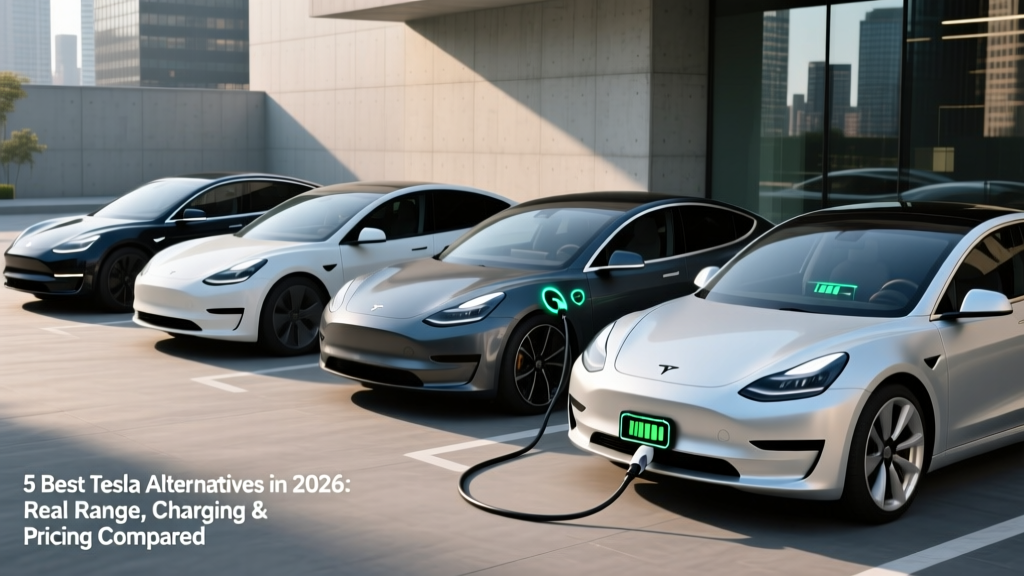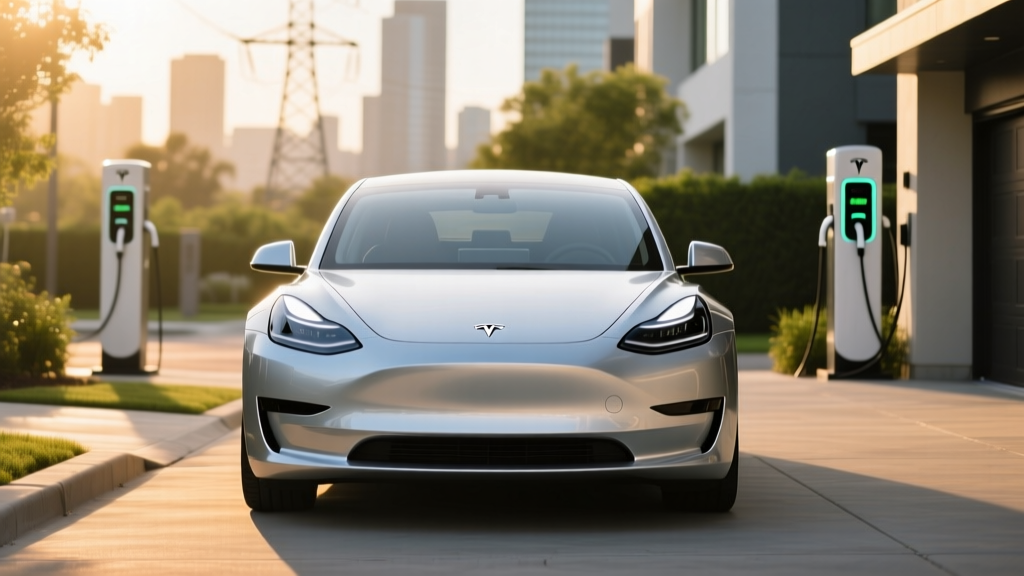
If you've been searching for the Tesla cheapest lease deal in 2026, the answer almost always points to one vehicle: the Tesla Model 3 Rear-Wheel Drive (RWD). As Tesla's entry-level sedan, the Model 3 RWD consistently offers the lowest monthly payment in Tesla's leasing portfolio — often undercutting the Model Y by $80–$120/month and the Long Range variants by even more. But a low monthly payment only matters if the vehicle actually fits your life. This review dissects the 2026 Model 3 RWD from the perspective of a lease shopper who needs exact numbers: real-world range, charging speed, battery chemistry trade-offs, tax-credit impact on lease economics, and how it stacks up against the Hyundai Ioniq 6 and BMW i4.
Quick Verdict: Is the Model 3 RWD the Tesla Cheapest Lease Worth Taking?
Yes — with caveats. The 2026 Model 3 RWD starts at an MSRP of $38,990 (before destination), and Tesla's own lease calculator frequently shows $329–$399/month for a 36-month/10,000-mile-per-year term with $4,500 due at signing. That monthly figure is achievable because Tesla applies the $7,500 federal EV tax credit as a lease capitalization cost reduction — a critical nuance we'll unpack below. For the money, you get 363 miles of EPA range, access to the Supercharger network, and class-leading efficiency. The trade-off: a firm ride, minimalist interior that won't suit everyone, and an LFP battery that loses more range in freezing weather than NMC alternatives.
2026 Tesla Model 3 RWD: Core Specifications
| Attribute | Value |
|---|---|
| Base MSRP | $38,990 (excl. $1,390 destination) |
| EPA Range | 363 miles |
| Battery Capacity (usable) | ~60 kWh (LFP chemistry) |
| Drivetrain | Rear-Wheel Drive, single motor |
| Horsepower | 271 hp |
| 0–60 mph | 5.8 seconds |
| MPGe (city / hwy / combined) | 136 / 123 / 130 MPGe |
| Efficiency | 26 kWh/100 mi |
| Max DC Fast Charge | 170 kW peak |
| 10–80% DCFC Time | ~25 minutes |
| Level 2 Home Charge Rate | 11.5 kW (~44 mi/hr) |
| Cargo Volume | 23 cu ft (trunk) + 3.1 cu ft (frunk) |
| Rear Legroom | 35.3 inches |
| Battery Warranty | 8 years / 100,000 miles (min 70% retention) |
| Basic Vehicle Warranty | 4 years / 50,000 miles |
Source: fueleconomy.gov and Tesla's official order page.
Real-World Range: What 363 EPA Miles Actually Means
EPA Sticker: 363 miles
Real-World Highway (70 mph, mild weather): ~300–320 miles
Real-World Winter (30°F, mixed driving): ~240–270 miles
Worst Case (75 mph, 15°F, cabin heat): ~210–230 miles
The Model 3 RWD's 363-mile EPA rating is among the highest of any single-motor EV on the market. But EPA range tests include significant city driving at lower speeds, where regenerative braking recaptures energy and aerodynamic drag is minimal. On sustained highway runs at 70–75 mph, expect to use roughly 300–320 miles before needing a charge stop.
The bigger variable is cold weather. The Model 3 RWD uses an LFP (lithium iron phosphate) battery, which is more tolerant of daily 100% charging but suffers greater range loss in freezing temperatures compared to NMC (nickel manganese cobalt) packs. In testing at 20–30°F, LFP-equipped Model 3s typically see a 25–35% range reduction. Tesla's heat pump helps mitigate cabin heating draw, but the chemistry itself is less efficient in the cold. If you live in Minnesota or Maine, plan for ~240 miles of usable winter range and route road trips accordingly.
Charging Speed: DC Fast, Level 2, and the LFP Advantage
Charging is where the Model 3 RWD's LFP battery creates a unique ownership pattern. Unlike NMC batteries, which Tesla recommends charging to 80% for daily use, LFP batteries should be charged to 100% at least once per week for accurate state-of-charge calibration. This means your daily usable range is essentially the full 363 miles — not 80% of it.
| Charging Level | Power | Speed | Notes |
|---|---|---|---|
| Level 1 (120V outlet) | ~1.4 kW | ~5 mi/hr | Emergency/top-up only |
| Level 2 (240V, 48A) | 11.5 kW | ~44 mi/hr | Full charge in ~6.5 hours |
| DC Fast Charge (peak) | 170 kW | ~170 mi in 15 min | Peak rate; tapers above 60% SoC |
| DC Fast 10–80% | Variable | ~25 minutes | At V3/V4 Superchargers |
The 170 kW peak DC rate is lower than the Model 3 Long Range AWD (which peaks around 250 kW on its NMC pack). In practice, the LFP charge curve holds near peak power longer than many competitors, but the 10–80% session still takes about 25 minutes at a Tesla V3 or V4 Supercharger. On Electrify America or other CCS networks (with the included NACS-to-CCS adapter or at NACS-equipped stations), speeds will vary by station capability.
Home charging setup: A Tesla Wall Connector on a 60-amp circuit delivers the full 11.5 kW (48A continuous). Expect to pay $800–$1,800 for professional installation depending on panel proximity and local permit requirements. Always have a licensed electrician confirm your panel has capacity for a 60A breaker.
Lease Pricing, Tax Credits, and the §30D Loophole
Here's where the "Tesla cheapest lease" search gets interesting — and where many buyers get confused.
| Item | Amount |
|---|---|
| Base MSRP | $38,990 |
| Destination Fee | $1,390 |
| Gross Capitalized Cost | ~$40,380 |
| Federal §30D Credit (applied as cap cost reduction) | –$7,500 |
| Adjusted Cap Cost | ~$32,880 |
| Estimated Monthly Payment (36 mo / 10k mi/yr, $4,500 down) | $329–$399 |
| Total Due at Signing (typical) | $4,500–$5,500 |
How the tax credit works in a lease: When you purchase a Model 3 RWD, the $7,500 federal tax credit under IRS §30D is subject to your personal income tax liability, MSRP caps (sedans must be under $55,000), and buyer income limits ($150K single / $300K joint AGI). But when you lease, the credit flows to the leasing company (Tesla Finance) as a commercial clean vehicle credit under §45W. Tesla then passes it to you as a capitalization cost reduction, lowering your monthly payment. This means lease customers can benefit from the $7,500 even if their personal income exceeds the §30D caps — a well-known advantage sometimes called the "lease loophole."
That said, Tesla's lease terms are non-negotiable, and residual values are set by Tesla. You cannot purchase the vehicle at lease-end (a major change from legacy automaker leases). You also cannot transfer the lease to another party. If your circumstances change mid-lease, you're locked in.
Performance, Tech, and Daily Livability
The single rear motor produces 271 horsepower and launches the Model 3 RWD to 60 mph in 5.8 seconds. That's not the neck-snapping acceleration of a dual-motor Performance variant, but it's quicker than most gas-powered compact sedans and more than adequate for highway merging and passing.
The 15.4-inch center touchscreen handles all vehicle functions — there are no physical buttons for climate, mirrors, or glovebox. This minimalism is polarizing: fans love the clean aesthetic; critics note the safety concern of navigating menus to adjust mirrors or wipers while driving. The 2026 Model 3 (the "Highland" refresh introduced for the 2024 model year) added ventilated front seats, ambient lighting, rear-seat touchscreen, improved sound insulation, and a stiffer body structure compared to the pre-2024 model.
Driver assistance: Basic Autopilot (Traffic-Aware Cruise Control and Autosteer) is standard. This is a SAE Level 2 system — it assists with steering and speed but requires continuous driver supervision. Tesla's Full Self-Driving (Supervised) capability is a $8,000 add-on or $99/month subscription that adds automatic lane changes, traffic light recognition, and city street navigation, but it remains Level 2. The driver must remain attentive at all times. No Tesla consumer vehicle is "self-driving" in the Level 4 sense that a Waymo robotaxi operates.
Pros
- 363-mile EPA range — longest in its price class
- Supercharger network access (17,000+ stalls in North America)
- Lowest energy consumption: 26 kWh/100 mi
- LFP battery can be charged to 100% daily without degradation concerns
- Over-the-air updates add features post-purchase
- Strong safety ratings (NHTSA 5-star, IIHS Top Safety Pick+)
Cons
- 170 kW peak DC charging is slower than Long Range (250 kW) and rivals like Ioniq 6 (350 kW)
- LFP battery loses 25–35% range in freezing temps
- No physical buttons — all controls through touchscreen
- Rear seat is tighter than Model Y or midsize competitors
- Lease-end: no purchase option, no transfer
- FSD subscription cost adds up if you want advanced driver assist
Model 3 RWD vs. Key Competitors: Is It the Right Lease?
The Model 3 RWD's lease competition in 2026 primarily includes the Hyundai Ioniq 6 SE (EPA 361 miles, 350 kW peak charging, ~$38,990 MSRP) and the BMW i4 eDrive40 (EPA 307 miles, premium interior, ~$52,200 MSRP). Here's how they compare on the metrics that matter:
| Spec | Tesla Model 3 RWD | Hyundai Ioniq 6 SE | BMW i4 eDrive40 |
|---|---|---|---|
| MSRP | $38,990 | $38,990 | $52,200 |
| EPA Range | 363 mi | 361 mi | 307 mi |
| Battery (usable) | ~60 kWh (LFP) | 77.4 kWh (NMC) | 81.5 kWh (NMC) |
| Peak DC Charge | 170 kW | 350 kW | 205 kW |
| 10–80% DCFC | ~25 min | ~18 min | ~31 min |
| 0–60 mph | 5.8 sec | 6.1 sec | 5.5 sec |
| Efficiency | 26 kWh/100mi | 27 kWh/100mi | 32 kWh/100mi |
| Charging Network | Supercharger (native NACS) | CCS (NACS adapter avail.) | CCS (NACS adapter avail.) |
Choose the Model 3 RWD if: You prioritize Supercharger network access, the lowest energy cost per mile, and Tesla's software ecosystem. The LFP battery's 100% daily charging capability means you use all 363 miles every day.
Choose the Ioniq 6 SE if: Fast DC charging matters most (350 kW is nearly double the Model 3 RWD), you prefer physical buttons and a more traditional cockpit, or you frequently road-trip in extreme cold where NMC chemistry retains range better.
Choose the BMW i4 if: Interior quality and driving dynamics are your priority, and you're willing to pay $13K+ more for a premium badge.
Who Should Lease the Model 3 RWD — and Who Shouldn't
Ideal lease candidate: A commuter driving 20–50 miles daily with access to home Level 2 charging, living in a mild-to-warm climate (think California, Texas, Southeast). The 363-mile range means charging 2–3 times per week, and the LFP battery rewards this pattern with exceptional long-term durability. At $329–$399/month, the total cost is competitive with a well-equipped Toyota Camry once you factor in fuel savings (~$1,200–$1,500/year at national average electricity and gas prices).
Not ideal for: Cold-climate drivers who regularly face sub-20°F winters and need 300+ miles of reliable range (consider the Long Range AWD with NMC battery instead). Also not ideal for families needing easy car-seat access — the Model 3's rear door opening is narrow, and the sloping roofline makes loading bulky items harder than in the Model Y crossover. If you need cargo space, the Model Y Long Range at ~$429/month may be worth the premium.
Frequently Asked Questions
What is the real-world range of the 2026 Tesla Model 3 RWD?
Expect 300–320 miles on a highway road trip in mild weather, and 240–270 miles in freezing conditions. The EPA rates it at 363 miles, but real-world efficiency drops at sustained highway speeds and in cold temperatures due to battery chemistry and cabin heating demand.
How fast does the Model 3 RWD charge at home and on the road?
On a home Level 2 charger (11.5 kW), you'll add about 44 miles of range per hour, reaching a full charge in roughly 6.5 hours. On a Tesla V3/V4 Supercharger, DC fast charging peaks at 170 kW, with a 10–80% session taking approximately 25 minutes.
How much does a Tesla Model 3 lease cost after tax credits?
With the $7,500 federal credit applied as a capitalization cost reduction, typical 2026 Model 3 RWD lease deals fall between $329–$399/month for 36 months and 10,000 miles per year, with $4,500–$5,500 due at signing. Exact terms vary by region, credit score, and Tesla's current promotional offers.
Does the Model 3 RWD qualify for the federal EV tax credit?
Yes. The Model 3 RWD's MSRP ($38,990) is well under the $55,000 sedan cap, and Tesla's LFP battery has historically met critical-mineral and battery-component sourcing requirements. For a purchase, buyer income must not exceed $150K (single) or $300K (joint). For a lease, the credit passes through the leasing company and is not subject to buyer income caps. Always verify current sourcing rules on IRS.gov before signing, as requirements can shift.
Is it better to lease or buy the Tesla Model 3 RWD?
Leasing makes sense if you want the lowest monthly payment, plan to upgrade in 3 years, and don't want to worry about resale value or battery degradation. Buying makes more sense if you drive over 15,000 miles/year (lease overage charges are ~$0.25/mile), want to keep the car 5+ years, or want the option to sell later. The purchase also qualifies for the point-of-sale $7,500 credit transfer if you meet income requirements.
Can I charge a Tesla Model 3 at non-Tesla charging stations?
Yes. The 2026 Model 3 uses the NACS (North American Charging Standard) connector natively, which is now supported at growing numbers of Electrify America, EVgo, and other networks. For older CCS-equipped stations, Tesla includes or offers a CCS adapter. Tesla's Supercharger network remains the most reliable option for road trips.
What is the LFP battery and why does it matter for leasing?
LFP (lithium iron phosphate) is a battery chemistry that offers excellent cycle life and thermal stability but lower energy density than NMC. For a lease, the key advantage is that LFP batteries tolerate daily 100% charging without accelerated degradation — meaning you get full range every day. The trade-off is greater cold-weather range loss and a lower peak charging speed (170 kW vs. 250 kW on NMC packs).