The Cheaper Model Y Electric Vehicle: Quick Verdict
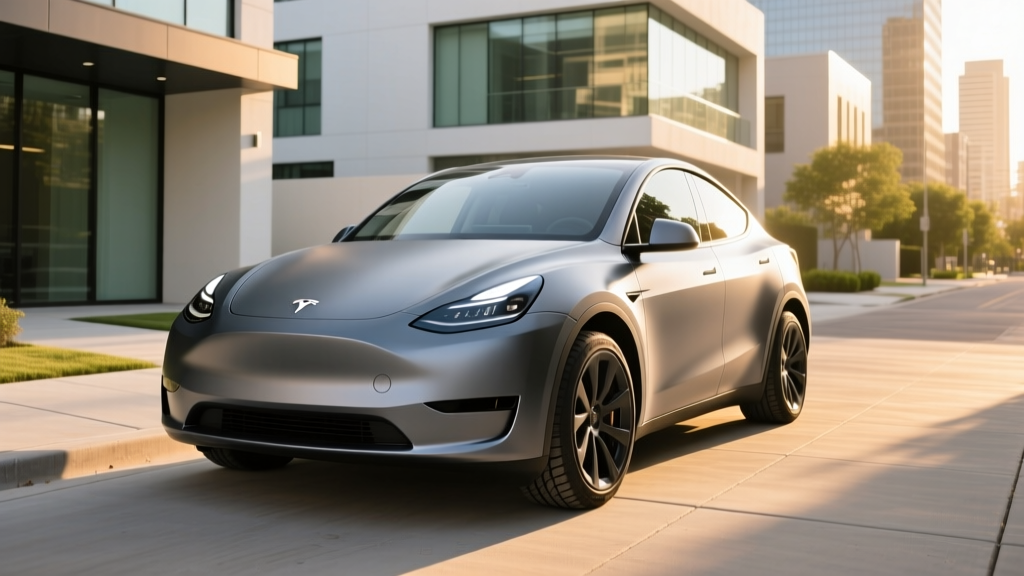
Tesla's 2026 Model Y Long Range Rear-Wheel Drive occupies a strategic position in the EV market: it's the most affordable way into a long-range Model Y, undercutting the dual-motor AWD variant by roughly $3,000 while retaining the Juniper refresh's updated interior, improved suspension tuning, and NACS-native Supercharger access. For buyers searching for a cheaper Model Y electric vehicle that still delivers 300+ miles of EPA range, this RWD trim is the value play — provided you don't need all-wheel drive or sub-5-second acceleration.
But "cheaper" doesn't mean cheap. At a base MSRP hovering around $44,990 before destination, this is still a premium compact SUV. The question is whether the savings over the Long Range AWD justify the trade-offs in traction, acceleration, and resale value in snow-belt states. Here's the full breakdown with real-world data.
| Spec | Value |
|---|---|
| EPA Range | 320 miles (est.) |
| Battery (usable) | ~75 kWh, NMC (2170 cells) |
| Drivetrain | Rear-Wheel Drive (single motor) |
| Horsepower | ~295 hp |
| 0–60 mph | ~5.8 seconds |
| Peak DC Fast Charge | 250 kW |
| 10–80% DC Time | ~25 minutes |
| Level 2 Home Charge | 11.5 kW (~44 mi/hr) |
| MPGe (combined) | 123 MPGe (est.) |
| Efficiency | ~27 kWh/100 mi |
| Cargo (rear seats up) | 30.2 cu ft |
| Cargo (rear seats folded) | 72.0 cu ft |
| Rear Legroom | 41.6 in |
| Battery Warranty | 8 years / 120,000 miles |
| Base MSRP | $44,990 (+$1,390 dest.) |
Range and Efficiency: EPA Sticker vs. Real-World Miles
Real-World Expectation: 270–295 miles in mixed driving; 240–260 miles sustained highway at 75+ mph; 220–245 miles in freezing temperatures with cabin heat.
The Juniper-generation Model Y benefits from improved aerodynamics (drag coefficient reportedly near 0.22 Cd) and a revised heat pump that reduces winter energy consumption compared to the pre-2025 platform. According to fueleconomy.gov, the Long Range RWD's efficiency lands in the 27–28 kWh/100-mile range, which is competitive with the Hyundai Ioniq 5 and slightly better than the Ford Mustang Mach-E Extended Range RWD.
In practice, efficiency varies dramatically by driving style and climate. On a 70°F day with mixed city/highway driving at moderate speeds, hitting 300+ miles is realistic. But load up the cabin with passengers, crank the AC or heat, and push 80 mph on the interstate, and you'll see the range estimator drop toward 240 miles. Cold-weather owners in the Upper Midwest should budget for a 20–30% range reduction in deep winter — this is physics, not a Tesla-specific flaw. The heat pump helps, but it can't eliminate the thermodynamic penalty of sub-freezing battery temps.
One advantage of the RWD variant: without the front motor's weight and mechanical drag, the Long Range RWD typically posts 2–4% better efficiency than its AWD sibling in identical conditions.
Charging Speed: DC Fast Charging and Home Level 2
| Charging Level | Power | Speed (miles added) | Notes |
|---|---|---|---|
| Level 1 (120V outlet) | ~1.4 kW | ~4–5 mi/hr | Emergency/trickle only |
| Level 2 (240V, 48A) | 11.5 kW | ~44 mi/hr | Full charge in ~7 hours |
| DC Fast (V3 Supercharger) | 250 kW peak | ~175 mi in 15 min | 10–80% in ~25 min |
| DC Fast (V4 Supercharger) | 250 kW peak | Similar to V3 | Wider cable, same peak for this vehicle |
The Model Y Long Range RWD peaks at 250 kW on Tesla's V3 and V4 Superchargers, but — and this is critical — that peak is not sustained. The charge curve tapers noticeably above 50% State of Charge (SoC). In real-world testing, you'll see 250 kW only briefly between roughly 10–20% SoC, after which the rate steps down through ~180 kW, then ~120 kW, and finally ~60 kW as you approach 80%. The 10–80% time of approximately 25 minutes reflects this taper, not a sustained 250 kW pull.
For home charging, the onboard charger accepts up to 11.5 kW (48 amps) on a 240V Level 2 circuit. This requires a 60-amp dedicated circuit installed by a licensed electrician. Expect to pay $800–$2,000 for a professional Level 2 installation depending on your panel capacity and run length — more if your home needs a 200-amp service upgrade. A full overnight charge from near-empty takes roughly 7 hours, which is more than adequate for daily replenishment.
One key advantage: as a native NACS vehicle, the Model Y has seamless access to Tesla's Supercharger network — still the most reliable DC fast-charging ecosystem in the US, with over 25,000 stalls nationally. No adapter needed, no third-party app fumbling.
Performance and Driving Dynamics
The single rear motor produces approximately 295 horsepower and launches the Model Y Long Range RWD to 60 mph in about 5.8 seconds. That's quick by any rational measure — quicker than most gas-powered compact SUVs — but it's a noticeable step behind the Long Range AWD's ~4.8-second sprint. If you're coming from a performance sedan, the RWD will feel adequate rather than thrilling.
The Juniper refresh brought meaningful suspension improvements: revised damping, updated bushings, and acoustic glass that noticeably reduce road noise at highway speeds. The ride is firm but compliant — Tesla has clearly responded to years of criticism about the pre-refresh Model Y's harshness. The RWD variant, being lighter over the front axle, actually steers with slightly more eagerness than the AWD model, though the difference is subtle.
Regenerative braking remains strong and consistent. Tesla's one-pedal driving implementation is among the best in the industry, with smooth blending into the friction brakes at low speeds. There's no adjustable regen setting — Tesla removed that option years ago — but the default calibration works well for most drivers after a brief adaptation period.
Pricing, Tax Credit Eligibility, and Total Cost
| Item | Amount |
|---|---|
| Base MSRP | $44,990 |
| Destination Fee | $1,390 |
| MSRP w/ Destination | $46,380 |
| Federal Tax Credit (§30D) — if eligible | Up to $7,500 |
| Effective Price (with full credit) | ~$38,880 |
The 2026 Model Y Long Range RWD qualifies as the entry point into long-range Tesla ownership. But federal tax credit eligibility under IRS §30D is not automatic — it depends on several factors that change periodically:
- MSRP Cap: SUVs must be under $80,000 MSRP — the Model Y clears this easily.
- Buyer Income Cap: Modified AGI must not exceed $150,000 (single), $225,000 (head of household), or $300,000 (joint). Check your prior-year or current-year tax return.
- Battery Sourcing: The credit splits into two halves ($3,750 each) — one for critical minerals and one for battery components. Tesla's US-built battery packs have progressively increased domestic and FTA-partner sourcing, but exact eligibility for the full $7,500 vs. a partial $3,750 depends on the specific build quarter. Verify current status on the IRS qualified vehicles list before purchasing.
- Point-of-Sale Transfer: As of 2024, buyers can transfer the credit to the dealer at purchase, reducing the upfront cost immediately rather than waiting for a tax refund. The Model Y qualifies for this if the dealer is registered with the IRS Energy Credits Online system.
Important: Battery sourcing requirements tighten annually. Consult a tax professional and check the IRS clean vehicle credits page for the most current qualified vehicle list before finalizing your purchase. State incentives (California, Colorado, Massachusetts, and others) may stack on top — check your state's energy office for details.
Interior, Cargo, and Technology
The Juniper interior refresh addressed the most common complaints about the pre-2025 Model Y. Ambient lighting, ventilated front seats, a rear-seat touchscreen, power-folding second row, and significantly improved sound insulation transform the cabin from spartan to genuinely pleasant. The minimalist aesthetic remains — there's still no instrument cluster, and everything routes through the 15.4-inch center display — but execution quality has climbed noticeably.
Cargo space is a Model Y strong suit: 30.2 cubic feet behind the second row and 72.0 cubic feet with the rear seats folded. That's competitive with the Ioniq 5 and considerably more than the Mach-E. The front trunk (frunk) adds additional storage for charging cables or a small bag. Rear legroom at 41.6 inches is generous for the segment, easily accommodating adults on longer trips.
Tech highlights include Tesla's latest infotainment software, which remains the benchmark for responsiveness and over-the-air update frequency. Navigation with real-time Supercharger routing, trip planning with battery preconditioning, and integrated media streaming are all standard. The premium audio system (14 speakers) punches well above its price class.
Driver assistance: Basic Autopilot (Traffic-Aware Cruise Control + Autosteer) is included. Full Self-Driving (Supervised) remains an $8,000 add-on or $99/month subscription. It's essential to understand that FSD is an SAE Level 2 system — you must remain engaged, hands on or near the wheel, and eyes on the road at all times. It is not autonomous driving.
Pros and Cons
- 320 miles EPA range — longest in its price class
- Supercharger network access (native NACS, no adapter)
- Best-in-class cargo volume for a compact EV SUV
- Juniper refresh brings meaningful NVH and ride improvements
- Strong OTA update cadence keeps the vehicle improving post-purchase
- Competitive efficiency (~27 kWh/100 mi)
- Point-of-sale tax credit transfer reduces upfront cost
- RWD only — no AWD option on this trim (snow-belt buyers take note)
- 250 kW peak DC charge is no longer class-leading (Hyundai/Kia at 350 kW on 800V)
- No adjustable regen — one-pedal only, love it or adapt
- Minimalist interior still polarizing; no physical buttons for HVAC or mirrors
- FSD (Supervised) is expensive and remains Level 2, not autonomous
- Insurance costs run 15–25% higher than comparable gas SUVs in many states
- Service center availability varies widely by region
How It Compares: Model Y RWD vs. Key Rivals
The cheaper Model Y electric vehicle faces stiff competition in 2026:
- Hyundai Ioniq 5 Long Range RWD: ~$48,000 MSRP, 310 mi EPA, 350 kW peak DC charging (10–80% in ~18 min). Faster charging, slightly less range, similar cargo. Eligible for §30D credit (US-built since 2024).
- Ford Mustang Mach-E Extended Range RWD: ~$45,000 MSRP, ~320 mi EPA, 150 kW peak DC. Comparable price, slower charging, more traditional interior layout.
- Kia EV6 Long Range RWD: ~$47,000 MSRP, ~310 mi EPA, 350 kW peak DC. Shares the Ioniq 5's 800V architecture advantage.
The Model Y's primary advantages remain its Supercharger network, cargo capacity, and software ecosystem. Its primary disadvantage relative to Hyundai/Kia is charging speed — the 400V architecture caps at 250 kW while competitors on 800V pull 350 kW, shaving 5–8 minutes off a 10–80% session. For road-trippers who DC-charge frequently, this adds up over a year of ownership.
Who Should Buy the Cheaper Model Y RWD?
Buy this if: You want maximum range per dollar in a compact EV SUV, you have reliable home Level 2 charging, you live in a mild-to-moderate climate where AWD isn't essential, and you value Supercharger network reliability for road trips. Commuters covering 40–80 miles round-trip will rarely need to DC-charge, making the 250 kW peak less relevant.
Look elsewhere if: You live in a heavy-snow region (get the AWD variant or a rival with AWD), you take frequent long road trips and want the fastest possible DC charging (consider the Ioniq 5 or EV6 on 800V), or you prefer physical controls and a traditional instrument cluster.
Frequently Asked Questions
What is the real-world range of the 2026 Model Y Long Range RWD?
Expect 270–295 miles in typical mixed driving. Sustained highway speeds above 75 mph reduce this to 240–260 miles. In freezing temperatures with cabin heat, plan for 220–245 miles. The 320-mile EPA figure is achievable in moderate conditions with mixed city/highway driving.
How fast does the Model Y Long Range RWD charge at home and on the road?
On a Level 2 home charger (240V, 48A), it charges at 11.5 kW, adding roughly 44 miles of range per hour — a full charge in about 7 hours. On a Tesla V3 or V4 Supercharger, it peaks at 250 kW and charges from 10–80% in approximately 25 minutes, though the rate tapers significantly above 50% SoC.
Does the 2026 Model Y Long Range RWD qualify for the $7,500 federal EV tax credit?
It may qualify for the full $7,500, a partial $3,750, or no credit, depending on battery sourcing requirements that tighten annually. The MSRP is well under the $80,000 SUV cap. Buyer income caps apply ($150K single / $300K joint). Check the IRS qualified vehicle list for your specific build date before purchasing.
Is the Model Y RWD worth buying over the AWD version?
If you don't need all-wheel traction for snow or mountain driving, the RWD saves approximately $3,000, gains 2–4% efficiency, and is slightly lighter on its feet in corners. You sacrifice the 4.8-second 0–60 time and front-motor traction, but for most commuters in temperate climates, the RWD is the rational choice.
What are the biggest drawbacks of the cheaper Model Y RWD?
The main limitations are the lack of AWD (a dealbreaker for snow-belt buyers), DC charging that peaks at 250 kW while rivals offer 350 kW on 800V architecture, and a minimalist control scheme that routes everything — including mirror adjustment and glovebox release — through the touchscreen. Insurance costs also tend to run higher than segment averages.
How long will the Model Y battery last?
Tesla warranties the battery for 8 years or 120,000 miles (whichever comes first), guaranteeing at least 70% capacity retention. Real-world data from high-mileage Tesla owners suggests NMC packs in the 2170 format typically retain 85–90% capacity at 100,000 miles with normal charging habits (avoiding frequent 100% charges and prolonged storage at low SoC).