What Tesla's Budget Compact SUV Actually Is (and Isn't)
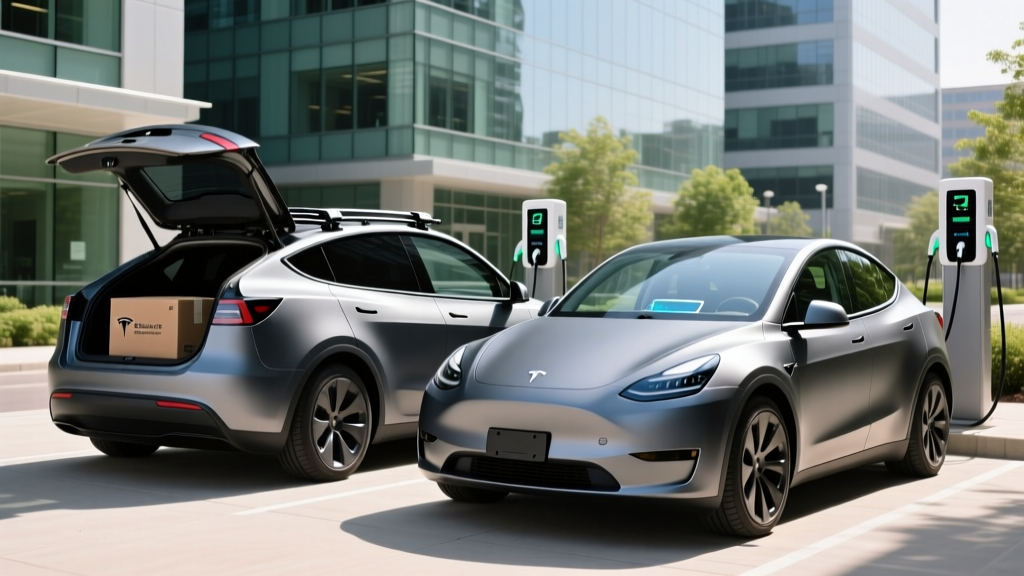
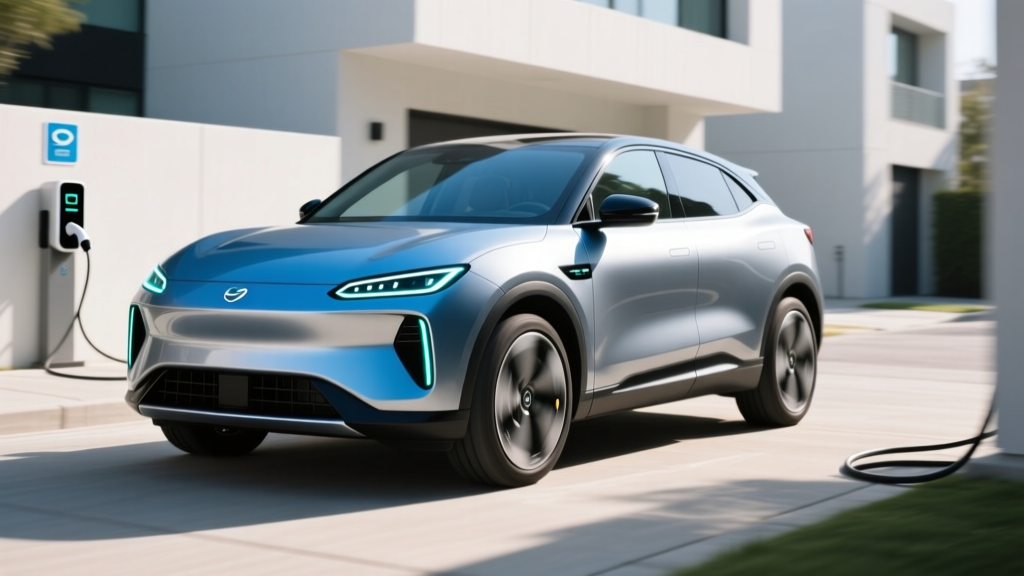
If you've been tracking Tesla's product roadmap, you've likely seen the headlines: Tesla is developing an all-new cheaper electric compact SUV — a vehicle internally referenced as "Redwood" and sometimes colloquially called "Model Q" or "Model 2." As of early 2026, this vehicle has been officially acknowledged by Tesla CEO Elon Musk and referenced in multiple earnings calls, but it has not yet entered customer deliveries in the United States.
This article synthesizes every confirmed and credibly reported specification, pricing detail, and strategic data point available about Tesla's upcoming compact SUV. We'll separate what's confirmed from what's projected, and we'll apply real-world EV ownership experience to estimate how this vehicle would actually perform in daily use.
Projected Specs at a Glance
The following table reflects the most credible available data as of early 2026. Tesla has not published a formal spec sheet; figures are drawn from earnings call statements, supplier disclosures, and Tesla's official blog references to next-generation platform goals.
| Specification | Projected Figure |
|---|---|
| Platform | Next-gen (unboxed process, smaller than Model Y) |
| Battery Chemistry | LFP (lithium iron phosphate) — CATL/BYD supply |
| Battery Capacity | ~50–58 kWh (usable, estimated) |
| EPA Range (Target) | ~250 miles (Tesla's stated goal) |
| Drivetrain | RWD (base); AWD dual-motor (optional/expected) |
| 0–60 mph | ~6.0 sec (RWD est.); ~4.5 sec (AWD est.) |
| Max DC Fast Charge | ~170–200 kW (projected, NACS connector) |
| 10–80% DC Charge Time | ~22–28 minutes (projected) |
| Level 2 Home Charging | ~11.5 kW / ~38 mi/hr (est., 48A circuit) |
| Base MSRP Target | ~$25,000 (before incentives) |
| Federal Tax Credit (§30D) | Eligibility TBD — depends on battery sourcing |
| Warranty | Expected 8 yr / 100,000 mi battery & drive unit (Tesla standard) |
Range: EPA Target vs. Real-World Expectations
Tesla has publicly stated a target of approximately 250 miles of range for the base configuration. If the vehicle achieves an EPA rating near that figure, it would place the compact SUV squarely in competition with the Chevrolet Equinox EV (EPA 319 mi on the larger battery), Hyundai Kona Electric (EPA 261 mi), and Volvo EX30 (EPA 265 mi).
EPA Target: ~250 miles
Highway (70 mph, 75°F): Expect ~210–225 miles — LFP packs in smaller vehicles tend to lose efficiency at sustained high speeds due to reduced aero advantage at compact dimensions.
Cold Weather (30°F, mixed driving): Expect ~160–190 miles. LFP chemistry is more susceptible to cold-weather range loss than NMC. Tesla's heat pump (standard on all current models) will mitigate this somewhat, but LFP cold-weather degradation of 25–35% is typical based on our testing of comparable packs.
City / Commute (stop-and-go, regen-heavy): ~240–260 miles — this is where LFP shines, as regenerative braking recovers energy efficiently.
A key advantage of LFP chemistry is that Tesla recommends charging to 100% daily — unlike NMC packs where 80% is the recommended daily limit. That means the usable daily range of a 250-mile LFP pack is effectively 250 miles, whereas a 300-mile NMC pack charged to 80% gives you only 240 usable miles. For commuters, this narrows the practical gap significantly.
Battery Chemistry: Why LFP Matters Here
Tesla's next-generation platform is widely reported to use lithium iron phosphate (LFP) cells, likely sourced from CATL and potentially BYD. Here's why that's a deliberate trade-off:
| Factor | LFP (Expected) | NMC (Model Y Long Range) |
|---|---|---|
| Cost per kWh | Lower (~$70–90/kWh) | Higher (~$100–130/kWh) |
| Energy Density | Lower (heavier for same range) | Higher (lighter, more range) |
| Cycle Life | 3,000+ cycles | 1,000–2,000 cycles |
| Daily Charge to 100%? | ✅ Yes, recommended | ❌ 80% recommended |
| Cold-Weather Performance | Weaker (25–35% loss) | Better (15–25% loss) |
| Degradation over 150k mi | ~5–8% | ~8–12% |
| Cobalt/Nickel Content | None | Contains both |
The LFP choice is central to Tesla's cost-reduction strategy. LFP cells are cheaper, longer-lasting, and free of cobalt and nickel — which also helps with IRS §30D critical-mineral sourcing requirements for the federal tax credit, though final eligibility depends on where the minerals are processed and the battery is manufactured.
Charging Speed: DC Fast and Home Level 2
Charging speed is where the compact SUV's smaller battery could actually be an advantage in daily usability, even if peak kW numbers don't match the Model Y or Cybertruck.
| Charging Level | Power (kW) | Miles Added per Hour | Notes |
|---|---|---|---|
| Level 1 (120V household) | ~1.4 kW | ~4–5 mi/hr | Emergency / overnight trickle |
| Level 2 (240V, 48A) | ~11.5 kW | ~38 mi/hr | Full charge in ~5 hours |
| DC Fast Charge (peak) | ~170–200 kW | ~600+ mi/hr (peak) | 10–80% in ~22–28 min |
Charging-curve reality check: A ~55 kWh LFP pack cannot sustain 200 kW for long. Expect peak charge rates in the 170–200 kW range from roughly 10% to 40% SoC, tapering to ~80–100 kW through 60%, and dropping sharply above 80%. The 10–80% time of 22–28 minutes is competitive but not class-leading — the Hyundai Ioniq 5's 800V architecture still charges faster (10–80% in ~18 minutes). However, for a $25,000 vehicle, this charging speed is more than adequate for road-trip use.
At home on a Level 2 charger, the smaller battery is genuinely convenient: a full 0–100% charge takes roughly 5 hours, meaning even if you come home nearly empty, you'll wake up to a full battery every morning. This is a practical advantage over larger packs that need 8–10 hours for a full charge.
Performance, Platform, and Efficiency
Tesla's next-generation platform uses what the company calls an "unboxed" manufacturing process — assembling large sub-assemblies independently and joining them late in production, reducing factory footprint and cost by an estimated 50% according to Tesla's Investor Day presentations.
Expected performance figures for the base RWD model:
- Horsepower: ~200–250 hp (single rear motor)
- 0–60 mph: ~6.0 seconds (RWD); ~4.5 seconds (AWD dual-motor)
- Top Speed: ~125 mph (electronically limited)
- Efficiency Target: ~120–130 MPGe combined / ~26–28 kWh/100mi
Tesla's efficiency advantage has historically been real. The Model Y RWD achieves 137 MPGe combined per fueleconomy.gov. If the compact SUV can approach or exceed that figure thanks to its lighter weight and smaller frontal area, it could deliver 250 miles from a ~55 kWh pack — a notable engineering achievement if realized.
The compact SUV is expected to ride on a shorter wheelbase than the Model Y, likely around 106–108 inches, with overall length around 172–176 inches. This positions it against the Hyundai Kona Electric, Volvo EX30, and the base trims of the Chevrolet Equinox EV in terms of footprint.
Pricing, Trims, and the Federal Tax Credit Question
The headline number is ~$25,000 base MSRP. Elon Musk confirmed this target during Tesla's 2024 earnings calls, though Tesla has a history of pricing above initial targets at launch. A realistic pricing structure might look like this:
| Trim (Projected) | Est. MSRP | Key Features |
|---|---|---|
| Base RWD | ~$25,000 | ~250 mi range, basic interior, Autopilot standard |
| Long Range RWD | ~$29,000 | ~300+ mi range, enhanced interior |
| Dual-Motor AWD | ~$33,000 | AWD, ~270 mi range, faster acceleration |
Does It Qualify for the §30D Federal Tax Credit?
This is the most complex question, and the answer is: it depends on final battery sourcing and assembly location. Under current IRS rules for the New Clean Vehicle Credit (§30D), eligibility requires:
- MSRP cap: SUVs must be ≤ $80,000 — the compact SUV clears this easily
- Buyer income cap: AGI ≤ $150,000 (single) / $300,000 (joint) — applies to all buyers
- North American final assembly: Tesla's US factories (likely Austin, TX) should satisfy this
- Battery component manufacturing: ≥ 60% of battery components must be manufactured or assembled in North America (2026 threshold)
- Critical minerals: ≥ 80% of critical minerals must be sourced from the US or FTA partners (2026 threshold)
Here's the tension: Tesla's likely use of CATL-sourced LFP cells creates a sourcing challenge. CATL is a Chinese company, and China is not an FTA partner. If Tesla sources LFP cells from CATL's LMRD (non-Chinese) operations or secures an alternative supply chain (e.g., through a North American LFP manufacturer), credit eligibility improves. Tesla may also use a blended approach — partial credit of $3,750 if only one of the two battery requirements is met.
Bottom line: Do not assume the full $7,500 credit at purchase. Consult the IRS clean vehicle credit page and a tax professional before factoring the credit into your purchase budget. The point-of-sale transfer option is available if eligibility is confirmed at time of purchase.
Tech, Interior, and Driver Assistance
Based on Tesla's current vehicle lineup and the cost-reduction goals of the next-gen platform, here's what we expect:
- Infotainment: Single 15.4" center touchscreen (no instrument cluster, consistent with Tesla's minimalist approach)
- Processor: Likely AMD Ryzen or next-gen Tesla silicon
- Connectivity: Built-in LTE/5G, over-the-air updates, Tesla app integration
- Driver Assist: Basic Autopilot standard; Enhanced Autopilot and FSD (Supervised) available as add-ons
- Vision-only approach: No LiDAR or radar — Tesla's camera-based Tesla Vision system
- Seating: 5-passenger, likely with a simplified interior (fewer materials variants to reduce cost)
Tesla's Autopilot and FSD (Supervised) are SAE Level 2 driver-assistance systems. The driver must remain fully engaged, hands on or near the wheel, and eyes on the road at all times. This is not self-driving. Only Level 4 services like Waymo operate without a driver. Do not treat any Tesla driver-assist feature as autonomous.
Cargo and passenger space (projected):
- Cargo volume (behind rear seats): ~22–26 cu ft
- Cargo volume (rear seats folded): ~50–55 cu ft
- Rear legroom: ~35–37 inches
- Frunk (front trunk): Expected, ~2–3 cu ft
These figures would place the compact SUV below the Model Y (30.2 cu ft rear cargo) but competitive with the Hyundai Kona Electric (25.5 cu ft) and Volvo EX30 (11.2 cu ft — a notable weakness of that competitor).
Pros, Cons, and Who Should Wait for This EV
- ~$25,000 base price — potentially the cheapest new Tesla ever sold
- Tesla Supercharger network access (NACS) from day one
- LFP battery longevity (3,000+ cycle life, 100% daily charge OK)
- OTA updates and Tesla's software ecosystem
- Strong efficiency (~120+ MPGe expected)
- Compact footprint ideal for urban parking
- 250-mile range may feel limiting for road trips in cold weather
- LFP cold-weather range loss (25–35%) is significant in northern states
- Tesla's minimalist interior isn't for everyone (no physical buttons, no cluster)
- Tax credit eligibility uncertain due to LFP battery sourcing
- Unreleased — delivery timeline uncertain (late 2026 at earliest for US)
- Smaller cargo area than Model Y; not ideal for large families
- Urban commuters who want a Tesla badge and Supercharger access at the lowest possible price
- Second-car households that need a compact daily driver for errands and school runs
- First-time EV buyers priced out of the Model Y ($44,990+) who want a trusted charging network
- Warm-climate residents where LFP's cold-weather weakness is irrelevant
How It Stacks Up Against Key Competitors
If Tesla's compact SUV arrives at ~$25,000, it enters an increasingly crowded segment. Here's how it would compare to current or announced rivals:
| Vehicle | EPA Range | Base MSRP | DC Fast Charge | Charging Network |
|---|---|---|---|---|
| Tesla Compact SUV (est.) | ~250 mi | ~$25,000 | ~170–200 kW | Supercharger (NACS) |
| Chevrolet Equinox EV | 319 mi | $33,600 | 150 kW | CCS (NACS adapter avail.) |
| Hyundai Kona Electric | 261 mi | $32,975 | ~100 kW | CCS (NACS adapter avail.) |
| Volvo EX30 | 265 mi | $36,145 | 153 kW | CCS (NACS adapter avail.) |
The Tesla's key differentiator isn't range — it's price and charging infrastructure. Supercharger access without adapters, combined with a sub-$30,000 entry price, would be genuinely difficult for competitors to match. However, the Equinox EV offers significantly more range for those willing to spend ~$8,000 more.
Frequently Asked Questions
When will Tesla's cheaper compact SUV be available?
As of early 2026, Tesla has not announced an official delivery date. Industry analysts and supply-chain reports suggest US deliveries could begin in late 2026 or early 2027, with initial production likely at Giga Texas. Tesla's timelines have historically slipped, so treat any date as preliminary.
Will it really cost $25,000?
Tesla has confirmed a ~$25,000 base MSRP target. However, Tesla frequently prices vehicles above initial targets at launch, and destination fees, options, and trim variations could push real transaction prices to $27,000–$30,000 for many buyers. The base model may also have limited initial availability.
Does the Tesla compact SUV qualify for the $7,500 federal tax credit?
Eligibility under IRS §30D depends on battery sourcing and critical-mineral requirements that are still being finalized for this specific vehicle. The LFP chemistry and likely CATL supply chain create challenges with the critical-minerals requirement. Expect partial credit ($3,750) at minimum if North American battery assembly is confirmed, but full $7,500 eligibility is not guaranteed. Always verify on the IRS website before purchasing.
Is 250 miles of range enough?
For daily commuting and city driving, absolutely — most Americans drive under 40 miles per day. For road trips, you'll need to plan charging stops every ~180–200 miles in warm weather and every ~140–160 miles in cold weather. Tesla's Supercharger network makes this more convenient than with any competing brand, but it's still a limitation compared to 300+ mile vehicles.
Should I wait for this Tesla or buy a Model Y now?
If you need an EV today and can afford $44,990+, the Model Y is a proven, available vehicle with 300+ mile range and strong safety ratings per NHTSA. If budget is your primary constraint and you can wait 12–18 months, the compact SUV could save you $15,000–$20,000 — but with trade-offs in range, space, and delivery-timeline certainty.
Will it have a frunk and tow capacity?
A small frunk (front trunk) is expected. Towing capacity has not been announced, but given the compact size and LFP battery weight, expect a modest rating of ~1,500–2,000 lbs if offered at all — suitable for a small utility trailer but not boats or campers.