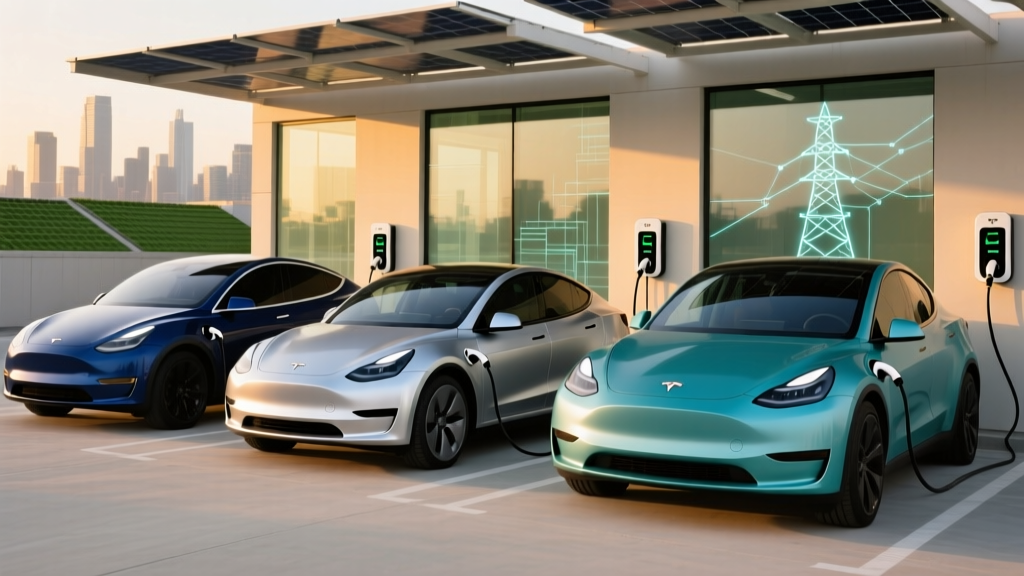
Search "how long does it take to charge up a Tesla" and you'll find a tangle of numbers—peak kW ratings, 10-80% claims, and vague "super fast" promises. The truth is that Tesla charging time depends heavily on which model you own, which Supercharger generation you plug into, battery chemistry, state of charge, and ambient temperature. This guide breaks down the exact charging speeds, real-world range, and home-charging expectations for every current-production Tesla in the 2026 lineup.
Charging Times at a Glance: 2026 Tesla Lineup
Tesla operates the largest proprietary DC fast-charging network in North America, with V3 Superchargers delivering up to 250 kW and the newer V4 cabinets capable of similar peaks with improved cable management. Below is a consolidated spec table covering every current model.
| Model / Trim | Battery (kWh usable) | Chemistry | EPA Range (mi) | Max DC kW | 10-80% Time | L2 Rate (mi/hr) | 0-60 mph | Base MSRP |
|---|---|---|---|---|---|---|---|---|
| Model 3 RWD | ~60 | LFP | 363 | 170 | ~25 min | ~33 @ 11.5 kW | 5.8 s | $38,990 |
| Model 3 Long Range AWD | ~79 | NMC | 341 | 250 | ~27 min | ~41 @ 11.5 kW | 4.2 s | $42,490 |
| Model 3 Performance | ~79 | NMC | 315 | 250 | ~27 min | ~41 @ 11.5 kW | 2.9 s | $52,990 |
| Model Y RWD | ~60 | LFP | 320 | 170 | ~25 min | ~33 @ 11.5 kW | 6.6 s | $39,990 |
| Model Y Long Range AWD | ~79 | NMC | 320 | 250 | ~27 min | ~41 @ 11.5 kW | 4.8 s | $44,990 |
| Model Y Performance | ~79 | NMC | 296 | 250 | ~27 min | ~41 @ 11.5 kW | 3.5 s | $51,490 |
| Model S Long Range | ~100 | NMC | 402 | 250 | ~30 min | ~44 @ 11.5 kW | 3.1 s | $79,990 |
| Model S Plaid | ~100 | NMC | 396 | 250 | ~30 min | ~44 @ 11.5 kW | 1.99 s | $89,990 |
| Model X Long Range | ~100 | NMC | 335 | 250 | ~31 min | ~35 @ 11.5 kW | 3.8 s | $79,990 |
| Model X Plaid | ~100 | NMC | 326 | 250 | ~31 min | ~35 @ 11.5 kW | 2.5 s | $94,990 |
Note: Battery capacities are usable estimates based on teardown data and EPA filings; Tesla does not publish official kWh figures. Specs reflect 2026 model-year data. Sources: fueleconomy.gov, tesla.com.
How Fast Does a Tesla Charge on DC Fast Charging?
The headline number—250 kW on V3 Superchargers—applies only to Long Range and Performance trims of the Model 3, Model Y, Model S, and Model X. The base RWD trims of Model 3 and Model Y use smaller LFP (lithium iron phosphate) packs that peak around 170 kW. Here's why that matters in practice:
Supercharger Generations Explained
| Supercharger Gen | Peak kW | Connector | Real-World Session (10-80%) | Notes |
|---|---|---|---|---|
| V2 | 150 kW | CCS (adapter) or NACS | 35-40 min | Older stalls; shared cabinet can split power |
| V3 | 250 kW | NACS (native) | 25-31 min (model-dependent) | No power sharing; dedicated cabinet per stall |
| V4 | 250+ kW | NACS + CCS cable | 25-31 min | Newer cabinet design; integrated payment terminal; CCS-native cable option |
On a V2 Supercharger with a neighboring car plugged in, expect peak power to split to 75 kW per stall, stretching a 10-80% session to 45-50 minutes. Always check the Tesla app for real-time stall availability and power ratings before routing to a station.
The LFP Advantage: 100% Charging Without Guilt
Tesla's RWD trims (Model 3 and Model Y) use CATL-supplied LFP batteries. Unlike NMC packs, which Tesla recommends charging to 80% daily to preserve longevity, LFP chemistry tolerates—and actually benefits from—regular 100% charges. This means a Model 3 RWD owner gets the full 363 EPA miles of range for daily use, while a Long Range owner effectively has ~273 usable daily miles (80% of 341). On road trips, LFW owners also charge faster to 100% since the taper above 80% is less severe than with NMC.
Home Level 2 Charging: What to Expect Overnight
Every current Tesla supports Level 2 AC charging at up to 11.5 kW (48 amps) using the Tesla Wall Connector on a 60-amp circuit. Here's what that looks like for each model:
| Model | Max L2 kW | Miles Added per Hour | Full 0-100% Time | Overnight (10 hr) Range Added |
|---|---|---|---|---|
| Model 3 RWD | 11.5 kW | ~33 mi/hr | ~9 hr | ~330 mi |
| Model 3 LR / Perf | 11.5 kW | ~41 mi/hr | ~10 hr | ~340 mi (at 80%) |
| Model Y RWD | 11.5 kW | ~33 mi/hr | ~9 hr | ~320 mi |
| Model Y LR / Perf | 11.5 kW | ~41 mi/hr | ~10 hr | ~296 mi (at 80%) |
| Model S / X | 11.5 kW | ~35-44 mi/hr | ~11-12 hr | ~335-400 mi (at 80%) |
Installation cost context: A Tesla Wall Connector ($475) plus professional installation on an existing 60A circuit typically runs $800-$1,500 total. If your electrical panel needs an upgrade to 200A service—common in older homes—budget an additional $1,500-$3,000. Always have a licensed electrician evaluate your panel before purchase.
For Level 1 (standard 120V outlet), expect 3-5 miles of range per hour of charging—adequate only for PHEVs or very low-mileage commuters. It takes roughly 4 days to fully recharge a Model Y Long Range on Level 1.
Real-World Range: EPA Sticker vs. What You'll Actually Get
• Model 3 Long Range: EPA 341 mi → Expect 280-310 mi on highway trips at 70+ mph; ~220-250 mi in sub-30°F weather.
• Model Y Long Range: EPA 320 mi → Expect 260-290 mi highway; ~200-230 mi in cold.
• Model S Long Range: EPA 402 mi → Expect 340-370 mi highway; ~280-310 mi in cold.
• Model 3 RWD (LFP): EPA 363 mi → Expect 300-330 mi highway; LFP chemistry loses less range in cold than NMC (~10-15% vs 20-30%).
Tesla's EPA range figures are among the most realistic in the industry—they tend to track closely with mixed-driving real-world results. However, sustained highway speeds above 70 mph, cold temperatures below freezing, and aggressive acceleration all reduce range predictably. The heat pump standard on all current Teslas mitigates cold-weather cabin-heating losses significantly compared to older resistive-heater EVs, but battery chemistry still slows in cold, reducing both range and charge speed.
Pro tip for road trips: Use the Tesla navigation's built-in Supercharger routing. It preconditions the battery (heats it to optimal temperature) before you arrive at a Supercharger, which can shave 5-10 minutes off your charge session in cold weather. This is a significant advantage over non-Tesla EVs that may not precondition as effectively on third-party networks.
Efficiency, Performance, and What It Costs to Drive
| Model | MPGe (combined) | kWh/100 mi | HP | Drivetrain | Cargo (cu ft) |
|---|---|---|---|---|---|
| Model 3 RWD | 132 | 25 | 283 | RWD | 23 (trunk + frunk) |
| Model 3 LR AWD | 131 | 26 | 346 | Dual-Motor AWD | 23 |
| Model 3 Performance | 119 | 28 | 510 | Dual-Motor AWD | 23 |
| Model Y RWD | 127 | 26 | 295 | RWD | 72 (rear seats folded) |
| Model Y LR AWD | 123 | 27 | 384 | Dual-Motor AWD | 72 |
| Model Y Performance | 111 | 30 | 456 | Dual-Motor AWD | 72 |
| Model S LR | 122 | 28 | 670 | Dual-Motor AWD | 28 (trunk) + 5.3 (frunk) |
| Model X LR | 103 | 33 | 670 | Dual-Motor AWD | 88 (max, seats folded) |
At a national average electricity cost of ~$0.16/kWh and DC fast-charging costs averaging $0.30-$0.40/kWh on Superchargers, the Model 3 RWD costs roughly $4.00 per 100 miles at home and $7.50-$10.00 per 100 miles on the road. Compare that to a 30 MPG gas car at $3.40/gallon: $11.33 per 100 miles. Home charging delivers the clearest cost advantage.
Pricing, Tax Credits, and Total Cost
| Model / Trim | Base MSRP | §30D Credit Eligible? | Effective Price (with credit) |
|---|---|---|---|
| Model 3 RWD | $38,990 | Yes — $7,500 (if sourcing requirements met) | ~$31,490 |
| Model 3 Long Range | $42,490 | Yes — $7,500 (if sourcing requirements met) | ~$34,990 |
| Model 3 Performance | $52,990 | Yes — $7,500 (under $55K sedan cap) | ~$45,490 |
| Model Y RWD | $39,990 | Yes — $7,500 (if sourcing requirements met) | ~$32,490 |
| Model Y Long Range | $44,990 | Yes — $7,500 (under $80K SUV cap) | ~$37,490 |
| Model Y Performance | $51,490 | Yes — $7,500 (under $80K SUV cap) | ~$43,990 |
| Model S Long Range | $79,990 | No — exceeds $55K sedan MSRP cap | $79,990 |
| Model S Plaid | $89,990 | No — exceeds $55K sedan MSRP cap | $89,990 |
| Model X Long Range | $79,990 | Yes — under $80K SUV cap (if sourcing met) | ~$72,490 |
| Model X Plaid | $94,990 | No — exceeds $80K SUV MSRP cap | $94,990 |
- Income caps: AGI ≤ $150,000 (single) / $225,000 (head of household) / $300,000 (joint)
- MSRP caps: ≤ $55,000 for sedans (Model 3) / ≤ $80,000 for SUVs and trucks (Model Y, Model X)
- Battery sourcing: Critical minerals and battery components must meet escalating domestic-content thresholds — check IRS eligible vehicle list before purchasing, as eligibility can change mid-year
- Point-of-sale transfer: You can transfer the credit to the dealer at purchase for an immediate price reduction, rather than waiting to claim it on your tax return
- One vehicle per 3 years: Limitation per taxpayer under current rules
Warranty coverage: All Tesla models carry a 4-year/50,000-mile basic vehicle warranty. Battery and drive unit coverage is 8 years/100,000 miles for Model 3 and Model Y, and 8 years/150,000 miles for Model S and Model X. Tesla guarantees at least 70% battery capacity retention over the warranty period.
Tech, Driver Assistance, and Daily Ownership
Every Tesla ships with Basic Autopilot, a Level 2 driver-assistance system providing lane centering and adaptive cruise control. The optional Full Self-Driving (Supervised) package ($8,000 or $99/month) adds automatic lane changes, traffic light/stop sign recognition, and navigation-based highway driving—but the driver must remain fully engaged at all times.
Infotainment: All Teslas feature a 15.4-inch center touchscreen (Model 3/Y) or 17-inch screen (Model S/X) running Tesla's proprietary OS. There is no Apple CarPlay or Android Auto—Tesla's native navigation, Spotify, and streaming apps are built in. The Model 3 "Highland" refresh and updated Model Y "Juniper" also include a rear-seat 8-inch touchscreen for climate and entertainment controls.
Notable drawbacks: The minimalist interior means nearly all controls (including glovebox, mirror adjustment, and wiper settings) live on the touchscreen, which frustrates some buyers. No physical instrument cluster exists in the Model 3/Y—speed and navigation info appear only on the center screen. Panel gap quality has improved but still occasionally falls short of luxury competitors. The glass roof can make the cabin hot in summer without aftermarket tinting or a sunshade.
- Access to the Supercharger network — the most reliable DC fast-charging ecosystem in North America
- Class-leading efficiency (kWh/100 mi) across the lineup
- Over-the-air updates continuously add features
- LFP battery in RWD trims allows daily 100% charging
- Strong resale value relative to non-Tesla EVs
- Excellent safety ratings (NHTSA 5-star across all models)
- No Apple CarPlay / Android Auto
- Touchscreen-only controls for basic functions
- FSD (Supervised) is expensive and still requires full driver attention
- Insurance costs tend to be higher than segment average
- Model S/X MSRP exceeds tax credit caps on most trims
- V2 Supercharger stalls still common in rural areas (slower, shared power)
Who Should Buy a Tesla in 2026?
- Commuters: Model 3 RWD at ~$31,490 (after credit) with LFP battery is the value king—363 mi EPA range, cheap home charging, and daily 100% charging capability.
- Families: Model Y Long Range offers 72 cu ft of cargo space, dual-motor AWD, and ~320 mi of range for $37,490 after credit. The top-selling EV in America for good reason.
- Road trippers: Tesla's Supercharger network is unmatched. No other EV brand offers this density of reliable, fast, plug-and-charge stations across all 50 states.
- Performance buyers: Model 3 Performance (2.9s 0-60, $45,490 after credit) and Model S Plaid (1.99s, $89,990) remain benchmarks for electric performance.
- You need Apple CarPlay or prefer physical buttons (consider Hyundai Ioniq 5, BMW i4)
- You need 3-row seating (Model X is expensive; consider Kia EV9 or Rivian R1S)
- You tow frequently (Tesla's tow ratings are modest: 2,000-3,500 lbs for Model Y, 5,000 lbs for Model X—Rivian R1T or Ford F-150 Lightning offer more)
Frequently Asked Questions
How long does it take to charge a Tesla at a Supercharger?
On a V3 Supercharger (250 kW), a Tesla Model 3 or Model Y Long Range charges from 10-80% in approximately 25-27 minutes. The larger Model S and Model X take about 30-31 minutes. RWD trims with smaller LFP batteries peak at 170 kW and take roughly 25 minutes for the same session. On older V2 Superchargers, expect 35-50 minutes depending on whether power is being shared with a neighboring stall.
Can I charge a Tesla at home overnight?
Yes. With a Tesla Wall Connector on a 60-amp circuit (11.5 kW), any Tesla will fully recharge overnight in 9-12 hours depending on battery size. A typical daily commute of 30-50 miles requires only 1-2 hours of Level 2 charging. Installation costs $800-$1,500 if your panel supports a 60A circuit; panel upgrades add $1,500-$3,000.
Does the Tesla Model Y qualify for the $7,500 federal tax credit?
The Model Y (all trims) qualifies for the full $7,500 §30D federal tax credit as of early 2026, provided you meet the income caps ($150K single / $300K joint) and the vehicle meets current battery-sourcing requirements. The credit can be transferred at the point of sale for an immediate price reduction. Always verify current eligibility on the IRS eligible vehicles page before purchasing, as sourcing rules update periodically.
Is a Tesla worth it vs. competitors like the Hyundai Ioniq 5 or BMW i4?
Tesla's advantages are the Supercharger network, class-leading efficiency, over-the-air updates, and strong resale value. The Hyundai Ioniq 5 offers faster 800V charging (10-80% in ~18 min on a 350 kW charger), Apple CarPlay, and a more conventional interior. The BMW i4 provides a more traditional luxury experience with physical controls. For buyers who prioritize charging infrastructure and software, Tesla wins. For those who prefer CarPlay or a more premium cabin, competitors are compelling—especially as third-party networks (Electrify America, EVgo) add NACS connectors.
How much does it cost to charge a Tesla at home vs. at a Supercharger?
At home on a national average of $0.16/kWh, charging a Model 3 Long Range (~79 kWh battery) from empty costs about $12.64. At a Supercharger averaging $0.35/kWh, the same charge costs about $27.65. Over a year of 12,000 miles, home charging a Model 3 costs roughly $480-$600, while exclusive Supercharger use costs $1,050-$1,400. Most owners do 80%+ of charging at home.
Do Tesla batteries degrade significantly over time?
Tesla's own fleet data shows an average of approximately 12% battery degradation after 200,000 miles for NMC packs. LFP packs (Model 3/Y RWD) tend to degrade even less, with many owners reporting 5-8% loss after 100,000 miles. Tesla's battery warranty guarantees at least 70% capacity retention for 8 years/100,000 miles (Model 3/Y) or 8 years/150,000 miles (Model S/X). Full battery replacements currently cost $12,000-$16,000 out of warranty, though most owners never need one.