If you're shopping for a Tesla — or already own one — the question you'll field most often is some version of: how long do Tesla take to charge? The honest answer depends on which model you drive, the battery chemistry under the floor, the charger you're plugged into, and whether you understand the difference between a peak kW number and a sustained charge curve.
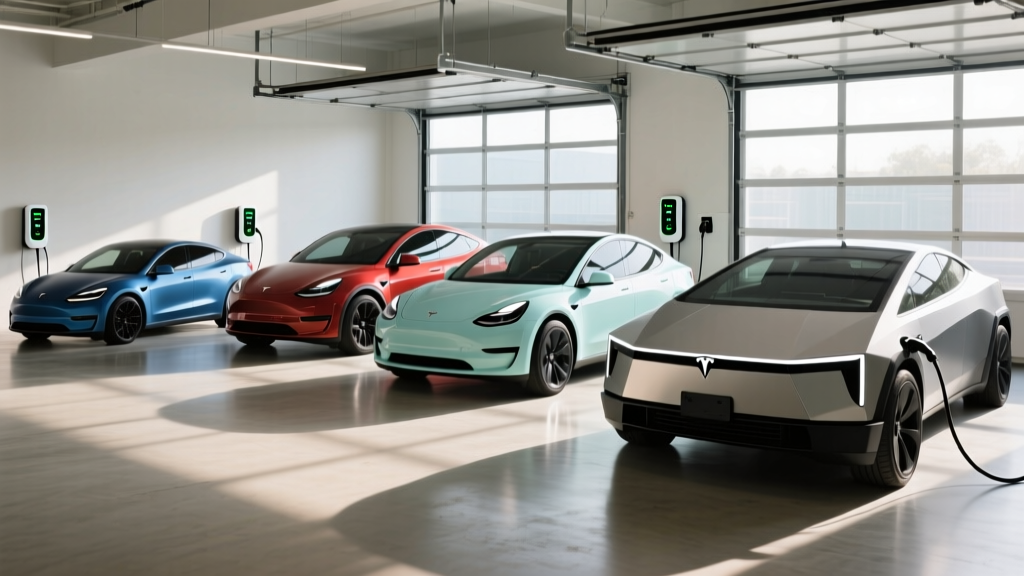
Tesla's 2026 lineup spans four consumer models: the refreshed Model 3, the Juniper-updated Model Y, the luxury Model S, and the Model X SUV. Each has different battery capacities, chemistries (LFP vs. NMC), and charge acceptance rates that meaningfully change how long you'll spend at a Supercharger or plugged in at home.
This guide breaks down exact charge times, real-world range expectations, and the ownership math for every current Tesla. No marketing fluff — just the numbers that matter.
Tesla Charging Speed at a Glance: Every 2026 Model
Before we get into individual models, here's the consolidated charging data. Note that kW (kilowatts) measures power — the rate at which energy flows into the battery — while kWh (kilowatt-hours) measures energy capacity, i.e., how much the battery holds total. Confusing these two is the single most common EV mistake.
| Model / Trim | Battery (kWh usable) | Chemistry | Max DC Fast Charge (kW) | 10–80% DC Time | Level 2 Home Rate (kW / mi-hr) |
|---|---|---|---|---|---|
| Model 3 RWD | ~60 kWh | LFP | 170 kW | ~25 min | 11.5 kW / ~44 mi/hr |
| Model 3 Long Range AWD | ~79 kWh | NMC | 250 kW | ~22 min | 11.5 kW / ~44 mi/hr |
| Model 3 Performance | ~79 kWh | NMC | 250 kW | ~22 min | 11.5 kW / ~44 mi/hr |
| Model Y Long Range AWD | ~79 kWh | NMC | 250 kW | ~24 min | 11.5 kW / ~40 mi/hr |
| Model Y Performance | ~79 kWh | NMC | 250 kW | ~24 min | 11.5 kW / ~40 mi/hr |
| Model S Long Range | ~100 kWh | NMC | 250 kW | ~30 min | 11.5 kW / ~38 mi/hr |
| Model S Plaid | ~100 kWh | NMC | 250 kW | ~30 min | 11.5 kW / ~36 mi/hr |
| Model X Long Range | ~100 kWh | NMC | 250 kW | ~32 min | 11.5 kW / ~34 mi/hr |
| Model X Plaid | ~100 kWh | NMC | 250 kW | ~32 min | 11.5 kW / ~32 mi/hr |
Real-World Range: What the EPA Sticker Doesn't Tell You
EPA range estimates are a useful baseline, but they're generated under controlled laboratory conditions. Real-world range varies with speed, temperature, terrain, and driving style. Here's what to actually expect from each 2026 Tesla.
| Model / Trim | EPA Range (mi) | Real-World Highway (mi) | Cold Weather (mi, ~35°F) | MPGe (combined) | kWh/100 mi |
|---|---|---|---|---|---|
| Model 3 RWD | 272 | ~235–250 | ~200–215 | 132 MPGe | 25 |
| Model 3 Long Range AWD | 363 | ~300–320 | ~255–275 | 134 MPGe | 25 |
| Model 3 Performance | 315 | ~265–285 | ~225–245 | 121 MPGe | 28 |
| Model Y Long Range AWD | 320 | ~270–290 | ~230–250 | 122 MPGe | 28 |
| Model Y Performance | 285 | ~245–260 | ~210–225 | 115 MPGe | 29 |
| Model S Long Range | 402 | ~340–360 | ~290–315 | 124 MPGe | 27 |
| Model S Plaid | 359 | ~300–320 | ~260–280 | 116 MPGe | 29 |
| Model X Long Range | 348 | ~290–310 | ~250–270 | 111 MPGe | 30 |
| Model X Plaid | 311 | ~260–280 | ~225–245 | 104 MPGe | 32 |
The Model 3 Long Range AWD remains the efficiency king of the lineup, squeezing over 360 EPA miles from a ~79 kWh pack. The EPA's official fuel economy database confirms these figures and is worth cross-referencing before you buy.
Home Charging: What You Need and What It Costs
Most Tesla owners do 85%+ of their charging at home. The question isn't just "how long" but "what do I need to install?"
Level 1 (120V standard outlet): Adds roughly 3–5 miles of range per hour. A full charge from near-empty takes 3–5 days. Fine for plug-in hybrids; inadequate for a Tesla unless your daily driving is under 20 miles.
Level 2 (240V): Tesla's Wall Connector delivers up to 11.5 kW (48A) on a 60A circuit. This adds 34–44 miles of range per hour depending on the model, meaning a full overnight charge is routine. Installation typically runs $800–$2,000 depending on your electrical panel's capacity and the distance from panel to charger location.
| Model | 0–100% Home Charge Time | Miles Added per Hour | Overnight (8 hrs) Range Added |
|---|---|---|---|
| Model 3 RWD | ~5.5 hours | ~44 mi/hr | ~272 mi (full) |
| Model 3 Long Range | ~7 hours | ~44 mi/hr | ~352 mi (full) |
| Model Y Long Range | ~7 hours | ~40 mi/hr | ~320 mi (full) |
| Model S Long Range | ~9 hours | ~38 mi/hr | ~304 mi |
| Model X Long Range | ~9 hours | ~34 mi/hr | ~272 mi |
Panel upgrade gotcha: If your home has a 100A electrical panel (common in older construction), adding a 60A EV circuit may require a panel upgrade to 200A, which adds $1,500–$3,500. Always get a licensed electrician's assessment before committing.
Supercharger Network: Tesla's Biggest Ownership Advantage
When people ask how long do Tesla take to charge, they're often really asking about road trips. Tesla's Supercharger network — now exceeding 6,000 stations and 60,000+ individual chargers in North America — remains the most reliable public fast-charging infrastructure available. Plug-in rates exceed 95% across the network, a figure competitors' CCS networks still chase.
Most V3 Superchargers deliver up to 250 kW; newer V4 stalls can deliver up to 350 kW, though current Tesla vehicles are hardware-limited to 250 kW acceptance. The practical implication: a Model 3 Long Range starting at 10% SoC will reach 80% in roughly 22 minutes at a V3 stall, adding approximately 200 miles of range.
Preconditioning matters. When you navigate to a Supercharger in the Tesla's built-in navigation, the car automatically warms the battery to optimal charging temperature before you arrive. Skipping this step (by using third-party apps to navigate to a charger without the car knowing) can add 5–10 minutes to your session, especially in cold weather. The battery thermal management system needs the battery at roughly 95–104°F (35–40°C) for peak charge acceptance.
Performance, Space, and Tech: Quick Model Profiles
Model 3 (Refreshed / Highland Platform)
The Model 3 continues as Tesla's volume sedan with a minimalist interior, ventilated front seats, ambient lighting, and a rear touchscreen for passengers. The RWD trim uses an LFP battery — heavier but more durable with a longer cycle life and no degradation anxiety from charging to 100% daily. The Long Range and Performance trims use NMC chemistry for higher energy density.
- 0–60 mph: 5.8s (RWD) / 4.2s (Long Range) / 2.9s (Performance)
- Horsepower: 271 hp (RWD) / 346 hp (LR) / 510 hp (Perf)
- Drivetrain: RWD single motor / AWD dual motor
- Cargo: 23 cu ft (trunk + frunk combined)
- Rear legroom: 35.3 inches
Model Y (Juniper Refresh)
The Juniper update brought a quieter cabin, redesigned front and rear lighting, a rear passenger touchscreen, and improved suspension tuning. It remains the best-selling EV in the U.S. for good reason: crossover practicality with sedan-like efficiency.
- 0–60 mph: 4.8s (Long Range) / 3.5s (Performance)
- Horsepower: 384 hp (LR) / 510 hp (Perf)
- Drivetrain: AWD dual motor
- Cargo: 76 cu ft (rear seats folded) / 30 cu ft (seats up) + frunk
- Rear legroom: 41.6 inches
Model S and Model X
The flagship sedan and SUV share a platform with ~100 kWh NMC packs, adaptive air suspension, and the highest range figures in the lineup. The Plaid variants use a tri-motor setup producing 1,020 hp. Both models feature a yoke or conventional steering wheel option and a 17-inch center touchscreen with a rear passenger display.
- Model S 0–60: 3.1s (LR) / 1.99s (Plaid)
- Model X 0–60: 3.8s (LR) / 2.5s (Plaid)
- Model S cargo: 28 cu ft (trunk + frunk)
- Model X cargo: 88 cu ft (seats folded, 5-seat config)
- Model X towing: 5,000 lbs rated
Pricing, Tax Credits, and Total Cost
Tesla pricing shifts periodically, but here are the approximate 2026 MSRPs and federal tax credit eligibility. The IRS §30D clean vehicle credit has strict requirements: buyer income caps ($150K single / $300K joint AGI), vehicle MSRP caps ($55K for sedans, $80K for SUVs/pickups/vans), and battery critical-mineral and component sourcing rules that change annually.
| Model / Trim | Base MSRP | MSRP Cap Category | Est. §30D Credit | Effective Price (after credit) |
|---|---|---|---|---|
| Model 3 RWD | ~$38,990 | Sedan ($55K cap) | Up to $7,500* | ~$31,490* |
| Model 3 Long Range AWD | ~$47,740 | Sedan ($55K cap) | Up to $7,500* | ~$40,240* |
| Model 3 Performance | ~$54,990 | Sedan ($55K cap) | Up to $7,500* | ~$47,490* |
| Model Y Long Range AWD | ~$46,630 | SUV ($80K cap) | Up to $7,500* | ~$39,130* |
| Model Y Performance | ~$51,490 | SUV ($80K cap) | Up to $7,500* | ~$43,990* |
| Model S Long Range | ~$79,990 | Sedan ($55K cap) | $0 (over cap) | ~$79,990 |
| Model X Long Range | ~$84,990 | SUV ($80K cap) | $0 (over cap) | ~$84,990 |
*Eligibility depends on your AGI, the vehicle's battery sourcing compliance for the current tax year, and point-of-sale transfer rules. Consult a tax professional and check the latest IRS guidance before relying on credit amounts.
- Buyer AGI: ≤$150K single / ≤$225K head of household / ≤$300K joint
- Vehicle MSRP: ≤$55K (sedans) or ≤$80K (SUVs, trucks, vans)
- Battery critical minerals: percentage threshold increases annually — verify current-year requirement
- Battery components: must meet North American manufacturing/sourcing thresholds
- Credit can be transferred to the dealer at point of sale as an immediate price reduction
Warranty, Longevity, and Battery Degradation
Tesla's warranty structure is straightforward but has important nuances:
- Basic vehicle warranty: 4 years / 50,000 miles (all models)
- Battery & drive unit — Model 3 RWD (LFP): 8 years / 100,000 miles, ≥70% capacity retention
- Battery & drive unit — Model 3 LR/Perf, Model Y: 8 years / 120,000 miles, ≥70% retention
- Battery & drive unit — Model S/X: 8 years / 150,000 miles, ≥70% retention
The 70% retention threshold is industry-standard but worth understanding: Tesla guarantees your battery will hold at least 70% of its original capacity during the warranty period. Real-world degradation data from fleet studies suggests most Tesla NMC packs lose roughly 10–12% capacity over the first 100,000 miles, then degrade more slowly. LFP packs in the Model 3 RWD tend to show slightly less degradation over equivalent mileage and tolerate regular 100% charging better than NMC — Tesla recommends daily 100% charges for LFP vehicles.
Out-of-warranty battery replacement costs remain significant: approximately $12,000–$16,000 for Model 3/Y packs and $18,000–$22,000 for Model S/X, based on current service center estimates.
Driver Assistance: Autopilot and FSD (Supervised)
Tesla Autopilot and Full Self-Driving (Supervised) are SAE Level 2 driver-assistance systems. Despite the "Full Self-Driving" branding, the driver must remain fully engaged, hands on the wheel (or providing torque input), and eyes on the road at all times. These systems do NOT make the vehicle autonomous. Only Level 4 services like Waymo operate without a human driver.
Every 2026 Tesla ships with basic Autopilot (traffic-aware cruise control and autosteer). FSD (Supervised) is a $8,000 add-on (or $99/month subscription) that adds automatic lane changes, intersection handling, and parking assistance. Real-world performance has improved substantially, but intervention frequency varies dramatically by geography and road type. Plan to stay alert.
Pros and Cons: The Honest Summary
Pros
- Supercharger network: most reliable DC fast-charging ecosystem in North America
- Class-leading efficiency (kWh/100 mi) across the lineup
- Over-the-air updates continuously add features and improve performance
- Strong resale value relative to most EV competitors
- LFP option on Model 3 RWD: durable, daily-chargeable, lower cost
- Best-in-class infotainment and app integration
Cons
- No physical stalks on refreshed Model 3/Y — turn signals are steering-wheel buttons
- Panel gaps and paint quality still inconsistent vs. legacy luxury brands
- FSD (Supervised) cost is high and capability still requires driver vigilance
- Model S/X exceed MSRP caps — no federal tax credit
- Rear-seat comfort and headroom in Model 3 trails midsize sedan competitors
- Service center wait times can stretch weeks in high-population areas
Who Should Buy a Tesla in 2026?
Choose Model 3 RWD if: You commute under 40 miles daily, want the lowest entry price, have home charging, and value LFP battery longevity over maximum range.
Choose Model 3 Long Range if: You take regular road trips, live in a cold climate where range loss matters, and want the best efficiency-to-range ratio in the lineup.
Choose Model Y Long Range if: You need family cargo space, car seats, and a taller ride height without sacrificing too much range. The tax credit (SUV MSRP cap) makes this the value sweet spot.
Choose Model S/X if: You want flagship luxury, air suspension, and 400-mile range (Model S) or need 5,000-lb towing (Model X) — and the $80K+ price and lack of federal credit don't deter you.
Frequently Asked Questions
How long do Tesla take to charge at a Supercharger?
At a V3 Supercharger (250 kW), most Tesla models charge from 10% to 80% in 22–32 minutes depending on battery size. The Model 3 Long Range achieves this in roughly 22 minutes; the larger-battery Model X takes closer to 32 minutes. Remember that charging slows significantly above 80% SoC — plan to unplug at 80% on road trips for the best time-to-range ratio.
How long does it take to charge a Tesla at home?
Using a Tesla Wall Connector on a 60A circuit (11.5 kW), a full 0–100% charge takes 5.5 to 9 hours depending on battery size. In practice, most owners plug in nightly and only need to add 30–50% of capacity, which takes 2–4 hours. A standard 120V outlet (Level 1) adds only 3–5 miles per hour and is impractical for daily Tesla use.
Does charging to 100% damage the Tesla battery?
For NMC batteries (Model 3 LR/Performance, Model Y, Model S, Model X), Tesla recommends daily charging to 80–90% and reserving 100% for trips. Regularly charging NMC to 100% accelerates degradation. For LFP batteries (Model 3 RWD), Tesla actually recommends charging to 100% at least once weekly to maintain battery calibration — LFP chemistry tolerates full charges far better.
Do Tesla models qualify for the $7,500 federal tax credit?
Model 3 and Model Y variants priced under their respective MSRP caps ($55K sedan / $80K SUV) may qualify for up to $7,500 under IRS §30D, subject to buyer income limits and battery sourcing requirements that change annually. Model S and Model X exceed the MSRP caps and do not qualify. Always verify current-year eligibility on the IRS website and with a tax professional.
Is a Tesla worth buying vs. competitors like the Hyundai Ioniq 5 or BMW i4?
Tesla's advantages remain the Supercharger network, software ecosystem, and efficiency. Competitors like the Hyundai Ioniq 5 offer faster peak charging (up to 350 kW on 800V architecture), more physical controls, and in some cases better build quality. If you road-trip frequently and value charging reliability, Tesla still leads. If you prioritize interior refinement or want the fastest possible DC charging sessions, cross-shop the Ioniq 5, Kia EV6, and BMW i4.
What affects Tesla charging speed the most?
Three factors dominate: (1) battery state of charge — lower SoC means faster acceptance; (2) battery temperature — cold batteries charge much slower, which is why preconditioning matters; (3) charger capability — a 150 kW stall will charge slower than a 250 kW V3 stall, even if the car can accept more. Ambient temperature, battery age, and simultaneous Supercharger use (stall splitting at older stations) also play roles.