Why Tesla Carbon Credits Matter to Your Wallet
Before you evaluate the Tesla Model Y's 320-mile EPA range or its 250 kW Supercharging capability, there's a financial force shaping the sticker price: Tesla carbon credits. Every quarter, Tesla earns hundreds of millions of dollars by selling regulatory credits to legacy automakers who fall short of zero-emission vehicle (ZEV) mandates in California and the EU. In 2025, Tesla reported over $2.7 billion in annual credit revenue, a figure that directly subsidizes the Model Y's pricing and keeps it competitive against the Ford Mustang Mach-E, Hyundai Ioniq 5, and Kia EV6.
For buyers, this matters because Tesla's aggressive pricing strategy — enabled in part by credit revenue — means the Model Y often undercuts rivals by $3,000–$7,000 before incentives. This review breaks down the 2026 Tesla Model Y Long Range AWD with exact specs, real-world range data, charging performance, and the current §30D federal tax credit picture.
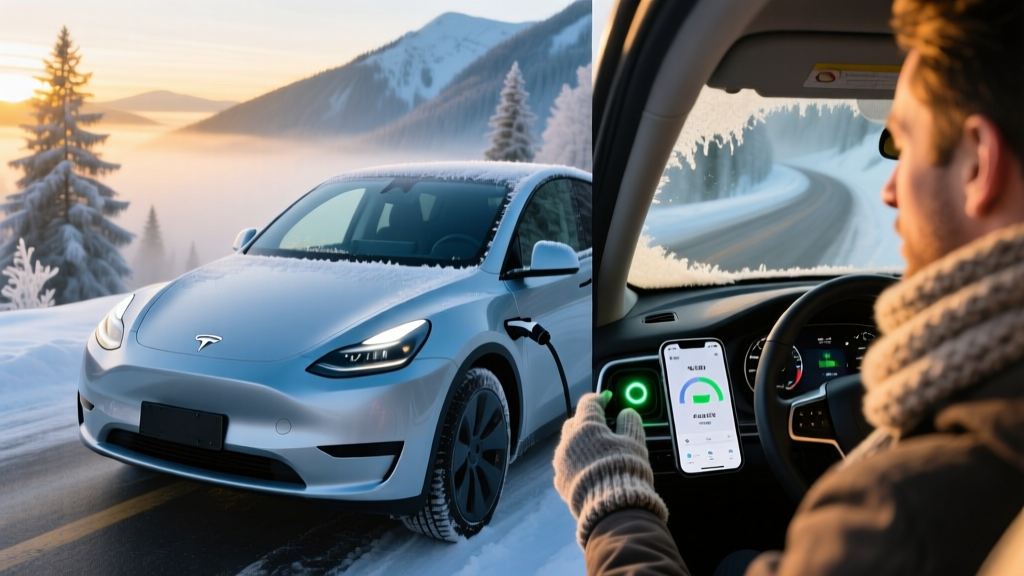
Real-World Expectation: ~270–290 miles on highway trips at 70 mph; ~230–250 miles in sub-30°F cold weather. City driving with regen braking can exceed 300 miles.
2026 Tesla Model Y Long Range: Full Spec Sheet
| Attribute | 2026 Model Y Long Range AWD |
|---|---|
| EPA Range | 320 miles |
| Battery (usable) | ~79 kWh, NMC (nickel-manganese-cobalt) |
| Efficiency | 122 MPGe combined / 28 kWh per 100 mi |
| Max DC Fast Charge | 250 kW peak (CCS via NACS adapter or native NACS) |
| 10–80% DC Charge Time | ~25 minutes |
| Level 2 Home Charge Rate | 11.5 kW (~44 miles/hr added) |
| 0–60 mph | 4.8 seconds |
| Horsepower | 384 hp (dual motor) |
| Drivetrain | Dual Motor AWD |
| Cargo Volume | 34.3 cu ft (rear seats up) / 76.2 cu ft (seats folded) |
| Rear Legroom | 40.5 inches |
| Battery Warranty | 8 years / 120,000 miles (min 70% retention) |
| Base MSRP | $46,630 (before destination) |
| As-Tested (w/ FSD + paint) | ~$57,130 |
Real-World Range: What the EPA Sticker Doesn't Tell You
The EPA's 320-mile estimate is derived from a blended test cycle. In our experience and corroborated by independent testing, real-world highway range at sustained 70–75 mph speeds sits closer to 270–290 miles in mild conditions (60–80°F). The Model Y's heat pump — standard since the 2021 refresh — significantly reduces cold-weather energy consumption compared to resistive heaters, but you should still budget 20–25% range loss in sustained sub-freezing temperatures.
Efficiency on the highway averages around 270–285 Wh/mile depending on speed, tire pressure, and elevation changes. In stop-and-go city driving where regenerative braking recovers kinetic energy, owners frequently report 240–260 Wh/mile, stretching effective range past 300 miles. This is consistent with fueleconomy.gov data showing 122 MPGe combined.
Charging Performance: Supercharger Network Advantage
The Model Y Long Range peaks at 250 kW on V3 Tesla Superchargers. However, peak rate is not sustained rate. The charging curve tapers meaningfully above 50% state of charge (SoC), and the 10–80% session takes approximately 25 minutes under ideal battery-preconditioned conditions. Without preconditioning — which the car activates automatically when you navigate to a Supercharger — that same session can stretch to 32–35 minutes in cold weather.
| Charging Level | Power | Speed (miles/hr added) | Use Case |
|---|---|---|---|
| Level 1 (120V outlet) | 1.4 kW | ~4–5 mi/hr | Emergency / overnight trickle |
| Level 2 (240V, 48A Wall Connector) | 11.5 kW | ~44 mi/hr | Home daily charging |
| DC Fast (V3 Supercharger) | 250 kW peak | ~1,000 mi/hr at peak | Road trips, 10–80% in ~25 min |
| DC Fast (V4 Supercharger) | Up to 350 kW* | Faster above 50% SoC | Newer stations rolling out 2025–2026 |
*V4 Supercharger availability is limited as of early 2026; most existing stations are V3 at 250 kW.
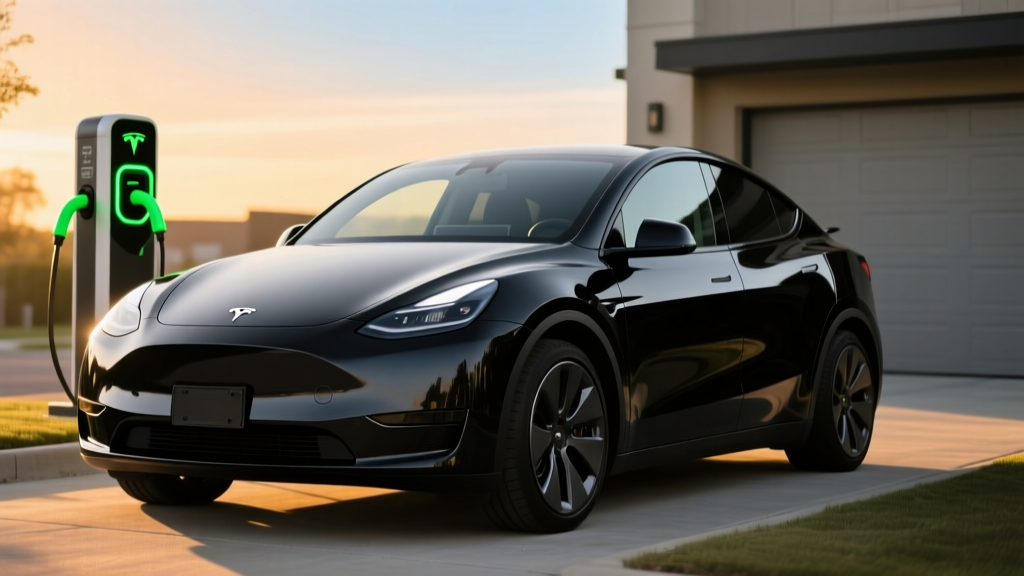
At home, Tesla's Wall Connector on a 60-amp circuit delivers 11.5 kW (48 amps continuous), adding roughly 44 miles of range per hour. A full 10–100% charge from near-empty takes about 7 hours — meaning a typical overnight session easily refills a day's driving. For home installation, expect $800–$2,000 depending on panel proximity, with a 240V/60A dedicated circuit. A panel upgrade to 200A can add $1,500–$3,000 if your home has an older 100A service.
Performance and Driving Dynamics
The dual-motor AWD powertrain delivers 384 hp and a 4.8-second 0–60 mph time. That's brisk enough to merge confidently onto any freeway and overtake without hesitation. The instant torque delivery — characteristic of all BEVs — makes the Model Y feel quicker than the stopwatch suggests in everyday driving.
Ride quality has improved with the 2025 Juniper refresh: revised damper tuning and acoustic glass reduce highway noise and absorb road imperfections better than pre-2025 models. However, the 20-inch Gemini wheels (optional) firm up the ride noticeably compared to the standard 19-inch set. If comfort is a priority, stick with 19s.
Tesla's Autopilot remains a SAE Level 2 driver-assistance system. Full Self-Driving (Supervised) adds automated lane changes, traffic light recognition, and city-street navigation, but the driver must remain fully engaged at all times. FSD is not autonomous driving — it is an advanced Level 2 system that still requires hands-on-wheel supervision and can make errors in construction zones, unmapped areas, and adverse weather.
Pricing, Trims, and the Federal Tax Credit
The 2026 Tesla Model Y lineup starts with the Long Range AWD at $46,630 (plus $1,390 destination, for a total of $48,020). The Performance trim sits at approximately $52,130. A base RWD variant has been periodically available at lower price points, though availability fluctuates.
| Trim | Base MSRP | Destination | Out-the-Door | Est. After §30D Credit |
|---|---|---|---|---|
| Long Range AWD | $46,630 | $1,390 | $48,020 | ~$40,520* |
| Performance AWD | $52,130 | $1,390 | $53,520 | ~$46,020* |
*§30D credit eligibility requires meeting all of the following criteria. Actual credit amount varies.
- MSRP Cap: SUVs/vans/pickups must be under $80,000. The Model Y qualifies at all current trims.
- Buyer Income Cap: Modified AGI must not exceed $150,000 (single), $225,000 (head of household), or $300,000 (joint). Check IRS §30D rules for current-year thresholds.
- Battery Sourcing: The credit is split into two halves ($3,750 each) — one for critical minerals sourcing and one for battery component manufacturing. Tesla's supply chain has progressively met more domestic-content requirements, but exact eligibility can shift quarter to quarter. Always verify current sourcing compliance on the IRS qualified vehicles list before purchasing.
- Point-of-Sale Transfer: As of 2024, the credit can be transferred to the dealer at purchase, reducing your out-of-pocket cost immediately rather than waiting for a tax refund.
How Tesla Carbon Credits Lower Your Effective Price
Here's the mechanism most buyers overlook: Tesla carbon credits don't directly reduce your purchase price, but they fund Tesla's ability to price the Model Y aggressively. Because Tesla earns $0 in tailpipe-emission penalties and sells billions in ZEV credits to competitors, it can operate with thinner per-vehicle margins than automakers who must buy credits to comply with CAFE standards and state ZEV mandates.
In practical terms, this means the Model Y Long Range at ~$48,000 out-the-door undercuts comparably equipped rivals — the Mustang Mach-E Premium AWD (~$52,000), Ioniq 5 Limited AWD (~$56,000), and BMW iX xDrive50 (~$85,000) — often before any federal or state incentives are applied. When the §30D credit applies, the gap widens further.
Tesla's credit revenue also funds continuous price adjustments. Throughout 2024–2025, Tesla cut Model Y pricing multiple times, a strategy enabled by credit income buffering margins. For buyers, the takeaway: Tesla's pricing is unusually fluid. Monitoring Tesla's configurator and acting when prices dip can save thousands.
Interior, Cargo, and Daily Livability
The Juniper-refreshed Model Y interior is materially improved over pre-2025 models. Ventilated front seats, ambient lighting, a rear-seat touchscreen, and power-folding second-row seats bring the cabin closer to luxury-compact expectations. The minimalist design remains polarizing — there are no physical buttons, and turn signals are on the steering wheel via haptic-capacitive controls (with a backup stalk on some markets).
Cargo space is a standout: 34.3 cu ft behind the second row and 76.2 cu ft with seats folded. The front trunk (frunk) adds usable storage for charging cables or a small bag. Rear legroom at 40.5 inches is generous for adults. The panoramic glass roof creates an airy feel, though it does reduce headroom slightly compared to vehicles with a traditional roofline.
The 15.4-inch central touchscreen runs Tesla's proprietary OS, which remains one of the fastest and most responsive infotainment systems available. Wireless phone charging, over-the-air updates, and a robust app ecosystem (Netflix, YouTube, games while parked) are standard. However, Apple CarPlay and Android Auto are not supported — a dealbreaker for some buyers.
Ownership Costs: 5-Year Outlook
Electricity costs for the Model Y average $0.04–$0.06 per mile when charging at home on a residential rate of $0.13–$0.16/kWh (national average). Supercharger rates vary from $0.25–$0.45/kWh depending on location and time of day, translating to $0.07–$0.13 per mile. Compare this to a 25 MPG gas SUV at $3.50/gallon ($0.14/mile) and the home-charging advantage is clear.
Insurance remains a cost factor: Model Y premiums average 15–30% higher than comparable gas crossovers, driven by repair costs for aluminum body panels and sensor-laden bumpers. Budget $2,000–$3,200 annually depending on your state and driving record.
Tesla's battery warranty covers 8 years or 120,000 miles with a minimum 70% capacity retention guarantee. NMC batteries in the Long Range typically show 5–8% degradation over the first 50,000 miles, then plateau — meaning most owners will retain 88–92% of original capacity at 100,000 miles based on aggregated fleet data.
- Supercharger network: 60,000+ stalls globally, highest reliability of any public network
- Class-leading efficiency at 28 kWh/100 mi
- Strong cargo space (76.2 cu ft) and frunk utility
- Continuous OTA updates add features post-purchase
- Competitive pricing, partly enabled by Tesla carbon credit revenue
- Heat pump standard — strong cold-weather efficiency
- No Apple CarPlay or Android Auto
- Capacitive turn signals take significant adaptation
- FSD ($8,000 add-on) remains Level 2 — not autonomous
- Insurance premiums run 15–30% above segment average
- Minimalist interior lacks physical climate/media controls
- 20-inch wheels degrade ride comfort and range by ~10 miles
Who Should Buy the 2026 Tesla Model Y?
- You road-trip frequently and want the most reliable DC fast-charging network
- You value cargo versatility for family hauling (strollers, gear, dogs)
- You want strong efficiency and low per-mile charging costs
- You're comfortable with a touchscreen-first interface
- You want OTA software improvements over ownership
- You need Apple CarPlay/Android Auto (see Ioniq 5, EV6)
- You prefer traditional controls and a more cushioned ride (see Mach-E, EV9)
- You need a third row for 7-passenger seating (see Kia EV9, Rivian R1S)
- You want a luxury badge and dealer service experience (see BMW iX, Mercedes EQB)
Frequently Asked Questions
What is the real-world range of the 2026 Tesla Model Y?
Expect 270–290 miles on highway trips in moderate temperatures, and 230–250 miles in sustained cold weather (below 30°F). City driving with regenerative braking can stretch past 300 miles. The EPA estimate is 320 miles, but real-world driving rarely matches the blended test cycle perfectly.
How fast does the Model Y charge at home and on the road?
At home on a Level 2 Wall Connector (11.5 kW), you add ~44 miles of range per hour — a full charge takes about 7 hours. On a V3 Supercharger (250 kW peak), a 10–80% session takes approximately 25 minutes when the battery is preconditioned.
Does the Tesla Model Y qualify for the $7,500 federal EV tax credit?
The Model Y qualifies for the §30D credit if you meet income caps ($150K single / $300K joint), and if the vehicle's battery meets current-year critical-mineral and component-sourcing requirements. The credit amount can be up to $7,500 and can be transferred at point of sale. Always verify current eligibility on the IRS qualified vehicles list before purchasing, as sourcing compliance can change.
How do Tesla carbon credits affect the Model Y's price?
Tesla carbon credits are regulatory ZEV credits sold to legacy automakers who need them for compliance. This revenue — over $2.7 billion in 2025 — helps Tesla price vehicles more aggressively than competitors who must purchase credits. The result is a lower MSRP for buyers, though the credit itself doesn't appear as a line-item discount on your purchase agreement.
Is the Model Y worth buying over the Ford Mustang Mach-E or Hyundai Ioniq 5?
The Model Y wins on charging network reliability, cargo space, and software. The Mach-E offers a more traditional interior with physical controls and CarPlay. The Ioniq 5 has faster 10–80% charging (18 min on 350 kW chargers) and a more distinctive design. Test-drive all three — the right choice depends on whether you prioritize network access (Tesla), design/charging speed (Ioniq 5), or traditional ergonomics (Mach-E).
What is the battery warranty on the Model Y?
Tesla covers the battery and drive unit for 8 years or 120,000 miles (whichever comes first) with a guaranteed minimum of 70% capacity retention. Real-world fleet data suggests NMC batteries retain 88–92% capacity at 100,000 miles under normal use patterns.