Tesla's Safety Record: What the Crash Tests Actually Show
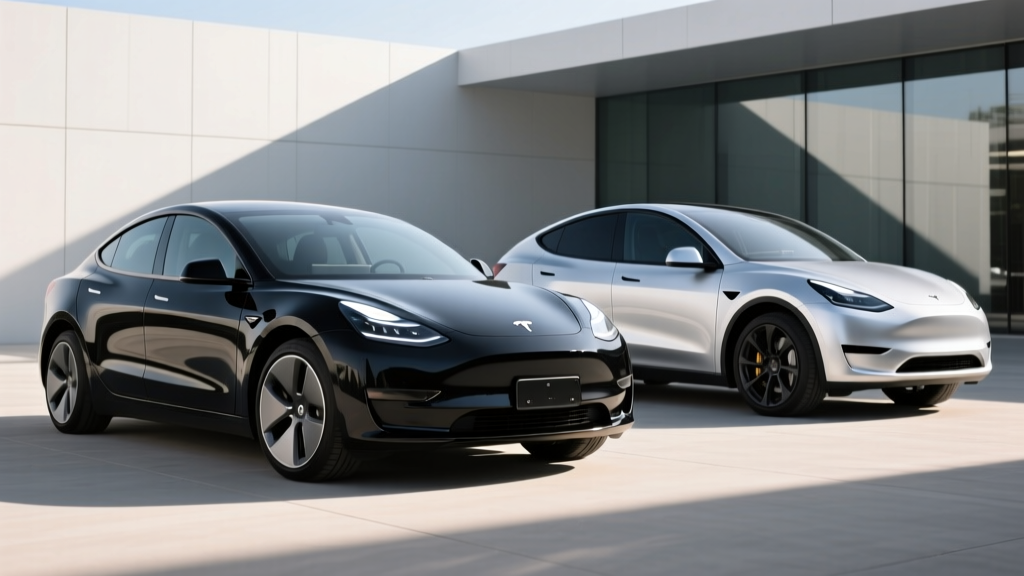
When shoppers search for a Tesla car safety rating, they're usually looking at two vehicles: the 2026 Tesla Model 3 and the 2026 Tesla Model Y. Together, these two platforms account for the vast majority of Tesla's US sales, and both carry strong crash-test credentials. But safety is only part of the purchase equation. This profile breaks down every number that matters — from NHTSA stars and IIHS scores to real-world range, charging curves, battery chemistry, and the exact federal tax credit math under current IRS §30D rules.
Spec Table: 2026 Model 3 vs. Model Y at a Glance
| Spec | Model 3 Long Range AWD | Model Y Long Range AWD |
|---|---|---|
| EPA Range | 341 miles | 320 miles |
| Battery (usable) | ~75 kWh (NMC) | ~75 kWh (NMC) |
| Peak DC Fast Charge | 250 kW | 250 kW |
| 10–80% DC Time | ~25 min | ~27 min |
| Level 2 Home Rate | 11.5 kW (~44 mi/hr) | 11.5 kW (~44 mi/hr) |
| 0–60 mph | 4.2 sec | 4.8 sec |
| Horsepower | 346 hp | 384 hp |
| Drivetrain | Dual-Motor AWD | Dual-Motor AWD |
| MPGe (combined) | 132 MPGe | 122 MPGe |
| Efficiency | 25 kWh/100 mi | 28 kWh/100 mi |
| Cargo Volume | 23 cu ft (trunk) + frunk | 34 cu ft (rear seats up) + frunk |
| Base MSRP | $47,740 | $48,990 |
| Battery Warranty | 8 yr / 120,000 mi | 8 yr / 120,000 mi |
Source: EPA fueleconomy.gov, Tesla spec sheets. Figures reflect 2026 model-year data and are subject to change.
Tesla Car Safety Rating: NHTSA and IIHS Results
Both the Model 3 and Model Y have earned top marks in government and independent crash testing — a major reason buyers search for the Tesla car safety rating before purchasing.
NHTSA Ratings
The National Highway Traffic Safety Administration awarded both the Model 3 and Model Y a 5-Star Overall Safety Rating, the highest possible score. Sub-category results include:
- Frontal crash: 5 stars (driver and passenger)
- Side crash: 5 stars
- Rollover risk: 5 stars (very low center of gravity from floor-mounted battery pack)
IIHS Ratings
The Insurance Institute for Highway Safety has tested the refreshed Model 3 extensively. Key results for recent model years:
- Moderate overlap front (original test): Good
- Side crash (updated test): Good
- Roof strength: Good
- Head restraints & seats: Good
- Headlights: Acceptable to Good (trim-dependent)
The Model Y has similarly strong IIHS results, though the updated moderate overlap front test — which now evaluates rear-seat passenger protection — has proven more challenging across the industry. Buyers should check IIHS directly for the most current test cycle results, as ratings are periodically re-evaluated.
Active Safety and Crash Avoidance
Beyond crashworthiness, Tesla vehicles include standard automatic emergency braking, lane departure warning, lane keeping assist, and blind-spot monitoring. NHTSA's crash-avoidance evaluations have consistently rated Tesla's AEB systems highly. However, the NHTSA has also opened investigations into Autopilot-related incidents, underscoring that Level 2 driver-assist systems require constant driver supervision.
Real-World Range: What the EPA Number Doesn't Tell You
EPA sticker: 341 miles
Expect in mixed real-world driving: ~290–310 miles
Sustained highway (75+ mph): ~260–280 miles
Cold weather (below 30°F): ~220–250 miles (25–35% reduction)
EPA sticker: 320 miles
Expect in mixed real-world driving: ~270–290 miles
Sustained highway (75+ mph): ~240–260 miles
Cold weather (below 30°F): ~200–230 miles
Tesla's thermal management system — which includes a heat pump on all current models — helps mitigate cold-weather losses compared to older EVs without heat pumps. Preconditioning the battery while plugged in (using the Tesla app's scheduled departure feature) warms the pack and cabin using grid power rather than battery energy, preserving range on cold mornings.
The Model 3's slight range advantage over the Model Y comes down to aerodynamics and weight. The sedan's lower drag coefficient (~0.219 Cd) and lighter curb weight translate directly to fewer kWh consumed per mile, especially at highway speeds where air resistance dominates.
Charging Speed: DC Fast Charge and Home Level 2
| Charging Level | Power (kW) | Miles Added per Hour | Notes |
|---|---|---|---|
| Level 1 (120V) | ~1.4 kW | ~3–5 mi/hr | Emergency/trickle only |
| Level 2 (240V, 48A) | 11.5 kW | ~44 mi/hr | Full overnight charge (~8–9 hrs) |
| DC Fast Charge | Peak 250 kW | Up to ~1,000 mi/hr (peak) | 10–80% in ~25–27 min |
Understanding the charge curve: The 250 kW peak rate applies only at low state of charge (roughly 10–30% SoC) and requires battery preconditioning — which the car does automatically when you navigate to a Supercharger. Above 50% SoC, the rate tapers to roughly 100–120 kW, and above 80% it drops further to protect battery longevity. This is why Tesla (and most manufacturers) quote 10–80% times rather than 0–100%.
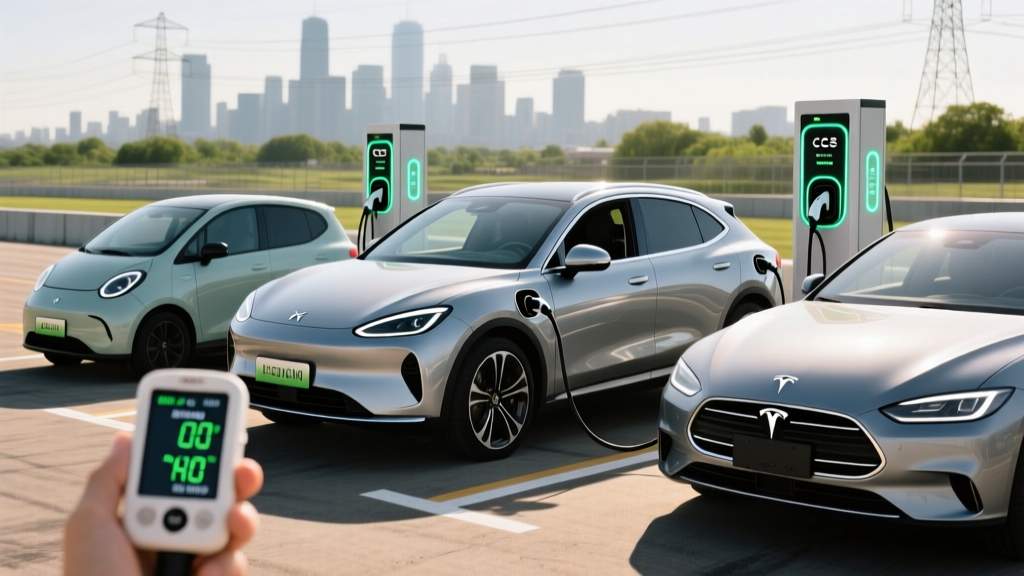
Tesla's Supercharger network uses the NACS connector, which Tesla developed and which has now been adopted by Ford, GM, Rivian, Hyundai, and most major automakers. Non-Tesla EVs are gaining access to Superchargers via built-in NACS ports or CCS-to-NACS adapters. For Tesla owners, the NACS ecosystem means the broadest and most reliable DC fast-charging network in North America — a significant ownership advantage.
For home charging, a 48-amp Level 2 wall connector on a 60-amp circuit delivers the full 11.5 kW. Home installation typically costs $500–$2,000 depending on panel proximity and whether a service upgrade is needed. A licensed electrician should evaluate your panel capacity before installation.
Pricing, Trims, and Federal Tax Credit Eligibility
| Trim | Base MSRP | Est. After §30D Credit |
|---|---|---|
| Model 3 RWD | $38,990 | ~$31,490* |
| Model 3 Long Range AWD | $47,740 | ~$40,240* |
| Model 3 Performance | $54,990 | ~$47,490* |
| Model Y Long Range AWD | $48,990 | ~$41,490* |
| Model Y Performance | $53,990 | ~$46,490* |
*Credit amounts are estimates and depend on individual eligibility. See §30D checklist below.
IRS §30D Federal Tax Credit Checklist
- Vehicle MSRP cap: Sedans (Model 3) must be ≤ $55,000; SUVs/trucks/vans (Model Y) must be ≤ $80,000
- Buyer income cap: AGI ≤ $150,000 (single), ≤ $225,000 (head of household), ≤ $300,000 (joint)
- Battery sourcing: Critical minerals and battery components must meet phased-in percentage thresholds for North American or FTA-partner sourcing
- Point-of-sale transfer: Eligible buyers can transfer the credit to the dealer at purchase, reducing the upfront price rather than waiting for tax filing
- Assembly: Vehicle must undergo final assembly in North America
As of 2026, both the Model 3 and Model Y are assembled at Tesla's Fremont, CA and Austin, TX plants. However, credit eligibility can change based on battery-sourcing compliance, which Tesla and the IRS update periodically. Always verify current eligibility at IRS.gov or through the dealer's point-of-sale system before finalizing a purchase.
Performance, Interior, and Technology
Performance
The Model 3 Long Range AWD hits 0–60 mph in 4.2 seconds with 346 hp from its dual-motor setup. The Performance trim drops that to 2.9 seconds. The Model Y Long Range AWD achieves 4.8 seconds with 384 hp, while the Performance variant reaches 3.3 seconds. All versions deliver instant torque and smooth, linear acceleration that outpaces most gasoline competitors in the same price bracket.
Interior and Cargo
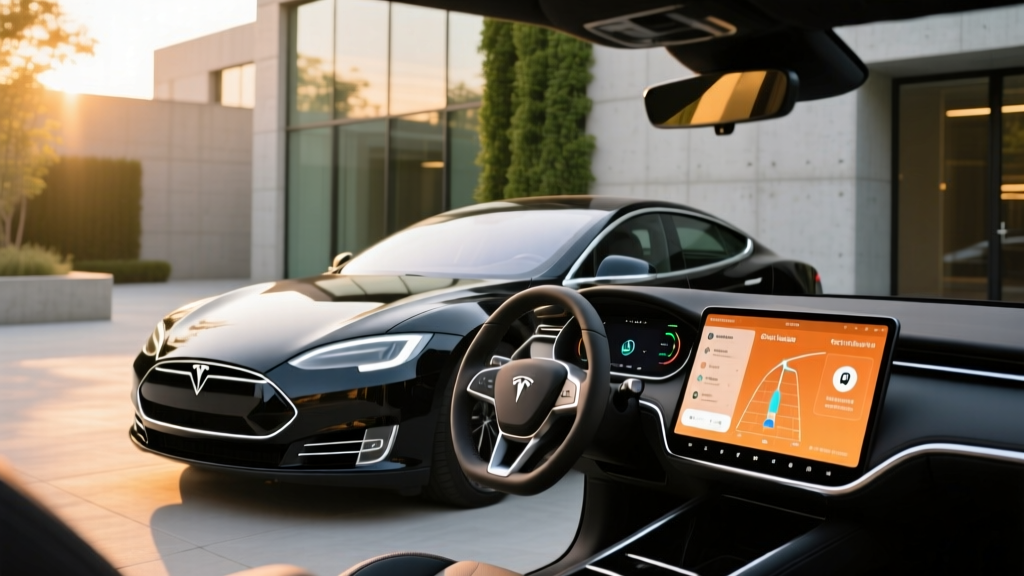
The Model 3's minimalist cabin centers on a 15.4-inch touchscreen that controls virtually all vehicle functions — there are no physical instrument cluster or stalk-mounted controls in the refreshed version (turn signals are on the steering wheel). Rear legroom measures 35.2 inches. Cargo space is 23 cu ft in the trunk plus a small front trunk (frunk).
The Model Y offers substantially more utility: 34 cu ft behind the second row (expanding to 72 cu ft with seats folded), available third-row seating (though the third row is best suited for small children), and 41.6 inches of rear legroom. For families needing cargo flexibility, the Model Y's crossover form factor is the clear winner.
Technology and Driver Assistance
Standard features across both models include:
- 15.4-inch center touchscreen with navigation, streaming, and vehicle controls
- Tesla Autopilot (adaptive cruise control + lane centering) — SAE Level 2
- Over-the-air software updates
- Sentry Mode (parked-camera security recording)
- Dashcam recording
- Tesla app with remote climate, location, and charging controls
Full Self-Driving (Supervised) remains an $8,000 add-on option. Despite the name, FSD is still SAE Level 2 and requires active driver supervision. It handles city streets, stop signs, and traffic lights with varying competence but is not a substitute for an attentive driver.
Who Should Buy a Tesla Model 3 or Model Y?
- You prioritize maximum range and efficiency (341 mi EPA, 132 MPGe)
- You commute solo or with one passenger most days
- You want the lowest cost of entry into the Tesla ecosystem
- Sporty handling matters more than cargo space
- You need family-friendly cargo space (34 cu ft, available 7 seats)
- You regularly carry rear-seat passengers who need legroom
- You want a higher seating position and easier ingress/egress
- You plan road trips with gear, strollers, or bikes
Neither vehicle is ideal for heavy towing (the Model Y is rated for 3,500 lbs max; the Model 3 is not recommended for towing). Buyers who need serious towing capacity should look at the Rivian R1S, Ford F-150 Lightning, or Tesla's own Cybertruck.
Pros and Cons
- Top-tier NHTSA 5-star safety ratings
- Best-in-class Supercharger network access
- Industry-leading efficiency (kWh/mi)
- Over-the-air updates add features post-purchase
- Strong resale value relative to most EVs
- Heat pump standard (better cold-weather range)
- Minimalist interior lacks physical controls (learning curve)
- No Apple CarPlay or Android Auto
- FSD (Supervised) is expensive and still Level 2
- Insurance premiums tend to be above segment average
- Model 3 rear visibility is limited
- Service center availability varies by region
Frequently Asked Questions
What is the real-world range of the Tesla Model 3 and Model Y?
The Model 3 Long Range AWD is EPA-rated at 341 miles, but expect roughly 290–310 miles in mixed driving, 260–280 on sustained highway trips, and 220–250 in cold weather below 30°F. The Model Y Long Range AWD is rated at 320 miles EPA, with real-world figures roughly 20–30 miles lower than the Model 3 across all conditions due to greater weight and aerodynamic drag.
How fast does a Tesla charge at home and on the road?
On a 48-amp Level 2 home charger (11.5 kW), both vehicles add roughly 44 miles of range per hour, achieving a full charge overnight in 8–9 hours. At a 250 kW V3/V4 Supercharger, the 10–80% charge takes approximately 25–27 minutes with proper battery preconditioning. Peak charging speed is not sustained — the rate tapers significantly above 50% SoC.
How much does a Tesla cost after the federal tax credit?
If you qualify for the full $7,500 §30D credit and transfer it at point of sale, a Model 3 RWD drops from $38,990 to roughly $31,490, and a Model Y Long Range AWD drops from $48,990 to roughly $41,490. Eligibility depends on your adjusted gross income, the vehicle's MSRP, battery-sourcing compliance, and North American assembly. Always confirm at IRS.gov.
Is the Tesla Model 3 or Model Y worth buying versus competitors?
Against the Hyundai Ioniq 6 (361 mi EPA, $39,000+), the Model 3 trades a small range disadvantage for Supercharger access and a more mature software ecosystem. Against the Ford Mustang Mach-E (320 mi EPA), the Model Y offers slightly more efficiency and the NACS charging advantage. Against the BMW i4 and Polestar 2, the Model 3 undercuts on price while matching or exceeding range. The Tesla car safety rating (5-star NHTSA across both models) remains a strong differentiator in the segment.
Does the Tesla Model 3 or Model Y qualify for the $7,500 federal EV tax credit?
Both models are assembled in North America and fall under their respective MSRP caps ($55,000 for sedans, $80,000 for SUVs). However, the actual credit amount depends on battery critical-mineral and component sourcing requirements that shift over time. Some trims may qualify for the full $7,500, a partial credit, or none at all depending on the current sourcing compliance status. Check the latest eligibility list on the IRS website or ask your Tesla advisor at the time of purchase.
What is the battery warranty on Tesla vehicles?
Tesla covers the Model 3 and Model Y battery and drive unit for 8 years or 120,000 miles (whichever comes first), with a minimum 70% capacity retention guarantee over that period. The Long Range and Performance trims use NMC (nickel manganese cobalt) chemistry. Tesla recommends charging NMC batteries to 80% for daily use and 100% only for trips, to maximize long-term battery health.