Quick Verdict: Is a Tesla Car Lease Worth It in 2026?
If you're researching a Tesla car lease, you're likely weighing monthly affordability against range, charging convenience, and long-term value. For 2026, Tesla offers leasing on the Model 3 and Model Y through its direct-to-consumer program, with typical terms of 36 months and annual mileage caps of 10,000–15,000 miles. A Tesla lease can be an attractive entry point into the Supercharger network and over-the-air updates — but it comes with unique restrictions that don't apply to leases from legacy automakers.
The biggest structural difference: most Tesla leases do not allow you to purchase the vehicle at lease-end (with limited exceptions for certain Model 3 and Model Y configurations depending on state and timing). You hand the keys back. That makes a Tesla car lease ideal for drivers who want predictable payments and plan to upgrade every three years, but frustrating for those who might fall in love with the car and want to keep it.
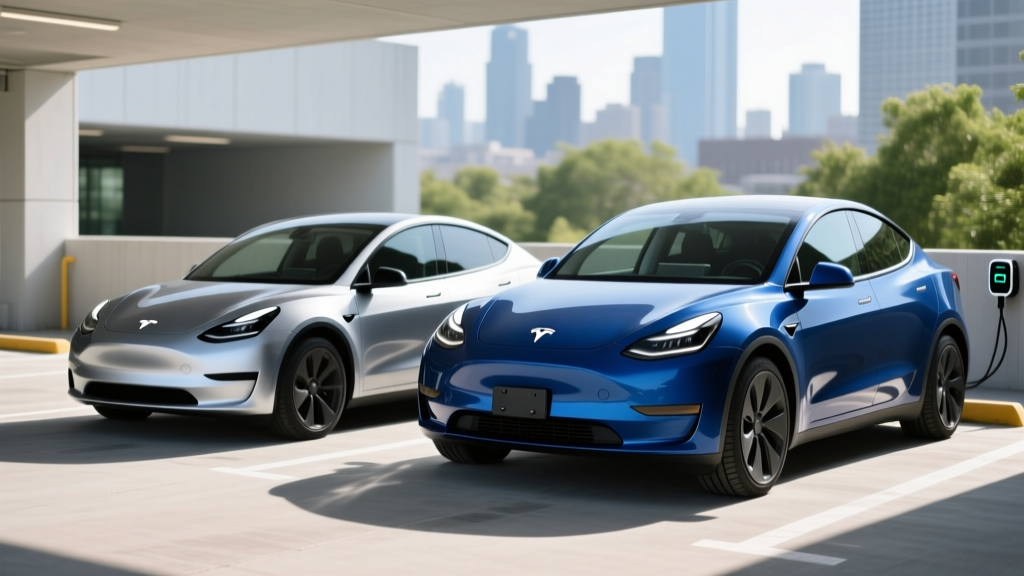
Below, we break down the two most popular Tesla lease candidates — the 2026 Model 3 Long Range AWD and the 2026 Model Y Long Range AWD — with exact specs, real-world range data, charging performance, and a clear look at how the federal tax credit works in a lease scenario.
Spec Comparison: 2026 Tesla Model 3 vs. Model Y for Leasing
| Specification | 2026 Model 3 Long Range AWD | 2026 Model Y Long Range AWD |
|---|---|---|
| Battery Capacity (usable) | 75 kWh (NMC) | 75 kWh (NMC) |
| EPA Estimated Range | 341 miles | 320 miles |
| MPGe (combined) | 134 MPGe | 122 MPGe |
| Efficiency (kWh/100 mi) | 25 kWh/100 mi | 28 kWh/100 mi |
| Max DC Fast-Charge Rate | 250 kW (peak) | 250 kW (peak) |
| 10–80% DC Charge Time | ~27 minutes | ~27 minutes |
| Level 2 Home Charging | 11.5 kW (~44 mi/hr) | 11.5 kW (~41 mi/hr) |
| 0–60 mph | 4.2 seconds | 4.8 seconds |
| Horsepower | 346 hp | 384 hp |
| Drivetrain | Dual-Motor AWD | Dual-Motor AWD |
| Cargo Volume | 23 cu ft (rear) + 3 cu ft (frunk) | 30 cu ft (rear) + 4.1 cu ft (frunk) |
| Rear Legroom | 35.3 in | 41.6 in |
| Battery & Drive Unit Warranty | 8 yr / 120,000 mi | 8 yr / 120,000 mi |
| Base MSRP (before incentives) | $47,740 | $50,630 |
Source: fueleconomy.gov and Tesla specifications. Prices reflect 2026 model-year data and may vary by configuration.
Real-World Range: What the EPA Sticker Doesn't Tell You
Model 3 Long Range: EPA 341 mi → Expect ~280–300 mi on sustained highway driving at 70–75 mph. In sub-30°F winter conditions, plan for 230–260 mi.
Model Y Long Range: EPA 320 mi → Expect ~265–285 mi highway. Winter range drops to roughly 215–245 mi.
The EPA combined cycle blends city and highway driving, and Tesla's regenerative braking system excels in stop-and-go traffic, which inflates the combined number. On real-world road trips at sustained highway speeds, energy consumption climbs significantly. The Model 3's lower drag coefficient (Cd 0.219) gives it an edge over the taller, boxier Model Y (Cd ~0.23) at speed.
Cold weather hits all EVs hard. Tesla's heat pump (standard on both models since 2021) is among the best in the industry at mitigating cabin-heating energy draw, but battery chemistry itself becomes less efficient below freezing. If you live in the Upper Midwest or Northeast, budget a 20–30% range reduction in January and February. Both vehicles support battery preconditioning — activate navigation to a Supercharger and the car will warm the battery en route, improving charge speed on arrival.
Charging Performance: DC Fast Charging and Home Setup
| Charging Level | Power / Rate | Model 3 (mi/hr added) | Model Y (mi/hr added) |
|---|---|---|---|
| Level 1 (120V household) | ~1.4 kW | ~3–4 mi/hr | ~3–4 mi/hr |
| Level 2 (240V, 48A Wall Connector) | 11.5 kW | ~44 mi/hr | ~41 mi/hr |
| DC Fast Charge (V3 Supercharger) | 250 kW peak | ~170 mi in 15 min | ~160 mi in 15 min |
Both the Model 3 and Model Y use the NACS (North American Charging Standard) connector natively, giving them full access to Tesla's Supercharger network — over 6,500 V3 and V4 stalls in the U.S. as of early 2026. This remains a significant practical advantage: Superchargers consistently deliver their rated speeds with minimal downtime, as measured by third-party reliability studies.
The DC fast-charging curve matters more than the peak kW number. Both vehicles peak at 250 kW but only sustain that rate between roughly 10–30% state of charge (SoC). By 50% SoC, power tapers to ~120 kW, and above 80% it drops further to ~40–60 kW. The 10–80% charge takes about 27 minutes under optimal conditions (warm battery, V3 stall). Charging from 80–100% can add another 20+ minutes — plan your road-trip stops accordingly.
For home charging, Tesla's Gen 3 Wall Connector ($475) on a 60-amp circuit delivers the full 11.5 kW. Expect a full overnight charge from 20% to 100% in roughly 6–7 hours for either vehicle. Professional installation of a 240V/60A circuit typically runs $800–$2,500 depending on panel proximity and local permitting. If your home has a 100-amp main panel, you may need a panel upgrade ($1,500–$3,000+) before adding a dedicated EV circuit — get a quote from a licensed electrician before signing a lease.
Tesla Car Lease Pricing: Monthly Costs and Tax Credit Mechanics
As of early 2026, Tesla's direct lease program for the Model 3 Long Range AWD typically starts around $499–$579/month for a 36-month term with 10,000 annual miles, depending on the money factor, residual value, and any current promotions. The Model Y Long Range AWD generally leases for $549–$649/month under similar terms. Exact figures fluctuate monthly based on Tesla's residual adjustments and interest-rate environment.
Here's the critical tax credit nuance for leasing:
When you lease a Tesla, the leasing company (Tesla Finance) is the legal owner of the vehicle. The $7,500 federal EV tax credit under IRS §30D technically goes to the lessor, not to you. Tesla has historically passed this credit through as a capitalized cost reduction (effectively lowering your monthly payment), but this is not guaranteed. Additionally, the commercial clean vehicle credit (§45W) may apply to leased vehicles under different rules, potentially allowing the lessor to claim the credit regardless of the buyer's income or the vehicle's battery-sourcing requirements.
Key eligibility factors if purchasing instead of leasing:
- Buyer AGI cap: $150,000 (single) / $300,000 (joint)
- Vehicle MSRP cap: $55,000 (sedans like Model 3) / $80,000 (SUVs like Model Y)
- Battery critical-mineral and component sourcing requirements (subject to annual tightening)
- Point-of-sale transfer option available for qualified purchases
For most lessees, the practical question is simple: what's my total monthly out-the-door cost? If Tesla applies the $7,500 credit as a cap-cost reduction on a 36-month lease, it reduces the monthly payment by roughly $208/month. Verify this directly in Tesla's lease quote before signing — the online configurator may or may not reflect the credit depending on your state and current policy.
Technology, Driver Assistance, and Ownership Experience
Both the Model 3 and Model Y ship with Tesla's 15.4-inch center touchscreen running the latest Tesla software, which includes navigation, streaming media, phone-as-key, and over-the-air updates that can add features post-delivery. The 2026 Model 3 (refreshed "Highland" platform) features improved cabin insulation, ventilated front seats, ambient lighting, and a rear passenger touchscreen — significant quality-of-life upgrades over pre-2024 versions.
Autopilot (standard) includes adaptive cruise control, lane-centering, and automatic emergency braking. This is an SAE Level 2 driver-assistance system — you must keep your hands on the wheel and eyes on the road at all times. Full Self-Driving (Supervised), a $8,000 add-on (or $99/month subscription as of 2026), adds automated lane changes, traffic-light recognition, and city-street navigation assistance. Despite the name, FSD remains SAE Level 2 and requires continuous driver supervision. It is not a self-driving system.
Notable drawbacks:
- No Apple CarPlay or Android Auto — Tesla uses its proprietary infotainment system exclusively.
- Minimalist interior — no physical buttons for climate, mirrors, or glovebox; everything routes through the touchscreen.
- Service center access — depending on your metro area, Tesla service appointments can have multi-week wait times. Mobile service handles many issues but not all.
- Insurance costs — Tesla insurance premiums run 20–40% higher than comparable ICE vehicles in most states due to repair costs and parts pricing. Get a quote before committing.
Who Should Lease a Tesla — and Who Shouldn't?
- You have reliable access to Level 2 home charging (garage or driveway with 240V capability).
- Your daily commute is under 80 miles round-trip, leaving ample range buffer.
- You want access to the Supercharger network for road trips without third-party charging app juggling.
- You prefer upgrading every 3 years and don't want to worry about EV depreciation or battery health.
- You live in a state with HOV-lane access incentives for EVs.
- You drive more than 15,000 miles/year — excess mileage penalties on Tesla leases run $0.20–$0.25/mile.
- You want the option to buy the car at lease-end (Tesla generally does not offer purchase options on leases).
- You live in an apartment or condo without charging access and rely solely on public infrastructure.
- You prefer physical controls, Apple CarPlay, or a traditional dealership service experience.
- You plan to modify the vehicle (wraps, aftermarket wheels) — lease return standards can penalize modifications.
Tesla vs. Key Competitors: Lease Comparison
The closest competitors to a Tesla car lease in 2026 include the Hyundai Ioniq 5, Ford Mustang Mach-E, and BMW i4. All three offer traditional lease structures with purchase options at lease-end, and the Hyundai and Ford now have NACS adapter access to the Supercharger network.
Where Tesla still leads: the integrated Supercharger network experience (no adapters needed), best-in-class software, and strong residual values that keep lease payments competitive. Where competitors lead: interior quality (BMW), physical controls and CarPlay (Hyundai, Ford), and the ability to purchase at lease-end (all three).
Pros
- Supercharger network access — fastest, most reliable DC charging in the U.S.
- Over-the-air updates keep the car current post-delivery
- Class-leading efficiency (MPGe) reduces electricity cost per mile
- Strong safety ratings (IIHS Top Safety Pick+, 5-star NHTSA)
- No dealership haggling — direct online lease configuration
- Heat pump standard for better cold-weather efficiency
Cons
- No purchase option at lease-end (in most cases)
- 10,000–15,000 mi/yr cap with $0.20–$0.25/mile overage penalty
- No Apple CarPlay or Android Auto
- Insurance premiums significantly above segment average
- Service center wait times can stretch to weeks in some metros
- Touchscreen-only controls frustrate some drivers
Frequently Asked Questions
What is the real-world range of a leased Tesla Model 3 or Model Y?
The Model 3 Long Range AWD carries an EPA rating of 341 miles, but expect 280–300 miles on highway road trips and 230–260 miles in freezing weather. The Model Y Long Range AWD is rated at 320 miles EPA, with real-world highway range around 265–285 miles and winter range of 215–245 miles. These figures assume standard 19-inch wheels; larger 20-inch wheels reduce range by roughly 5–8%.
How fast does a Tesla charge at home and on the road?
On a Level 2 home charger (240V, 48A), both vehicles add roughly 41–44 miles of range per hour, fully charging overnight in 6–7 hours. On a V3 Supercharger (250 kW DC), you can add up to 170 miles in 15 minutes under ideal conditions, with a 10–80% charge taking about 27 minutes. Charge speed tapers significantly above 80% SoC.
Does a Tesla car lease qualify for the $7,500 federal EV tax credit?
The tax credit mechanics for leases differ from purchases. In a lease, the lessor (Tesla Finance) is the vehicle owner and may claim the credit under §45W (commercial clean vehicle credit) or §30D. Tesla has historically passed the credit through as a capitalized cost reduction, lowering your monthly payment by roughly $200/month on a 36-month term. However, this is not guaranteed and may depend on battery-sourcing compliance and current IRS guidance. Confirm the credit's application in your specific lease quote. Consult IRS.gov or a tax professional for details.
Can I buy my Tesla at the end of the lease?
In most cases, no. Tesla's lease agreements generally do not include a purchase option at lease-end. The vehicle must be returned. Tesla has occasionally offered buyout options on specific models or in specific states, but this is the exception, not the rule. If ownership flexibility matters to you, consider purchasing with financing instead, or look at competitors like Hyundai, Ford, or BMW, which offer traditional lease-to-buy structures.
Is it worth leasing a Tesla vs. buying or leasing a competitor?
A Tesla car lease is worth it if you prioritize Supercharger access, software quality, and strong efficiency — and if you're comfortable with the no-buyout structure and mileage caps. If you drive high annual miles, want CarPlay, prefer physical buttons, or want the option to keep the car long-term, a Hyundai Ioniq 5 or Ford Mach-E lease may serve you better. Run the numbers on total lease cost (monthly payment × term + acquisition fee + disposition fee + any overage) and compare against a financed purchase, especially if you qualify for the full $7,500 tax credit as a buyer.
What happens if I exceed my lease mileage?
Tesla leases typically cap at 10,000, 12,000, or 15,000 miles per year. Excess mileage charges run $0.20–$0.25 per mile. If you drive 18,000 miles in a 15,000-mile/year lease, you'd owe $900–$1,500 at lease-end. Choose your mileage allowance carefully at signing — you generally cannot increase it mid-lease.
For the latest Tesla lease pricing, configure your vehicle at Tesla.com and request a lease quote. All specifications, pricing, and tax-credit details in this article reflect 2026 model-year data and are subject to change. Always verify with Tesla directly and consult a tax professional regarding credit eligibility.