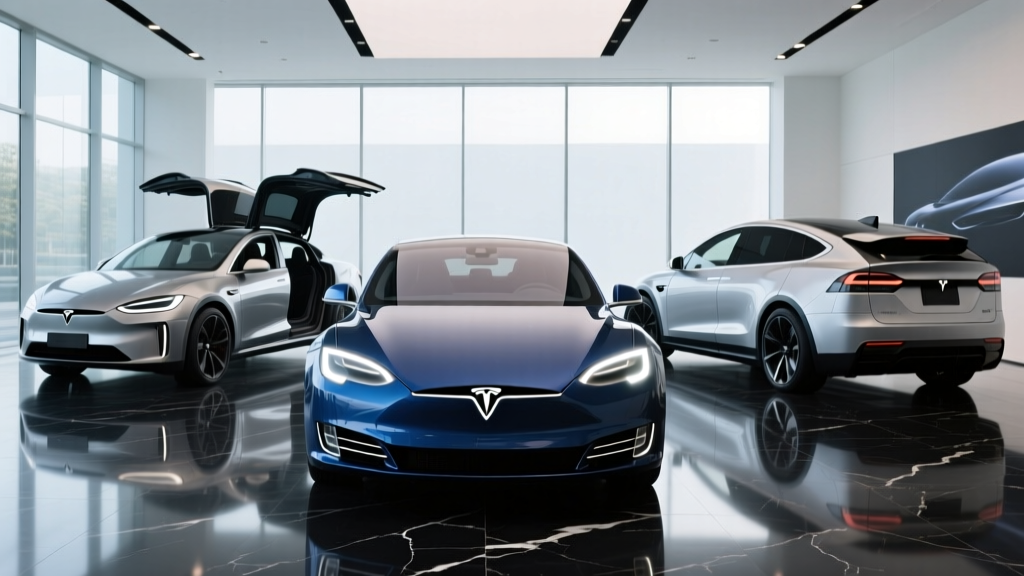
Search forums, Reddit threads, or EV Facebook groups long enough and you'll encounter a recurring rumor: Tesla cancels S and X. The claim usually cites slowing sales, the Cybertruck's production ramp, or Elon Musk's shifting priorities toward robotaxis and AI. But as of early 2026, both the Model S and Model X remain in production, available for order, and still represent the performance and luxury ceiling of Tesla's lineup.
That said, the rumors aren't entirely baseless. Tesla has not given either flagship a meaningful refresh since the 2021 "Plaid" overhaul. Sales volumes have declined sharply compared to the Model 3 and Model Y. And the company's Fremont factory has reallocated significant floor space to other programs. So while Tesla hasn't officially axed its original sedans and SUVs, the writing may be on the wall.
This review covers exactly where the Model S and Model X stand in 2026—real specs, real-world range, charging performance, pricing, tax-credit eligibility, and whether either vehicle still deserves your money versus fresh competitors from Lucid, BMW, Mercedes, and Rivian.
Current 2026 Model S and Model X: Spec Snapshot
Before we address the discontinuation rumors head-on, here's what Tesla is actually selling today. Both models share the same underlying platform and battery options, differing primarily in body style, weight, and interior space.
| Spec | Model S Long Range | Model S Plaid | Model X Long Range | Model X Plaid |
|---|---|---|---|---|
| EPA Range | 402 mi | 359 mi | 335 mi | 320 mi |
| Battery (usable) | ~95 kWh (NMC) | ~95 kWh (NMC) | ~95 kWh (NMC) | ~95 kWh (NMC) |
| Drivetrain | Dual-Motor AWD | Tri-Motor AWD | Dual-Motor AWD | Tri-Motor AWD |
| Horsepower | 670 hp | 1,020 hp | 670 hp | 1,020 hp |
| 0–60 mph | 3.1 sec | 1.99 sec | 3.8 sec | 2.5 sec |
| Peak DC Charge | 250 kW | 250 kW | 250 kW | 250 kW |
| 10–80% DCFC Time | ~30 min | ~30 min | ~32 min | ~32 min |
| Level 2 Home Rate | 11.5 kW (~34 mi/hr) | 11.5 kW (~34 mi/hr) | 11.5 kW (~30 mi/hr) | 11.5 kW (~30 mi/hr) |
| Efficiency | 120 MPGe (28 kWh/100mi) | 108 MPGe (31 kWh/100mi) | 105 MPGe (32 kWh/100mi) | 100 MPGe (34 kWh/100mi) |
| Base MSRP | $74,990 | $89,990 | $79,990 | $94,990 |
| Battery Warranty | 8 yr / 150,000 mi | 8 yr / 150,000 mi | 8 yr / 150,000 mi | 8 yr / 150,000 mi |
Source: fueleconomy.gov and Tesla's official specifications page.
Real-World Range: What the EPA Sticker Doesn't Tell You
Model S Long Range: EPA 402 mi — Expect ~330–350 mi on a highway road trip at 70–75 mph; ~270–300 mi in freezing temperatures with cabin heating.
Model S Plaid: EPA 359 mi — Expect ~290–310 mi highway; ~240–260 mi in cold weather.
Model X Long Range: EPA 335 mi — Expect ~270–290 mi highway; ~220–250 mi in cold weather.
Model X Plaid: EPA 320 mi — Expect ~260–280 mi highway; ~210–240 mi in cold weather.
The Model S Long Range remains one of the longest-range EVs sold in the United States. Its 402-mile EPA rating is genuinely useful for road trips—you can realistically stretch 300+ miles between Supercharger stops at interstate speeds without dipping below 10% State of Charge (SoC). However, the Plaid variant's tri-motor setup and stickier tires exact a noticeable efficiency penalty. The ~43-mile gap between the Long Range and Plaid is the real cost of that 1,020 hp.
The Model X, burdened by 500+ extra pounds of SUV body structure and less aerodynamic falcon-wing doors, sacrifices range across the board. If maximum distance per charge is your top priority, the sedan wins decisively. Cold weather hits both models roughly the same way—a 20–25% reduction in usable range at highway speeds in sub-freezing conditions. Tesla's heat pump, standard since the 2021 refresh, helps mitigate cabin-heating energy draw, but physics is physics.
One often-overlooked factor: Tesla's navigation-based battery preconditioning. When you route to a Supercharger, the car warms the battery pack to optimize charge acceptance. Without preconditioning—say, arriving at a non-Tesla DC fast charger cold—you may see peak charge rates well below 250 kW. Always precondition before fast charging.
Charging Speed: 250 kW Peak, but Mind the Curve
Both the Model S and Model X charge at up to 250 kW peak on V3 Superchargers or equivalent CCS/NACS DC fast chargers. That peak rate is genuinely fast—but it's a peak, not a sustained average. Here's what the actual charge curve looks like:
| SoC Range | Average Power | Approx. Time | Miles Added |
|---|---|---|---|
| 10–30% | ~230 kW | ~6 min | ~80 mi |
| 30–50% | ~200 kW | ~7 min | ~75 mi |
| 50–70% | ~150 kW | ~9 min | ~70 mi |
| 70–80% | ~100 kW | ~8 min | ~40 mi |
| 10–80% Total | — | ~30 min | ~265 mi |
The takeaway: you'll add the bulk of your range in the first 15–20 minutes. Charging past 80% slows dramatically—going from 80% to 100% can take as long as 10% to 80%. For road trips, the optimal strategy is to charge to 80%, then drive. Only charge to 100% if you need every mile to reach your destination.
At home on a Level 2 charger (240V, 48A circuit), both models accept up to 11.5 kW, which translates to roughly 30–34 miles of range per hour. An overnight charge from 20% to 80% takes about 5–6 hours—perfectly suited for daily driving. The onboard charger uses a NACS (Tesla) connector natively, so no adapter is needed at Superchargers. For Electrify America or other CCS networks, you'll need a NACS-to-CCS adapter (Tesla sells one for ~$250).
Why the "Tesla Cancels S and X" Rumor Persists
Let's address the keyword directly. As of this writing, Tesla has not officially canceled the Model S or Model X. Both remain orderable on Tesla's website, and Fremont continues to build them—albeit at much lower volumes than in their peak years. So why does the rumor refuse to die?
1. Declining sales volume. In 2024, Tesla reported that Model S/X deliveries combined fell below 50,000 units globally—a fraction of the Model Y's 800,000+. By 2025, quarterly reports often lumped S/X into an "other" category, signaling diminished strategic importance.
2. No significant refresh since 2021. The interior, exterior, and powertrain haven't changed meaningfully in five years. Competitors like the Lucid Air, BMW i7, and Mercedes EQS have introduced newer architectures, 800V charging systems, and more refined interiors.
3. Factory floor competition. Fremont has limited capacity. As Tesla prioritizes higher-volume vehicles and new programs, allocating lines to low-volume flagships becomes harder to justify.
4. Musk's public focus on robotaxis and AI. Tesla's investor narrative has shifted heavily toward Full Self-Driving, the Optimus robot, and the Cybercab. Legacy passenger sedans don't fit neatly into that story.
The most likely scenario: Tesla keeps the Model S and X in low-volume production through 2026–2027, possibly discontinuing them when a next-generation platform arrives or when the Fremont factory requires retooling. If you're considering buying one, the window may be narrowing—but it hasn't closed yet.
Pricing, Trims, and Federal Tax Credit Eligibility
Here's what you'll actually pay in 2026, and whether the federal §30D EV tax credit applies:
| Trim | Base MSRP | As-Tested (typical) | §30D Credit Eligible? | Effective Price (if eligible) |
|---|---|---|---|---|
| Model S Long Range | $74,990 | $78,000–$82,000 | No (MSRP cap: $55,000 sedans) | $74,990+ |
| Model S Plaid | $89,990 | $93,000–$98,000 | No (MSRP cap: $55,000 sedans) | $89,990+ |
| Model X Long Range | $79,990 | $83,000–$88,000 | No (MSRP cap: $80,000 SUVs)* | $79,990+ |
| Model X Plaid | $94,990 | $98,000–$104,000 | No (exceeds $80,000 SUV cap) | $94,990+ |
*Important caveat on the Model X: Under IRS §30D rules, the MSRP cap for SUVs, vans, and pickup trucks is $80,000. The Model X Long Range starts at $79,990, which technically falls under the cap. However, the vehicle must also meet critical minerals and battery component sourcing requirements that shift annually. As of 2026, Tesla's battery supply chain for the Model S/X (which uses Panasonic NMC cells manufactured in the U.S.) may partially qualify, but buyers should verify current-year eligibility on the IRS clean vehicle credits page and consult a tax professional before counting on the credit.
Additionally, the §30D credit has buyer income caps: $300,000 for joint filers, $225,000 for heads of household, $150,000 for single filers. The credit can now be transferred to the dealer at point of sale, reducing your purchase price directly—if the vehicle qualifies.
Realistically, most Model S and X buyers will not qualify for the full $7,500 federal credit. These vehicles are priced above the thresholds where the credit was designed to help. Budget accordingly.
Interior, Cargo, and Technology
The Model S and X share Tesla's minimalist interior architecture: a 17-inch landscape touchscreen, a 12.3-inch digital instrument cluster, a yoke-style steering wheel (conventional round wheel available at no cost), and a rear-seat entertainment screen.
Model S dimensions:
- Front legroom: 42.7 in | Rear legroom: 35.4 in
- Cargo (rear seats up): 28 cu ft | With seats folded: 79 cu ft
- Frunk: 3.1 cu ft
Model X dimensions:
- Front legroom: 41.2 in | Rear legroom: 37.1 in (5-seat config)
- Cargo (rear seats up): 37.1 cu ft | With seats folded: 85.1 cu ft
- Frunk: 6.6 cu ft
- Optional 6- or 7-seat configurations (third row is tight—best for children)
The Model X's falcon-wing rear doors are its most polarizing feature. They're genuinely useful in tight parking spots (opening upward rather than outward), but they add weight, complexity, and occasional reliability concerns. The hydraulic struts and sensors have improved since the early Model X years, but replacement cost out of warranty is significant.
Tech highlights:
- Tesla's infotainment remains the industry benchmark for responsiveness and over-the-air update frequency
- Autopilot is standard; Full Self-Driving (Supervised) is an $8,000 add-on — note that FSD is SAE Level 2, requiring full driver attention at all times
- 22-speaker audio system with active noise cancellation
- Gaming-capable rear screen (up to 10 teraflops of compute)
- HEPA air filtration with "Bioweapon Defense Mode"
Tesla's Full Self-Driving (Supervised) operates at SAE Level 2. You must keep your hands on the wheel (or yoke) and eyes on the road at all times. The system can handle highway lane changes, on-ramps, and some city streets, but it is not autonomous. Only Level 4 services like Waymo operate without driver supervision. Do not buy FSD expecting to nap behind the wheel.
How the Model S and X Compare to 2026 Rivals
The competitive landscape has shifted dramatically since these Teslas launched. Here's how they stack up against key alternatives:
| Attribute | Tesla Model S LR | Lucid Air Pure | BMW i7 xDrive50 | Tesla Model X LR | Rivian R1S (Dual) |
|---|---|---|---|---|---|
| EPA Range | 402 mi | 419 mi | 318 mi | 335 mi | 352 mi |
| Peak DC Charge | 250 kW | 250 kW | 195 kW | 250 kW | 220 kW |
| 0–60 mph | 3.1 sec | 5.2 sec | 4.5 sec | 3.8 sec | 4.5 sec |
| Base MSRP | $74,990 | $69,900 | $105,700 | $79,990 | $75,900 |
| Interior Quality | Good | Excellent | Outstanding | Good | Very Good |
| Supercharger Access | Native | Adapter needed | Adapter needed | Native | Native (NACS) |
Key takeaway: The Lucid Air now beats the Model S on both range and base price, with a more luxurious interior. The BMW i7 is a generation ahead in build quality and ride comfort, though at a steep premium. For SUVs, the Rivian R1S offers more rugged capability and three-row seating at a competitive price. The Model S and X retain advantages in Supercharger network access, software, and raw Plaid performance—but the gap has narrowed considerably.
Pros, Cons, and Who Should Buy
- Model S Long Range: 402-mile EPA range is still top-tier
- Supercharger network: seamless NACS-native charging, no adapter needed
- Plaid performance is absurd: 1.99-second 0–60 (Model S) is supercar territory
- OTA updates keep software current years after purchase
- Industry-leading infotainment and app integration
- Strong battery warranty: 8 yr / 150,000 mi with 70% minimum retention
- Model X offers falcon-wing doors and optional 7-seat layout
- No major refresh since 2021 — interior and exterior feel dated vs. Lucid, BMW
- Yoke steering is divisive and not ideal for low-speed maneuvers
- Build quality inconsistency (panel gaps, trim alignment) remains a Tesla weak point
- No federal tax credit for most buyers (MSRP and sourcing limitations)
- Plaid range penalty is substantial (~43 mi less on Model S)
- Model X falcon-wing doors add repair complexity and cost
- Insurance premiums are above segment average
- Discontinuation risk: long-term parts support uncertain if production ends
Who the Model S is best for: Performance-oriented drivers who want maximum range and acceleration in a sedan, prioritize Supercharger convenience, and don't need the interior opulence of a Mercedes or BMW. The Long Range trim is the sweet spot for road-trippers who want 300+ real-world highway miles between stops.
Who the Model X is best for: Families needing three-row seating, cargo flexibility, and SUV ride height with electric powertrain benefits. The falcon-wing doors are genuinely handy in tight school-dropoff lanes. But if you don't need the third row, the Rivian R1S and even the Model Y offer compelling alternatives at lower prices.
Who should look elsewhere: Buyers prioritizing interior luxury (look at Lucid Air or BMW i7), those who need the federal tax credit to justify the purchase (consider the Model Y, which still qualifies), or anyone worried about long-term support for a potentially discontinued model.
Frequently Asked Questions
Has Tesla officially canceled the Model S and Model X?
No. As of early 2026, both models remain in production and available for order on Tesla's website. However, sales volumes have dropped significantly and no major refresh has occurred since 2021, fueling ongoing speculation about eventual discontinuation.
What is the real-world highway range of the 2026 Model S?
The Model S Long Range (EPA 402 mi) delivers approximately 330–350 miles at sustained 70–75 mph highway speeds in moderate temperatures. In freezing weather, expect 270–300 miles. The Plaid variant sacrifices roughly 40–50 miles due to its tri-motor powertrain and wider tires.
How fast does the Model S charge at home and on DC fast chargers?
On a DC fast charger (V3 Supercharger or equivalent), the Model S peaks at 250 kW and charges from 10–80% in approximately 30 minutes with proper battery preconditioning. At home on a Level 2 charger (11.5 kW / 48A), it adds roughly 34 miles of range per hour, or about 200 miles overnight in 6 hours.
Does the Model S or Model X qualify for the $7,500 federal EV tax credit?
Likely not for most buyers. The §30D credit has an MSRP cap of $55,000 for sedans (disqualifying the Model S) and $80,000 for SUVs (the Model X Long Range barely qualifies at $79,990, but must also meet battery sourcing requirements that are difficult to confirm). Additionally, buyer income caps apply. Check the IRS clean vehicle credits page for current eligibility and consult a tax professional.
Is the Model S still worth buying vs. the Lucid Air or BMW i7?
It depends on your priorities. The Model S wins on Supercharger network access, software, and Plaid performance. The Lucid Air offers more range (419 mi EPA) and a more premium interior at a lower base price. The BMW i7 delivers superior build quality and ride comfort but costs significantly more and charges slower. Test-drive all three before deciding.
What happens to parts and service if Tesla discontinues the Model S/X?
Federal law requires automakers to supply parts for a minimum period after discontinuation (typically 10+ years for safety-related components). Tesla would likely continue supporting existing vehicles through its service network. However, body panels, falcon-wing components, and model-specific trim pieces could become harder to source over time, potentially increasing repair costs and wait times.
How does the battery warranty work?
Tesla covers the Model S and X battery and drive unit for 8 years or 150,000 miles, whichever comes first, with a guaranteed minimum 70% capacity retention. If the battery degrades below 70% of its original capacity within the warranty period, Tesla will repair or replace it at no cost. Real-world data suggests NMC packs in Teslas degrade approximately 10–15% over the first 100,000 miles, then slow significantly.
Bottom Line: Buy Now or Wait?
If you want a Model S or Model X, buying in 2026 is defensible. You're getting a proven, high-range, high-performance EV with native Supercharger access and years of software support ahead. The risk of discontinuation is real but not immediate—and even if Tesla ends production, the existing fleet will be supported for years.
That said, the competitive landscape has caught up. The Lucid Air is a genuinely compelling sedan alternative. The Rivian R1S is a more capable family SUV. And if federal tax-credit eligibility matters to your budget, neither flagship Tesla is the smartest financial play.
Drive one before you decide. The Model S Plaid's acceleration will make your jaw drop. The Model X's falcon-wing doors will delight your kids. But go in with eyes open about the aging platform, the no-credit pricing reality, and the possibility that you may be buying one of the last ones off the line.