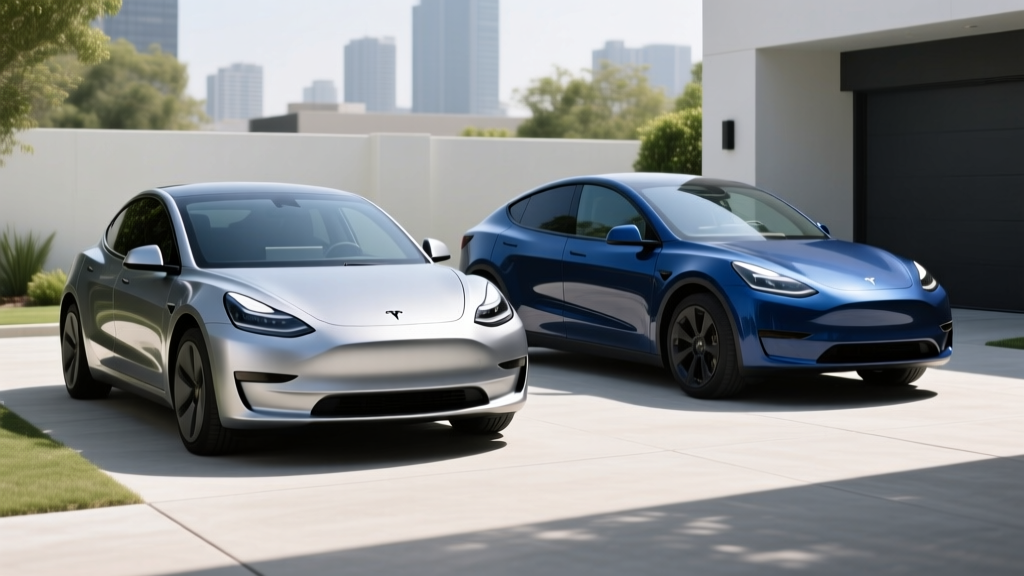
Search forums and EV subreddits long enough and you'll encounter the same recurring question: did Tesla cancel Model S and X? The short answer for 2026 is no — both the Model S sedan and Model X SUV remain in production and available to order. But the longer answer is more nuanced. Tesla has progressively narrowed its focus toward the higher-volume Model 3, Model Y, Cybertruck, and upcoming next-generation platform, leaving its legacy flagship vehicles in an unusual position: still sold, still updated incrementally, but clearly no longer the center of Tesla's strategic gravity.
This review examines the 2026 Tesla Model S and Model X as they exist today — their real-world range, charging behavior, pricing after federal tax credits, and whether either makes sense against a rapidly evolving luxury EV field that now includes the Lucid Air, BMW i7, Mercedes EQS, and Rivian R1S.
Why the "Tesla Cancel Model S and X" Rumors Won't Die
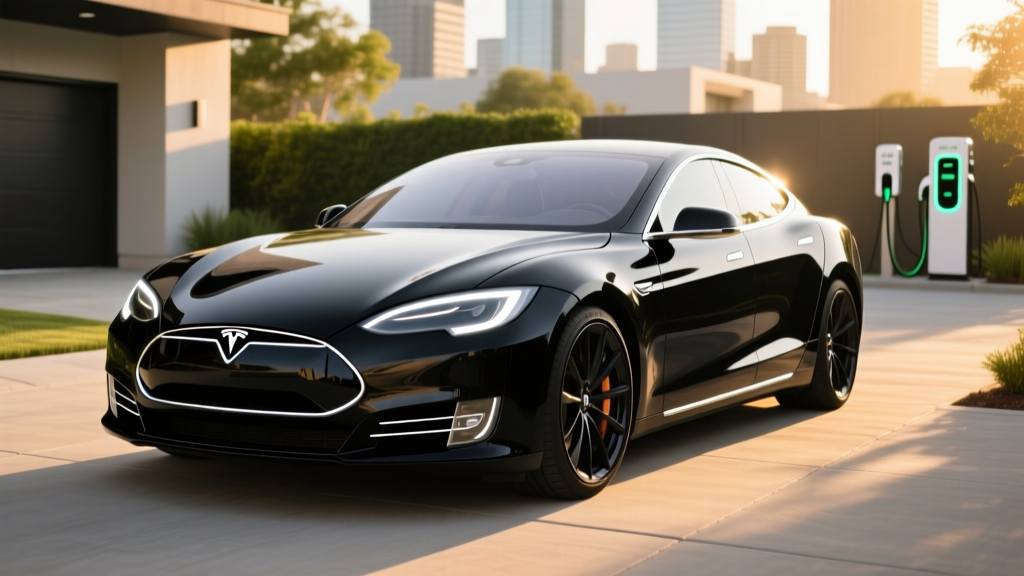
Tesla introduced the Model S in 2012 and the Model X in 2015. Both ride on the same original platform architecture, which Tesla refreshed significantly in 2021 with new powertrains (Plaid tri-motor), a horizontal 17-inch touchscreen, a yoke steering option, and revised interiors. Since that overhaul, updates have been incremental — new paint colors, wheel options, and software features — rather than generational.
The cancellation speculation stems from several real signals:
- Low production volume: Tesla reports Model S/X deliveries as a combined line item, typically accounting for under 5% of total quarterly output. In Q4 2025, combined S/X deliveries were roughly 13,000 units globally — a fraction of the ~485,000 Model 3/Y units delivered in the same period.
- Fremont line reallocation: Tesla has periodically retooled portions of the Fremont factory for newer products, leading to speculation that the S/X line could eventually be sunset.
- Platform age: The underlying architecture dates back over a decade. Competitors have launched on dedicated 800V+ platforms (Lucid, Hyundai E-GMP, Porsche PPE) that offer structural and efficiency advantages.
- Elon Musk's public commentary: Tesla's CEO has occasionally suggested that the Model S and X are nearing the end of their natural lifecycle, though no official discontinuation date has been announced as of early 2026.
For now, both vehicles remain orderable on Tesla's website with estimated delivery windows. Buyers should simply be aware they're purchasing a mature platform, not a brand-new architecture.
2026 Model S: Range, Battery, and Efficiency
| Spec | Long Range (Dual-Motor AWD) | Plaid (Tri-Motor AWD) |
|---|---|---|
| EPA Range | 402 miles | 359 miles |
| Battery (usable, est.) | ~95 kWh, NMC | ~95 kWh, NMC |
| Drivetrain | Dual-motor AWD | Tri-motor AWD |
| Horsepower | 670 hp | 1,020 hp |
| 0–60 mph | 3.1 sec | 1.99 sec |
| Top Speed | 155 mph | 200 mph |
| MPGe (combined) | 120 MPGe | 116 MPGe |
| Efficiency | 28 kWh/100 mi | 29 kWh/100 mi |
| Cargo Volume | 28 cu ft (rear seats up), 79 cu ft (folded) + frunk | Same |
| Rear Legroom | 40.9 in | 40.9 in |
| Base MSRP | $74,990 | $89,990 |
The EPA rates the Model S Long Range at 402 miles. In real-world highway driving at 70–75 mph in moderate temperatures (60–80°F), expect approximately 340–365 miles before needing to charge. In cold weather (below 32°F), range can drop to 280–310 miles due to cabin heating demands and reduced battery chemistry efficiency, even with Tesla's heat pump. City driving with frequent regenerative braking opportunities will get you closer to the EPA figure, sometimes exceeding 380 miles.
Tesla continues to use NMC (nickel manganese cobalt) chemistry in the Model S and X. NMC offers higher energy density than LFP (lithium iron phosphate), which is why it's used in Tesla's performance and long-range variants. The trade-off is that NMC batteries benefit from being kept between 20–80% state of charge for daily use, whereas LFP packs (found in the base Model 3) can be charged to 100% regularly without significant degradation concern. The Model S battery pack carries an 8-year/150,000-mile warranty with a minimum 70% capacity retention threshold, per Tesla's warranty documentation.
Charging Speed: DC Fast Charge and Home Level 2
| Charging Method | Power / Rate | Speed (Miles Added) | Notes |
|---|---|---|---|
| DC Fast Charge (Supercharger V3/V4) | Up to 250 kW peak | ~200 miles in 15 min (claimed peak) | 10–80% in approximately 25–30 min; tapers significantly above 80% |
| DC Fast Charge (CCS adapter) | Up to 250 kW at compatible stations | Similar to Supercharger | Requires Tesla CCS adapter (included with newer deliveries) |
| Level 2 — Tesla Wall Connector (48A) | 11.5 kW | ~34 miles per hour | Requires 60A circuit; 8–10 hr for full charge |
| Level 2 — NACS destination charger | Up to 11.5 kW (varies) | ~30–34 miles per hour | Depends on site amperage |
| Level 1 (120V household) | ~1.4 kW | ~3–4 miles per hour | Emergency/trickle only |
The Model S and X peak at 250 kW on DC fast charging, which was class-leading in 2021 but now trails competitors on 800V architectures. The Lucid Air, for example, can accept over 300 kW at compatible chargers, and Hyundai/Kia's E-GMP vehicles sustain strong charge rates thanks to their 800V systems. The Model S charges on Tesla's 400V architecture, which limits peak charge rate relative to battery size.
The practical charging curve matters more than the peak number. In real-world testing at a V3 Supercharger, the Model S Long Range typically:
- Holds near 250 kW from roughly 5–25% SoC
- Tapers to ~175 kW by 40% SoC
- Drops to ~100 kW by 60% SoC
- Falls below 50 kW past 80% SoC
This means a 10–80% charge takes approximately 25–30 minutes under ideal conditions (battery preconditioned via navigation routing to the charger). Without preconditioning — say, arriving at a charger without the car expecting it — add 5–10 minutes as the battery warms to optimal charging temperature.
At home, a Tesla Wall Connector on a 60-amp circuit delivers 11.5 kW, adding roughly 34 miles of range per hour. A full overnight charge (10 hours) replenishes the entire pack. Installation costs for a Level 2 home setup typically range from $800–$2,500 depending on panel proximity and local electrical code requirements, on top of the ~$400 Wall Connector hardware cost.
2026 Model X: What Changes for the SUV
The Model X shares its platform and powertrain options with the Model S but adds SUV utility, falcon-wing rear doors, and available three-row seating. The trade-offs are additional weight and reduced aerodynamic efficiency.
| Spec | Long Range (Dual-Motor AWD) | Plaid (Tri-Motor AWD) |
|---|---|---|
| EPA Range | 335 miles (20" wheels) / 312 miles (22") | 311 miles |
| Battery (usable, est.) | ~95 kWh, NMC | ~95 kWh, NMC |
| Horsepower | 670 hp | 1,020 hp |
| 0–60 mph | 3.8 sec | 2.5 sec |
| MPGe (combined) | 104 MPGe | 98 MPGe |
| Cargo Volume | Up to 88 cu ft (5-seat, rear folded) + frunk | Same |
| Towing Capacity | 5,000 lbs | 5,000 lbs |
| Base MSRP | $79,990 | $94,990 |
The EPA rates the Model X Long Range at 335 miles with 20-inch wheels. Real-world highway driving in moderate conditions yields approximately 275–300 miles. Cold weather (sub-freezing) can reduce this to 230–260 miles. The Model X's larger frontal area and heavier curb weight (~5,100 lbs) penalize efficiency compared to the sedan, especially at sustained highway speeds.
The falcon-wing rear doors remain the Model X's signature feature — genuinely useful for loading children into car seats in tight parking spaces, though they add mechanical complexity and have historically been a source of maintenance issues. Tesla has improved the door seals and actuator reliability since the early production years, but it's worth noting that out-of-warranty falcon-wing repairs can be costly.
Pricing, Tax Credits, and Total Cost
| Model | Base MSRP | Federal §30D Credit | Effective Price | Eligibility Notes |
|---|---|---|---|---|
| Model S Long Range | $74,990 | Up to $7,500 | ~$67,490 | Subject to income caps, battery sourcing, and point-of-sale transfer |
| Model S Plaid | $89,990 | Up to $7,500 | ~$82,490 | Same conditions apply |
| Model X Long Range | $79,990 | Up to $7,500 | ~$72,490 | Same conditions apply |
| Model X Plaid | $94,990 | Up to $7,500 | ~$87,490 | Same conditions apply |
Critical tax credit caveats: Under current IRS §30D rules (as outlined on irs.gov), the $7,500 federal credit is not guaranteed for every buyer. Eligibility depends on:
- Buyer income caps: Modified adjusted gross income must not exceed $300,000 (joint filers), $225,000 (head of household), or $150,000 (single filers).
- MSRP caps: The vehicle MSRP must not exceed $55,000 for sedans (Model S) or $80,000 for SUVs/trucks/vans (Model X). The Model S Long Range at $74,990 exceeds the sedan cap — this is a key issue that may disqualify the Model S from the credit unless Tesla reclassifies it or adjusts pricing. The Model X, classified as an SUV, falls under the higher $80,000 cap, making the Long Range trim eligible but the Plaid potentially over the limit.
- Battery sourcing requirements: A percentage of critical minerals and battery components must be sourced from the U.S. or free-trade-agreement countries. Tesla has worked to localize supply chains, but exact eligibility varies by production batch and model year. Always verify current eligibility on fueleconomy.gov before purchasing.
- Point-of-sale transfer: As of 2024, buyers can transfer the credit to the dealer at purchase, reducing the upfront price rather than waiting for a tax refund.
Always consult a tax professional and verify your specific eligibility before relying on the credit in your purchase budget.
Tech, Driver Assistance, and Interior
Both the Model S and X feature Tesla's current-generation infotainment system with a 17-inch horizontal touchscreen, a 12.3-inch digital instrument cluster, and a rear-seat 8-inch display. The system remains one of the most responsive and feature-rich in the industry, with native navigation, streaming apps, gaming capabilities, and over-the-air updates that continue to add functionality.
Tesla's Autopilot and Full Self-Driving (Supervised) are SAE Level 2 driver-assistance systems. The driver must remain attentive, keep hands on the wheel (or demonstrate engagement via camera monitoring), and be prepared to take over at any moment. These are not self-driving systems. Only Level 4 services like Waymo operate without a human driver in defined areas.
Autopilot (included standard) provides adaptive cruise control and lane-centering on highways. FSD (Supervised), a $8,000 add-on (or $99/month subscription as of late 2025), adds automated lane changes, traffic-light recognition, and navigation-guided routing. FSD has improved substantially but still requires active supervision — expect occasional phantom braking, missed construction-zone cones, and unpredictable behavior in unmapped areas.
Notable drawbacks:
- Yoke steering: The optional yoke (still standard on Plaid trims) is polarizing. It provides an unobstructed view of the instrument cluster but complicates low-speed maneuvers, three-point turns, and hand-over-hand parking. Many owners retrofit the standard round wheel after purchase.
- No physical stalks: Turn signals and gear selection are handled via touchscreen or steering-wheel buttons, which many drivers find less intuitive than traditional stalks.
- Minimalist interior: The cabin is clean but sparse. No physical climate knobs, no traditional gauge cluster beyond the small driver display. This appeals to some and frustrates others.
- Build quality variability: While improved from earlier years, panel gaps and interior trim alignment remain inconsistent across individual vehicles. Inspect your delivery carefully.
Model S/X vs. Key Competitors: Is It Still Worth Buying?
- You want the widest Supercharger network access without adapters
- Sub-2-second 0–60 performance (Plaid) matters to you
- You value Tesla's OTA update cadence and software ecosystem
- You prefer a sedan with 400+ miles of EPA range
- You want a newer 800V+ platform with faster sustained charging
- Interior luxury and material quality are top priorities
- You prefer traditional controls (stalks, knobs, physical buttons)
- Build quality consistency matters more than raw performance
The Lucid Air Pure ($69,900) offers 420 miles EPA on a modern 900V architecture with faster charging. The BMW i7 ($105,700+) delivers a far more luxurious cabin but at a steep premium. The Porsche Taycan prioritizes driving dynamics and 800V charging but sacrifices range (EPA ~280–310 mi depending on trim). For the Model X, the Rivian R1S ($75,900+) offers genuine off-road capability and three rows but less range, while the BMW iX ($87,000+) provides a more refined luxury experience.
The honest assessment: the Model S and X are still good vehicles — the Plaid variants are engineering marvels — but they're no longer the default best-in-class choices they were in 2018. They're the right pick if Tesla's ecosystem, Supercharger network, and software are your top priorities. They're the wrong pick if you want cutting-edge platform architecture or traditional luxury.
Pros
- Class-leading EPA range (402 mi, Model S LR)
- Access to 20,000+ Superchargers (plus NACS-opening networks)
- Plaid performance is unmatched at the price
- Continual OTA updates add features post-purchase
- Strong cargo utility (Model X: 88 cu ft, 5,000-lb tow)
- Heat pump standard for better cold-weather efficiency
Cons
- 400V architecture limits peak DC charge rate vs. 800V rivals
- Aging platform — no major redesign since 2021
- Yoke steering and stalkless controls polarize owners
- Model S may exceed $55K sedan MSRP cap for tax credit
- Build quality still inconsistent vs. German luxury OEMs
- FSD (Supervised) requires constant driver attention despite the name
- Long-term platform support uncertain given cancellation rumors
Who Should Buy the Model S or X in 2026?
Model S is best for: Tech-forward sedan buyers who prioritize range and Tesla's software/charging ecosystem over traditional luxury. The Long Range trim is a compelling daily driver for commuters with long one-way distances. Plaid suits enthusiasts who want supercar acceleration in a four-door package.
Model X is best for: Families needing three-row seating, cargo versatility, and towing capability (5,000 lbs) who want to stay within Tesla's ecosystem. The falcon-wing doors are genuinely useful for car-seat loading. However, the Rivian R1S and Kia EV9 offer more interior space and newer platforms if Tesla lock-in isn't essential.
Who should look elsewhere: Buyers who want the latest 800V charging architecture, traditional luxury interiors, or the reassurance of a brand-new platform with a decade of planned support ahead of it. If the cancellation rumors concern you about long-term parts availability and resale value, a newer-platform competitor may offer more peace of mind.
Frequently Asked Questions
Has Tesla officially announced it will cancel the Model S and Model X?
No. As of early 2026, Tesla has not issued any official discontinuation announcement. Both vehicles remain available to order on Tesla's website with production at the Fremont factory. However, Tesla's leadership has acknowledged the platform's maturity, and the company's investment is clearly focused on higher-volume products.
What is the real-world range of the 2026 Tesla Model S?
The EPA rates the Model S Long Range at 402 miles. Real-world highway driving in moderate temperatures yields approximately 340–365 miles. Cold weather (below freezing) reduces this to roughly 280–310 miles. The Plaid variant, rated at 359 miles EPA, delivers approximately 290–320 miles on the highway.
How fast does the Model S charge on DC fast chargers?
The Model S peaks at 250 kW on Tesla Superchargers and compatible CCS stations. A 10–80% charge takes approximately 25–30 minutes with battery preconditioning. The charge rate tapers significantly above 60% SoC, and the 400V architecture means it cannot match the sustained rates of 800V competitors like the Lucid Air or Porsche Taycan.
Does the 2026 Model S qualify for the $7,500 federal EV tax credit?
It depends. Under IRS §30D rules, sedans must have an MSRP at or below $55,000 to qualify. The Model S Long Range at $74,990 exceeds this cap, which likely disqualifies it unless Tesla reclassifies the vehicle or adjusts pricing. The Model X, as an SUV, falls under the $80,000 MSRP cap — making the Long Range trim potentially eligible, subject to income limits and battery-sourcing requirements. Always verify on fueleconomy.gov and consult a tax professional.
Should I buy a Model S/X now or wait for a potential replacement?
If you need a vehicle now and Tesla's ecosystem is important to you, the current Model S/X are mature, well-sorted products. If you can wait and want a next-generation platform, Tesla has not confirmed a successor. The risk of buying now is potential depreciation if a replacement is announced; the risk of waiting is that no replacement timeline exists and the current models could be discontinued without a direct successor.
Is FSD (Supervised) worth the $8,000 cost?
For most buyers, no — at least not yet. FSD (Supervised) is a Level 2 system that requires constant driver engagement. It handles highway driving competently in many scenarios but still struggles with construction zones, unmapped roads, and edge cases. The $99/month subscription is a lower-risk way to try it before committing to the full purchase. Treat it as a convenience feature, not a replacement for attentive driving.