The Quick Verdict: Tesla Camp Mode Across the 2026 Lineup
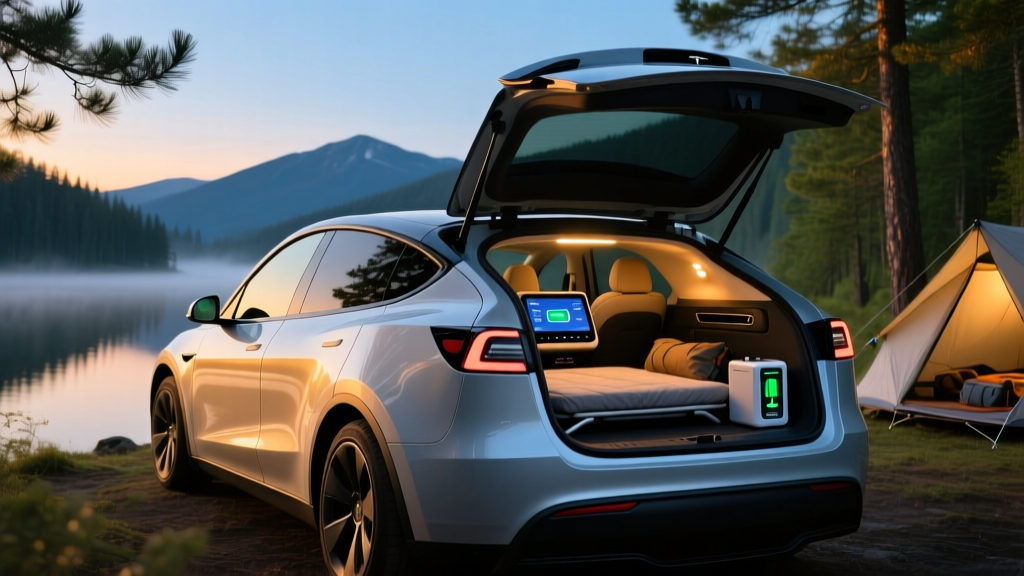
Tesla Camp Mode is one of the most practical software features in any electric vehicle. Activated from the climate-control menu, it keeps the cabin at a set temperature, maintains airflow, and powers USB ports and the touchscreen for entertainment — all while the vehicle is parked. But Camp Mode is only as useful as the battery behind it. A 10-hour night in a Model 3 Standard Range will cost you a different percentage of state of charge than the same night in a Model X with its 100 kWh pack.
This guide evaluates every current Tesla model through the lens of Camp Mode usability: how much energy overnight camping actually consumes, which model offers the best balance of range and interior space for sleeping, and what the real-world ownership picture looks like in 2026 — from charging speed to federal tax credit eligibility.
Spec-by-Spec: How Each Tesla Handles Camp Mode
The table below compares the 2026 Tesla lineup on the metrics that matter most for car camping: usable battery capacity, EPA range, interior cargo volume (with seats folded), and Camp Mode runtime estimates.
| Spec | Model 3 LR AWD | Model Y LR AWD | Model X LR | Cybertruck AWD |
|---|---|---|---|---|
| Usable Battery (kWh) | ~75 kWh (NMC) | ~75 kWh (NMC) | ~95 kWh (NMC) | ~112 kWh (NMC) |
| EPA Range | 363 mi | 320 mi | 335 mi | 340 mi |
| Real-World Highway Range | ~290–310 mi | ~260–280 mi | ~270–290 mi | ~260–280 mi |
| Cargo (seats folded, cu ft) | 23 cu ft (trunk+frunk) | 72 cu ft | 88 cu ft | ~68 cu ft (bed+frunk) |
| Camp Mode Runtime (est. hrs, mild weather) | ~60–75 hrs | ~60–75 hrs | ~80–95 hrs | ~90–110 hrs |
| 0-60 mph | 4.2 sec | 4.8 sec | 3.8 sec | 3.9 sec |
| Horsepower | 346 hp | 384 hp | 670 hp | 600 hp |
| Drivetrain | Dual-Motor AWD | Dual-Motor AWD | Dual-Motor AWD | Dual-Motor AWD |
| Efficiency (MPGe) | 132 MPGe | 122 MPGe | 109 MPGe | ~95 MPGe (est.) |
| Efficiency (kWh/100mi) | 25 kWh | 28 kWh | 31 kWh | ~35 kWh (est.) |
Charging Speed: Getting Back on the Road After Camping
Camp Mode is only half the equation. After a night (or a weekend) off-grid, you need to recharge efficiently. Tesla's Supercharger network remains the gold standard for DC fast charging reliability, but charge speeds vary significantly across the lineup.
| Charging Metric | Model 3 LR | Model Y LR | Model X LR | Cybertruck |
|---|---|---|---|---|
| Max DC Fast Charge (kW) | 250 kW | 250 kW | 250 kW | 250 kW (V3) / 350 kW (V4 est.) |
| 10–80% DCFC Time | ~27 min | ~27 min | ~32 min | ~28 min (V4 est.) |
| Level 2 Home Charging (kW) | 11.5 kW | 11.5 kW | 11.5 kW | 11.5 kW |
| Level 2 Miles per Hour | ~44 mi/hr | ~37 mi/hr | ~32 mi/hr | ~28 mi/hr |
| Connector | NACS (native) | NACS (native) | NACS (native) | NACS (native) |
Charging-curve reality: Tesla's 250 kW peak rate on V3 Superchargers is not sustained. Expect peak speeds between 20–50% SoC, tapering significantly above 60%. The Cybertruck's larger 112 kWh pack means more absolute energy to replenish, so while its peak rate is competitive, a full 10–80% session takes slightly longer in practice. Always precondition the battery via the navigation system before arriving at a Supercharger — this warms the pack and enables faster charge acceptance, particularly in cold weather.
Camp Mode Feature Breakdown: What It Actually Does
Tesla's Camp Mode is accessed through the climate control screen (tap the fan icon, then select "Camp"). Here's what the feature manages:
- Climate control: Maintains your selected cabin temperature indefinitely. The heat pump (standard on all current Teslas) handles heating efficiently down to roughly 0°F, below which resistive heating supplements it at higher energy cost.
- Airflow: Keeps cabin air circulating to prevent condensation buildup — critical when two people are breathing inside a sealed cabin overnight.
- USB power: All USB-C ports remain active for charging phones, laptops, or powering CPAP machines (a common use case).
- Touchscreen entertainment: The display stays on for Netflix, YouTube, Spotify, or the built-in "Campfire" visual with crackling audio — a gimmick, but one that kids and first-time car campers appreciate.
- Sentry Mode disabled: Camp Mode automatically turns off Sentry Mode to prevent the cameras and screen from cycling on and off, which wastes energy and disturbs sleep.
- Locking: Doors remain locked. Walk-up unlock and phone-as-key proximity features are paused to prevent accidental unlocking.
Pricing, Tax Credits, and Total Camping Cost
Base MSRPs for the 2026 model year are listed below. Federal tax credit eligibility under IRS §30D depends on MSRP caps ($55,000 for sedans, $80,000 for SUVs/trucks), buyer income limits ($150K single / $300K joint AGI), and battery component + critical mineral sourcing requirements that tighten annually.
| Model & Trim | Base MSRP | As-Tested (typical config) | §30D Credit Eligibility (2026) | Effective Price (with credit) |
|---|---|---|---|---|
| Model 3 Long Range AWD | $47,740 | $50,240 (w/ FSD) | Eligible — up to $7,500 (verify sourcing) | ~$40,240 |
| Model Y Long Range AWD | $52,490 | $54,990 (w/ wheels) | Eligible — up to $7,500 (verify sourcing) | ~$44,990 |
| Model X Long Range | $81,630 | $88,630 (w/ 6-seat) | Exceeds $80K SUV cap — NOT eligible | $81,630+ |
| Cybertruck AWD | $79,990 | $84,990 (w/ tonneau) | Eligible — up to $7,500 (verify sourcing) | ~$72,490 |
Critical caveat: The §30D credit's battery-sourcing requirements for critical minerals and components become stricter each year. As of 2026, a significant percentage of battery minerals must be sourced from the US or FTA partners, and components cannot come from "foreign entities of concern." Tesla's supply chain has adapted substantially, but eligibility can shift by model and production batch. Always verify current eligibility on IRS.gov before purchasing. The credit can now be transferred to the dealer at point of sale, reducing your out-of-pocket cost immediately rather than waiting for tax filing.
Interior Space and Sleeping Practicality
For car camping, cargo volume with seats folded is the metric that matters. Here's how each model accommodates a sleeping platform:
Model Y Long Range: The best all-around camping Tesla. With the rear seats folded, you get a mostly flat 72 cu ft floor that fits a full-size inflatable mattress or a custom foam pad. The panoramic glass roof provides stargazing without opening anything. Rear headroom is generous at ~39 inches. The frunk adds 4.1 cu ft for gear you want sealed from the cabin.
Model X Long Range: The most spacious option at 88 cu ft with both rear rows folded (5-seat config). The falcon-wing rear doors are dramatic but impractical in tight campsites — they need significant overhead clearance. The windshield is enormous and provides excellent morning light. However, the Model X's $81,630 starting price and ineligibility for the federal tax credit make it the most expensive camping platform in the lineup.
Model 3 Long Range: The budget pick with a compromise. Trunk volume is limited to ~23 cu ft (including the frunk), and while the rear seats do fold, the pass-through is narrower than the Model Y's. You can fit a single adult on a custom-cut foam pad, but couples will find it tight. Best suited for solo campers or as a secondary use case rather than a primary camping vehicle.
Cybertruck: The wildcard. The 6-foot bed is ideal for truck-bed camping with a canopy or bed tent, and the frunk ("front trunk") adds substantial sealed storage. The stainless steel exoskeleton is dent-proof against trail brush. However, the angular bed walls require custom mattress solutions, and the Cybertruck's sheer width (86.6 inches with mirrors) can be challenging on narrow forest roads. The 112 kWh battery gives the longest Camp Mode runtime — potentially 4+ nights in mild weather without recharging.
Pros and Cons: Tesla for Car Camping
Pros
- Camp Mode is genuinely best-in-class: integrated climate, entertainment, and USB power with zero aftermarket equipment needed
- Heat pump is highly efficient — far less energy draw than resistive heating in competitors
- Supercharger network remains the most reliable DC fast-charging ecosystem for remote-area recharging
- NACS connector is now the North American standard, ensuring long-term charging compatibility
- OTA updates continually refine Camp Mode (recent additions include scheduled wake-up alarms and improved condensation management)
- No tailpipe emissions — camp in areas where idling gas vehicles are restricted
Cons
- No built-in 120V AC outlet — cannot power appliances without a separate inverter/power station
- Cabin air recirculates only; no fresh-air intake mode in Camp Mode
- Model X exceeds the $80K MSRP cap, disqualifying it from the §30D federal tax credit
- Model 3 trunk space is limiting for couples or gear-heavy camping trips
- Cybertruck's width and weight (nearly 7,000 lbs) restrict access to some forest service roads and soft-ground campsites
- Sentry Mode is disabled during Camp Mode — no security recording while you sleep
Warranty and Battery Longevity for Frequent Campers
All 2026 Teslas carry the same baseline warranty structure:
- Basic vehicle: 4 years / 50,000 miles
- Battery & drive unit: 8 years / 120,000 miles (Model 3/Y) or 8 years / 150,000 miles (Model X/Cybertruck), with a guaranteed minimum 70% capacity retention over the warranty period
For frequent campers: Running Camp Mode nightly adds HVAC cycles but minimal additional battery degradation beyond normal use. Tesla's NMC chemistry typically loses 5–8% capacity over the first 50,000 miles, then stabilizes. According to Tesla's own impact reports, their packs retain roughly 85% capacity at 200,000 miles. The LFP (lithium iron phosphate) packs in the Standard Range models tolerate regular 100% charging better than NMC, but the Standard Range's smaller battery (~60 kWh) means shorter Camp Mode runtime — roughly 48–60 hours in mild weather versus 60–75+ for Long Range models.
Which Tesla Should You Buy for Camping?
Choose the Cybertruck AWD if: You need truck-bed camping versatility, maximum battery capacity (112 kWh for 4+ nights off-grid), and don't mind the $72,490+ effective price and large vehicle footprint.
Choose the Model 3 Long Range if: You're a solo camper prioritizing efficiency (132 MPGe, lowest kWh/100mi in the lineup) and the lowest entry price (~$40,240 after credit). Accept the tighter sleeping quarters.
Choose the Model X if: Space is paramount, budget is flexible, and you understand it does NOT qualify for the federal tax credit due to the $80K MSRP cap. Best for families who also want a daily-driver three-row SUV.
Frequently Asked Questions
How much battery does Tesla Camp Mode use overnight?
In mild conditions (60–75°F), Camp Mode consumes roughly 1% of battery per hour — about 8% over an 8-hour night. In cold weather (below freezing), expect 2–3% per hour, or 16–24% overnight. Always arrive at your campsite with at least 30–40% charge as a buffer.
Does Tesla Camp Mode qualify for the federal EV tax credit?
Camp Mode is a software feature, not a separate product. The underlying vehicle may qualify for the IRS §30D credit of up to $7,500, subject to MSRP caps ($55K sedans, $80K SUVs/trucks), buyer income limits ($150K single / $300K joint), and battery-sourcing requirements. Verify at IRS.gov before purchase.
Can I run a CPAP machine on Tesla Camp Mode?
Yes, via the USB-C ports (up to 65W on the rear ports in current models). Most CPAP machines draw 30–60W, well within USB-C capacity. Alternatively, use a USB-to-DC adapter. The energy draw is negligible — roughly 0.5 kWh over 8 hours.
Is Tesla Camp Mode better than a portable power station?
For climate control and basic device charging, Camp Mode is superior — it uses the vehicle's large battery and heat pump rather than a separate unit. For powering AC appliances (blenders, laptops with proprietary chargers, heated blankets with AC plugs), a portable power station like an EcoFlow or Jackery is still necessary since Teslas lack built-in AC outlets.
What's the real-world range of a Tesla after a night of camping?
Subtract roughly 8–20% from your current charge depending on temperature. A Model Y Long Range starting a camping night at 80% SoC (256 EPA miles) in 65°F weather will wake up at ~72% SoC (~230 miles). In 20°F weather, expect to wake up closer to 60–64% (~192–205 miles). Check fueleconomy.gov for official EPA figures by model.
Can Camp Mode be used in extremely cold weather?
Yes, Tesla's heat pump operates efficiently down to approximately 0°F. Below that, supplemental resistive heating kicks in, increasing energy consumption. In sub-zero testing, expect 3%+ per hour battery drain. Precondition the battery before driving in the morning to restore regenerative braking and charge acceptance.