What Is Tesla Cabin Overheat Protection and Why Do Owners Search for It?
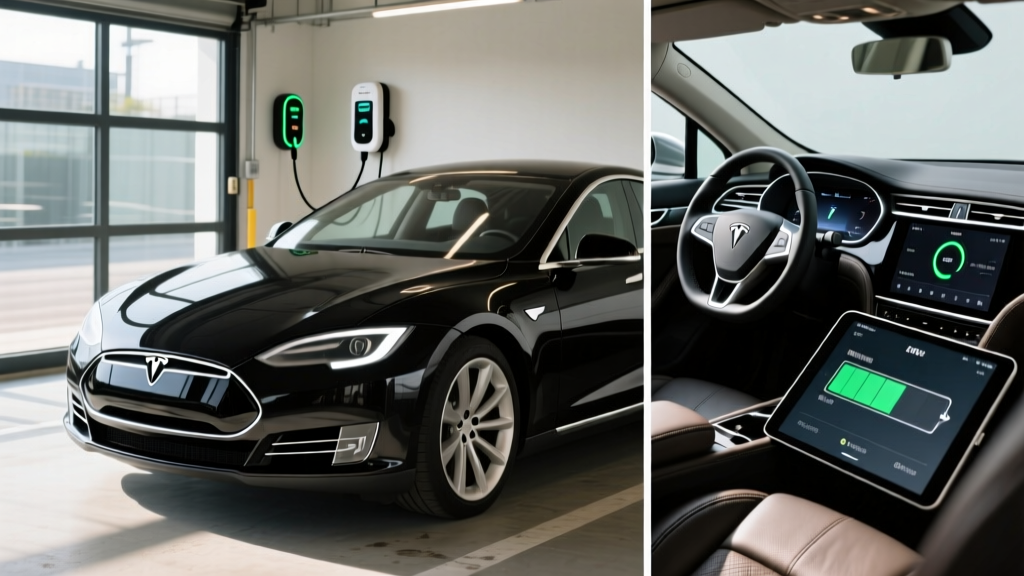
If you've parked a Tesla in a sun-baked lot and returned to a cabin that feels like an oven, you've likely searched for cabin overheat protection Tesla to understand how the feature works and whether it's worth the energy cost. Tesla's Cabin Overheat Protection (COP) is a thermal-management feature that activates after you exit the vehicle, using the air-conditioning compressor to keep the interior below a set threshold — typically 105°F (40°C) — for up to 12 hours. It's not a gimmick; it's a direct response to the reality that dark interiors in direct sunlight can exceed 150°F within an hour, degrading upholstery, stressing electronics, and creating an unsafe environment for children or pets left momentarily.
For 2026, every current-production Tesla — Model 3, Model Y, Model S, Model X, and the Cybertruck — includes Cabin Overheat Protection as standard software. The feature has matured since its 2016 debut on the Model S, and today it offers user-selectable modes that let owners balance cabin comfort against battery drain. Understanding those modes, the real energy cost, and how COP interacts with range and battery chemistry is essential for any Tesla buyer or current owner in hot climates.
How Tesla Cabin Overheat Protection Actually Works
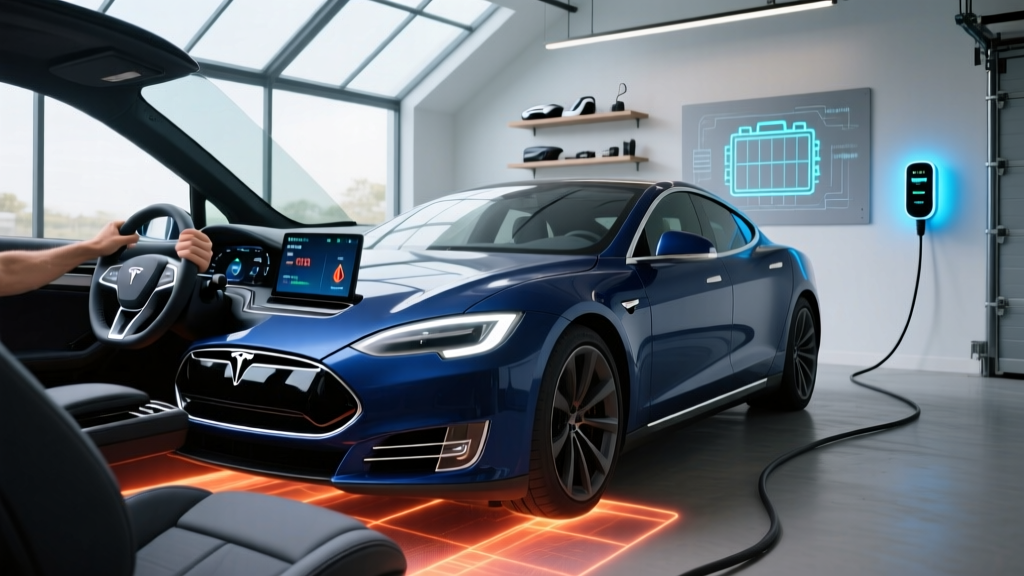
Cabin Overheat Protection relies on Tesla's high-voltage traction battery to power the HVAC compressor after the vehicle is parked and the driver exits. The system monitors the cabin temperature via interior sensors and engages the compressor when the temperature exceeds the configured threshold. Tesla offers three modes through the Climate settings menu:
- On (A/C): Runs the full air-conditioning compressor to actively cool the cabin. Highest energy draw but most effective in extreme heat.
- No A/C (Fan Only): Runs only the cabin fan, circulating air without active cooling. Lower energy consumption but less effective above 110°F ambient.
- Off: Disables the feature entirely. Cabin temperature rises naturally.
The system operates for up to 12 hours after the driver exits, or until the battery's State of Charge (SoC) drops to 20% — a built-in safeguard to prevent the battery from depleting to a level that could strand you. Tesla also pairs COP with its cabin ventilation logic: on some models, the system will crack windows slightly (if equipped with ventilated window controls) to allow hot air to escape before engaging the compressor.
Cabin Overheat Protection Across 2026 Tesla Models
While the software feature is identical across the fleet, the battery capacity, chemistry, and thermal-management hardware differ by model — and those differences affect how COP performs and how much range you sacrifice. Below is a spec table covering the 2026 Tesla lineup most relevant to buyers researching this feature.
| Spec | 2026 Model 3 Long Range AWD | 2026 Model Y Long Range AWD | 2026 Model S Long Range |
|---|---|---|---|
| EPA Range | 341 mi | 320 mi | 402 mi |
| Battery (usable) | 75 kWh (NMC) | 75 kWh (NMC) | 100 kWh (NMC) |
| Efficiency | 132 MPGe / 25 kWh/100mi | 122 MPGe / 27 kWh/100mi | 124 MPGe / 27 kWh/100mi |
| Max DC Fast Charge | 250 kW | 250 kW | 250 kW |
| 10–80% DC Time | ~25 min | ~27 min | ~30 min |
| Level 2 Home Rate | 11.5 kW (~44 mi/hr) | 11.5 kW (~44 mi/hr) | 11.5 kW (~44 mi/hr) |
| 0–60 mph | 4.2 sec | 4.8 sec | 3.1 sec |
| Horsepower | 346 hp | 384 hp | 670 hp |
| Drivetrain | Dual-Motor AWD | Dual-Motor AWD | Dual-Motor AWD |
| Base MSRP | $47,740 | $48,990 | $79,990 |
| Battery Warranty | 8 yr / 120,000 mi | 8 yr / 120,000 mi | 8 yr / 150,000 mi |
| COP Standard? | Yes | Yes | Yes |
Sources: fueleconomy.gov, Tesla Model S specs, Tesla Model 3 specs.
Battery Chemistry and COP: What LFP vs NMC Owners Should Know
Tesla currently uses two primary battery chemistries across its lineup: NMC (nickel manganese cobalt) in Long Range and Performance variants, and LFP (lithium iron phosphate) in the base Rear-Wheel-Drive Model 3 and Model Y. The chemistry matters for Cabin Overheat Protection because it affects how you should manage State of Charge (SoC) — and COP draws from that charge while parked.
| Factor | LFP (Base RWD Models) | NMC (Long Range / Performance) |
|---|---|---|
| Recommended Daily Charge | 100% | 80% (daily), 100% for trips |
| Energy Density | Lower (heavier pack for same kWh) | Higher (lighter, more range) |
| Cycle Life | ~3,000+ cycles | ~1,500–2,000 cycles |
| Cold-Weather Performance | Weaker (more range loss) | Better (less range loss) |
| COP Buffer Headroom | More (100% daily charge = bigger buffer) | Less (80% daily = ~15 kWh usable buffer before 20% floor) |
For LFP owners, Cabin Overheat Protection is essentially worry-free: you charge to 100% daily, and the system has the full pack capacity to draw from without degradation concerns. NMC owners who charge to 80% daily have roughly 60 kWh usable (on a 75 kWh pack), and COP will cut off at 20% SoC — meaning about 45 kWh of usable range is available before COP shuts down. In practice, COP never draws enough to approach that floor in a single day, but on extended parking (airport lots, multi-day outdoor events), the 20% cutoff is a real safeguard worth understanding.
Pricing, Tax Credits, and Which Tesla Model Makes Sense
Federal tax credit eligibility under IRS §30D is a moving target for Tesla buyers. As of 2026, the following rules apply:
- MSRP Cap: Sedans (Model 3) must be under $55,000; SUVs/trucks (Model Y, Cybertruck, Model X) must be under $80,000.
- Income Cap: Modified adjusted gross income (MAGI) must not exceed $150,000 (single), $225,000 (head of household), or $300,000 (joint).
- Battery Sourcing: Critical minerals and battery components must meet escalating domestic-content thresholds — Tesla's shifting supply chain means eligibility varies by build month. Always confirm via the IRS's official list at the point of purchase.
- Point-of-Sale Transfer: Eligible buyers can transfer the credit to the dealer at purchase, reducing the out-of-pocket price immediately rather than waiting for a tax refund.
| Model / Trim | Base MSRP | Est. After §30D Credit | Credit Eligible? |
|---|---|---|---|
| Model 3 RWD | $38,990 | ~$31,490 | Yes (if sourcing rules met) |
| Model 3 Long Range AWD | $47,740 | ~$40,240 | Yes (under $55K sedan cap) |
| Model Y Long Range AWD | $48,990 | ~$41,490 | Yes (under $80K SUV cap) |
| Model Y Performance | $53,990 | ~$46,490 | Yes (under $80K SUV cap) |
| Model S Long Range | $79,990 | $79,990 (no credit) | No — exceeds $55K sedan cap |
| Model X Long Range | $84,990 | $84,990 (no credit) | No — exceeds $80K SUV cap |
Credit eligibility is subject to change. Confirm current sourcing requirements at irs.gov before purchase.
Cabin Overheat Protection vs Competitor Thermal Management
Tesla isn't the only automaker offering post-parking climate control, but its implementation is the most robust. Hyundai's Remote Smart Parking Assist and Kia's Remote Smart Parking allow you to pre-condition the cabin via the app before returning, but neither runs autonomously for 12 hours after exit. Ford's BlueCruise-equipped Mustang Mach-E and F-150 Lightning offer scheduled preconditioning but lack a passive overheat-protection mode. Rivian's R1S and R1T offer "cabin comfort" modes, but they require manual activation via the app rather than running automatically after every exit.
The key differentiator for Tesla's COP is autonomy: once enabled, it activates every time you leave the car without any app interaction, schedule setup, or manual trigger. That's why the search volume for "cabin overheat protection Tesla" remains high — it's a feature Tesla owners rely on passively, and prospective buyers want to confirm it exists before purchasing.
Pros, Cons, and Who Should Prioritize This Feature
Pros
- Runs autonomously for up to 12 hours — no app or schedule needed
- Protects interior materials, electronics, and child-seat surfaces from UV/heat degradation
- Configurable A/C vs fan-only modes let you balance energy vs cooling
- 20% SoC cutoff prevents battery depletion
- Standard on every 2026 Tesla — no extra-cost package required
- Pairs with Tesla app for real-time cabin temperature monitoring
Cons
- Consumes 1–3 kWh per day (3–9 miles of range) in hot climates
- Compressor cycling can be audible — noticeable in quiet garages
- Not a substitute for Dog Mode or human supervision for living occupants
- No COP equivalent for extreme cold (Tesla does not offer a "cabin freeze protection" mode)
- Fan-only mode is insufficient above ~110°F ambient in direct sun
Who This Feature Suits Best
Hot-climate commuters (Arizona, Texas, Florida, Southern California): COP is essential. Park in an exposed lot for 8 hours and return to a cabin under 105°F instead of 155°F. The 3–9 mile daily range cost is trivial against a home-charging routine.
Families with child seats: Child-seat fabric and plastic buckles degrade rapidly at high temperatures. COP extends the life of expensive car seats and prevents the dreaded "hot buckle" burn.
Airport parkers and road trippers: If you park outdoors for multi-day trips, COP keeps the cabin manageable for the first 12 hours. Beyond that, precondition via the Tesla app before returning to the car.
Cold-climate owners (Minnesota, Montana, Maine): COP is irrelevant for you. Your thermal concern is cold-soak range loss, not overheat. Focus on preconditioning while plugged in and battery heating features instead.
Frequently Asked Questions
Does Cabin Overheat Protection drain the battery significantly?
In A/C mode, COP draws roughly 1–3 kWh over a 12-hour period in high-heat conditions. That equates to 3–9 miles of EPA-rated range — about 1–3% of a Long Range battery. In fan-only mode, consumption drops to under 0.5 kWh. For owners who charge at home nightly, the impact is negligible.
Can I adjust the temperature threshold for Cabin Overheat Protection?
Tesla sets the threshold at 105°F (40°C) and does not currently allow user adjustment. The system activates only when the cabin exceeds this temperature, so in mild weather (below 90°F ambient), COP may not engage at all.
Does Cabin Overheat Protection work if the car is not connected to Wi-Fi or cellular?
Yes. COP operates locally via the vehicle's onboard systems and does not require a network connection. However, you won't receive app notifications about cabin temperature or COP status without connectivity.
Is Cabin Overheat Protection the same as Dog Mode?
No. COP activates automatically after you exit and runs for up to 12 hours, maintaining a temperature below 105°F. Dog Mode is manually activated, maintains a specific user-set temperature, runs indefinitely (until battery depletion), and displays a message on the touchscreen. Use Dog Mode when a pet is in the car; use COP for empty-cabin protection after parking.
Does using Cabin Overheat Protection void the battery warranty?
No. COP is a Tesla-designed feature that operates within the battery management system's parameters. It respects the 20% SoC floor and does not cause abnormal degradation. Tesla's battery warranty — 8 years / 120,000 miles for Model 3/Y, 8 years / 150,000 miles for Model S/X — covers capacity retention to 70% regardless of COP usage.
How do I enable or disable Cabin Overheat Protection?
Navigate to Controls > Climate on the touchscreen, or use the Tesla app. You'll find the Cabin Overheat Protection toggle with the three mode options: On (A/C), No A/C (Fan Only), and Off. Settings persist across drives until changed.