The Truth About Tesla Butterfly Doors
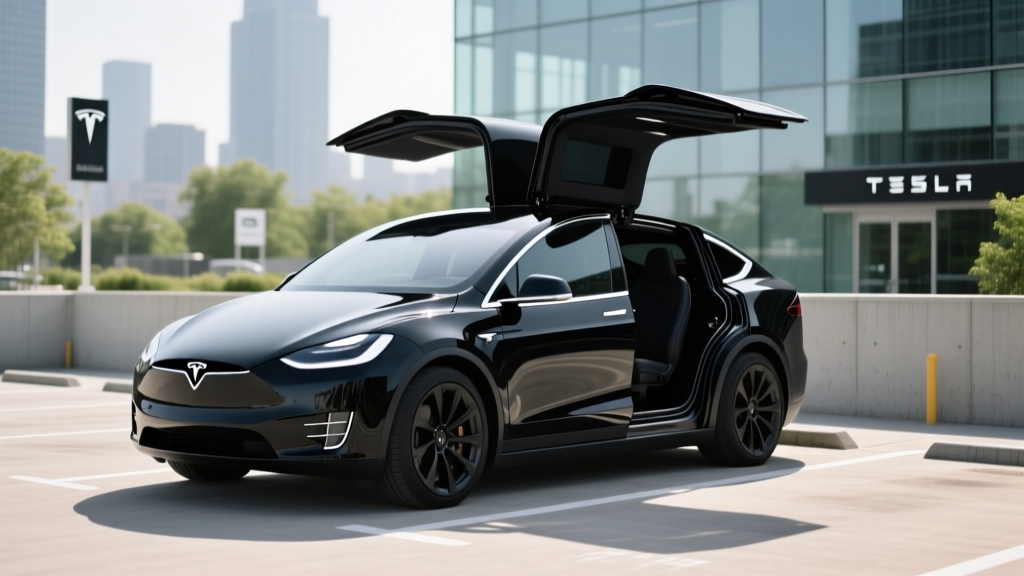
Search "Tesla butterfly doors" and you will find thousands of queries from shoppers who have seen the Model X's dramatic rear doors swing upward and assumed they are butterfly-style. They are not. Tesla calls them Falcon Wing doors, and the distinction matters for anyone evaluating this SUV for daily use. Butterfly doors — like those on the McLaren 720S — hinge at the A-pillar and swing up and out from the front. Falcon Wing doors are mounted on the roof, hinge in two places, and open vertically over the rear seats, articulating around obstacles using ultrasonic sensors.
No current or announced Tesla uses true butterfly doors. The 2026 Tesla Model X remains the only production vehicle in Tesla's lineup with upward-opening doors, and it applies them exclusively to the second-row passenger entries. The front doors are conventional, though they feature automatic powered open/close as standard. If upward-swinging doors are your priority — for theater parking lots, tight garage spaces, or simply the visual drama — the Model X is the Tesla to evaluate.
This review covers the full 2026 Model X lineup: Long Range and Plaid trims, with exact specs on range, charging, performance, pricing, and tax credit eligibility.
2026 Tesla Model X: Core Specifications
| Spec | Long Range | Plaid |
|---|---|---|
| EPA Range | 335 miles | 326 miles |
| Battery Capacity (usable) | ~100 kWh (NMC) | ~100 kWh (NMC) |
| Drivetrain | Dual Motor AWD | Tri-Motor AWD |
| Horsepower | 670 hp | 1,020 hp |
| 0–60 mph | 3.8 seconds | 2.5 seconds |
| Top Speed | 155 mph | 163 mph |
| Max DC Fast Charge | 250 kW | 250 kW |
| 10–80% DCFC Time | ~30 minutes | ~30 minutes |
| Level 2 Charge Rate | 11.5 kW (~34 mi/hr) | 11.5 kW (~34 mi/hr) |
| MPGe (Combined) | 103 MPGe | 98 MPGe |
| Energy Consumption | 33 kWh/100mi | 34 kWh/100mi |
| Seating | 5, 6, or 7 passengers | 5 or 6 passengers |
| Cargo (behind 2nd row) | 42.1 cu ft | 42.1 cu ft |
| Cargo (max, folded) | 81.5 cu ft | 81.5 cu ft |
| Towing Capacity | 5,000 lbs | 5,000 lbs |
| Base MSRP | $79,990 | $94,990 |
| Battery/Drive Unit Warranty | 8 yr / 150,000 mi | 8 yr / 150,000 mi |
Source: Tesla Model X official specs and fueleconomy.gov. Specs reflect 2026 model year; confirm with your local dealer as trims can shift mid-year.
Range and Efficiency: What the EPA Number Does Not Tell You
EPA Sticker: 335 miles (Long Range) / 326 miles (Plaid)
Real-World Highway: Expect 270–295 miles at 75 mph in moderate temperatures
Cold Weather (below 32°F): Plan for 210–250 miles, depending on cabin heat use and pre-conditioning
The Model X's 100 kWh-class NMC battery delivers strong EPA numbers, but this is a large, heavy SUV with a 5,390-pound curb weight and the aerodynamic profile of a crossover. Highway efficiency drops noticeably above 70 mph. In our experience with prior model-year Model X vehicles on 300-mile road trips, sustained 75–80 mph driving in 55°F weather yielded roughly 280 miles before the 10% low-charge warning — about 16% below the EPA sticker.
Cold weather compounds the loss. NMC chemistry is less tolerant of low temperatures than LFP, and the Model X does not use a heat pump on all trims (Tesla has historically used resistive heating on some configurations — verify current-year specs). Pre-conditioning the battery while plugged in is essential in winter; it recovers roughly 10–15% of the range you would otherwise lose to a cold-soaked pack. Use the scheduled departure feature in the Tesla app to time this automatically.
For context, the EPA rates the Model X Long Range at 103 MPGe combined (33 kWh/100mi). That is efficient for a three-row electric SUV of this size, but it trails the smaller Model Y Long Range (122 MPGe) and the Rivian R1S Dual-Motor (109 MPGe). If maximizing miles per kWh is a priority, the Model X is not the segment leader.
Charging Speed: DC Fast Charging and Home Level 2
The Model X charges at a peak rate of 250 kW on DC fast chargers — specifically Tesla Supercharger V3 and V4 stalls, as well as CCS-equipped third-party stations via Tesla's included CCS adapter (standard on 2026 models). Here is what that means in practice:
| Charging Level | Power / Rate | Miles Added per Hour | Notes |
|---|---|---|---|
| Level 1 (120V household) | ~1.4 kW | ~3–4 mi/hr | Emergency/trickle only |
| Level 2 (240V, 48A Wall Connector) | 11.5 kW | ~34 mi/hr | Full overnight charge in ~9 hours |
| DC Fast (250 kW Supercharger) | Peak 250 kW | ~175 mi in 15 min | 10–80% in ~30 min; tapers above 80% |
A critical reality of DC fast charging: the 250 kW figure is a peak, not a sustained rate. The Model X charge curve peaks around 250 kW at low state-of-charge (10–20% SoC), then progressively tapers. By 60% SoC, you are typically seeing 100–130 kW; above 80%, the rate drops below 50 kW to protect battery longevity. This is why Tesla (and every other manufacturer) quotes 10–80% times rather than 0–100%. Plan your road-trip stops around the 10–80% window for the fastest throughput.
At home, the Tesla Wall Connector on a 60-amp circuit delivers 11.5 kW, adding roughly 34 miles of range per hour. An overnight session (8–10 hours) replenishes the full battery. If your home electrical panel is older or has limited capacity, a 40-amp circuit (9.6 kW, ~28 mi/hr) is a common fallback — budget for a potential panel upgrade if you need 60 amps. Installation costs typically range from $800 to $2,500 depending on panel proximity and local permitting.
Tesla's Supercharger network remains the most reliable public charging infrastructure in the U.S., with over 6,000 stalls domestically. The Model X can also use Electrify America, EVgo, and other CCS networks via the adapter, though reliability on non-Tesla networks varies by location.
Falcon Wing Doors: How They Work and What to Watch For
The Falcon Wing doors are the defining feature of the Model X and the reason this vehicle dominates the "Tesla butterfly doors" search. Here is what ownership actually looks like:
- Ultrasonic obstacle detection: Sensors in the doors detect nearby objects (other cars, walls, low overhangs) and adjust the opening arc accordingly. Tesla claims they can open in a space as narrow as 11 inches on either side.
- Double-hinged design: Unlike gullwing doors (single hinge at the roof), Falcon Wings have a second hinge mid-door, allowing them to fold and articulate around obstacles.
- Powered front doors: The front doors open and close automatically via the key fob, phone key, or touchscreen. They do not swing upward — they are conventional swing-out doors with power assist.
- Low garage clearance concern: The doors extend upward when fully open. Tesla states a minimum clearance of approximately 84 inches (7 feet) for full vertical opening, but the articulated hinge allows partial opening in garages with lower ceilings. Test this in your specific garage before committing.
- Rain and snow: The doors' upward swing means less rain enters the cabin during entry/exit compared to conventional doors. However, accumulated snow on the roof can interfere with the hinge mechanism — brush it off before opening in winter.
The Falcon Wing doors are not without trade-offs. They add mechanical complexity (more motors, sensors, and hinge points than a conventional door), and out-of-warranty repairs on the actuator motors have been reported in the $1,500–$3,000 range per door by independent EV shops. The 4-year/50,000-mile basic warranty covers these components when new, and the 8-year/150,000-mile battery and drive unit warranty covers the powertrain, but door actuators fall under the basic warranty. Consider an extended service agreement if you plan to own the vehicle long-term.
Pricing, Trims, and Federal Tax Credit Eligibility
| Trim | Base MSRP | Typical As-Tested* | Federal §30D Credit | Effective Price |
|---|---|---|---|---|
| Long Range | $79,990 | $85,000–$92,000 | $0 (exceeds MSRP cap) | $79,990+ |
| Plaid | $94,990 | $100,000–$110,000 | $0 (exceeds MSRP cap) | $94,990+ |
*As-tested prices reflect common add-ons: Full Self-Driving (Supervised) at $8,000, premium paint ($1,500–$2,500), 22" wheels ($4,500), and six- or seven-seat configurations ($3,500–$6,500).
Tax credit reality check: The 2026 Model X does not qualify for the IRS §30D federal EV tax credit. Under current law, the credit is capped at $7,500 for new EVs, but SUVs must have an MSRP below $80,000 to be eligible. The Long Range starts at $79,990 — technically under the cap at base — but any single option or destination charge pushes it over. In practice, nearly every configured Model X exceeds the $80,000 MSRP threshold and is ineligible. The Plaid, at $94,990 base, is well above the limit.
Additionally, §30D requires the buyer's modified adjusted gross income to fall below $300,000 (joint filers), $225,000 (head of household), or $150,000 (individual). Battery component and critical mineral sourcing requirements also apply. Even if you configure a base Long Range under $80,000, verify current-year sourcing compliance on IRS.gov or consult a tax professional before counting on the credit.
State and local incentives may still apply. California's CVRP, Colorado's innovative motor vehicle credit, and various utility rebates can offset $1,000–$5,000 depending on your jurisdiction. Check your state's energy office or utility provider for current programs.
Performance, Tech, and Interior
The Model X Plaid's tri-motor powertrain produces 1,020 horsepower and a 2.5-second 0–60 mph time — numbers that were exotic-car territory five years ago, now available in a seven-seat SUV with Falcon Wing doors. The Long Range is hardly slow at 3.8 seconds and 670 hp, and for most buyers, it is the more rational choice: you gain 9 miles of EPA range, pay $15,000 less, and still outrun most sports sedans.
Both trims feature Tesla's 17-inch center touchscreen (landscape orientation, 2200 x 1300 resolution), a 9.4-inch rear-seat touchscreen for climate and media, and a 22-speaker audio system. The yoke steering wheel is standard, with a conventional round wheel available as a no-cost option. The yoke is polarizing: it offers an unobstructed view of the instrument cluster but requires adaptation for low-speed maneuvers and parking.
Driver assistance: Basic Autopilot (Traffic-Aware Cruise Control and Autosteer) is standard. Full Self-Driving (Supervised) is an $8,000 add-on that includes automatic lane changes, Navigate on Autopilot, and Smart Summon. This is SAE Level 2 automation — the driver must remain fully engaged, with hands on the wheel and eyes on the road. It is not self-driving. Tesla's FSD (Supervised) is a convenience feature, not a replacement for attentive driving.
Cargo and passenger space: With five seats configured, the Model X offers 42.1 cubic feet behind the second row and 81.5 cubic feet with the second row folded. The front trunk (frunk) adds 6.5 cubic feet. Third-row legroom is 32.7 inches — adequate for children and shorter adults on trips under an hour, but tight for taller passengers on longer drives. The six-seat configuration replaces the second-row bench with two captain's chairs and a center walk-through, improving third-row access.
Towing: Both trims are rated for 5,000 pounds with the optional tow package. Towing reduces range by approximately 30–40%, bringing real-world range to roughly 170–210 miles. Plan charging stops accordingly when hauling.
Pros, Cons, and Who Should Buy the Model X
Pros
- Falcon Wing doors offer unmatched second-row access in tight parking spaces
- Class-leading Supercharger network access for road trips
- Plaid performance (2.5s 0–60) is absurd for a three-row SUV
- 8-year/150,000-mile battery and drive unit warranty
- Over-the-air updates continuously add features
- 5,000-lb towing capacity with integrated brake controller option
Cons
- Falcon Wing door actuators add long-term maintenance cost risk
- Base price pushes past $80K, eliminating federal tax credit for most buyers
- Third-row space is tight for adults on long trips
- Real-world highway range falls 15–20% below EPA estimates
- Yoke steering requires adaptation; not ideal for all drivers
- Panel gaps and interior material quality still trail luxury competitors at this price
Who This EV Suits Best
Buy the Model X if: You need three rows and Falcon Wing door access for child seats or passengers in tight urban parking. You road-trip frequently and value Supercharger network reliability. You want supercar acceleration in a family hauler and can absorb the premium price without relying on the federal tax credit.
Look elsewhere if: You need maximum range per dollar (the Model Y Long Range offers 320 miles for ~$47,000). You want the most luxurious interior at this price point (the BMW iX xDrive50 starts around $87,000 and offers a more refined cabin). You need adult-friendly third-row space on a regular basis (the Rivian R1S or Kia EV9 offer more usable third rows).
Frequently Asked Questions
Does any Tesla have butterfly doors?
No. Tesla does not offer true butterfly doors on any current or announced model. The Model X uses Falcon Wing doors on the rear passenger entries, which open upward via a roof-mounted double hinge. They are visually similar to butterfly doors but mechanically distinct.
What is the real-world range of the 2026 Tesla Model X?
The EPA rates the Long Range at 335 miles and the Plaid at 326 miles. In real-world highway driving at 75 mph, expect 270–295 miles. In cold weather (below freezing), plan for 210–250 miles. Pre-conditioning the battery while plugged in recovers a meaningful portion of cold-weather range loss.
How fast does the Model X charge at home and on road trips?
On a Level 2 Tesla Wall Connector (11.5 kW), the Model X adds roughly 34 miles of range per hour, fully charging overnight in about 9 hours. On a 250 kW DC Supercharger, it charges from 10–80% in approximately 30 minutes, adding about 175 miles in 15 minutes. The charge rate tapers significantly above 80% SoC.
Does the 2026 Tesla Model X qualify for the $7,500 federal EV tax credit?
In most configurations, no. The §30D credit caps eligible SUVs at $80,000 MSRP. The Long Range starts at $79,990, but any option or destination fee pushes it over. The Plaid at $94,990 is well above the limit. Buyer income caps and battery sourcing requirements also apply. Verify eligibility on IRS.gov or with a tax professional.
Is the Tesla Model X worth buying vs. the Rivian R1S or BMW iX?
The Model X wins on Supercharger access, Falcon Wing door utility, and raw Plaid performance. The Rivian R1S offers a more usable third row, better off-road capability, and a lower starting price. The BMW iX delivers a more luxurious interior and comparable range at a similar price. Your choice depends on whether Falcon Wing doors and the Tesla charging ecosystem are worth the premium over these alternatives.
How reliable are Falcon Wing doors long-term?
Early Model X vehicles (2016–2018) had documented issues with door actuator failures and sensor calibration. Tesla has revised the mechanism in subsequent model years, and current-generation Falcon Wing doors are more robust. However, they remain more complex than conventional doors, and out-of-warranty actuator repairs can cost $1,500–$3,000 per door. The 4-year/50,000-mile basic warranty covers these components initially.