Tesla doesn't sell cars the way legacy automakers do. There are no dealer markups, no haggling, no model-year clearance events, and no franchised showrooms. Instead, Tesla's vertically integrated, direct-to-consumer approach — combining vehicle sales, software subscriptions, Supercharger network revenue, and energy products — defines every aspect of what you actually buy when you drive home in a Model Y. This review examines the 2026 Tesla Model Y Long Range AWD not just as a vehicle, but as the clearest expression of Tesla's business model in practice: how it affects pricing, charging access, software features, and long-term ownership costs.
2026 Tesla Model Y Long Range AWD: Core Specifications
| Attribute | Specification |
|---|---|
| EPA Estimated Range | 320 miles |
| Battery Capacity | 78.1 kWh usable (NMC chemistry) |
| Drivetrain | Dual-motor AWD |
| Horsepower | 384 hp combined |
| 0–60 mph | 4.8 seconds |
| Peak DC Fast Charge | 250 kW (CCS via NACS adapter or native NACS) |
| 10–80% DC Fast Charge | ~27 minutes |
| Level 2 Home Charge Rate | 11.5 kW (~44 mi/hr) |
| Efficiency | 122 MPGe combined / 28 kWh/100 mi |
| Cargo Volume | 30.2 cu ft (rear seats up) / 72.1 cu ft (folded) |
| Rear Legroom | 40.5 inches |
| Base MSRP | $44,990 (before incentives) |
| Battery Warranty | 8 years / 120,000 miles (70% retention) |
Real-World Range: What the EPA Sticker Doesn't Tell You
EPA Estimate: 320 miles
Real-World Expectation: 265–285 miles at sustained highway speeds (70–75 mph); 220–250 miles in sub-freezing winter conditions with cabin heat active.
The Model Y Long Range's 320-mile EPA figure is competitive within the midsize electric SUV segment, but real-world highway driving consistently yields 10–17% less range than the sticker. Tesla's thermal management system — which includes a heat pump standard on all trims — mitigates cold-weather losses better than most competitors, but physics still applies. At 30°F with the cabin set to 70°F, expect roughly 240 miles of usable range before you'll want to find a charger.
Efficiency in mixed suburban driving hovers near the EPA's 28 kWh/100 mi figure, which is among the best in the segment. The Model Y's low drag coefficient (0.23 Cd) and regenerative braking calibration contribute to strong city-range performance, where you can approach or even exceed the 320-mile sticker in stop-and-go traffic with one-pedal driving engaged.
Charging Speed and Network Access: The Supercharger Advantage
| Charging Level | Power | Speed |
|---|---|---|
| Level 1 (120V household) | ~1.4 kW | ~5 miles per hour |
| Level 2 (240V home/public) | 11.5 kW max | ~44 miles per hour |
| DC Fast Charge | 250 kW peak | 10–80% in ~27 min |
Tesla's Supercharger network remains the most reliable DC fast-charging infrastructure in North America, with over 6,500 stalls across the U.S. as of early 2026 (source). The Model Y peaks at 250 kW on V3 Superchargers, though sustained rates taper significantly above 60% state of charge — a typical charge curve reality that means the 10–80% time of 27 minutes is achievable, but 80–100% can add another 20+ minutes.
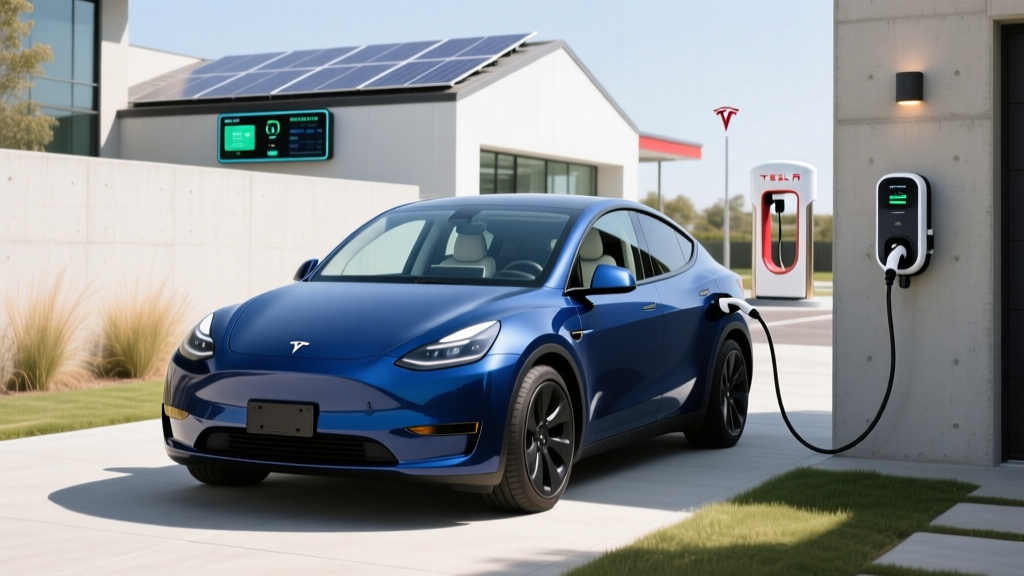
For home charging, a Tesla Wall Connector on a 60-amp circuit delivers the full 11.5 kW, adding roughly 44 miles of range per hour. Most owners with a standard overnight charging window (8–10 hours) will wake to a full battery daily. Installation costs typically range from $500–$2,000 depending on panel proximity and local permitting, though homes with 100-amp service panels may require a $1,500–$3,000 panel upgrade.
With Tesla opening the Supercharger network to non-Tesla EVs via NACS adapters, the exclusivity advantage has narrowed — but the reliability gap remains. Tesla's plug-and-charge authentication and stall uptime consistently outperform Electrify America and third-party CCS networks in J.D. Power EV experience studies.
Pricing, Trims, and Federal Tax Credit Eligibility
| Trim | MSRP | Est. After §30D Credit |
|---|---|---|
| Long Range AWD | $44,990 | ~$37,490 (if eligible) |
| Performance AWD | $48,990 | ~$41,490 (if eligible) |
The 2026 Model Y Long Range AWD starts at $44,990, well under the IRS §30D MSRP cap of $80,000 for SUVs. However, the full $7,500 federal tax credit is not automatic. Eligibility depends on three factors that shift annually:
- Buyer income caps: Modified AGI must not exceed $150,000 (single) or $300,000 (joint filers) (IRS §30D rules)
- Battery sourcing requirements: A percentage of critical minerals and battery components must originate from the U.S. or FTA-partner nations — Tesla's supply chain has adapted, but component-sourcing percentages are updated annually
- Point-of-sale transfer: As of 2024, buyers can elect to transfer the credit to the dealer (Tesla) at purchase, reducing the out-of-pocket price immediately rather than waiting for a tax refund
Because Tesla's business model eliminates dealer negotiations, the price you see on Tesla.com is the price you pay — no destination fees buried in fine print, no mandatory add-ons. This transparency is a direct consequence of vertical integration: Tesla controls manufacturing, sales, delivery, and service.
Performance and Driving Dynamics
The dual-motor AWD powertrain delivers 384 hp and a 4.8-second 0–60 mph time, which is brisk for a family SUV but no longer class-leading. The Model Y Performance trim drops that to 3.5 seconds with 510 hp, though at a $4,000 premium and a slight range penalty (303 miles EPA).
Ride quality in the refreshed Model Y (introduced for the 2025 model year) is noticeably improved over the pre-2025 versions, with retuned dampers and additional sound insulation. It remains firmer than a Hyundai Ioniq 5 or Ford Mustang Mach-E, but highway noise and impact harshness are substantially reduced. The steering is quick and precise, though feedback is minimal — typical of Tesla's drive-by-wire approach.
Regenerative braking is strong and consistent, enabling genuine one-pedal driving in most conditions. Tesla removed the driver-adjustable regen setting years ago, which frustrates some buyers transitioning from EVs that allow coasting, but the fixed calibration is well-tuned for daily use.
Tech, Autopilot, and Tesla's Software Revenue Strategy
SAE Automation Level: Tesla Autopilot and Full Self-Driving (Supervised) are Level 2 driver-assistance systems. The driver must remain actively engaged, hands on or near the wheel, with eyes on the road at all times. These are not autonomous or self-driving systems.
The Model Y's 15.4-inch center touchscreen runs Tesla's proprietary infotainment OS — no Apple CarPlay or Android Auto, which remains a dealbreaker for some buyers. The native system is responsive and feature-rich (Netflix/YouTube while parked, integrated navigation with real-time Supercharger routing, dashcam, Sentry Mode), but the absence of smartphone projection is a deliberate business-model choice: Tesla keeps the software ecosystem closed to maintain control over the user experience and future subscription revenue.
Full Self-Driving (Supervised) costs $8,000 as a one-time purchase or $99/month as a subscription in 2026. This is a significant revenue stream for Tesla — high-margin software layered onto hardware the customer already bought. Whether FSD delivers commensurate value is debatable: it handles highway lane changes, traffic-light recognition, and some city-street navigation, but still requires constant supervision and occasionally makes unpredictable routing decisions.
Standard Autopilot (Traffic-Aware Cruise Control + Autosteer) is included at no extra cost and is adequate for most highway commuting.
Cargo Space, Practicality, and Daily Ownership
The Model Y offers 30.2 cubic feet of cargo space behind the rear seats and 72.1 cubic feet with the 60/40 split folded — competitive with the Ioniq 5 and slightly less than the Mach-E. The rear frunk (front trunk) adds 4.1 cubic feet for charging cables or groceries. Rear legroom at 40.5 inches is generous for adults, and the panoramic glass roof creates an airy cabin, though it contributes to solar heat gain in summer (a removable shade is included).
Tesla's mobile app integration is best-in-class: remote preconditioning, location sharing, service scheduling, and software updates all work reliably. Over-the-air updates continue to add features years after purchase — a core element of Tesla's business model that treats the vehicle as a software platform, not a static product.
Pros and Cons
Pros
- Supercharger network reliability remains unmatched
- 320-mile EPA range with strong real-world efficiency
- Direct-sales model eliminates dealer markups and haggling
- Over-the-air updates add features post-purchase
- Class-leading software integration and app experience
- Heat pump standard for cold-climate efficiency
Cons
- No Apple CarPlay or Android Auto
- FSD (Supervised) is expensive and still requires full driver attention
- Service center availability lags in rural areas
- Firm ride compared to some competitors
- Closed software ecosystem limits third-party integration
- Tax credit eligibility subject to annual sourcing-rule changes
Who the 2026 Model Y Suits Best
The Model Y Long Range AWD is ideal for suburban commuters and small families who have reliable home Level 2 charging, take regular road trips (where Supercharger density pays off), and value software-forward ownership. It is less suited for buyers in rural areas far from Supercharger corridors, those who require CarPlay for daily navigation, or anyone uncomfortable with Tesla's camera-based driver-monitoring approach.
If you tow, note that the Model Y's 3,500-pound towing capacity is adequate for a small trailer but trails the Ford Mach-E's available tow rating and is far below truck-based EVs.
Frequently Asked Questions
What is the real-world range of the 2026 Tesla Model Y?
Expect 265–285 miles at highway speeds and 220–250 miles in freezing temperatures. The 320-mile EPA estimate is achievable in mild-weather city driving with regen braking active.
How fast does the Model Y charge at home and on DC fast chargers?
At home on a Level 2 Wall Connector (11.5 kW), it adds ~44 miles per hour, fully charging overnight. On a V3 Supercharger at 250 kW peak, 10–80% takes approximately 27 minutes, with tapering above 80%.
Does the 2026 Model Y qualify for the $7,500 federal EV tax credit?
It qualifies under the MSRP cap ($44,990 vs. the $80,000 SUV limit), but buyer income limits ($150K single / $300K joint) and battery-sourcing requirements apply. Check current-year rules on IRS.gov before purchasing. The credit can be transferred at point of sale.
Is the Model Y worth buying vs. the Hyundai Ioniq 5 or Ford Mustang Mach-E?
Choose the Model Y if Supercharger access, software integration, and resale value are priorities. The Ioniq 5 offers faster 800V charging (~18 min 10–80%) and CarPlay; the Mach-E offers a more traditional cabin layout and slightly softer ride. All three are strong — the decision hinges on charging ecosystem preference and software priorities.
How does Tesla's business model affect my ownership experience?
Direct sales mean fixed, transparent pricing with no negotiation. Over-the-air updates add features without service visits. The closed software ecosystem limits third-party apps but ensures tight integration. Supercharger revenue and FSD subscriptions subsidize vehicle pricing — Tesla's margins come from software and energy, not just hardware.