Quick Verdict: Tesla's 2026 Lineup at Brooklyn Park
For Twin Cities EV shoppers visiting the Tesla showroom and service center in Brooklyn Park, Minnesota, the decision matrix has never been more nuanced. The 2026 Model Year brings updated battery chemistries, revised pricing, and shifting federal tax credit eligibility across Tesla's core lineup. Whether you're cross-shopping the refreshed Model 3 Highland, the globally dominant Model 3 Juniper refresh, the polarizing Cybertruck, or the upcoming next-generation platform, this review breaks down every spec, real-world range expectation, and ownership cost you need before walking into that Brooklyn Park delivery center.
Minnesota winters add a critical variable that most spec sheets ignore: cold-weather range loss and charging preconditioning behavior. We'll address that head-on, alongside the exact §30D tax credit rules that determine whether you pay sticker or save up to $7,500 at point of sale.
2026 Tesla Model 3: The Highland Refresh Matures
The Model 3 received its "Highland" refresh for 2024-2025, and the 2026 model year carries forward with minor software and packaging updates. It remains Tesla's most affordable entry point and the volume leader for sedan buyers who prioritize efficiency and Supercharger network access.
| Spec | Model 3 RWD | Model 3 Long Range AWD | Model 3 Performance |
|---|---|---|---|
| EPA Range | 272 mi | 341 mi | 315 mi |
| Battery (usable) | ~57.5 kWh (LFP) | ~75 kWh (NMC) | ~75 kWh (NMC) |
| 0-60 mph | 5.8 sec | 4.2 sec | 2.9 sec |
| Horsepower | 271 hp | 346 hp | 510 hp |
| Drivetrain | RWD | Dual-Motor AWD | Dual-Motor AWD |
| Peak DC Charge | 170 kW | 250 kW | 250 kW |
| 10-80% DC Time | ~25 min | ~26 min | ~26 min |
| Level 2 Rate | 11.5 kW (~44 mi/hr) | 11.5 kW (~44 mi/hr) | 11.5 kW (~44 mi/hr) |
| MPGe (combined) | 132 MPGe | 134 MPGe | 118 MPGe |
| Base MSRP | $38,990 | $45,990 | $52,990 |
| Cargo (trunk + frunk) | 23 cu ft | 23 cu ft | 23 cu ft |
| Battery Warranty | 8 yr / 100,000 mi | 8 yr / 120,000 mi | 8 yr / 120,000 mi |
Real-World Range Reality (Minnesota Climate)
EPA Sticker: 272-341 miles depending on trim.
Expect in practice: Highway cruising at 70-75 mph yields roughly 85-90% of EPA, so plan for 230-305 miles. In Minnesota winter (sub-30°F), expect a 20-30% range reduction without preconditioning, dropping the RWD to roughly 190-215 miles on a full charge. The Long Range AWD with its heat pump and NMC chemistry handles cold better, retaining approximately 260-280 miles in freezing conditions when preconditioned.
LFP vs NMC: What Brooklyn Park Buyers Should Know
The RWD Model 3 uses an LFP (lithium iron phosphate) battery. Trade-offs: lower energy density (hence the shorter range), but Tesla recommends charging to 100% regularly — no buffer anxiety. It also exhibits slower DC charging speeds and slightly more cold-weather range loss. The Long Range and Performance trims use NMC (nickel manganese cobalt) chemistry, which Tesla recommends keeping between 20-80% for daily use, reserving 100% for road trips.
2026 Tesla Model Y: Juniper Refresh Arrives
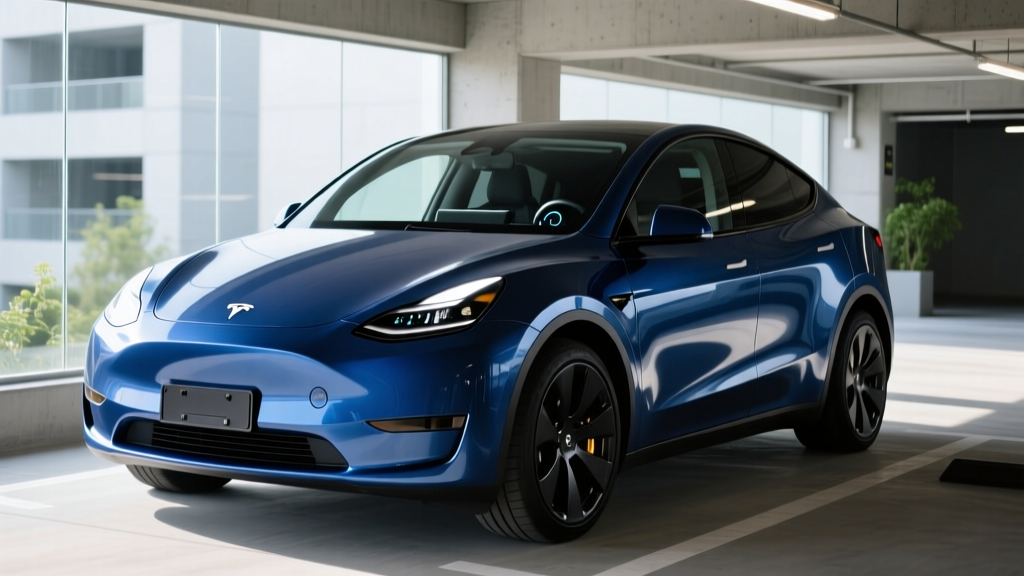
The Model Y received its "Juniper" mid-cycle refresh for 2025, and the 2026 model year solidifies the update with a ventilated-seat option on Long Range trims and an updated ambient lighting package. It remains the best-selling EV globally and the default crossover pick for families visiting the Brooklyn Park showroom.
| Spec | Model Y Long Range AWD | Model Y Performance |
|---|---|---|
| EPA Range | 320 mi | 277 mi |
| Battery (usable) | ~75 kWh (NMC) | ~75 kWh (NMC) |
| 0-60 mph | 4.8 sec | 3.5 sec |
| Horsepower | 384 hp | 456 hp |
| Peak DC Charge | 250 kW | 250 kW |
| 10-80% DC Time | ~27 min | ~27 min |
| MPGe (combined) | 111 MPGe | 103 MPGe |
| Base MSRP | $46,990 | $51,490 |
| Cargo (rear seats up) | 30 cu ft | 30 cu ft |
| Cargo (rear seats down) | 72 cu ft | 72 cu ft |
| Towing Capacity | 3,500 lbs | 3,500 lbs |
| Battery Warranty | 8 yr / 120,000 mi | 8 yr / 120,000 mi |
The Juniper update brought a redesigned front fascia, a rear light bar, acoustic glass, ventilated front seats (Long Range and above), and an 8-inch rear touchscreen for passengers. Interior material quality took a meaningful step up, closing the gap with the Hyundai Ioniq 5 and Kia EV6.
2026 Tesla Cybertruck: Availability and Reality
After a prolonged ramp-up, the Cybertruck is now in steady production and available for delivery at Brooklyn Park. The lineup has consolidated into two primary trims for 2026.
| Spec | Cybertruck AWD | Cyberbeast |
|---|---|---|
| EPA Range | 340 mi | 320 mi |
| Battery (usable) | ~123 kWh (NMC) | ~123 kWh (NMC) |
| 0-60 mph | 4.1 sec | 2.6 sec |
| Horsepower | 600 hp | 845 hp |
| Peak DC Charge | 350 kW (800V architecture) | 350 kW (800V architecture) |
| 10-80% DC Time | ~17 min (at V4 Supercharger) | ~17 min |
| Base MSRP | $79,990 | $99,990 |
| Towing Capacity | 11,000 lbs | 11,000 lbs |
| Battery Warranty | 8 yr / 150,000 mi | 8 yr / 150,000 mi |
Cybertruck Range: Aerodynamics Matter
The Cybertruck's angular stainless-steel exoskeleton creates a drag coefficient higher than the Model Y. At highway speeds (75 mph), expect roughly 260-290 miles real-world from the AWD trim — a 15-23% drop from EPA. Towing a 5,000-lb trailer cuts that roughly in half. Cold weather further compounds the loss. This is a capable truck, but road-trip planning requires more Supercharger stops than the EPA sticker implies.
Charging Infrastructure: What Brooklyn Park Owners Actually Experience
Home charging is where 80%+ of Tesla miles are added. A Level 2 Tesla Wall Connector (up to 48 amps / 11.5 kW on a 60-amp circuit) adds roughly 44 miles of range per hour for Model 3/Y. For a full overnight charge from 20-80%, plan on 5-6 hours.
| Charging Level | Power | Miles Added/Hour | Use Case |
|---|---|---|---|
| Level 1 (120V standard outlet) | ~1.4 kW | ~4-5 mi/hr | Emergency/top-up only |
| Level 2 (240V Wall Connector) | 11.5 kW | ~44 mi/hr | Daily home charging |
| DC Fast (V3 Supercharger) | 250 kW peak | ~1,000 mi/hr (at peak) | Road trips, 10-80% in ~26 min |
| DC Fast (V4 Supercharger) | 350 kW peak | ~1,300 mi/hr (at peak) | Cybertruck, future models |
Home Install Cost Reality (Minnesota)
Expect $500-$700 for the Tesla Wall Connector unit itself. Professional installation by a licensed electrician in the Twin Cities metro typically runs $800-$2,500 depending on panel proximity and whether a 240V/60A circuit already exists. Older homes with 100-amp panels may need a $2,000-$4,000 panel upgrade. Always get a permit — it protects your home insurance and resale value.
The Charge Curve Matters More Than Peak kW
Tesla advertises 250 kW peak on V3 Superchargers, but that rate only holds between roughly 10-30% State of Charge. Above 50%, the curve tapers significantly. By 80%, you're pulling under 60 kW. This is why the 10-80% metric (~26 minutes) is far more useful than peak kW. Plan to charge to 80% on road trips and move on — the last 20% takes as long as the first 60%.
Federal Tax Credit: §30D Eligibility for 2026
The IRS §30D Clean Vehicle Credit remains in effect for 2026, but eligibility is a moving target due to battery-sourcing and critical-mineral requirements that tighten annually. Here's the framework for Tesla buyers:
§30D Requirements Checklist
- MSRP Cap: Sedans (Model 3) must be under $55,000. SUVs/pickups (Model Y, Cybertruck) must be under $80,000.
- Buyer Income Cap: Modified AGI ≤ $300,000 (joint), $225,000 (head of household), $150,000 (single).
- Battery Sourcing: Percentage thresholds for critical minerals and battery components manufactured in the US or FTA-partner nations increase each year. Tesla's vertically integrated supply chain has maintained compliance, but verify at purchase.
- Point-of-Sale Transfer: You can transfer the credit to the dealer at purchase, reducing your out-of-pocket price immediately — no need to wait for tax filing.
- Final Assembly: Must be in North America. All US-market Teslas qualify.
| Model | Base MSRP | Est. After $7,500 Credit | Credit Eligible? |
|---|---|---|---|
| Model 3 RWD | $38,990 | ~$31,490 | Yes (subject to sourcing/income) |
| Model 3 Long Range | $45,990 | ~$38,490 | Yes (under $55K cap) |
| Model 3 Performance | $52,990 | ~$45,490 | Yes (under $55K cap) |
| Model Y Long Range | $46,990 | ~$39,490 | Yes (SUV classification, under $80K) |
| Model Y Performance | $51,490 | ~$43,990 | Yes |
| Cybertruck AWD | $79,990 | ~$72,490 | Yes (under $80K cap) |
| Cyberbeast | $99,990 | $99,990 | No (exceeds $80K MSRP cap) |
Critical caveat: Tax credit eligibility depends on your specific tax situation and the battery-sourcing rules in effect at the time of delivery. Consult a tax professional and verify current IRS guidance at irs.gov before committing.
Autopilot, FSD, and Smart Driving: What's Level 2 vs. Level 4
SAE Automation Level: Level 2 (Driver Assist)
Tesla's Autopilot and Full Self-Driving (Supervised) are SAE Level 2 systems. The driver must remain fully engaged, hands on or near the wheel, eyes on the road, and ready to take over at any moment. This is NOT autonomous driving. Only Level 4 services like Waymo operate without a human driver in geofenced areas.
For 2026, Tesla includes Basic Autopilot (adaptive cruise + lane centering) standard. FSD (Supervised) remains a $8,000 add-on or $99/month subscription. It handles city streets, stop signs, and traffic lights with increasing competence, but driver supervision is non-negotiable. The system's camera-only approach (no lidar or radar) means performance can degrade in heavy rain, fog, or construction-zone lane changes.
What FSD (Supervised) Does NOT Do
- Drive without an attentive, licensed driver in the seat
- Handle all weather conditions reliably (heavy snow, ice-covered lanes)
- Replace your auto insurance or liability in a collision
- Guarantee safe navigation through unmapped construction zones
Who Should Buy From Tesla Brooklyn Park?
Choose Tesla If:
- Daily commuter (Model 3 RWD): You charge at home, drive under 100 miles/day round trip, and want the lowest cost-per-mile in the lineup. LFP battery means you can charge to 100% nightly without degradation anxiety.
- Family road-tripper (Model Y LR): You need 30+ cu ft cargo, AWD for Minnesota winters, 3,500-lb towing for a small camper, and Supercharger access on I-90/I-94 corridor runs.
- Performance enthusiast (Model 3 Perf / Model Y Perf): Sub-3.5-second 0-60, track-capable handling, and you accept the range/efficiency trade-off.
- Truck buyer (Cybertruck AWD): You need 11,000-lb towing, bed utility, and accept the polarizing design and real-world range compromises.
Look Elsewhere If:
- You need a third-row SUV (Tesla has no 7-seat EV — consider the Rivian R1S or Kia EV9)
- You want traditional dealer service with loaner cars and a waiting room (Tesla's mobile-ranger and service-center model is different)
- You want physical buttons, a traditional instrument cluster, or Apple CarPlay/Android Auto (Tesla's ecosystem is closed)
Pros, Cons, and the Competitive Landscape
Pros
- Supercharger network remains the most reliable DC fast-charging ecosystem in North America (now opening to NACS adapters for competitors)
- Best-in-class software, OTA updates, and app integration
- Strong residual values relative to most EV competitors
- Heat pump standard on all trims (critical for Minnesota efficiency)
- Over-the-air feature additions can improve the car post-purchase
Cons
- No Apple CarPlay or Android Auto — you're in Tesla's walled garden
- Service center wait times in the Twin Cities can stretch weeks for non-collision work
- Build-quality variance is better than 2020-era but still trails Hyundai/Kia
- Camera-only vision system has limitations in adverse weather vs. lidar-equipped competitors
- FSD ($8,000) remains a promise, not a Level 4 product
- Insurance premiums in Minnesota run 15-25% higher than equivalent gas sedans
Frequently Asked Questions
What is the real-world range of a Tesla in Minnesota winters?
Expect a 20-30% range reduction in sub-30°F conditions without preconditioning. A Model Y Long Range rated at 320 miles EPA will deliver roughly 220-260 miles in deep winter. Preconditioning the battery while plugged in (via scheduled departure) recovers much of that loss. The heat pump standard on all 2026 Teslas significantly reduces cabin-heating energy draw compared to older resistive heaters.
How fast does a Tesla charge at home vs. on the road?
At home on a Level 2 Tesla Wall Connector (11.5 kW), you add ~44 miles per hour — enough to fully replenish overnight. On a V3 Supercharger (250 kW peak), a Model 3 Long Range goes 10-80% in about 26 minutes. The Cybertruck on a V4 Supercharger (350 kW) achieves 10-80% in approximately 17 minutes. Remember: peak kW only holds at low state of charge; the curve tapers significantly above 50%.
How much does a Tesla cost after tax credits in 2026?
A Model 3 RWD at $38,990 MSRP drops to approximately $31,490 after the $7,500 §30D credit — if you meet income caps ($150K single / $300K joint) and the battery-sourcing requirements hold at delivery. A Model Y Long Range at $46,990 becomes ~$39,490. The Cyberbeast at $99,990 does NOT qualify (exceeds the $80,000 MSRP cap for trucks/SUVs). Always verify with a tax professional and the IRS §30D page.
Is Tesla worth buying vs. Hyundai Ioniq 5, Kia EV6, or Ford Mustang Mach-E?
Tesla wins on Supercharger network access, software ecosystem, and residual value. The Ioniq 5 and EV6 offer 800V charging (10-80% in ~18 min on capable chargers), physical buttons, and CarPlay. The Mach-E offers a more traditional crossover feel. If you road-trip frequently and value charging reliability, Tesla's network advantage is still meaningful in 2026. If you prioritize interior material quality and open infotainment, cross-shop the Korean competitors.
Does the Tesla Brooklyn Park location handle service and delivery?
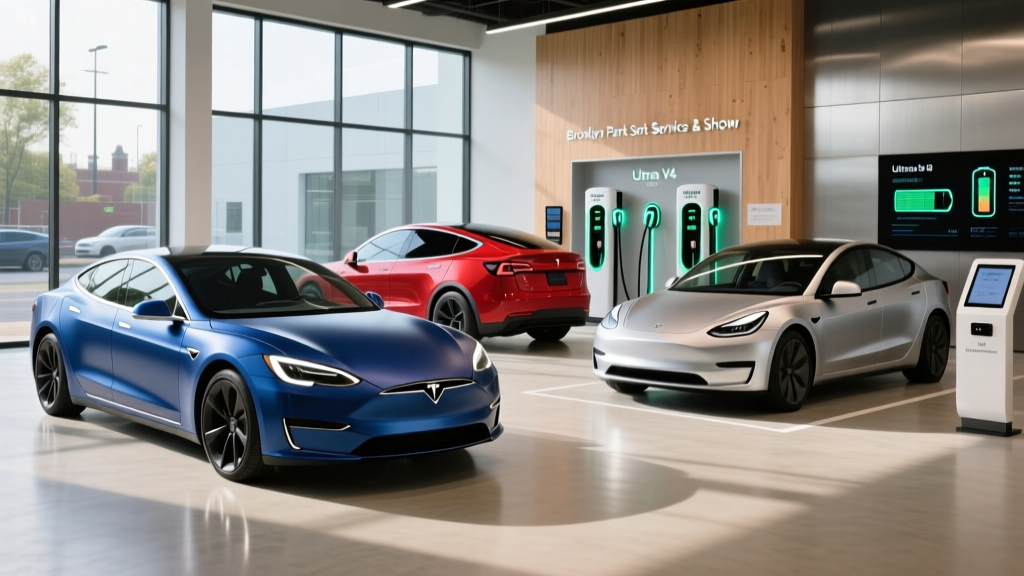
Yes. The Brooklyn Park facility serves as both a showroom for new-vehicle configuration and a service center for warranty and collision work. Mobile Service rangers also handle many software and minor hardware repairs at your home or workplace in the Twin Cities metro. For major battery or drive-unit work, plan for longer turnaround times and arrange a loaner or rideshare.
How long will a Tesla battery last, and what does replacement cost?
Tesla warranties its batteries for 8 years / 100,000-150,000 miles (depending on trim) with a minimum 70% capacity retention threshold. Real-world data from fueleconomy.gov and owner surveys show most NMC packs retain 85-90% capacity at 100,000 miles. LFP packs degrade more slowly but at a lower starting energy density. Out-of-warranty replacement costs range from $12,000-$20,000 depending on the pack — a significant but increasingly rare expense.
Sources: fueleconomy.gov (EPA range and MPGe data), IRS §30D Clean Vehicle Credit, Tesla official specifications.