Search "Tesla bricked" on any EV forum and you will find a spectrum of stories — from a Model 3 that refused to wake up after an over-the-air update to a Model S with a dead 12V battery leaving the owner locked out. The term "bricked" gets thrown around loosely, but for anyone spending $40,000 to $100,000+ on a Tesla in 2026, the question is legitimate: how real is the risk of a Tesla becoming a non-functional brick, and what does warranty coverage actually protect?
This guide dissects the three distinct failure modes people lump under "bricked," reviews Tesla's 2026 warranty language, and pairs that analysis with the current Model 3 and Model Y specs buyers actually need to make a purchase decision.
What "Tesla Bricked" Actually Means (Three Different Problems)
The word "bricked" originated in consumer electronics to describe a device rendered permanently useless — like a brick. In the Tesla context, owners and media conflate three very different scenarios:
- 12V auxiliary battery failure: The most common "bricked" complaint. When the small 12V battery (now lithium in 2026 Model 3/Y, lead-acid in older vehicles) dies, the car cannot wake up its main contactors. Doors may not open, the screen stays black, and the vehicle appears dead — even though the main traction battery is perfectly fine. This is a recoverable state, not a true brick.
- Software/firmware corruption: A failed OTA update or corrupted MCU (Media Control Unit) can leave the vehicle unresponsive. Tesla can typically reflash the software via a service connection or replace the MCU under warranty. Rarely permanent.
- Traction battery failure: The catastrophic scenario — the main high-voltage battery pack (60 kWh LFP or ~82 kWh NMC depending on trim) develops an internal fault. This is the closest to a true "brick" and the most expensive out-of-warranty repair, with replacement costs ranging from $12,000 to $20,000+.
Understanding which of these three you are reading about in a headline is critical. A dead 12V lithium battery on a 2026 Model 3 Highland is a $300–$500 fix. A traction pack replacement on an out-of-warranty 2018 Model 3 is a five-figure event.
2026 Tesla Model 3: Current Specs at a Glance
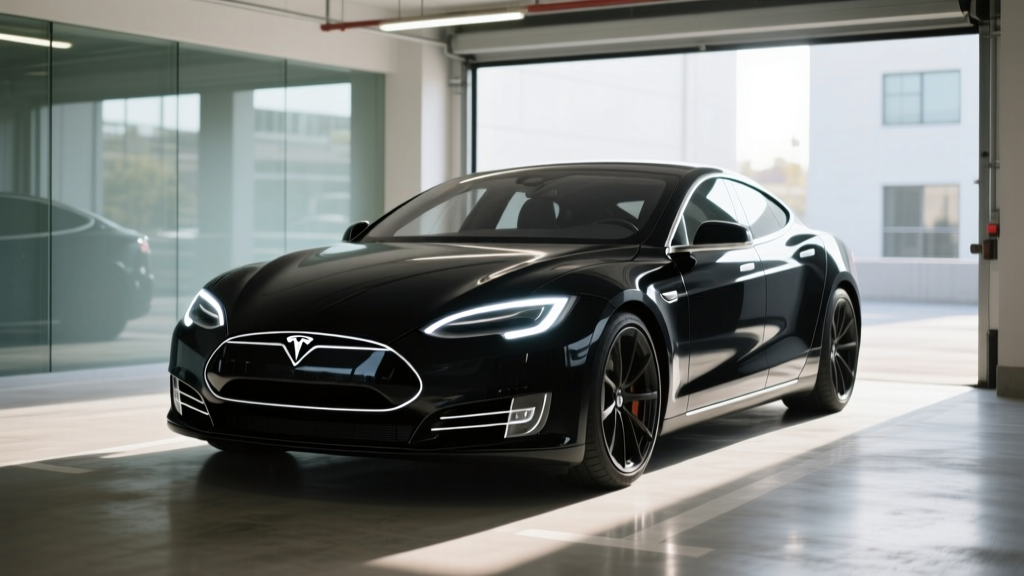
Since "bricked" concerns apply across the Tesla lineup, we will anchor our analysis to the current 2026 Model 3 — Tesla's highest-volume sedan and the vehicle most new buyers research first.
| Spec | RWD (Base) | Long Range AWD | Performance |
|---|---|---|---|
| EPA Range | 363 mi | 363 mi | 346 mi |
| Battery (usable) | ~60 kWh (LFP) | ~82 kWh (NMC) | ~82 kWh (NMC) |
| Max DC Fast Charge | 170 kW | 250 kW | 250 kW |
| 10–80% DCFC Time | ~25 min | ~27 min | ~27 min |
| Level 2 Home Charge | 11.5 kW (~44 mi/hr) | 11.5 kW (~44 mi/hr) | 11.5 kW (~44 mi/hr) |
| 0–60 mph | 5.8 sec | 4.2 sec | 2.9 sec |
| Horsepower | 271 hp | 346 hp | 510 hp |
| Drivetrain | RWD (single motor) | AWD (dual motor) | AWD (dual motor) |
| MPGe (combined) | 132 MPGe | 125 MPGe | 118 MPGe |
| Efficiency | 25 kWh/100 mi | 27 kWh/100 mi | 28 kWh/100 mi |
| Cargo Volume | 23 cu ft (trunk + frunk) | 23 cu ft | 23 cu ft |
| Rear Legroom | 35.3 in | 35.3 in | 35.3 in |
| Base MSRP | $44,130 | $49,130 | $55,130 |
Source: fueleconomy.gov and Tesla.com configurator. Prices include destination; specs subject to mid-year updates.
Real-World Range vs. EPA Sticker: What to Actually Expect
EPA estimate: 363 miles
Expect ~290–310 miles on highway road trips (75–80 mph sustained), ~250–270 miles in cold weather (below 32°F), and 340+ miles in mixed city driving with regen braking. The LFP RWD model's 363-mile EPA figure holds up better in daily city use but drops proportionally on highway runs.
Tesla's efficiency remains among the best in the industry — the Model 3's ~25–28 kWh/100 mi beats nearly every competitor in its class, including the Hyundai Ioniq 6 (27–29 kWh/100 mi) and BMW i4 (30–33 kWh/100 mi). This efficiency advantage means less energy wasted per mile and faster effective charging on road trips.
Charging Speed: DC Fast, Level 2, and the Charge Curve Reality
Charging speed is where Tesla's Supercharger network advantage meets physics. Peak kW is not sustained kW — the charge curve tapers significantly above 80% State of Charge (SoC) to protect battery longevity.
| Charging Level | Power (kW) | Miles Added per Hour | Notes |
|---|---|---|---|
| Level 1 (120V outlet) | ~1.4 kW | ~3–5 mi/hr | Emergency/trickle only |
| Level 2 (240V, 48A) | 11.5 kW | ~44 mi/hr | Full overnight charge in ~8 hr |
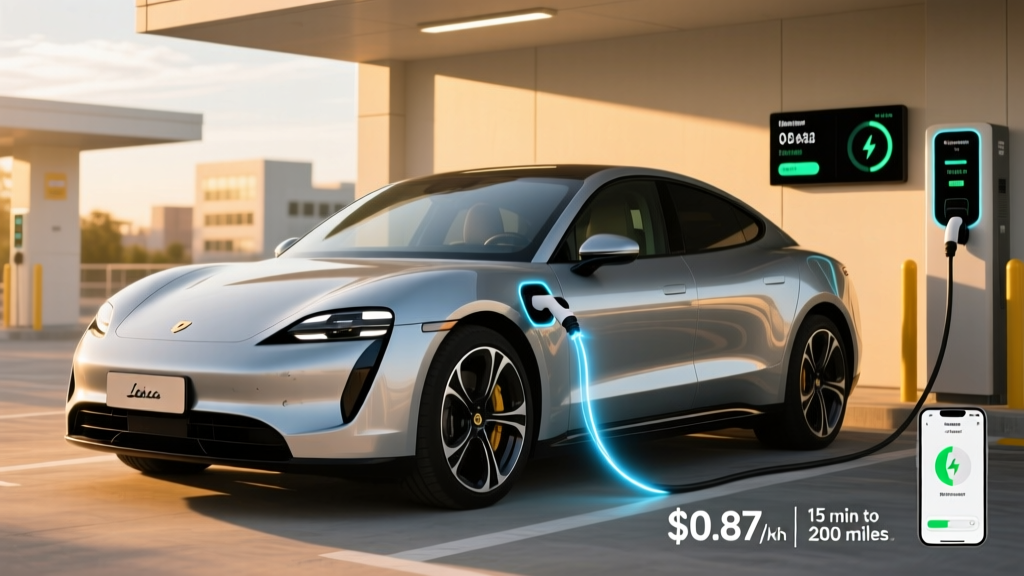
| DC Fast (V3 Supercharger, RWD) | 170 kW peak | ~750 mi/hr (peak) | 10–80% in ~25 min; tapers hard past 80% |
| DC Fast (V3 Supercharger, LR/Perf) | 250 kW peak | ~1,000 mi/hr (peak) | 10–80% in ~27 min; sustained ~150 kW avg |
Charge curve insight: On a V3 Supercharger, the Long Range Model 3 hits 250 kW only between roughly 10–30% SoC. By 60% SoC, it has tapered to ~100 kW. By 80%, it drops to ~40 kW. This is why Tesla (and every EV manufacturer) quotes 10–80% times — the final 20% takes nearly as long as the first 70%. For road trips, charge to 80% and move on.
Tesla's North American Charging Standard (NACS) connector is now the industry standard, with Ford, GM, Rivian, Hyundai, and others adopting it. This means Supercharger access — over 30,000 stalls in North America — is both a Tesla advantage and a growing shared resource.
How Real Is the "Bricked" Risk? Battery Degradation & Failure Data
Tesla's 2025 Impact Report (the latest available data) states that Model 3 and Model Y battery packs retain approximately 85% of original capacity after 150,000 miles. Total pack failure rates remain well below 1% within the warranty period.
Here is what the data actually tells us about the three "bricked" scenarios:
- 12V battery failures: The shift to a lithium 12V battery in the Model 3 Highland (2024+) and refreshed Model Y dramatically reduced dead-12V incidents. The older lead-acid units in pre-2024 vehicles were the primary culprit behind "my Tesla is bricked" complaints. The lithium 12V is monitored by the BMS and charged from the traction pack, making deep-discharge events rare.
- OTA/software bricks: Tesla's OTA update architecture includes redundant bootloaders and rollback capability. Documented cases of permanent software bricks are exceedingly rare — most "stuck update" situations resolve with a service-center reflash. This is an inconvenience, not a write-off.
- Traction battery failure: At sub-1% rates over hundreds of thousands of vehicles, catastrophic pack failure is a warranty event, not an epidemic. The LFP chemistry in the RWD model offers additional thermal stability and a longer cycle life (3,000+ cycles vs. ~1,500–2,000 for NMC) at the cost of lower energy density.
LFP vs. NMC: What It Means for Longevity
| Attribute | LFP (RWD Model 3) | NMC (Long Range / Performance) |
|---|---|---|
| Cycle Life | 3,000+ cycles | 1,500–2,000 cycles |
| Thermal Stability | Higher (less thermal runaway risk) | Moderate (requires active cooling) |
| Energy Density | Lower (heavier for same kWh) | Higher (more range per kg) |
| Recommended Daily Charge | 100% (Tesla recommends) | 80% daily, 100% for trips |
| Cold-Weather Performance | Slightly worse range loss | Better cold-weather retention |
| Cost | Lower (no cobalt/nickel) | Higher |
For buyers whose primary concern is longevity and minimizing "bricked" risk, the LFP-equipped RWD Model 3 is arguably the most durable configuration in Tesla's lineup — you can charge it to 100% daily without accelerating degradation, and the chemistry is inherently more stable.
Warranty Coverage: What Tesla Actually Covers
Tesla's warranty structure directly addresses the "bricked" concern:
- Basic Vehicle Limited Warranty: 4 years / 50,000 miles (whichever comes first). Covers the MCU, 12V battery, door handles, screens, and all non-powertrain components.
- Battery & Drive Unit Warranty (RWD): 8 years / 100,000 miles. Covers the traction battery and drive motor(s).
- Battery & Drive Unit Warranty (Long Range / Performance): 8 years / 120,000 miles.
- Capacity Retention Threshold: Tesla warrants that the battery will retain at least 70% of original capacity during the warranty period. If it drops below 70%, Tesla will repair or replace the pack at no cost.
What this means practically: If your Model 3's traction battery suffers a catastrophic failure at 95,000 miles (Long Range), Tesla replaces it under warranty. If the 12V lithium battery dies at 38,000 miles, it is covered under the basic warranty. The scenario where you are truly "on the hook" for a $15,000+ battery replacement is an out-of-warranty vehicle — typically 8+ years old with 100,000+ miles.
Pricing, Tax Credits, and Total Cost in 2026
| Trim | Base MSRP | Federal Credit (§30D) | Effective Price |
|---|---|---|---|
| RWD | $44,130 | Up to $7,500 (if eligible) | As low as $36,630 |
| Long Range AWD | $49,130 | Up to $7,500 (if eligible) | As low as $41,630 |
| Performance | $55,130 | Up to $7,500 (if eligible) | As low as $47,630 |
Critical §30D eligibility rules (2026 tax year):
- MSRP cap: Sedans must be under $55,000 MSRP. The Model 3 RWD and Long Range qualify; the Performance trim may exceed the cap depending on options.
- Buyer income cap: Modified adjusted gross income must not exceed $150,000 (single), $225,000 (head of household), or $300,000 (joint filers).
- Battery sourcing: The credit is split into two halves ($3,750 each) — one for critical minerals sourcing and one for battery component manufacturing. Eligibility depends on where the battery materials and components originate. Check IRS.gov §30D guidance for current sourcing requirements, as these tighten annually.
- Point-of-sale transfer: As of 2024, eligible buyers can transfer the credit to the dealer at purchase, reducing the upfront cost rather than waiting for a tax refund.
Always confirm eligibility with a tax professional before purchase. Rules change annually and individual circumstances vary.
Pros and Cons: Honest Assessment
- Best-in-class efficiency (25–28 kWh/100 mi)
- Supercharger network access — 30,000+ stalls, highest reliability of any public network
- OTA updates add features post-purchase
- LFP option for maximum battery longevity
- Strong resale value relative to EV market
- Excellent driver-assist suite (Autopilot standard, FSD Supervised optional)
- Minimal maintenance — no oil, filters, or spark plugs
- Minimalist interior — no instrument cluster, no physical stalks (2024+ Highland)
- Rear seat space tighter than Ioniq 6 or Polestar 2
- Panel gaps and build quality inconsistent across units
- FSD Supervised is SAE Level 2 — requires full driver attention, not autonomous
- Insurance premiums 15–30% higher than comparable ICE sedans
- No Apple CarPlay or Android Auto
- Service center wait times can be weeks in some markets
Is It Worth Buying vs. Key Competitors?
The Model 3 competes directly with the Hyundai Ioniq 6, BMW i4, Polestar 2, and the refreshed Chevrolet Bolt EUV (if considering crossover alternatives). Here is how it stacks up on the metrics that matter:
- Range per dollar: The Model 3 RWD at $44,130 for 363 EPA miles ($121/mile of range) beats the Ioniq 6 SE ($133/mile) and crushes the BMW i4 ($175+/mile).
- Charging infrastructure: Tesla's NACS/Supercharger advantage is significant for road-trippers. Competitors on CCS rely on Electrify America and EVgo, which have lower uptime rates.
- Interior quality: The BMW i4 and Polestar 2 win on materials, noise isolation, and traditional ergonomics. The Model 3's minimalist cabin is polarizing.
- Long-term battery confidence: Tesla's sub-1% pack failure rate and 8-year warranty match or exceed competitors. Hyundai offers 10yr/100,000 mi, which is longer on paper.
Choose the Model 3 if: You prioritize efficiency, Supercharger access, and OTA feature updates. The LFP RWD is the best value-for-longevity pick in the EV market.
Choose the Ioniq 6 if: You want a longer warranty (10yr battery), 800V ultra-fast charging architecture, and more rear-seat space.
Choose the BMW i4 if: Interior refinement, driving dynamics, and brand prestige outweigh efficiency and charging-network advantages.
Who the 2026 Model 3 Suits Best
- Daily commuters (30–60 mi round trip): The RWD with LFP is ideal — charge to 100% nightly, minimal degradation, lowest running cost.
- Frequent road-trippers: Long Range AWD with Supercharger access makes 300+ mile days comfortable. Plan stops at 20% SoC for fastest charging.
- Tech-forward buyers: Tesla's software stack, Sentry Mode, app integration, and Autopilot are the most feature-rich in the segment.
- NOT ideal for: Families needing generous rear-seat room (consider Model Y), towing (not rated), or buyers who prioritize dealership service convenience over mobile/app-based service.
Frequently Asked Questions
Can a Tesla actually get "bricked" permanently?
True permanent bricking (a vehicle that cannot be repaired) is extremely rare. The vast majority of "bricked Tesla" stories involve recoverable 12V battery failures or software glitches that service centers resolve. Traction battery failures within the 8-year warranty period are covered by Tesla. Out-of-warranty battery replacement is expensive ($12,000–$20,000) but not a "brick" — it is a repair.
What happens if my Tesla's 12V battery dies?
On 2024+ Highland and refreshed Model Y vehicles with the lithium 12V battery, deep-discharge events are rare because the BMS actively monitors and charges the 12V from the traction pack. If it does fail, Tesla Roadside Assistance can jump the 12V system, and the car will function normally. Replacement costs $300–$500.
Does the 2026 Model 3 qualify for the $7,500 federal tax credit?
The RWD and Long Range trims (under the $55,000 sedan MSRP cap) can qualify for up to $7,500 under IRS §30D, provided the buyer meets income limits ($150K single / $300K joint) and the battery meets current-year critical-mineral and component-sourcing requirements. The Performance trim may exceed the MSRP cap. Verify current eligibility at IRS.gov and consult a tax professional.
How long will a Tesla battery last before needing replacement?
Tesla's own fleet data shows Model 3/Y packs retain ~85% capacity at 150,000 miles. The LFP chemistry in the RWD model can endure 3,000+ full charge cycles — mathematically equivalent to 1 million+ miles before reaching end-of-life capacity thresholds. Most packs will outlast the vehicle's useful life.
Is Tesla's Autopilot or FSD self-driving?
No. Both Autopilot and FSD (Supervised) are SAE Level 2 driver-assistance systems. The driver must remain fully attentive, keep hands on the wheel (or demonstrate engagement via the cabin camera), and be prepared to take over instantly. Tesla's own documentation states these systems do not make the vehicle autonomous. Only Level 4 services like Waymo operate without a human driver.
What does it cost to charge a Model 3 at home vs. Superchargers?
At the US average residential electricity rate of ~$0.17/kWh, fully charging the RWD's 60 kWh pack costs about $10.20 — roughly $0.028 per mile. Supercharger pricing varies by location but averages $0.30–$0.40/kWh, or ~$0.07–$0.10 per mile. Both are significantly cheaper than gasoline at current prices.