If you own a 2024–2026 Tesla Model 3 or Model Y, you have likely seen — or will soon see — a notification on your touchscreen that reads "Brake fluid health check required." Unlike oil changes on gas cars, this maintenance item catches many new EV owners off guard. Below, we break down exactly what the alert means, what it costs, whether you can do it yourself, and how it fits into the broader ownership picture of Tesla's two highest-volume vehicles.
What Is the Tesla Brake Fluid Health Check?
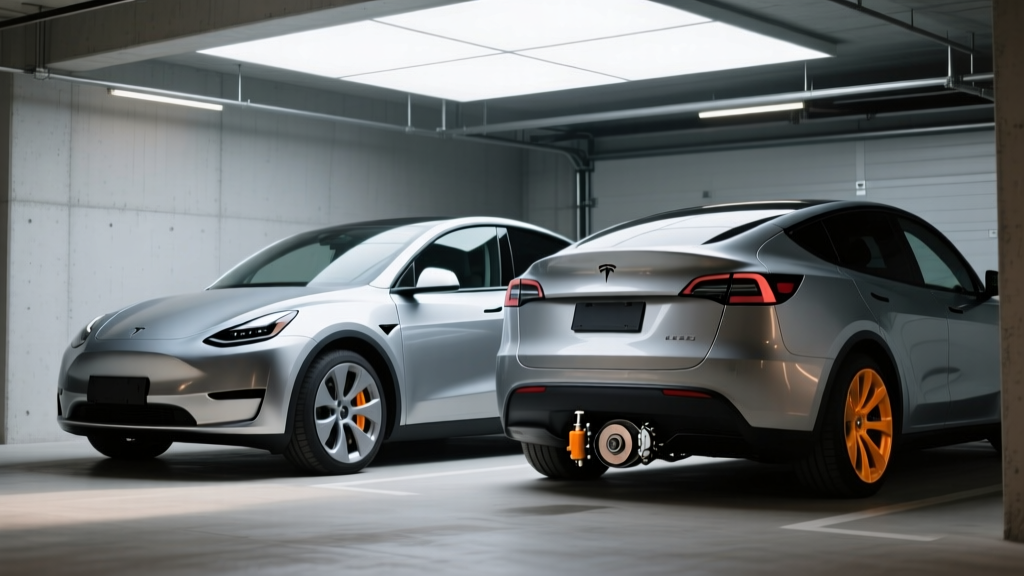
Tesla vehicles monitor brake fluid condition using a sensor that measures moisture absorption over time. Brake fluid is hygroscopic — it pulls water from the atmosphere through microscopic pores in hoses and seals. As water content rises, the fluid's boiling point drops, which can lead to vapor lock under hard or repeated braking (mountain descents, track use, emergency stops).
When the car's algorithm determines the fluid has degraded — typically around the 2-year mark, regardless of mileage — it triggers the brake fluid health check alert. This is not a hard fault; the car remains drivable. But ignoring it for extended periods risks reduced braking performance and may void warranty coverage on brake-system components.
Cost and Service Options for the Brake Fluid Check
You have three paths when the alert fires:
- Tesla Service Center or Mobile Service: A brake fluid flush and replacement typically runs $125–$175 at a Tesla service center. Mobile service (a Tesla technician comes to your home or workplace) is often the same price or slightly less, since there is no bay-time overhead. Schedule via the Tesla app → Service → Brakes → Brake Fluid.
- Independent EV-capable shop: Many shops now service Teslas and will perform a brake fluid flush for $80–$130. Ensure they use the correct DOT-rated fluid specified in your owner's manual (typically DOT 4 or DOT 4 LV for Tesla).
- DIY: Experienced home mechanics can perform a gravity or pressure bleed for roughly $15–$25 in fluid cost. However, Tesla's regenerative braking system means the hydraulic brakes are used less frequently, making proper bleeding critical to avoid air pockets. If you are not confident with brake work, defer to a professional.
Why Brake Fluid Matters More (and Less) in an EV
Regenerative braking handles the majority of deceleration in a Tesla — often 80–90% of daily stops. This means the friction brakes (calipers, rotors, pads) see far less wear than on a gas car. Pads can last 100,000+ miles. But this same low usage creates a hidden problem: caliper corrosion and fluid stagnation.
Because the hydraulic system sits idle for long stretches, moisture-laden fluid can corrode caliper pistons and ABS modulator valves. Tesla's maintenance schedule therefore emphasizes periodic brake caliper cleaning and lubrication (every 12 months in road-salt regions, every 2 years otherwise) alongside the fluid health check.
2026 Model Y at a Glance: Specs That Matter
Since the brake fluid health check alert applies primarily to the Model Y and Model 3, here is a current snapshot of the 2026 Model Y Long Range AWD — the volume seller.
| Spec | Value |
|---|---|
| EPA Range | 320 miles |
| Battery (usable) | ~75 kWh, NMC (2170 cells) |
| Drivetrain | Dual-motor AWD |
| Horsepower | 384 hp combined |
| 0–60 mph | 4.8 seconds |
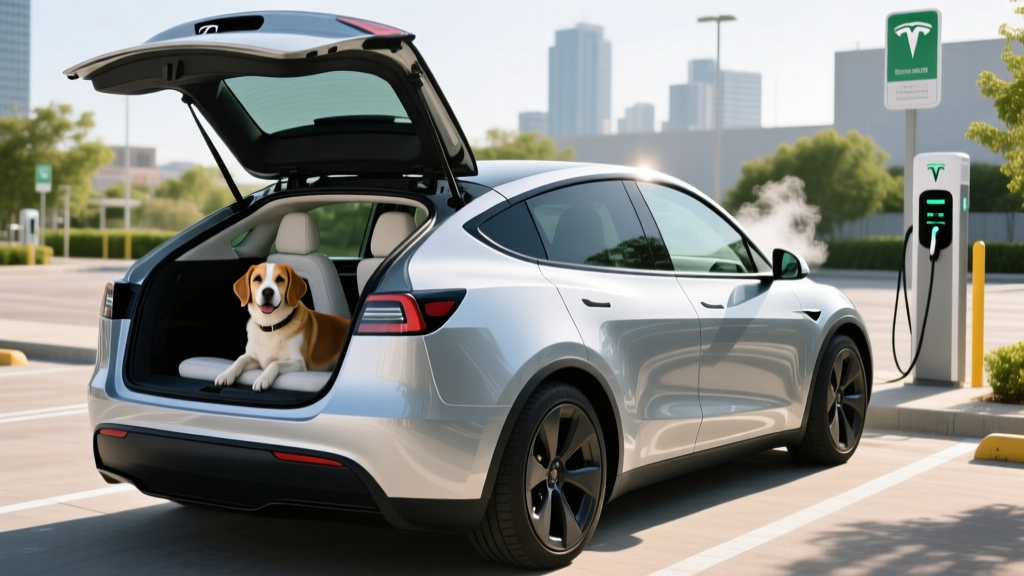
| Peak DC Fast Charge | 250 kW (V3 Supercharger) |
| 10–80% DC Time | ~27 minutes |
| Level 2 Charge Rate | 11.5 kW (~44 mi/hr) |
| MPGe (combined) | 122 MPGe |
| Efficiency | 28 kWh/100 mi |
| Cargo (rear seats up / down) | 30.2 / 72.1 cu ft |
| Rear Legroom | 38.4 in |
| Base MSRP | $44,990 |
| Battery Warranty | 8 yr / 120,000 mi (min 70% retention) |
2026 Model 3 Long Range AWD — Quick Comparison
| Spec | Model 3 LR AWD | Model Y LR AWD |
|---|---|---|
| EPA Range | 341 mi | 320 mi |
| Battery | ~75 kWh NMC | ~75 kWh NMC |
| 0–60 mph | 4.2 sec | 4.8 sec |
| Cargo | 23.0 cu ft | 72.1 cu ft (max) |
| Base MSRP | $42,490 | $44,990 |
| §30D Credit Eligible | Yes (if sourcing rules met) | Yes (if sourcing rules met) |
Charging Speed and Infrastructure
| Level | Power (kW) | Miles Added per Hour | Typical Use Case |
|---|---|---|---|
| Level 1 (120V) | ~1.2 kW | ~4 mi/hr | Overnight top-up, emergencies |
| Level 2 (240V, 48A) | 11.5 kW | ~44 mi/hr | Daily home charging (Wall Connector) |
| DC Fast (V3 Supercharger) | Up to 250 kW peak | ~1,000 mi/hr at peak | Road trips, 10–80% in ~27 min |
| DC Fast (V4 Supercharger) | Up to 350 kW peak (capable vehicles) | — | Newer architecture models; Model Y refresh may support higher rates |
Charging-curve reality: The 250 kW peak is not sustained. The Model Y Long Range charges at roughly 250 kW from 10–30% SoC, tapers to ~180 kW through 50%, then drops to ~80 kW above 70%, and ~40 kW above 90%. This is why Tesla quotes 10–80% times rather than 0–100% — the final 20% takes nearly as long as the first 70%.
For NACS (Tesla's North American Charging Standard) adoption: as of 2026, nearly all legacy CCS vehicles can access Superchargers via adapter, but Tesla owners enjoy native plug-and-charge compatibility at all 6,500+ North American Supercharger stalls — still the most reliable public network by Tesla's own data and third-party uptime surveys.
Federal Tax Credit (§30D) — 2026 Rules
Both the Model 3 and Model Y remain eligible for the federal EV tax credit under IRS §30D, but eligibility is not automatic. Here is the checklist:
- MSRP cap: SUVs (Model Y) must be ≤ $80,000; sedans (Model 3) must be ≤ $55,000. Both base trims qualify.
- Buyer income cap: Modified AGI ≤ $300,000 (joint), $225,000 (head of household), $150,000 (single).
- Battery sourcing: Critical minerals and battery components must meet phased-in percentages from US/FTA partners. Tesla's supply chain has largely complied, but verify at the point of sale — the dealer/manufacturer must certify.
- Point-of-sale transfer: As of 2024, you can transfer the credit to the dealer at purchase, effectively reducing your out-of-pocket by up to $7,500 on the spot (the dealer then claims the credit). This is optional; you can still claim it on your tax return.
| Trim | MSRP | Max §30D Credit | Effective Price |
|---|---|---|---|
| Model 3 LR AWD | $42,490 | $7,500 | ~$34,990 |
| Model Y LR AWD | $44,990 | $7,500 | ~$37,490 |
| Model Y Performance | $48,990 | $7,500 | ~$41,490 |
Note: State incentives (California, Colorado, New York, etc.) may stack on top. Check your state's energy office for current programs. Tax advice should come from a qualified professional.
Full Tesla Maintenance Schedule (Beyond Brake Fluid)
While Teslas eliminate oil changes, spark plugs, and transmission fluid, they are not maintenance-free. Here is the 2026 recommended schedule per Tesla's owner's manual:
- Cabin air filter: Every 2 years (HEPA filter in Model Y every 3 years)
- Brake fluid health check: Condition-based alert, typically every 2 years
- Brake caliper cleaning/lubrication: Every 12 months (salt-belt states) or 2 years
- Tire rotation: Every 6,250 miles or when tread difference ≥ 2/32 in
- A/C desiccant bag: Every 6 years (Model 3) or 4 years (Model Y)
- Wiper blades: As needed, typically annual
- Windshield washer fluid: Top up as needed
Pros, Cons, and Who Should Buy
Pros
- Class-leading Supercharger network access
- Over-the-air updates add features post-purchase
- Strong efficiency (28 kWh/100 mi beats most rivals)
- Spacious cargo area (72.1 cu ft in Model Y)
- Low running costs: ~$0.04–0.06/mi on home solar or off-peak rates
- IIHS Top Safety Pick+ (2025 Model Y)
Cons
- Minimalist interior not for everyone (no instrument cluster)
- Panel gaps and paint quality inconsistent across Fremont vs Austin builds
- Insurance premiums 15–30% higher than comparable gas crossovers
- FSD (Supervised) remains Level 2 — driver must stay engaged
- Turn-signal stalk removal (2024+ Model 3 Highland) frustrates some drivers
- Service center wait times can stretch 2–4 weeks in high-volume markets
Best For
Commuters and families who have home Level 2 charging and drive 200–350 miles weekly. The Model Y's cargo space, efficiency, and Supercharger access make it ideal for road trips. Not ideal for buyers without reliable home or workplace charging, or those in extreme cold-weather regions without garage parking (range loss of 20–30% in sub-20°F conditions).
Frequently Asked Questions
How often does Tesla brake fluid actually need replacing?
The car monitors fluid condition and alerts you — typically every 2 years, but it varies with humidity and climate. Do not ignore the alert; schedule service within a few weeks.
Can I reset the brake fluid health check alert myself?
No. The alert clears only after a service event is logged by a Tesla technician or after a documented fluid replacement. There is no owner-accessible reset procedure.
Does the brake fluid check affect my warranty?
Ignoring maintenance alerts can give Tesla grounds to deny warranty claims on brake-system components (ABS module, calipers, master cylinder). The battery and drive-unit warranties are separate and unaffected.
What is the real-world range of the 2026 Model Y Long Range?
EPA rates it at 320 miles. In mixed real-world driving, expect 280–300 miles in mild weather, 270–290 on highway trips at 70+ mph, and 230–260 in winter without preconditioning.
Does the Model Y still qualify for the $7,500 federal tax credit in 2026?
Yes, provided the buyer meets income caps ($300K joint / $150K single) and the specific vehicle's battery sourcing complies with current §30D rules. Verify at point of sale and consult a tax professional.
Is the Model Y worth buying over the Hyundai Ioniq 5 or Ford Mustang Mach-E?
The Model Y wins on Supercharger network reliability and efficiency. The Ioniq 5 charges faster on 800V architecture (~18 min 10–80% at 350 kW chargers) and has a more conventional interior. The Mach-E offers a sportier drive but trails on range and charging infrastructure. Choose Tesla if network access and OTA updates matter most; choose Hyundai if 800V fast charging and interior ergonomics are priorities.
What does a Tesla brake fluid flush cost at a non-Tesla shop?
Typically $80–$130. Ensure the shop uses the correct DOT 4 or DOT 4 LV fluid and performs a proper bleed sequence. Some independent shops may not have Tesla-specific scan tools to reset the maintenance alert, so confirm before scheduling.