The Tesla Bot Isn't an EV — But Buyers Are Searching Anyway
If you've landed here searching "how much does a Tesla Bot cost", you're not alone. The Tesla Bot — officially named Optimus — is a general-purpose humanoid robot, not an electric vehicle. It has no EPA range, no charging port, and no sticker price at a dealership. But because it shares the Tesla brand, many EV shoppers are curious whether it fits into their garage, budget, or daily routine alongside a Model Y or Cybertruck.
As of early 2026, the Optimus robot is not available for consumer purchase. Tesla has deployed limited units internally at its Fremont and Gigafactory Texas facilities for materials-handling tasks, and CEO Elon Musk has publicly targeted a consumer price between $20,000 and $30,000 once the product reaches mass production. No firm on-sale date has been announced.
This article clarifies what Optimus is, what it isn't, and — since most readers researching this keyword are also evaluating Tesla vehicles — how its projected cost compares to buying a 2026 Tesla EV with federal tax credits applied.
What the Tesla Bot (Optimus) Actually Is
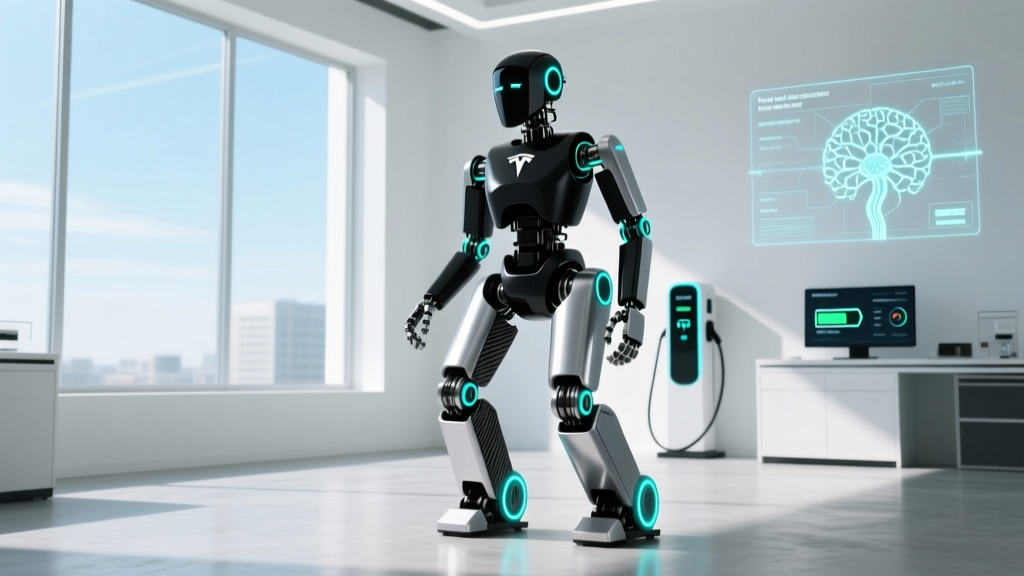
Optimus is a bipedal humanoid robot standing approximately 5'8" and weighing around 125 lbs. It is powered by the same AI inference hardware Tesla uses for its Full Self-Driving (FSD Supervised) system, repurposed for physical-world manipulation. The robot features 28 degrees of freedom in its hands, custom actuators, and a 2.3 kWh battery pack — enough for roughly a full day of light industrial work, according to Tesla's preliminary disclosures.
Critically, Optimus is a standalone product category. It does not drive on roads, carry passengers, or qualify for any automotive incentives. Think of it as closer to a Boston Dynamics Atlas or Figure 01 robot than to a Model 3.
Tesla Bot Projected Pricing vs. 2026 Tesla EV Pricing
The most useful comparison for an EV shopper is how the Bot's projected $20,000–$30,000 price stacks up against Tesla's current vehicle lineup, especially after the federal §30D EV tax credit. The table below uses 2026 base MSRPs and the maximum $7,500 credit (eligibility varies — see tax credit section below).
| Product | Base MSRP | Est. After §30D Credit | Category |
|---|---|---|---|
| Tesla Bot (Optimus) — projected | $20,000–$30,000 | N/A (not a vehicle) | Humanoid robot |
| 2026 Model 3 RWD | $38,990 | ~$31,490* | Sedan / BEV |
| 2026 Model Y Long Range AWD | $44,990 | ~$37,490* | SUV / BEV |
| 2026 Model Y RWD | $39,990 | ~$32,490* | SUV / BEV |
| 2026 Cybertruck AWD | $79,990 | ~$72,490* | Truck / BEV |
* Credit eligibility depends on buyer income, vehicle MSRP caps, and battery-sourcing requirements under IRS §30D. See IRS clean vehicle credit rules for current-year details. Credit can be transferred to the dealer at point of sale as a purchase-price reduction.
If You're Actually Shopping for a Tesla EV: 2026 Model Y Snapshot
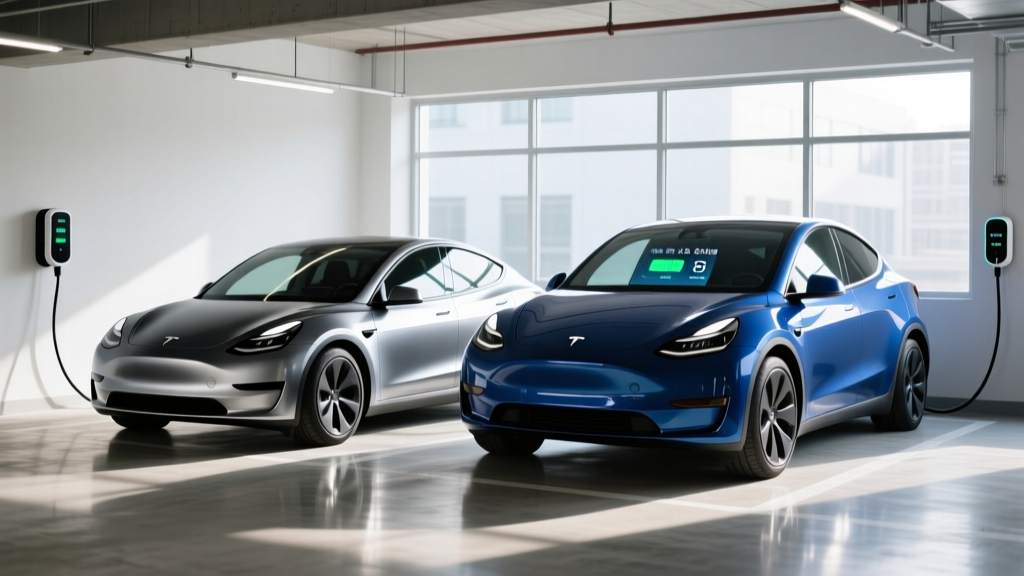
Since the Bot isn't purchasable, most readers here are evaluating Tesla's vehicles. The 2026 Model Y Long Range AWD is Tesla's highest-volume seller and the most likely cross-shop. Here are the exact figures an EV buyer needs.
| EPA Range | 320 miles |
| Real-World Range (see below) | ~260–290 mi highway; ~220–250 mi cold weather |
| Battery Capacity | ~78 kWh usable (NMC chemistry) |
| Max DC Fast Charge | 250 kW peak; 10–80% in ~27 minutes |
| Level 2 Home Charge | 11.5 kW (~44 mi/hr added) |
| 0–60 mph | 4.8 seconds |
| Horsepower | 384 hp (dual motor AWD) |
| MPGe (combined) | 117 MPGe / 28 kWh/100mi |
| Cargo Volume | 76.2 cu ft (rear seats folded) |
| Battery Warranty | 8 years / 120,000 miles (min 70% retention) |
| Base MSRP | $44,990 (before incentives) |
Source: EPA fueleconomy.gov, Tesla specifications.
Charging Speed: DC Fast Charging and Home Level 2
The Model Y Long Range supports Tesla's V3 and V4 Supercharger network at up to 250 kW peak. However, peak kW is not sustained kW — the charge curve tapers significantly above 50% State of Charge (SoC). Here's what that looks like in practice:
| Charge Level | Power | Speed | Use Case |
|---|---|---|---|
| Level 1 (120V) | ~1.4 kW | ~5 mi/hr | Emergency / overnight trickle |
| Level 2 (240V, 48A) | 11.5 kW | ~44 mi/hr | Daily home charging |
| DC Fast (Supercharger V3/V4) | 250 kW peak | ~162 mi in 15 min | Road trips |
On a road trip, plan for 20–25 minute stops at Superchargers to go from 10% to 80%. Charging from 80% to 100% slows dramatically — often taking as long as the 10–80% session — so it's rarely worth waiting unless you need maximum range for the next leg.
Federal Tax Credit Eligibility: What Applies in 2026
The Optimus robot does not qualify for any automotive tax credit — it is not a motor vehicle. For Tesla EVs, the §30D New Clean Vehicle Credit can provide up to $7,500, but eligibility hinges on several requirements that change annually:
- MSRP cap: Vans/SUVs/pickups ≤ $80,000; sedans ≤ $55,000
- Buyer income cap: AGI ≤ $150K single / $300K joint
- Battery sourcing: Critical minerals and battery components must meet phased-in domestic/free-trade sourcing thresholds
- Point-of-sale transfer: Credit can be applied as a purchase-price reduction at the dealer, reducing out-of-pocket cost immediately
- VIN registration: Vehicle must be registered for personal use in the U.S.
Source: IRS.gov — Clean Vehicle Credits. Consult a tax professional for your specific situation.
Pros and Cons: Tesla Model Y (Since the Bot Isn't Available)
- Class-leading Supercharger network reliability
- Spacious 76.2 cu ft cargo area with optional 7-seat config
- Strong 250 kW DC fast charging for road trips
- Over-the-air updates add features post-purchase
- Competitive 117 MPGe efficiency
- No Apple CarPlay or Android Auto support
- FSD (Supervised) is Level 2 — not autonomous driving
- Panel gaps and build-quality inconsistency reported
- Insurance premiums 20–40% higher than comparable ICE SUVs
- Highway range drops noticeably in cold weather
Who Should Wait for Optimus — and Who Should Buy an EV Now
If your goal is personal transportation, the Tesla Bot is irrelevant to your purchase decision. Optimus is designed for repetitive physical tasks in warehouses, factories, and eventually homes — not for commuting or road trips.
Buy a 2026 Tesla Model Y if: You need a practical electric family SUV with reliable DC fast charging, strong cargo capacity, and access to the Supercharger network.
Consider alternatives if: You want Apple CarPlay (look at Hyundai Ioniq 5 or Kia EV6), need true Level 4 autonomous capability (currently only Waymo offers this in limited metro areas), or want a lower entry price (the Chevy Equinox EV starts around $33,000).
Follow Optimus news if: You're interested in home robotics for household tasks and are willing to wait for a consumer product that may not ship until 2027 or later, with no guaranteed pricing.
Frequently Asked Questions
Can I buy a Tesla Bot in 2026?
No. As of early 2026, the Tesla Optimus robot is not available for consumer purchase. Tesla has deployed limited units internally for testing, but no public sale date or finalized pricing has been confirmed.
How much will the Tesla Bot cost when it launches?
Elon Musk has targeted a consumer price between $20,000 and $30,000, though this is preliminary and subject to change based on production scale, component costs, and final capabilities.
Does the Tesla Bot qualify for the $7,500 EV tax credit?
No. The §30D federal tax credit applies only to qualified plug-in electric vehicles — cars, trucks, SUVs, and vans that are driven on public roads. A humanoid robot does not meet this definition.
Is the Tesla Bot the same as a self-driving car?
No. Optimus is a humanoid robot for physical tasks. Tesla's vehicle driver-assistance systems (Autopilot and FSD Supervised) are SAE Level 2 — they require the driver to remain fully engaged at all times. Neither the Bot nor any current Tesla vehicle is "self-driving."
What Tesla vehicle is closest in price to the Bot's projected cost?
The 2026 Model 3 RWD at $38,990 MSRP — or roughly $31,490 after the maximum $7,500 §30D credit — is the closest Tesla vehicle to Optimus's projected $20,000–$30,000 range. No current Tesla vehicle matches the Bot's lower projected price point.