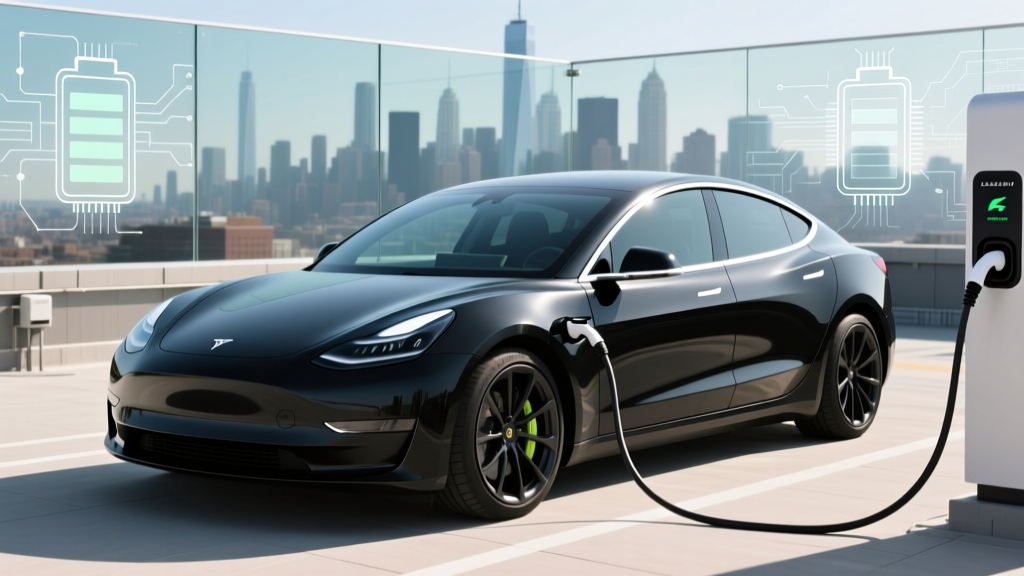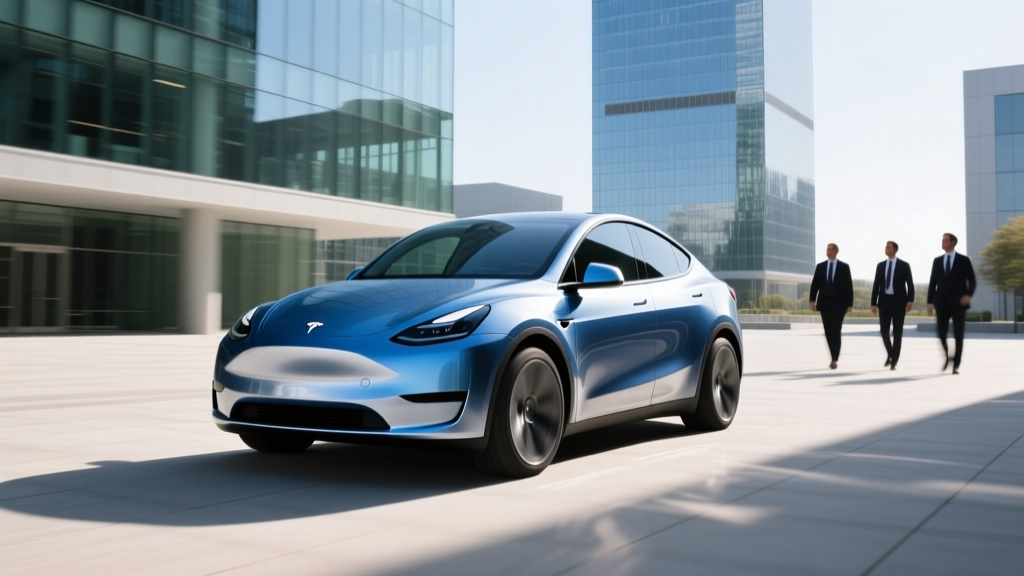
When EV shoppers search for Tesla board members, they're often trying to understand who steers the company behind the best-selling electric vehicle in America. Board-level decisions directly influence vehicle pricing, battery chemistry choices, Supercharger network expansion, and whether a given model qualifies for the federal §30D tax credit. In this review, we connect those governance decisions to the concrete ownership experience of the 2026 Tesla Model Y — the vehicle most directly shaped by Tesla's strategic leadership.
Why Tesla's Board Composition Matters to EV Buyers
Tesla's board of directors approves capital allocation for battery gigafactories, signs off on pricing strategy, and oversees compliance with federal incentive sourcing requirements. For the 2026 Model Y, board decisions have materialized in three buyer-facing ways:
- Battery sourcing strategy: The shift toward LFP (lithium iron phosphate) chemistry in Standard Range trims — a cost and supply-chain decision with board-level oversight — directly affects whether the vehicle clears §30D critical-mineral thresholds.
- Manufacturing efficiency: Gigacasting and simplified wiring harnesses, approved through successive board capital-expenditure votes, keep the Model Y's MSRP competitive against the Ford Mustang Mach-E and Hyundai Ioniq 5.
- Supercharger network opening: The board-sanctioned decision to adopt and license the NACS connector standard now defines charging compatibility across the industry.
The current Tesla board includes Robyn Denholm (Chair), Kimbal Musk, Ira Ehrenpreis, James Murdoch, Kathleen Wilson-Thompson, Steve Jurvetson, and Hiromichi Mizuno. Their collective influence shows up in the spec sheet below.
2026 Tesla Model Y: Core Specifications
| Specification | Long Range AWD | Performance |
|---|---|---|
| EPA Range | 320 miles | 293 miles |
| Battery Capacity (usable) | 75 kWh (NMC) | 75 kWh (NMC) |
| Drivetrain | Dual-Motor AWD | Dual-Motor AWD |
| Horsepower | 384 hp | 456 hp |
| 0–60 mph | 4.8 sec | 3.5 sec |
| Peak DC Fast Charge | 250 kW | 250 kW |
| 10–80% DCFC Time | ~25 min | ~25 min |
| Level 2 Home Charge | 11.5 kW (~44 mi/hr) | 11.5 kW (~44 mi/hr) |
| MPGe (combined) | 122 MPGe | 111 MPGe |
| Efficiency | 28 kWh/100 mi | 30 kWh/100 mi |
| Cargo Volume (rear seats up) | 30.2 cu ft | 30.2 cu ft |
| Cargo Volume (rear seats folded) | 72.1 cu ft | 72.1 cu ft |
| Rear Legroom | 41.6 in | 41.6 in |
| Base MSRP | $44,990 | $48,990 |
| As-Tested (w/ FSD + wheels) | ~$57,490 | ~$61,490 |
| Battery Warranty | 8 yr / 120,000 mi | 8 yr / 120,000 mi |
| Vehicle Warranty | 4 yr / 50,000 mi | 4 yr / 50,000 mi |
Source: fueleconomy.gov and Tesla.com Model Y design studio.
Real-World Range: What the EPA Number Doesn't Tell You
Real-World Highway (70 mph, mild weather): ~265–285 miles
Real-World Highway (30°F, heater on): ~220–245 miles
City/Commuter (regen-heavy, mild climate): ~295–315 miles
The Model Y Long Range's 320-mile EPA figure is achievable in mixed suburban driving with moderate climate-control use. On sustained highway runs at 70–75 mph, aerodynamic drag pushes consumption to roughly 300–320 Wh/mi, trimming effective range by 10–15%. In cold weather, the heat pump (standard on the refreshed Juniper platform) mitigates cabin-heating losses, but battery internal resistance still reduces usable capacity. Expect a 20–30% range reduction in sub-freezing highway driving — consistent with NMC chemistry behavior across the industry.
For a 35-mile round-trip commute with home charging, range is a non-issue. For 250-mile road trips, the Long Range covers it in one charge with a comfortable buffer. The Performance trim sacrifices 27 miles of EPA range for its 3.5-second sprint, a trade-off most enthusiasts accept willingly.
Charging Speed: DC Fast, Home Level 2, and the NACS Advantage
| Charging Level | Power / Connector | Miles Added per Hour | Notes |
|---|---|---|---|
| Level 1 (120V) | 1.4 kW / NACS | ~5 mi/hr | Emergency/trickle only |
| Level 2 (240V, 48A) | 11.5 kW / NACS | ~44 mi/hr | Full overnight charge in ~7 hrs |
| DC Fast (V3 Supercharger) | 250 kW peak / NACS | ~175 mi in 15 min | Peak rate below 30% SoC; tapers above 80% |
| DC Fast (V4 Supercharger) | 250 kW (cable-limited) | ~175 mi in 15 min | Model Y architecture caps at 250 kW |
The Model Y charges at a peak of 250 kW on Tesla's V3 and V4 Superchargers, adding roughly 175 miles in 15 minutes under optimal conditions (battery preconditioned, SoC below 30%). The charge curve tapers progressively: expect ~150 kW sustained between 30–60% SoC, dropping to ~80 kW by 80%, and ~35 kW in the 80–100% zone. A 10–80% session takes approximately 25 minutes.
At home on a Tesla Wall Connector (48A / 11.5 kW), the 75 kWh battery refills from 10% to 100% in roughly 7 hours — easily overnight. This is the primary refueling method for most owners and costs approximately $0.13/kWh on the national average, or about $9.75 for a full charge versus $50+ for a comparable gasoline fill-up.
The native NACS connector is a major competitive advantage. Tesla owners access the Supercharger network — over 25,000 stalls in North America — without adapters. Non-Tesla networks (Electrify America, EVgo) are accessible via a CCS1-to-NACS adapter, though the experience is less seamless.
Performance, Efficiency, and Daily Usability
The dual-motor AWD powertrain delivers confident all-weather traction. The Long Range's 4.8-second 0–60 time outpaces most luxury crossovers, while the Performance trim's 3.5 seconds enters sports-car territory. Regenerative braking is strong and predictable, enabling near one-pedal driving in most scenarios, though Tesla has softened the default regen intensity in recent software updates — a preference toggle in the settings menu restores the aggressive setting.
Interior practicality remains a Model Y hallmark. With 30.2 cubic feet behind the second row and 72.1 cubic feet with seats folded, it competes favorably with the Ioniq 5 (27.2 / 56.2 cu ft) and Mach-E (29.7 / 59.7 cu ft). The optional third row adds two small seats (best for children), though it eliminates the sub-floor cargo area.
The 15.4-inch center touchscreen handles all infotainment, navigation, climate, and vehicle settings — no physical buttons aside from steering-wheel rollers. This minimalist approach divides opinion: some owners love the clean aesthetic, while others miss tactile climate controls. The 2026 refresh adds ventilated front seats, ambient lighting, a rear-seat touchscreen, and power-folding second-row seats — all standard on Long Range and Performance trims.
Pricing, Trims, and Federal Tax Credit Eligibility
| Trim | Base MSRP | Destination | Est. After §30D Credit | §30D Eligible? |
|---|---|---|---|---|
| Long Range AWD | $44,990 | $1,390 | ~$38,880* | Yes (verify sourcing) |
| Performance | $48,990 | $1,390 | ~$42,880* | Yes (verify sourcing) |
*Assumes full $7,500 §30D credit applied as point-of-sale reduction. Actual eligibility depends on buyer income, battery sourcing, and MSRP caps. See IRS §30D guidelines.
The Model Y Long Range's MSRP of $44,990 sits under the §30D SUV cap of $80,000. However, the $7,500 credit is split into two $3,750 halves: one for battery-component sourcing (North America) and one for critical-mineral sourcing (U.S. or FTA-partner countries). Tesla's ongoing shift of LFP cell sourcing — historically from CATL in China — has periodically affected eligibility on Standard Range variants. The Long Range, using domestically assembled NMC cells, has maintained more consistent eligibility, but buyers should verify the specific VIN's sourcing status at purchase via the IRS Clean Vehicle report.
Income caps also apply: modified adjusted gross income must not exceed $150,000 (single), $225,000 (head of household), or $300,000 (joint filers). The credit is now transferable at point of sale, reducing the purchase price directly rather than requiring a tax-filing wait.
Autopilot, FSD, and Driver Assistance: SAE Level 2 Reality
Autopilot and FSD (Supervised) require continuous driver engagement. The driver is responsible for all vehicle operation at all times. This is NOT self-driving.
Every 2026 Model Y ships with basic Autopilot (Traffic-Aware Cruise Control + Autosteer) at no extra cost. Full Self-Driving (Supervised) — currently priced at $8,000 upfront or $99/month — adds automatic lane changes, Navigate on Autopilot, traffic-light and stop-sign recognition, and Autopark. Despite the name, FSD remains an SAE Level 2 system requiring hands-on-wheel supervision.
In our experience, FSD handles highway driving competently, managing interchanges and speed adjustments smoothly. Urban performance has improved significantly but still requires intervention at complex unprotected left turns and construction zones. The vision-only approach (no LiDAR or radar) occasionally produces phantom braking events on shadowed highways — a known limitation Tesla addresses iteratively via OTA updates.
Model Y vs. Key Competitors: Is It Worth Buying?
| Metric | Tesla Model Y LR | Ford Mach-E ER AWD | Hyundai Ioniq 5 Limited |
|---|---|---|---|
| EPA Range | 320 mi | 312 mi | 305 mi |
| Peak DCFC | 250 kW | 150 kW | 233 kW (800V) |
| 10–80% Time | ~25 min | ~38 min | ~18 min |
| 0–60 mph | 4.8 sec | 5.1 sec | 5.1 sec |
| Cargo (rear up) | 30.2 cu ft | 29.7 cu ft | 27.2 cu ft |
| Charging Network | NACS / Supercharger | CCS1 (adapter for NACS) | CCS1 (adapter for NACS) |
| Base MSRP | $44,990 | $45,995 | $49,500 |
The Ioniq 5 charges faster (18 minutes 10–80% on 800V architecture) and offers a more conventional interior with physical controls. The Mach-E provides a more engaging driving feel and Ford dealer support. But the Model Y wins on Supercharger network access, cargo capacity, software ecosystem, and resale value — advantages directly traceable to board-level strategic decisions Tesla made years before competitors caught up.
Pros, Cons, and Who Should Buy
- Class-leading Supercharger network access (native NACS)
- Best-in-class cargo volume (30.2 cu ft / 72.1 folded)
- Strong efficiency (122 MPGe combined, 28 kWh/100 mi)
- Continuous OTA improvements post-purchase
- Strong resale value relative to EV peers
- Optional third row for small families
- Minimalist interior polarizes — no physical climate controls
- 250 kW DCFC peak trails Ioniq 5 / EV6 (800V, ~235–350 kW)
- FSD ($8,000) remains Level 2, not autonomous
- Ride firmness on Performance trim with 21" wheels
- Insurance premiums run 15–25% above segment average
- Tax credit eligibility can shift with battery sourcing changes
Best for: Daily commuters with home charging, families needing maximum cargo flexibility, road-trippers who prioritize Supercharger reliability, and tech-forward buyers who value OTA updates. Consider alternatives if: you prioritize the fastest possible DC charging (Ioniq 5), want a traditional dealership experience (Mach-E, Ioniq 5), or dislike touchscreen-only controls.
Frequently Asked Questions
What is the real-world range of the 2026 Tesla Model Y?
The EPA rates the Long Range AWD at 320 miles. In real-world highway driving at 70 mph in mild weather, expect 265–285 miles. In cold weather (below 30°F), highway range drops to approximately 220–245 miles due to increased battery resistance and cabin heating demands.
How fast does the Model Y charge at home and on DC fast chargers?
On a Level 2 home charger (11.5 kW / 48A), the Model Y gains approximately 44 miles of range per hour, fully charging overnight in ~7 hours. On a V3 or V4 Supercharger, it peaks at 250 kW and charges from 10–80% in approximately 25 minutes, with the curve tapering significantly above 80% SoC.
Does the 2026 Model Y qualify for the federal EV tax credit?
The Long Range AWD at $44,990 MSRP falls well under the $80,000 SUV cap. Eligibility for the full $7,500 depends on battery-component and critical-mineral sourcing compliance, plus buyer income limits ($150K single / $300K joint). The credit can now be transferred at point of sale. Always verify current eligibility on fueleconomy.gov and the IRS Clean Vehicle portal before purchasing.
Is the Model Y worth buying over the Ioniq 5 or Mach-E?
If Supercharger network access, cargo capacity, and software ecosystem are your top priorities, the Model Y remains the segment benchmark. If faster DC charging speed matters more (18 vs. 25 minutes 10–80%), the Ioniq 5's 800V architecture is superior. If you want a more traditional dealership and service experience, the Mach-E is a strong alternative.
What are the biggest pros and cons of the 2026 Model Y?
Top pros: Supercharger access, cargo space, efficiency, OTA updates, resale value. Top cons: touchscreen-only controls, 250 kW DCFC peak trails 800V competitors, FSD is Level 2 only, higher insurance costs, ride firmness on Performance trim.
How do Tesla board decisions affect my purchase?
Board-level capital allocation determines Gigafactory output, battery chemistry sourcing (which affects §30D tax credit eligibility), Supercharger network expansion, and pricing strategy. The board's approval of the NACS licensing strategy made the Model Y's charging connector the emerging North American standard — a significant long-term ownership advantage.