Tesla's Blue Paint Options for 2026: What's Actually Available?
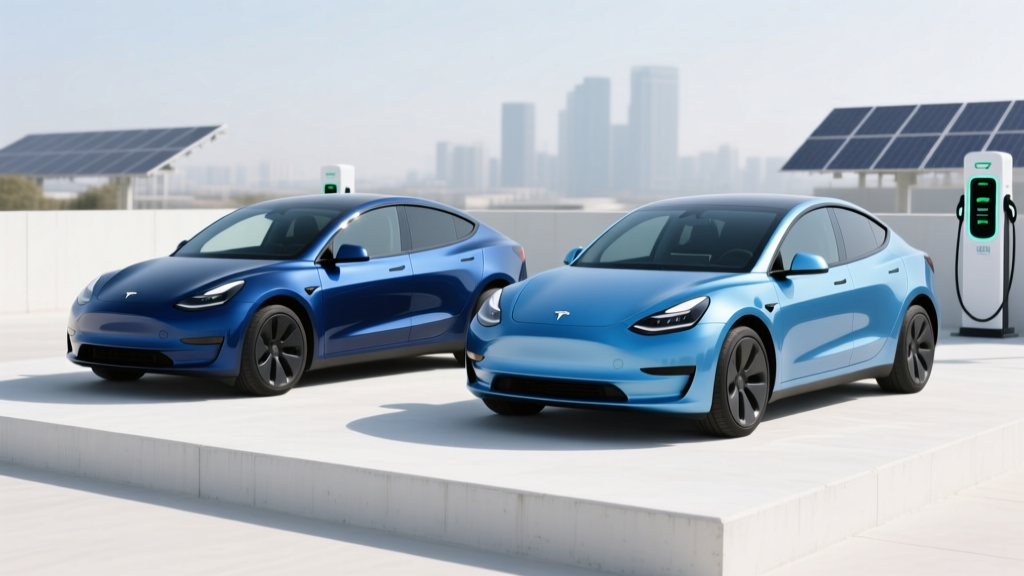
If you've been searching for the perfect Tesla blue color, you've likely noticed the palette shifts more often than most automakers. For 2026, Tesla offers two distinct blue shades across its core lineup — Deep Blue Metallic and the newer Ultra Blue — each carrying different pricing, availability by model, and visual character. This guide breaks down every blue option across the Model 3 and Model Y (Tesla's volume sellers), pairs that with a full spec-and-ownership review, and tells you exactly what you'll pay, drive, and charge.
Blue has historically been a tricky color for Tesla. The original Solid Blue was dropped years ago. Midnight Silver Metallic often reads as blue-gray in certain light. But Deep Blue Metallic — a multi-coat paint with significant metallic flake — has remained a fan favorite since its introduction, and Ultra Blue (a brighter, more saturated option introduced in late 2024) has carved out its own following among buyers who want something that photographs boldly and stands apart from the sea of white and gray Teslas at every Supercharger.
2026 Tesla Model 3: Blue Color Pricing and Full Specs
The 2026 Model 3 continues with the "Highland" refresh architecture introduced for the 2024 model year. Here's how the blue options break down by trim:
| Trim | Deep Blue Metallic | Ultra Blue | Paint Cost | Base MSRP | As-Tested (Blue) |
|---|---|---|---|---|---|
| Long Range RWD | ✓ Available | ✓ Available | $1,500 (Deep Blue) / $2,000 (Ultra Blue) | $42,380 | $43,880 – $44,380 |
| Long Range AWD | ✓ Available | ✓ Available | $1,500 / $2,000 | $45,380 | $46,880 – $47,380 |
| Performance AWD | ✓ Available | ✓ Available | $1,500 / $2,000 | $52,380 | $53,880 – $54,380 |
Deep Blue Metallic is the darker, more understated option. In direct sunlight, the metallic flake gives it depth and a subtle shift between navy and medium blue. In overcast conditions or shade, it reads as a very dark blue — almost black-blue. It hides dirt reasonably well for a dark color and pairs nicely with both the black and white interiors.
Ultra Blue is the attention-getter. It's a vivid, medium-bright blue with a finer metallic flake, closer to a classic "electric blue" without crossing into cartoonish. It shows dirt and swirl marks more readily than Deep Blue Metallic, so buyers who park outdoors or skip the ceramic coating should be prepared for more frequent washes.
| EPA Range | 346 miles |
| Battery (usable) | ~79 kWh, NMC (2170 cells) |
| Drivetrain | Dual Motor AWD |
| Horsepower | ~384 hp combined |
| 0–60 mph | 4.2 seconds |
| Max DC Fast Charge | 250 kW peak |
| 10–80% DC Charge | ~27 minutes |
| Level 2 Home Charge | 11.5 kW (~44 mi/hr) |
| Efficiency | 132 MPGe combined / 25 kWh/100mi |
| Cargo (trunk + frunk) | 23.0 cu ft (trunk) + 3.1 cu ft (frunk) |
| Rear Legroom | 35.3 inches |
| Battery Warranty | 8 years / 120,000 miles |
| Base MSRP | $45,380 |
2026 Tesla Model Y: Blue Options and Juniper Refresh Specs
The 2026 Model Y benefits from the "Juniper" refresh that began rolling out in early 2025, bringing updated styling, a revised interior with ambient lighting and ventilated front seats, improved suspension tuning, and slightly refined battery management. Blue color availability mirrors the Model 3:
| Trim | Deep Blue Metallic | Ultra Blue | Paint Cost | Base MSRP | As-Tested (Blue) |
|---|---|---|---|---|---|
| Long Range RWD | ✓ Available | ✓ Available | $1,500 / $2,000 | $44,990 | $46,490 – $46,990 |
| Long Range AWD | ✓ Available | ✓ Available | $1,500 / $2,000 | $47,990 | $49,490 – $49,990 |
| Performance AWD | ✓ Available | ✓ Available | $1,500 / $2,000 | $52,490 | $53,990 – $54,490 |
On the Model Y's larger, more upright body, Deep Blue Metallic reads slightly lighter than on the Model 3 — the extra surface area and different panel angles catch more light. Ultra Blue on the Model Y is striking and has become one of the more photographed configurations on social media since the Juniper launch.
| EPA Range | 320 miles |
| Battery (usable) | ~78 kWh, NMC (2170/4680 cells depending on build) |
| Drivetrain | Dual Motor AWD |
| Horsepower | ~384 hp combined |
| 0–60 mph | 4.8 seconds |
| Max DC Fast Charge | 250 kW peak |
| 10–80% DC Charge | ~28 minutes |
| Level 2 Home Charge | 11.5 kW (~44 mi/hr) |
| Efficiency | 122 MPGe combined / 28 kWh/100mi |
| Cargo (rear seats up / folded) | 30.2 cu ft / 72.1 cu ft + 4.1 cu ft frunk |
| Rear Legroom | 40.5 inches |
| Battery Warranty | 8 years / 120,000 miles |
| Base MSRP | $47,990 |
Real-World Range: What the EPA Sticker Doesn't Tell You
Model 3 LR AWD: EPA 346 mi — Expect ~290–310 mi on highway road trips (70–80 mph), ~250–275 mi in sub-freezing winter conditions, and ~320–340 mi in mixed city/suburban driving.
Model Y LR AWD: EPA 320 mi — Expect ~265–285 mi highway, ~230–250 mi in cold weather, and ~295–315 mi mixed city driving.
Tesla's EPA range estimates remain among the more optimistic in the industry. In our experience and consistent with third-party testing data from sources like fueleconomy.gov, highway driving at sustained speeds of 70–80 mph typically yields 80–90% of the EPA figure. Cold weather (below 32°F / 0°C) compounds this — battery chemistry becomes less efficient, cabin heating draws significant energy (the heat pump helps but doesn't eliminate the penalty), and regenerative braking is reduced at low battery temperatures.
The Model 3's advantage over the Model Y in real-world efficiency comes down to aerodynamics and weight. The sedan's lower frontal area and drag coefficient mean it loses less energy pushing air at highway speed. If your primary use case involves frequent long-distance highway driving, the Model 3 will consistently deliver more usable miles per charge.
For daily commuting under 60 miles round-trip, both vehicles will easily go 3–5 days between charges even in winter, which is where most owners live their EV lives. The range gap matters most on road trips exceeding 250 miles between charging stops.
Charging Speed: Supercharger Network and Home Setup
| Charging Level | Model 3 LR AWD | Model Y LR AWD | Notes |
|---|---|---|---|
| Level 1 (120V, 12A) | ~3 mi/hr | ~3 mi/hr | Emergency/trickle only |
| Level 2 (240V, 48A) | 11.5 kW / ~44 mi/hr | 11.5 kW / ~44 mi/hr | Full overnight charge in ~7–8 hrs |
| DC Fast (Supercharger V3) | 250 kW peak, 10–80% in ~27 min | 250 kW peak, 10–80% in ~28 min | Peak rate sustained to ~50% SoC, then tapers |
| DC Fast (Supercharger V4) | Up to 250 kW (vehicle-limited) | Up to 250 kW (vehicle-limited) | V4 cabinets deliver more power, but 2026 Model 3/Y onboard architecture caps at 250 kW |
A critical detail many buyers miss: peak kW is not sustained kW. Both the Model 3 and Model Y hit their 250 kW peak only in the lower portion of the charge curve (roughly 10–50% State of Charge). Above 50%, the rate progressively tapers — by 80% SoC, you're typically seeing 60–80 kW. This is why Tesla (and every other manufacturer) quotes 10–80% times rather than 0–100%. Charging from 80–100% on DC fast charging is painfully slow and generates excess heat; for battery longevity, it's best reserved for occasional needs.
For home charging, a Level 2 wall connector at 48 amps (11.5 kW) is the practical standard. This requires a 60-amp dedicated circuit installed by a licensed electrician. Expect a full charge from 10% to 100% in roughly 7–8 hours — plug in when you get home, wake up to a full battery every morning. Installation costs typically range from $500–$2,000 depending on your electrical panel's capacity and the distance from panel to garage. Older homes with 100-amp service panels may need a panel upgrade ($1,500–$3,000) before adding a 60-amp EV circuit.
Tesla's Supercharger network remains the gold standard for public DC fast charging in terms of reliability and coverage. With over 6,000 V3/V4 stalls in North America and the NACS connector now adopted industry-wide, Tesla owners have the most seamless public charging experience available. The in-car navigation preconditioning — which warms the battery en route to a Supercharger for faster charging — works automatically and shaves several minutes off your 10–80% time, especially in cold weather.
Federal Tax Credit: Does a Blue Tesla Qualify in 2026?
This is where careful attention to the rules matters. Under IRS §30D, the federal EV tax credit provides up to $7,500, but eligibility depends on a matrix of requirements that change periodically. As of 2026:
- MSRP Cap: Sedans (Model 3) must be ≤ $55,000. SUVs/trucks/vans (Model Y) must be ≤ $80,000. All Model 3 and Model Y trims fall under these caps.
- Buyer Income Cap: Modified AGI must not exceed $150,000 (single), $225,000 (head of household), or $300,000 (joint filers).
- Battery Sourcing: The $7,500 credit splits into two halves — $3,750 for critical minerals sourcing and $3,750 for battery component manufacturing. Tesla's North American battery sourcing has expanded significantly, and most 2026 Model 3/Y vehicles qualify for at least $3,750; many qualify for the full $7,500. Verify your specific VIN at the point of sale.
- Point-of-Sale Transfer: You can transfer the credit to the dealer at purchase, reducing your out-of-pocket cost immediately rather than waiting to claim it on your tax return.
- Final Assembly: Must occur in North America. All US-market Model 3 and Model Y vehicles are assembled at the Fremont, CA or Austin, TX factories. ✓
Source: IRS.gov — Clean Vehicle Credits. Tax rules are subject to change; consult a tax professional for your specific situation.
| Model & Trim | As-Tested (Blue) | Est. Federal Credit | Effective Price |
|---|---|---|---|
| Model 3 LR AWD (Deep Blue) | $46,880 | $7,500 | ~$39,380 |
| Model 3 LR AWD (Ultra Blue) | $47,380 | $7,500 | ~$39,880 |
| Model 3 Performance (Ultra Blue) | $54,380 | $7,500 | ~$46,880 |
| Model Y LR AWD (Deep Blue) | $49,490 | $7,500 | ~$41,990 |
| Model Y LR AWD (Ultra Blue) | $49,990 | $7,500 | ~$42,490 |
| Model Y Performance (Ultra Blue) | $54,490 | $7,500 | ~$46,990 |
Important caveat: Battery sourcing requirements tighten periodically under the Inflation Reduction Act. Always confirm your specific vehicle's credit eligibility via the dealer's point-of-sale documentation or the IRS VIN-lookup tool before finalizing your purchase. State and local incentives may stack on top — check your state's energy office or AFDC incentive database for details.
Tech, Interior, and Driver Assistance: What Blue Owners Get
Paint color doesn't change the tech stack, but since you're evaluating a purchase, here's what the 2026 Model 3 and Model Y deliver:
Infotainment: Both vehicles center around a 15.4-inch touchscreen running Tesla's proprietary OS. The Juniper/Highland interiors include ambient lighting strips, ventilated front seats, a rear-seat touchscreen (8.0 inches) for climate and media control, and improved sound insulation over pre-refresh models. There is no Apple CarPlay or Android Auto — Tesla's native navigation, Spotify, Netflix/YouTube (while parked), and phone-as-key functionality are the ecosystem.
Driver Assistance (SAE Level 2): Tesla's Basic Autopilot is standard and includes adaptive cruise control and lane centering. Full Self-Driving (Supervised) is available as a $8,000 option or $99/month subscription. FSD Supervised handles highway interchanges, city streets, and traffic light/stop sign recognition — but it remains a Level 2 system requiring constant driver attention. Hands must remain on the wheel (or the steering-torque sensor must detect input), and eyes must remain on the road. It is not autonomous driving.
FSD Supervised is an SAE Level 2 driver-assist system. It does NOT make the vehicle self-driving. The driver is legally and practically responsible for all vehicle operation at all times. FSD can and does make errors — misidentifying obstacles, mishandling construction zones, and occasionally making unexpected lane changes. Never use FSD while impaired, distracted, or fatigued. See NHTSA guidance on automated vehicle safety for context.
Notable Drawbacks:
- No physical turn signal stalk on 2026 Model 3/Y — turn signals are on the steering wheel buttons (a polarizing change from the Highland/Juniper redesign).
- No rear wiper on Model Y (pre-refresh quirk that persists; owners rely on aerodynamic clearing and hydrophobic coatings).
- Minimal physical buttons — climate, glovebox, and mirror adjustments are all touchscreen-mediated.
- Ride quality on Performance trims with 21-inch wheels can be firm on rough pavement; the Long Range with 19-inch wheels is noticeably more compliant.
- Paint quality has improved significantly since the Fremont pre-2023 era, but multi-coat colors like Deep Blue Metallic and Ultra Blue can show orange-peel texture on certain panels if you look closely. Many owners invest in paint protection film (PPF) for the front end — budget $1,200–$2,500 for a quality front-end PPF package.
Model 3 vs Model Y in Blue: Which Should You Choose?
346 EPA miles, 132 MPGe, lower drag, lighter weight. If maximizing miles per kWh and minimizing charging stops on road trips is your priority, the sedan wins by a meaningful margin.
72.1 cu ft with seats folded, 40.5 inches of rear legroom, available 7-seat configuration (small third row). For families with car seats, strollers, or regular Costco runs, the crossover form factor is the pragmatic pick.
Lower center of gravity, quicker steering response, and a more connected feel. The Performance trim's 3.1-second 0–60 time is sports-car territory. Enthusiasts prefer the sedan.
Higher seating position, easier ingress/egress for passengers with mobility concerns, and better forward sightlines in traffic. The crossover stance appeals to SUV-crossing-over buyers for a reason.
Deep Blue Metallic reads more sophisticated and subdued on both bodies. Ultra Blue is more eye-catching and photographs better for social media. The Model Y's larger panels make Ultra Blue more visually impactful; the Model 3's curves show off Deep Blue Metallic's flake more elegantly.
Starting ~$2,600 lower than the Model Y with more range and faster acceleration. If you don't need the cargo space or ride height, the Model 3 delivers more EV per dollar.
- Choose Model 3 (Deep Blue Metallic) if: You commute long distances, prioritize range and efficiency, prefer a sportier drive, and don't need SUV cargo volume.
- Choose Model 3 (Ultra Blue) if: Same as above, but you want maximum visual impact and don't mind washing more frequently.
- Choose Model Y (Deep Blue Metallic) if: You have kids, need cargo flexibility, prefer a higher seating position, and want a family-capable EV with strong range.
- Choose Model Y (Ultra Blue) if: Same as above, and you want the most head-turning Tesla crossover configuration available.
Pros and Cons: Owning a Blue Tesla in 2026
- Supercharger network — still the most reliable and extensive DC fast-charging network in North America
- Industry-leading efficiency (kWh per mile) in both Model 3 and Model Y segments
- Over-the-air updates continuously add features and refine performance
- Strong resale value relative to most EV competitors
- Deep Blue Metallic hides dirt better than most dark colors; Ultra Blue stands out in a sea of white/gray/silver
- Full $7,500 federal tax credit likely available (verify VIN at purchase)
- Heat pump standard — better cold-weather efficiency than resistive heating
- 15.4-inch touchscreen with robust native app ecosystem
- No Apple CarPlay or Android Auto — you're in Tesla's ecosystem or nothing
- Turn signal buttons on steering wheel (no stalk) frustrate some drivers
- Insurance premiums run 15–30% higher than comparable gas vehicles in most states
- Ultra Blue shows swirl marks, water spots, and road grime more readily than Deep Blue Metallic
- Paint protection film is nearly mandatory for multi-coat colors if you want long-term paint quality
- No rear wiper on Model Y
- FSD (Supervised) is expensive and still requires full driver engagement — evaluate whether the $8,000/$99-mo cost justifies a Level 2 system
- Tire replacement costs are higher than average (EV-specific tires, heavier vehicle weight, instant torque wear)
Frequently Asked Questions
Is Tesla's Deep Blue Metallic the same color it was in 2023?
The formulation is nominally the same multi-coat metallic, but Tesla has made subtle adjustments to paint application processes as it transitioned from Fremont-only production to include vehicles from Gigafactory Austin and Gigafactory Berlin (for European-market cars). Most owners report the 2025–2026 Deep Blue Metallic appears slightly more saturated and consistent across panels compared to 2021–2022 examples, likely due to improved robotic spray processes.
Does Ultra Blue cost more than Deep Blue Metallic?
Yes. Ultra Blue carries a $2,000 paint surcharge versus $1,500 for Deep Blue Metallic. The $500 premium reflects the additional pigment complexity and the fact that Ultra Blue was positioned as a "premium" color option when introduced.
Will a blue Tesla have better or worse resale value than white or black?
Historically, white and black have been the safest resale colors for Teslas due to broad buyer appeal. However, Deep Blue Metallic has maintained strong resale performance — typically within 1–2% of white equivalents. Ultra Blue is newer, so long-term resale data is limited, but bold colors tend to polarize used buyers: you may find a buyer who specifically wants blue and will pay a premium, or you may sit on the listing slightly longer. Pearl White Multi-Coat remains the highest-volume, safest-resale choice.
What's the real-world range of a blue Tesla Model 3 Long Range?
The EPA rates it at 346 miles. Real-world highway driving at 75 mph typically yields 290–310 miles. In winter conditions (below freezing), expect 250–275 miles. City and suburban driving with regenerative braking can approach or slightly exceed the EPA estimate at 320–340 miles. The blue paint color has no measurable effect on range.
How fast does a blue Tesla charge at a Supercharger?
Paint color doesn't affect charging speed. Both Model 3 and Model Y Long Range AWD peak at 250 kW on V3 Superchargers, charging from 10–80% in approximately 27–28 minutes. Peak rate is sustained to roughly 50% State of Charge, then tapers progressively. At home on a 48-amp Level 2 charger, expect ~44 miles of range added per hour.
Does a blue Tesla Model Y qualify for the $7,500 federal tax credit?
Most 2026 Model Y configurations are expected to qualify for the full $7,500 under IRS §30D, as the MSRP falls well under the $80,000 SUV cap, final assembly occurs in North America, and Tesla's battery sourcing has expanded to meet critical-mineral and component-manufacturing thresholds. However, eligibility can vary by specific vehicle VIN and by the buyer's income. Always verify through the IRS point-of-sale tool or your tax professional before purchase.
Should I get paint protection film (PPF) on a blue Tesla?
For Deep Blue Metallic and Ultra Blue, PPF is strongly recommended for the front bumper, hood, fenders, and mirrors. Multi-coat metallic paints show rock chips prominently, and Tesla's factory paint — while improved — is not class-leading in thickness. Budget $1,200–$2,500 for a quality front-end PPF installation. A full-body wrap runs $4,000–$7,000. Ceramic coating alone ($600–$1,200) adds hydrophobic protection and makes washing easier but does not prevent rock chips.
Is the 2026 Tesla Model 3 or Model Y worth buying versus competitors?
Against the Hyundai Ioniq 6 (361 EPA mi, 350 kW charging), the Model 3 gives up some range and charging speed but wins on Supercharger network access and software integration. Against the Ford Mustang Mach-E (up to 320 EPA mi), the Model Y offers comparable space with better efficiency and charging infrastructure. Against the BMW i4 (307 EPA mi, premium interior), the Model 3 sacrifices interior material quality for a lower price and longer range. The Supercharger ecosystem remains Tesla's strongest competitive moat — if road-trip charging reliability matters to you, it's a significant advantage even as competitors gain NACS access.