Why Tesla's Balance Sheet Matters to EV Shoppers
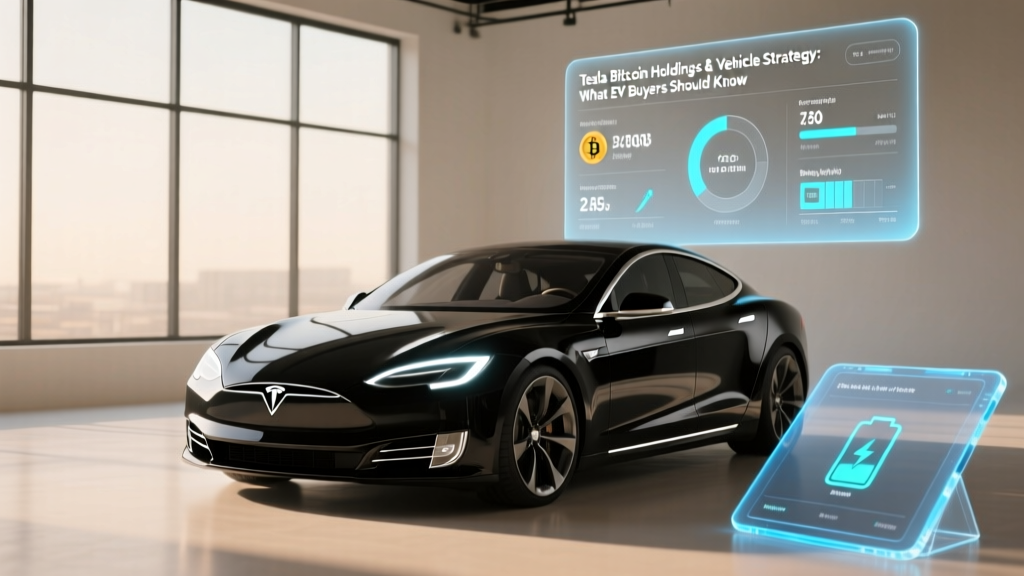
Most car shoppers never think about an automaker's corporate treasury. But Tesla is an outlier: it is simultaneously the world's most valuable automaker and one of the largest corporate holders of cryptocurrency. As of early 2026, Tesla Bitcoin holdings remain a defining — and controversial — feature of the company's financial profile, and they have real downstream effects on vehicle pricing, production investment, and the stability of the EV ecosystem buyers are plugging into.
This isn't a crypto explainer. It's an EV buyer's guide that uses Tesla's financial posture to answer the questions that actually matter: What do you get for the money today? How fast do these cars charge? How far do they really go? And is Tesla a safe long-term bet for warranty support and Supercharger reliability? Let's ground the Bitcoin noise in sheet metal, battery cells, and EPA stickers.
Tesla's Current EV Lineup at a Glance
For 2026, Tesla sells four core models to U.S. consumers: the Model 3 sedan, Model Y crossover, Model S luxury sedan, and Model X luxury SUV, with the Cybertruck rounding out the light-duty lineup. Below is a consolidated spec view of the volume sellers most buyers cross-shop.
| Spec | Model 3 Long Range AWD | Model Y Long Range AWD | Model S Dual Motor |
|---|---|---|---|
| EPA Range | 341 mi | 320 mi | 402 mi |
| Battery (usable) | ~79 kWh (NMC) | ~79 kWh (NMC) | ~100 kWh (NMC) |
| Peak DC Charge | 250 kW | 250 kW | 250 kW |
| 10–80% DC Time | ~25 min | ~25 min | ~30 min |
| Level 2 Rate | 11.5 kW (~44 mi/hr) | 11.5 kW (~44 mi/hr) | 11.5 kW (~34 mi/hr) |
| 0–60 mph | 4.2 sec | 4.8 sec | 3.1 sec |
| Drivetrain | Dual-Motor AWD | Dual-Motor AWD | Dual-Motor AWD |
| MPGe (combined) | 131 MPGe | 123 MPGe | 120 MPGe |
| Base MSRP | $47,740 | $48,990 | $79,990 |
Source: fueleconomy.gov and Tesla's official spec pages. Figures reflect the 2026 model year.
Real-World Range: What the EPA Sticker Doesn't Tell You
EPA sticker: Model 3 Long Range = 341 mi · Model Y Long Range = 320 mi
Real-world expectation: Highway driving at 70–80 mph typically yields ~270–295 miles in a Model 3 LR and ~255–280 miles in a Model Y LR. In freezing temperatures (below 32°F), expect an additional 15–25% range reduction due to battery-resistance losses and cabin heating, dropping effective range closer to 210–240 miles for the Model Y. Tesla's heat pump helps but does not eliminate cold-weather losses.
Tesla's efficiency remains best-in-class among non-luxury EVs, largely thanks to low curb weight, excellent aero (Model 3 Cd of 0.219), and aggressive regenerative braking. But physics is physics: at sustained 80 mph, the Model Y consumes roughly 30–32 kWh/100mi versus its EPA-rated 28 kWh/100mi combined figure.
Charging: Supercharger Network and Home Setup
Tesla's Supercharger network is the company's most durable competitive moat — and, not incidentally, an asset whose value is reflected in the same balance sheet that holds Bitcoin. As of 2026, there are over 6,500 Superchargers in North America, many now V4 cabinets capable of 350 kW (though Tesla vehicles still peak at 250 kW on the car side).
| Charging Level | Power (kW) | Speed | Typical Use |
|---|---|---|---|
| Level 1 (120V) | ~1.4 kW | ~4 mi/hr | Emergency / trickle |
| Level 2 (240V home) | 11.5 kW | ~44 mi/hr | Overnight / daily |
| DC Fast (Supercharger) | Peak 250 kW | ~180 mi in 15 min | Road trips |
Charging curve reality: Tesla's 250 kW peak is only sustained between roughly 10–30% State of Charge. Above 50%, the rate tapers to ~100 kW, and above 80% it drops below 50 kW. A 10–80% session takes about 25 minutes; an 80–100% top-off adds another 25+ minutes. Preconditioning (automatic when navigating to a Supercharger) is essential to hit peak rates — arriving cold can double your charge time.
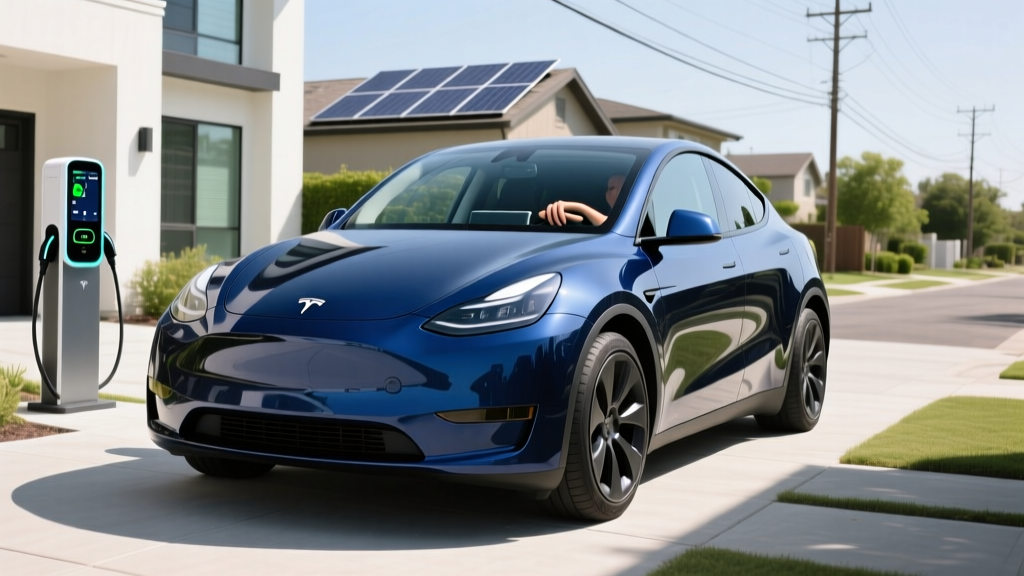
For home installation, budget $800–$1,500 for a Tesla Wall Connector plus $500–$2,000 for electrician labor, depending on panel proximity and whether your service panel needs a 200A upgrade. The Wall Connector on a 60A circuit delivers the full 11.5 kW.
Tesla Bitcoin Holdings: The Buyer's Angle
Tesla first bought $1.5 billion in Bitcoin in early 2021, sold a large portion in 2022, and has held the remainder as a long-term treasury reserve asset. As of 2026, the company holds approximately 11,509 BTC, worth several hundred million dollars depending on spot price. For context, that is a small fraction of Tesla's ~$30+ billion cash position.
Why should an EV buyer care? Three reasons:
- Pricing volatility risk. Tesla has historically used its balance-sheet flexibility to run aggressive price cuts (2023's Model Y cuts exceeded $10,000 in some trims). The Bitcoin position is part of the same philosophy: treating corporate cash as a speculative asset. That can work for or against buyers — price cuts are great if you're buying, painful if you just bought.
- R&D and factory investment. Critics argue that capital parked in Bitcoin could fund next-generation battery lines, 4680 cell scaling, or service-center expansion. Tesla's capex has remained strong regardless, but the crypto holdings signal a leadership philosophy that prioritizes financial engineering alongside manufacturing.
- Supercharger and software ecosystem stability. The Supercharger network, FSD development, and over-the-air updates are long-term commitments. Tesla's overall financial health — cash reserves vastly exceed Bitcoin exposure — means the ecosystem buyers rely on is not at risk from crypto volatility alone.
Bottom line: Tesla Bitcoin holdings are a real but manageable risk for EV buyers. The company's core automotive business generates strong cash flow independent of crypto markets.
Tax Credits, Pricing, and Total Cost
| Model | Base MSRP | §30D Credit Eligible? | Est. After-Credit Price |
|---|---|---|---|
| Model 3 RWD | $38,990 | Yes (if sourcing rules met) | ~$31,490 |
| Model 3 Long Range AWD | $47,740 | Yes | ~$40,240 |
| Model Y Long Range AWD | $48,990 | Yes | ~$41,490 |
| Model S Dual Motor | $79,990 | No (MSRP cap exceeded) | $79,990 |
The IRS §30D clean vehicle credit offers up to $7,500 but comes with strict requirements:
- MSRP cap: $55,000 for sedans (Model 3), $80,000 for SUVs/trucks (Model Y, Cybertruck).
- Buyer income cap: AGI ≤ $150,000 (single) / $300,000 (joint).
- Battery sourcing: Critical minerals and battery components must meet phased-in thresholds for North American or FTA-partner sourcing — Tesla's Austin-built models generally qualify, but always verify at fueleconomy.gov before purchasing.
- Point-of-sale transfer: The credit can now be applied at the dealer as a down-payment reduction, not just claimed at tax time.
Consult a tax professional for your specific situation; rules are subject to legislative change.
Pros, Cons, and Who Should Buy
Pros
- Best-in-class Supercharger network with 250 kW speeds
- Industry-leading efficiency (MPGe) across the lineup
- OTA updates continuously add features post-purchase
- Strong resale value relative to most EV competitors
- Minimal maintenance: no oil, no transmission, brake wear reduced by regen
Cons
- Build quality still inconsistent vs. legacy luxury OEMs
- Service center capacity lags sales volume in many markets
- FSD (Supervised) is Level 2 — driver must remain fully engaged
- Model S/X exceed MSRP caps, eliminating federal tax credit
- Corporate volatility (including Bitcoin exposure) creates pricing unpredictability
Best for: Tech-forward commuters and road-trippers who value charging infrastructure and software over traditional luxury fit-and-finish. The Model 3 LR at ~$40K after credit is arguably the best value-per-mile EV in America. The Model Y suits small families needing 76 cu ft of cargo space with hatchback utility.
Less ideal for: Buyers who prioritize dealership-style service, tow-heavy use cases (Model Y max tow is 3,500 lbs), or those uncomfortable with a company whose CEO's public statements can move stock prices — and vehicle prices — in a single news cycle.
Frequently Asked Questions
Does Tesla still hold Bitcoin in 2026?
Yes. Tesla holds approximately 11,509 BTC as a long-term reserve asset, disclosed in SEC filings. This represents a small fraction of its overall cash reserves.
How far does a Tesla really go on a charge?
The Model 3 Long Range is EPA-rated at 341 miles, but real-world highway driving yields ~270–295 miles. Cold weather can drop that to ~220–250 miles.
How fast does a Tesla charge at home?
On a 240V/60A circuit with the Tesla Wall Connector (11.5 kW), a Model 3 LR gains roughly 44 miles of range per hour — enough to fully replenish overnight.
Does the Model Y qualify for the $7,500 tax credit?
Generally yes, subject to buyer income caps ($300K joint AGI), the $80K SUV MSRP cap, and battery-sourcing rules. Verify at fueleconomy.gov before purchase.
Is Tesla's Autopilot or FSD self-driving?
No. Both are SAE Level 2 driver-assist systems. The driver must remain attentive, hands on or near the wheel, and ready to take over at any time. Only Level 4 services like Waymo operate without a human driver.
What is Tesla's battery warranty?
Tesla covers the battery and drive unit for 8 years / 120,000 miles (Model 3/Y) or 8 years / 150,000 miles (Model S/X), with a guaranteed minimum 70% capacity retention over that period.