If you have browsed Tesla's configurator or watched a YouTube review, you have likely encountered the term "Bioweapon Defense Mode" and wondered whether it is a marketing gimmick or a genuinely useful cabin-air feature. The short answer: it is a real, independently tested high-efficiency particulate air (HEPA) filtration system that pressurizes the cabin to keep outside pollutants out. But it is not available on every Tesla, and understanding which models carry it — along with their full EV specs — matters for any buyer evaluating a 2026 purchase.
This guide explains exactly what Bioweapon Defense Mode does, which current Tesla models include it, and pairs that with the hard EV numbers you need: EPA range, battery chemistry, DC fast-charge speeds, pricing, and federal tax credit eligibility under IRS §30D rules.
What Is Bioweapon Defense Mode in Tesla?
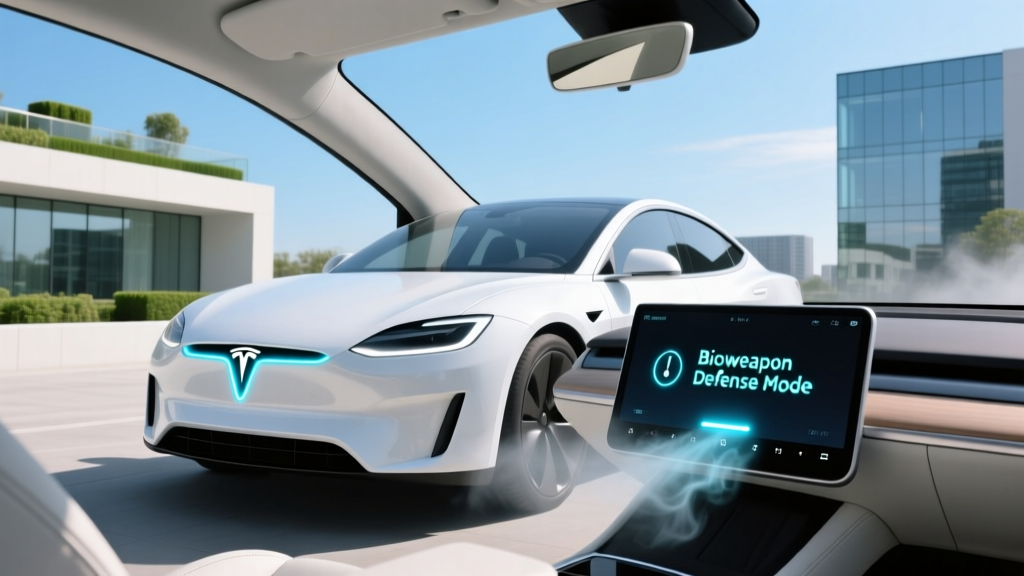
Bioweapon Defense Mode is Tesla's branded name for a cabin air-filtration system built around a medical-grade HEPA filter — roughly 10 times larger than a standard automotive cabin filter. When activated, the system:
- Over-pressurizes the cabin by running the HVAC blower at maximum output with outside air intake sealed, creating positive pressure that prevents unfiltered air from leaking in through door seals and vents.
- Filters particulates down to 0.3 microns at 99.97% efficiency, covering wildfire smoke (PM2.5), pollen, bacteria, mold spores, and industrial pollutants.
- Uses an activated-carbon secondary filter (on equipped models) to adsorb volatile organic compounds (VOCs) and odors from exhaust and industrial emissions.
Tesla first introduced the system on the Model X in 2016 and later added it to the Model S refresh and the Model Y. As of the 2026 model year, the Model S, Model X, and Model Y include a HEPA filtration system. The Model 3 uses a standard cabin air filter — improved in recent refreshes with a more efficient media, but it does not carry the Bioweapon Defense Mode branding or the true HEPA hardware.
2026 Tesla Lineup: Bioweapon Defense Mode Availability & Full Specs
Below is a consolidated spec table for the three models that carry HEPA filtration in 2026, plus the Model 3 for comparison. All figures reflect current EPA data and Tesla's published specifications. Prices are base MSRP before destination or incentives.
| Spec | Model Y Long Range AWD | Model S Long Range | Model X Long Range | Model 3 Long Range AWD |
|---|---|---|---|---|
| Bioweapon Defense Mode | ✅ Yes (HEPA) | ✅ Yes (HEPA) | ✅ Yes (HEPA) | ❌ No (standard filter) |
| EPA Range | 320 mi | 402 mi | 335 mi | 341 mi |
| Battery (usable, chemistry) | ~75 kWh, NMC | ~95 kWh, NMC | ~95 kWh, NMC | ~75 kWh, NMC |
| Drivetrain | Dual-Motor AWD | Dual-Motor AWD | Dual-Motor AWD | Dual-Motor AWD |
| 0–60 mph | 4.8 sec | 3.1 sec | 3.8 sec | 4.2 sec |
| Horsepower | 384 hp | 670 hp | 670 hp | 440 hp |
| Peak DC Fast Charge | 250 kW | 250 kW | 250 kW | 250 kW |
| 10–80% DC Time | ~27 min | ~33 min | ~33 min | ~27 min |
| Level 2 Home Charge (kW / mi-hr) | 11.5 kW / ~44 mi/hr | 11.5 kW / ~41 mi/hr | 11.5 kW / ~35 mi/hr | 11.5 kW / ~44 mi/hr |
| Efficiency (MPGe) | 123 MPGe combined | 120 MPGe combined | 109 MPGe combined | 131 MPGe combined |
| Cargo (rear seats up / folded) | 30 / 72 cu ft | 28 / 79 cu ft (incl. frunk) | 42 / 88 cu ft (incl. frunk) | 23 / 65 cu ft (incl. frunk) |
| Base MSRP | $48,990 | $79,990 | $84,990 | $47,740 |
| Battery/Drive Unit Warranty | 8 yr / 120,000 mi | 8 yr / 150,000 mi | 8 yr / 150,000 mi | 8 yr / 120,000 mi |
Sources: fueleconomy.gov, Tesla Model S specs, Tesla Model Y specs.
Real-World Range: What to Actually Expect
Model Y Long Range (EPA 320 mi): Expect 270–290 mi on a flat highway at 70 mph in mild weather. In cold conditions (below 30°F), range drops to roughly 220–250 mi due to battery resistance and cabin heating load. City driving with regenerative braking recovers energy and can push actual range above 300 mi.
Model S Long Range (EPA 402 mi): The largest battery in Tesla's lineup delivers genuine long-haul capability. Highway real-world at 75 mph yields approximately 330–360 mi. Cold-weather highway drops to ~280–310 mi. This remains one of the longest-range EVs on the market.
Model X Long Range (EPA 335 mi): The heavy, boxy SUV shape and falcon-wing doors add drag. Highway real-world sits around 275–300 mi; cold weather can pull that to 230–260 mi. Towing (up to 3,500 lbs) cuts range by roughly 40–50%.
Across all models, preconditioning the battery before a DC fast-charge stop is critical — the vehicle's navigation system does this automatically when a Supercharger is set as your destination. Skipping preconditioning can cut peak charge rate in half in cold weather.
Charging Speed: DC Fast, Level 2, and the Curve Reality
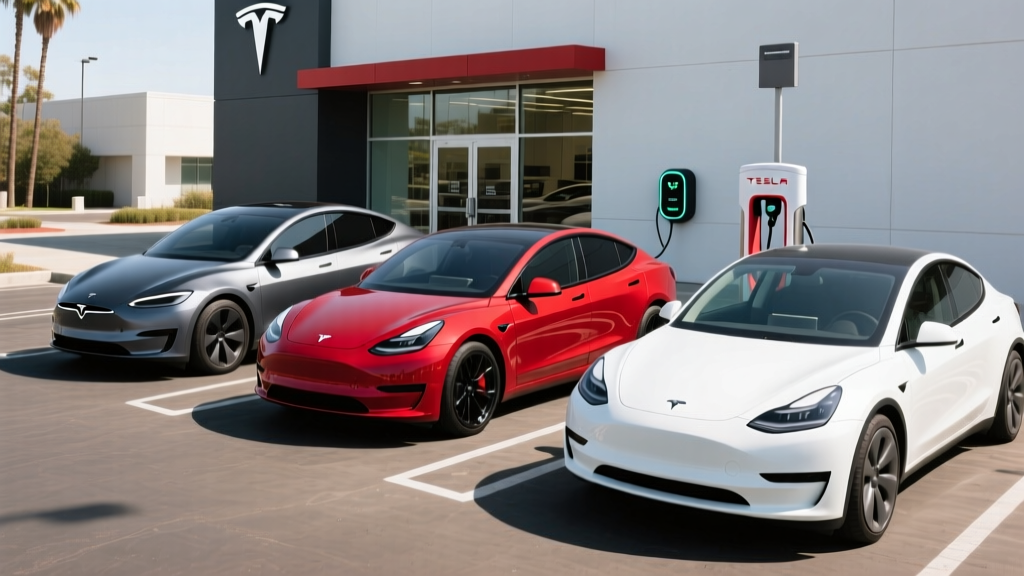
All current Tesla models use the North American Charging Standard (NACS) connector, which Tesla developed and which has now been adopted by Ford, GM, Rivian, Hyundai, and most major automakers. This gives Tesla owners native access to the Supercharger network — widely regarded as the most reliable public DC fast-charging infrastructure in the U.S.
| Charging Level | Power / Rate | Typical Use | Miles Added per Hour |
|---|---|---|---|
| Level 1 (120V outlet) | ~1.4 kW | Emergency / overnight trickle | ~3–5 mi/hr |
| Level 2 (240V home wall connector) | 11.5 kW (48A) | Daily home charging | ~35–44 mi/hr |
| DC Fast (Supercharger V3) | Peak 250 kW | Road trips | ~170 mi in 15 min (peak) |
| DC Fast (Supercharger V4) | Peak 250–350 kW (model dependent) | Next-gen stations | Varies; up to ~200 mi in 15 min |
The charge-curve reality: Tesla's 250 kW peak rate is not sustained across the full session. On a Model Y Long Range, the battery will accept close to 250 kW only between roughly 10–30% State of Charge (SoC). By 50%, the rate tapers to ~150 kW; by 80%, it drops to ~60 kW. This is why Tesla (and the industry) quotes 10–80% times — charging past 80% is dramatically slower and should be reserved for when you genuinely need the full battery for the remaining trip distance.
For home Level 2 charging, Tesla's Wall Connector at 48 amps on a 60A circuit adds roughly 44 miles of range per hour in the Model Y. A full overnight charge (8 hours) restores about 350 miles — more than enough for any daily driving pattern. Installation typically costs $800–$2,500 depending on panel capacity and conduit run; a 200A panel upgrade can add $1,500–$3,000.
Pricing, Trims, and Federal Tax Credit Eligibility (2026)
Tesla's pricing has shifted multiple times; the figures below reflect 2026 MSRP as of publication. The federal EV tax credit under IRS §30D has specific requirements that not every Tesla trim satisfies.
| Model / Trim | Base MSRP | Under §30D MSRP Cap? | Est. Credit (if eligible) | Effective Price (est.) |
|---|---|---|---|---|
| Model Y Long Range AWD | $48,990 | ✅ Yes (SUV cap: $80,000) | Up to $7,500 | ~$41,490 |
| Model Y Performance | $53,490 | ✅ Yes | Up to $7,500 | ~$45,990 |
| Model 3 Long Range AWD | $47,740 | ✅ Yes (Sedan cap: $55,000) | Up to $7,500 | ~$40,240 |
| Model S Long Range | $79,990 | ✅ Yes (Sedan cap: $55,000 — NO, exceeds) | $0 | $79,990 |
| Model X Long Range | $84,990 | ✅ Yes (SUV cap: $80,000 — NO, exceeds) | $0 | $84,990 |
- MSRP cap: Vans, SUVs, and trucks: ≤$80,000. Sedans: ≤$55,000. The Model S ($79,990 sedan) and Model X ($84,990 SUV) both exceed their respective caps.
- Buyer income cap: Modified AGI ≤$300,000 (joint), ≤$225,000 (head of household), ≤$150,000 (single).
- Battery sourcing: Critical minerals and battery components must meet escalating domestic/free-trade-area sourcing percentages that increase each year. Tesla's supply chain has adapted, but eligibility can shift — verify at fueleconomy.gov before purchasing.
- Point-of-sale transfer: As of 2024, buyers can transfer the credit to the dealer at purchase, reducing the purchase price directly rather than waiting for a tax refund. This applies to eligible Teslas.
Bioweapon Defense Mode in Practice: When It Actually Matters
The HEPA system is not a feature most buyers use daily, but it solves specific, high-impact problems:
Wildfire smoke: For owners in the western U.S., smoke events lasting days or weeks make cabin air quality a health concern. Tesla's HEPA filter maintains indoor AQI readings in the single digits even when outdoor AQI exceeds 200. Independent testing by third parties has confirmed particulate reduction consistent with true HEPA standards.
Allergy season: Pollen counts that trigger symptoms through standard cabin filters are effectively blocked. The system's positive-pressure design means even small gaps around door seals do not admit unfiltered air.
Urban pollution and tunnel driving: The activated-carbon layer reduces diesel-exhaust odor and VOCs that standard filters pass through.
How to activate: On the vehicle's touchscreen, tap the climate controls, then select "Bioweapon Defense Mode" (icon shows a biohazard symbol). The fan ramps to maximum, the outside air intake closes, and the cabin pressurizes. It can also be activated remotely via the Tesla app before entering the vehicle.
The HEPA filter itself is larger and more expensive to replace than a standard cabin filter — budget roughly $50–$80 for a replacement, versus $15–$25 for a Model 3 standard filter. Tesla recommends replacement every 2–3 years depending on environment; owners in wildfire-prone areas may need annual replacement.
Pros, Cons, and How Tesla Compares
✅ Pros
- True HEPA filtration with positive-pressure cabin — best-in-class cabin air quality
- Supercharger network access with NACS native connector
- Over-the-air updates continuously improve features
- Strong efficiency (Model Y: 123 MPGe combined)
- Spacious cargo area (Model Y: 72 cu ft folded)
- 8-year battery/drive unit warranty with 70% minimum capacity retention
❌ Cons
- Model S and Model X do NOT qualify for the §30D federal tax credit (MSRP cap)
- Model 3 does NOT include Bioweapon Defense Mode
- Peak 250 kW DC charge rate trails Hyundai Ioniq 5 (peak 350 kW on 800V architecture)
- No Apple CarPlay or Android Auto — Tesla's proprietary infotainment only
- Insurance premiums run 15–30% higher than comparable ICE vehicles
- FSD (Supervised) costs $8,000 extra and remains Level 2, not autonomous
Versus key competitors: The Hyundai Ioniq 5 and Kia EV6 charge faster on compatible 350 kW chargers (10–80% in ~18 minutes) but use the CCS connector (adapter required for Superchargers). The Ford Mustang Mach-E offers comparable range and a more traditional dealer service network. However, no competitor currently offers an equivalent HEPA pressurization system — Tesla's Bioweapon Defense Mode remains unique in the segment.
Who Should Buy a Tesla with Bioweapon Defense Mode?
- Choose the Model Y if you want Bioweapon Defense Mode at a price that can still qualify for the $7,500 federal credit, need family cargo space, and want Supercharger-native road trips. It is the best value in Tesla's lineup for most buyers.
- Choose the Model S if you prioritize 400+ mile range and luxury performance and do not need the tax credit. Best for long-distance commuters and executive use.
- Choose the Model X if you need three-row seating (up to 7 passengers), towing capability, and falcon-wing doors for tight parking — and accept the premium price without credit eligibility.
- Skip to the Model 3 if cabin air filtration is not a priority and you want the most affordable Tesla with the best efficiency (131 MPGe). It still qualifies for the credit.
For buyers in wildfire-prone regions (California, Oregon, Washington, Colorado), the Model Y Long Range represents the most accessible path to HEPA cabin protection with tax-credit-eligible pricing. For those who view Bioweapon Defense Mode as a nice-to-have rather than a must-have, the broader EV market offers compelling alternatives — but none that match the combination of HEPA filtration, Supercharger access, and Tesla's software ecosystem.
Frequently Asked Questions
Is Bioweapon Defense Mode just a marketing name?
The name is theatrical, but the hardware is real. The HEPA filter meets the same 99.97% efficiency at 0.3 microns standard used in hospital operating rooms and cleanrooms. Third-party tests using particle counters have confirmed cabin PM2.5 drops to near-zero within minutes of activation, even in heavy smoke conditions.
Can I add Bioweapon Defense Mode to a Model 3?
No. The Model 3's HVAC architecture does not accommodate the larger HEPA filter housing. Aftermarket HEPA-style cabin filters are available from third-party vendors, but they cannot replicate the positive-pressure system that makes Tesla's implementation effective.
Does running Bioweapon Defense Mode drain the battery?
The high fan speed draws additional power from the 12V system (charged by the main traction battery), but the energy cost is minimal — roughly 200–400 watts of HVAC blower draw. Running it for an hour in a smoke event costs less than 1 mile of range. It is not a meaningful efficiency concern.
Does the Tesla Model Y qualify for the $7,500 federal tax credit in 2026?
It can, provided the buyer meets income limits (≤$300,000 joint / ≤$150,000 single) and the specific vehicle's battery sourcing meets current-year §30D requirements. The Model Y's MSRP ($48,990 base) falls well under the $80,000 SUV cap. Always verify at fueleconomy.gov and consult a tax professional before relying on the credit.
How does Tesla's HEPA system compare to other automakers' air filtration?
Most premium automakers (BMW, Mercedes, Volvo) offer enhanced cabin filters with activated carbon, and some (Volvo) include PM2.5 sensors with automatic recirculation. However, none currently combine a true HEPA filter with active cabin pressurization. Tesla's system is the only one that creates positive pressure to physically prevent unfiltered air infiltration — a meaningful distinction during sustained smoke events.